| OCR Text |
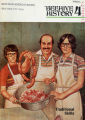
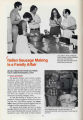
Show / Italian Sausage Making Is a Family Affair JACKSMITH, RON JOHNSON, LARRY JONES, LINDA EDEIKEN, AND PHIL NOTARIANNI DISCUSS THE FINE POINTS OF SEASONING SAUSAGE. AN OLD TRADITION FROM SOUTHERN ITALY LIVES ON IN MAGNA, UTAH BY PHILIP F. NOTARIANNI My parents, Filippo and Carmela Angotti Notarianni, were both born in a small Italian mountain village called Pedivigliano. Located in the southern Italian province of Cosenza, Calabria, the little town lies along a high mountain road, nestled among other villages. I visited there in 1972 and felt right at home. The language, smells, and many customs of Pedivigliano were very familiar to me, yet I was far away from my home in Magna, Utah. At first this feeling of being at home surprised me. Then I stopped to think about why I felt that way. The Italian sausage and cappo-collo (a type of Italian salami) hanging from the ceilings in cellars reminded me of home. My parents had taught me how to make sausage when I was five or six years old, and I have been following this annual tradition for twenty-five years. This kind of folk tradition THE AUTHOR'S FATHER, FILIPPO NOTARIANNI, ADDS PEPE DOLCE ("SWEET PEPPER") TO SAUSAGE MIXTURE. PHOTOGRAPH COURTESY OF AUTHOR. 10 has given me a link with the Italian culture, even though I was born and raised in Utah. In Italian homes sausage making is a social event. Family members gather at someone's home, usually on a Saturday evening. Pork casings are cleaned and placed in hot water. Pork meat is cut and ground and placed in a large tub. My Dad, Filippo, was the one who always added the various ingredients. That was an art! No measuring cups were used. He just knew how much to put in. I would mix the salt, fennel, sweet pepper, and hot pepper in with the meat. Then it was break time. A small amount of the meat mixture is taken to the kitchen to be cooked and sampled to be sure it has just the right taste. Everyone gathers around the table to eat sausage; goat cheese; ricotta; olives prepared with oil, vinegar, salt, pepper, and oregano; homemade bread; and wine. The rich food and lively conversation create a holiday mood. Then it's back to work. The next step is filling the pork casings with the meat mixture. The meat is rolled into small balls to fit into the grinder, which has a special large spout at the end. A casing is slipped over the spout. When the grinder is cranked, the casing fills with meat. The final step is tying the sausage into links and carefully punching each section with small air holes. This family project usually takes about four hours and ends with another trip to the kitchen for more food and relaxation. Early the next morning the sausage is hung in a shed to be smoked and dried for a number of days. Then the dried meat is hung in the basement, ready to be used for many Italian dishes, including spaghetti sauce. In Pedivigliano the process is much the same. So, through a folk tradition such as making Italian sausage, my cultural heritage remains very much a part of my present life. Mr. Notarianni is a historian with the Utah State Historical Society. PHIL NOTARIANNI WASHES SALT FROM PORK CASINGS (TOP). CASINGS ARE KEPT IN HOT WATER UNTIL FILLED SO THEY WILL NOT SPLIT. PORK IS CUT INTO SMALL PIECES (CENTER) BEFORE BEING GROUND BY RONALD S. JOHNSON, THE AUTHOR'S NEPHEW (BOTTOM). 11 HHHP^ MICHAEL S. JOHNSON AND RONALD S. JOHNSON (ABOVE) LEARN THE FINE ART OF SAUSAGE SEASONING FROM UNCLE PHIL NOTARIANNI. HAND MIXING (RIGHT) IS THE NEXT STEP. PHIL COOKS SOME OF THE SAUSAGE (BELOW LEFT) FOR TASTE TESTING WHILE RON (BELOW RIGHT) FORMS THE MIXTURE INTO BALLS. 12 WHEN CASING IS FILLED, END IS TIED OFF WITH STRING. MIKE CRANKS WHILE PHIL HOLDS CASING ON SAUSAGE-STUFFING ATTACHMENT. PHIL USES A TOOL MADE BY HIS FATHER TO PRICK CASINGS SO THEY WILL NOT SPLIT. FILLED CASING IS TIED OFF INTO INDIVIDUAL SAUSAGES 5 OR 6 INCHES LONG. 13 |