| OCR Text |
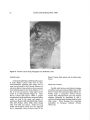
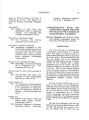
Show REPORTS 133 Museum of Archaeology and Ethnology Vol. 12, No. 1. Harvard University, Cambridge. Reagan, Albert 1931a Some Archaeological Notes on Nine MUe Canyon, Utah. El Palacio 31(4):45-71. 1931b Ruins and Pictographs in Nine MUe Canyon, Utah. Transactions of the Illinois State Academy of Sciences 24(2):369-370. Schaafsman, PoUy 1971 The Rock Art of Utah. Papers of the Peabody Museum of American Archaeology and Ethnology, Harvard University, Vol. 65. Cambridge. Zehnder, Chuck 1984 A Guide to Nine Mile Canyon. Pamphlet avaUable at CoUege of Eastern Utah Prehistoric Museum, Price. A FLUTED POINT FROM CLEAR CREEK CANYON, CENTRAL UTAH Vonn Larsen, Utah County Chapter, Utah Statewide Archaeological Sodety, 410 North 900 West, Provo, Utah 84601 INTRODUCTION A fluted projectile point fragment was found near the juncture of Clear Creek and Single Creek Canyon in central Utah on July 16,1989. Although fragmented, the point appears morphologically simUar to Clovis styles found in Utah (Copeland and Fike 1988, Davis 1989). Sourcing of the artifact was pursued with the approval of the United States Forest Service (USFS) on whose property the point was found. After sourcing and photographing, the point was sent to Bob Leonard to be housed at the Fremont Indian State Park near Richfield. A few days after the discovery, Bob Leonard, the Fish Lake Forest archaeologist, and Jeri DeYoung, an archaeologist trainee with the United States Forest Service from Weber State University, accompanied me to the site location. Later I was informed that the point was found within the boundaries of a previously recorded site (42Svl779). Tratt Mountain Rockshelter (Janetski et al. 1985) is located 100 m to the south and a number of other sites are in the area (Robert W. Leonard, personal communication 1989). SITE DESCRIPTION The fluted fragment was found on a south facing terrace overlooking Clear Creek Canyon in the Fish Lake National Forest (Figure 1). Clear Creek Ues 400 m to the south. Vegetation in the area consists of pinyon, juniper, and sage at an elevation of 6,680 feet. Surface soU is a rocky residual created by heavy erosion of Dry Hollow Latites. Several Uthic scatters of mostly obsidian and some jasper have been previously recorded throughout this area. Site 42Svl779 was recorded as an Archaic scatter of Uthic debris and tools (IMACS site form on file, USFS offices, Richfield, Utah). Included among the latter are Elko and Northern Side-notched style projectUe points. No features or subsurface deposits are known to be present at the site. The absence of other Paleo-Indian material suggests that the fluted point recovered here was likely removed from another location and dropped by Archaic or other peoples at some time in the distant past. The point is stylistically similar to Clovis or perhaps Folsom, and is made of obsidian from a local source (see below). POINT DESCRIPTION The artifact is the base of a fluted projectUe point broken transversely at about the midpoint (Figure 2). The point was formed primarily with percussion reduction techniques. The flute is on one side only. Remnants of the nipple or fluting platform are present in the basal concavity. Edge grinding is dearly present on the intact lateral edge (Figure 2a). Numerous scratches and grinding marks in the flute flake scar run in the direction of 134 UTAH ARCHAEOLOGY 1990 Figure 1. Location of fluted projectUe point in Clear Creek Canyon, Utah. REPORTS 135 a a a Figure 2. Drawing of fluted point. Actual size. the flute. Several surface characteristics argue that the transverse point breakage postdates the original use of the tool. Specifically, some minor reworking or use that postdates the break is suggested by the differential weathering of flake scars (e.g., shiny versus dull; especially shiny are the small flakes along the broken transverse edge). The basal width of 2.6 cm, maximum width of 3.0 cm and a thickness of .6 cm fatt comfortably in the range for Clovis offered by Copeland and Fike (1988:11). Sourcing The artifact was sent to Geochemical Research Laboratory in Rancho Cordova, California, for sourcing analysis utilizing x-ray fluorescence techniques. This is a non-destructive technique appropriate for the analysis of rare artifacts. The results of that analysis are shown in Table 1. The trace element profile for the obsidian from this specimen matches the WUd Horse Canyon source area in the Mineral Mountains in south central Utah (Richard Hughes, personal communication 1990). Discussion Although chert is the predominate material used in Clovis and Folsom point manufacture in Utah, obsidian is the second most common raw material (Copeland and Fike 1988:7). The latter is a fortunate fact as it allows some insight into prehistoric quarrying and trade patterns. This is the second fluted point known to archaeologists to be made of Mineral Mountain obsidian. A complete Clovis specimen sourced to WUd Horse Canyon came from the Blackwater Draw site in eastern New Mexico (Jane Day dted in Janetski et al. 1988:63). These finds although sparse, are important in Great Basin studies as information on early man continues to be elusive (cf. Willing et al. 1988), especially that related to temporal relationships with the well-dated Paleo-Indian strategy on the Great Plains and elsewhere. The Clear Creek Clovis adds another chip to the pUe of accumulating evidence for early man in this part of the world. ACKNOWLEDGMENTS I would like to thank Joel Janetski for his advice and patience in dealing with me as an amateur. Without his help in having the obsidian sourced, this paper would not have been possible. I appreciate the time Bob Leonard spent with me on the mountain and his consideration in sending me site reference materials. I very much appreciate the Utah Statewide Archaeological Society organization, for its formation has allowed me to participate with professional archaeologists who have been willing and patient in answering my many questions. 136 UTAH ARCHAEOLOGY 1990 Table 1. Trace Element Concentrations in the Clear Creek Fluted ProjectUe Point (Richard Hughes, personal communication 1990) Catalog Number Clovis-Like Zn 40 ±4 Ga 13 ±3 Rb 190 ±5 Sr 34 ±3 Y 24 ±2 Zr 107 ±4 Nb 24 ±3 Ba 170 ±11 Obisidan Source (Chemical Type) WUd Horse Canyon All trace element values in parts per million (ppm); ± = pooled expression (in ppm) of x-ray counting uncertainty and regression fitting error at 300 seconds livetime. REFERENCES CITED Copeland, James M., and Richard E. Fike 1988 Fluted ProjectUe Points in Utah. Utah Archaeology 1988 l(l):5-28. Davis, WiUiam E. 1989 The Lime Ridge Clovis Site. Utah Archaeology 1989 2(l):66-76. Janetski, Joel C, Fred Nelson, and James D. WUde 1988 The Loa Obsidian Cache. Utah Archaeology 1988 l(l):57-65. Janetski, Joel C, Asa S. Nielson, and James D. WUde 1985 The Clear Creek Canyon Archaeological Project: A Preliminary Report. Museum of Peoples and Cultures Technical Series No. 85-98. Brigham Young University, Provo, Utah. Wittig, Judith, C. Melvin Aikens, and John L. Fagan 1988 Early Human Occupation in Far Western North America: The Clovis-Archaic Interface. Nevada State Museum Anthropological Papers No. 21. Carson City. San Juan County REPORTS 137 Washington County 138 UTAH ARCHAEOLOGY 1990 MUlard County |