| OCR Text |
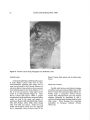
Show FREMONT TRANSITIONS Steven R. Simms, Department of Sodology, Social Work, and Anthropology, Utah State University, Logan, Utah 84322-0730 ABSTRACT A historical preoccupation with defining the Fremont has outgrown its usefulness. The concept is a stereotype, routinely confusing the variables of material culture, techno-economicpatterns, language, and ethnicity. This presents a naive and reductionistic scenario of prehistoric cultures to the reading public. Acknowledging Fremont unity, variability in the material culture of the time can be examined from a behavioral rather than cultural perspective. On-going study in northern Utah of the Fremont transition into archaeological obscurity and the subsequent Late Prehistoric period provides a context to examine a more dynamic approach. A working model illustrates the approach to the transition as an ecological phenomenon. Also, the relationship between the Fremont and the, "Numic spread" hypothesis begs for critical examination and may be approachable with new evidence in the form of human skeletal remains from the Great Salt Lake. INTRODUCTION Seems like archaeologists have felt compelled to define the Fremont with the tacit hope that understanding will be an intrinsic by-product of classification. The litany of hand-wringing over an acceptable definition reads like a history of the Fremont themselves (see Anderson 1983 for an overview). Perhaps archaeologists have put themselves in the untenable position of studying the behavior of the definitions and categories we make up rather than human behavior in prehistory. Even though classification is a fundamental part of the scientific enterprise, there has been a shift in perspective on the part of many anthropologists as to the role and consequences of classification. Part of this shift relevant to the notion of "Fremont transitions" is the view that simple, unitary, rigid, and distinct categories of past cultures are nothing more than stereotypes-whether we call them "cultural cores," "normative characterizations," or other fancy terms. Archaeologists increasingly understand that such definitional types can be as much of an obstacle to explanation and understanding as they are useful tools (Madsen 1989 provides an excellent Fremont example). In fact, we now realize that variability, once seen as a bothersome obstacle to "characterization" is actually the key to the explanation of cultural form and change. The very thing that we often used to abhor, that darned "variation," is finally being explicitly embraced as a major strength of anthropological study. Furthermore, it seems tenuous to allow ourselves to reduce the past to a set of simple categories called "cultures," each humming along in clearly bounded ethnic and linguistic bliss, occasionally encountering other like categories as if the world of human behavior was a huge pinball machine. We do not tolerate such reductionistic stereotyping of peoples and ethnic groups in our modern world, so there is no reason to exploit the dead in this way. The Fremont literature and references to Fremont "origins," their "demise," or the received wisdom about their relationships to the "Numics" are guilty of stereotyping and of assuming the very things begging for empirical investigation including behavior, language, ethnicity, and culture in general. We have employed as a crutch a classification which carries a dangerous burden-it may be nothing more than a reflection of our limited experience in the social present forced onto transitions spanning centuries or millennia. Is it possible that we assume simple, past societies to be reducible to neat categories since our own modern world is so difficult to comprehend? Some anthropologists have similarly questioned how we abuse the past. Eric Wolf, in his book, "Europe and the People Without History" writes: Concepts like "nation," "society," and "culture" name bits and threaten to turn names into things. Only by understanding these names as bundles of relationships, UTAH ARCHAEOLOGY 1990 pp. 1-18 UTAH ARCHAEOLOGY 1990 and by placing them back into the field from which they were abstracted, can we hope to avoid misleading inferences and increase our share of understanding.... One need have no quarrel with a denotative use of the term society to designate an empirically verifiable cluster of interconnections among people, as long as no evaluative prejudgments are added about its state of internal cohesion or boundedness in relation to the external world. . . . Yet the concept of the autonomous, self-regulating and self-justifying society and culture has trapped anthropology inside the bounds of its own definitions (Wolf 1982:3,18). Challenging our assumed simplicity of the primitive, Wolf writes: Indeed, has their ever been a time when human populations have existed in independence of larger encompassing relationships. . . . Just as the sociologists pursue the will-o'-the wisp of social order and integration in a world of upheaval and change, so anthropologists look for pristine replicas of the precapitalist, preindustrial past. . . (Wolf 1982:18). Have we been doing this with the Fremont, seeing "them" as a neatly identifiable "people" with the implication that archaeology has actually shown the learning public the ethnic and linguistic identities for the past inhabitants of Utah? Are we really assuming that we have a grasp of the Fremont "demise" into the later "Numic" peoples that invaded and replaced the elusive Fremontors? Are we reducing the past to add comfort to a contemporary world where such categories are not only difficult to see, but considered racially and ethnically bigoted? Some of the problem in archaeology may center around a loss of the early twentieth century realization in cultural anthropology that ethnic identity, language, and material culture do not intrinsically co-vary, but rather vary independently, often very independently. Colin Renfrew, author of, "Archaeology and Language: The Puzzle of Indo-European Origins" (1987) laments about some of the same things in a retrospective upon his book: It is the central thesis of my book that these early models-used by successive generations of scholars all too ready to equate a culture with a people (from Gordon Childe to Irving Rouse) and a people with a language-have yielded reconstructions for the origin and spread of languages which amount to a travesty of archaeological interpretation.... They are based upon the cardinal error, propagated by Childe in 1927, that when contemporary archaeologists define a "culture" on the basis of a "constantly recurring assemblage of artefacts" (often itself in practice reduced to a single trait, such as painted spirals or impressed cord decoration on pottery) they are simultaneously reconstructing an early ethnic group distinct from other groups and probably speaking its own language (Renfrew 1988:438). We certainly do this in the case of the Fremont-Numic issue, and perhaps to the Fremont in general. But all is not hopeless and in his retrospective Renfrew hints at a solution: I argue that the task can indeed be attempted without the simplistic equation of specific cultures or traits with specific hypothetical languages.... They (languages) change because their speakers are within societies where significant economic and social changes are also taking place. The key to the analysis must be change and an attempt to understand how language change correlates with other kinds of change within the society in question. Archaeological research in favorable circumstances should allow the elucidation of social and economic change. In place of the old framework of linkages-specific languages-people/ethos-specific archaeological culture, it may be possible to develop in a systematic way a rather different framework of inference: language change-economic/ social/demographic change-change in the archaeological record. This may be termed a "processual" approach, in which emphasis is to be laid upon the processes of change of each kind rather than upon specific notional archaeological "cultures" as supposed ethnic units (Renfrew 1988:438). Here, I examine the above issues using a brief tour of Fremont transitions, changes during the history of the Fremont from the initial crystallization of the phenomenon, to the time when it can no longer be archaeologicaUy recognized. The ability to explore these issues reflects an increasing comfort among archaeologists with Fremont diversity within the context of a certain acknowledged unity in material remains. We do not know what this unity means in terms of the social, ethnic, and linguistic categories that were relevant to humans living at that time, and may never know. On the other hand, new questions and perspectives come into focus. I pursue this by emphasizing the "last" Fremont transition into archaeological obscurity using current research in one of the most persistent and dense areas of Fremont occupation, the northern Wasatch Front. This example offers a means of identifying questions that archaeology is in a position to explore, but which do not necessarily speak to neatly defined packages of past "peoples" or "cultures," or invoke implications of ethnic and FREMONT TRANSITIONS linguistic groups sweeping across the landscape like Great Basin weather systems. Discussion of these issues is increasingly relevant to how we present our understanding of prehistory to the reading and listening public. CLASSIFICATION AND MATERIAL REMAINS: BEHAVIOR AS AN ALTERNATIVE VIEW One of the strongest lines of evidence for Fremont unity is seen in the initial development of the Fremont phenomenon. There is strong continuity from a widespread earlier tradition, the Archaic, a period spanning thousands of years (Jennings 1978; Marwitt 1970). Because the Archaic was so widespread over the desert west and because it spans so much time, it is a category which certainly embodies a great deal of cultural, linguistic, and physical diversity. In the eastern Great Basin and on the northern Colorado Plateau, Fremont development produced distinctiveness out of this continuity with the Archaic. Distinctiveness which was represented by: the use of domesticated crops to varying degrees; settlement oriented toward farming; and the appearance of a material culture associated with decreased residential mobility and a more complex logistic system-especially the use of pottery, a greater investment in housing, and the development of more socially formalized trading networks. The Fremont is also distinctive among its contemporaries. It seemed to have developed in place, but this certainly does not preclude the possibility that people from other regions colonized portions of the "Fremont" area, taking on "Fremont traits" (see Berry and Berry 1976, for instance). Fremont Transition and Basketry It is appropriate here to mention Fremont basketry, an item of material culture sometimes offered as proof that the Fremont are not only distinct, but are ethnically and linguistically homogeneous (e.g., Adovasio 1986). Fremont basketry is indeed distinct from all contemporary traditions in surrounding regions. It is also distinct from later traditions in the Great Basin. Fremont basketry is however, part and parcel of a prior, Archaic basketry tradition that was widespread over the Desert West of the United States (Adovasio 1974). As with other aspects of the Archaic, this widespread basketry tradition covers such a large area and so much time that it must certainly include a tremendous diversity of linguistic and ethnic identities. Yet, when Archaic basketry is discussed, it is not used to argue for the identity of particular peoples lurking in the shadows of time-it simply cannot speak to such issues on a consistent level. While it is true that in some cases, ethnic identity, language, and material culture do indeed co-vary, an equal number of contrary cases can be also be held up, precluding an intrinsic relationship among them. The absence of a consistent relationship between ethnicity, language, and basketry means that we are left with no method to routinely identify such relationships in the absence of additional, difficult to muster, evidence. Why then, when we refer to the Archaic basketry tradition, a realm that has resisted the temptation to identify "peoples," but which persists into the so-called Fremont, must it be taken as proof of Fremont homogeneity as a "people"? As an alternative view, I suggest that Fremont basketry, or the Utah type metate, a few stone balls, some hock moccasins held up as virtual Fremont icons, or even minute variations in rock art styles may tell us no more about language and ethnic affiliations than does the style of automobile you drive testify as to your primary language. As Payson Sheets (1975) pointed out, "Possessing a small, side-notched, and basally concave arrowhead does not make you a Ute any more than owning a Volvo makes you a Swede." What the basketry, points, and other items are telling us is that the first Fremont transition produced a material culture, as opposed to language and ethnicity, distinct from other evolving farming cultures in the region. While Fremont basketry is different from that of other farmers of the Colorado Plateau, it is less distinct from groups who remained hunter-gatherers in the Great Basin. This probably results from the common Archaic roots, a cultural stage likely to have encompassed more than one ethnic and linguistic group. UTAH ARCHAEOLOGY 1990 The Fremont As Distinct As farming spread over the Southwest, the eastern Great Basin, and onto the northern Colorado Plateau, mobility decreased as a function of the rise of farming, producing regionalization in material culture. Dedsions to incorporate domesticated resources into the economy and diet tended to tether people to locales, even when the farming was casual. Once farming became fundamental to the economy, further tethering ensued, and traditions in material culture (and I suspect ideological aspects of culture as well-perhaps represented in rock art), become relatively more regionalized or compartmentalized than in previous times when mobility was in general, higher. Thus, the distinctiveness of the Fremont from their contemporaries is associated with fundamental shifts in adaptive strategy occurring on local levels, but cumulatively over a spatial context far larger than the Fremont. The shift in adaptive strategy toward farming favored a process by which the earlier, Archaic cultural "substratum" became differentiated into more readily recognizable entities: the Fremont; various Southwestern traditions, and others in the western U.S. Regionalization is not a synonym for isolation, but the character of interaction among regions began to occur in the context of an increased reliance on domesticates and the effects of this on the remainder of the cultural system. Fremont Boundaries and Behavior Let us examine Fremont boundaries from this more contextual view and introduce a slightly different way to know the past-by attention to the relationships between material culture and behavior. For the purpose of example, I refer here to gender. Archaeologists around the world increasingly understand that cultural boundaries may inform us about gender, or be conditioned by relationships between material culture and gender (e.g., Conkey and Spector 1984). While the employment of this perspective is relatively rare in Fremont studies, there are some interesting possibilities when we examine cultural boundaries in relation to gender behavior. For instance, the easiest way to detect the Fremont boundary is to refer to what is commonly assumed to be women's technology, especially pottery and baskets (conceivably a false assumption, but one that does have considerable ethnographic support in the American west). It is possible to distinguish Fremont baskets and pots from those of the Anasazi, or the Late Prehistoric. On the other hand, if you look at arrowheads, perhaps more frequently men's technology, it is much more difficult to identify the Fremont boundary. For example, along the southern tier of the Fremont region, the same projectile points are given different names when they occur with Fremont or Anasazi pottery. At the Bull Creek sites, there are "Bull Creek" points. To the south, where Kayenta Anasazi pottery becomes more common, they are called "Kayenta" points. To be fair, archaeologists seem to recognize the problem in practice, but cling to the same holistic categories and stereotypical perspectives to describe the past to the non-professional reading world. The mere presence of this taxonomic charade demands a change in how we describe the past to others. Rather than informing us of boundaries between monolithic cultures, the perspective from gender suggests that we may be seeing something more real- culture in the form of actual human behavior such as the movement or affiliations of men and women. By comparing the boundaries formed by different classes of material culture, we may either learn more about the role of gender in shaping past social systems, or we may employ gender to learn about the nature of the boundaries. Holmer and Weder (1980) quietly implied this line of investigation years ago and have been courteously ignored. The nature of this boundary could be controlled by behaviors such as mobility for trading, hunts, raiding, marriage, or perhaps more basically, farming practices. Even in the absence of understanding the particulars of these behaviors, what a different view we gain of the Fremont as a culture when we pay attention to behavior rather than a relentless concern with developing broadly employed stereotypes of past "peoples." Does the public really thirst for such reductionism, or is it that archaeologists are unwilling or unable to describe prehistory in a more realistic manner to the world at large? FREMONT TRANSITIONS Fremont Economic Transitions I have suggested there are various sides to the notion of Fremont as a category, a category implying some sense of unity, but also a varying mix of characteristics that serve as indirect reflections of past human behavior. Let us proceed by examining some other Fremont transitions. After the Fremont became detectable in the archaeological record, and over at least the next eight centuries or so, Fremont lifeways made a variety of detectable transitions. These can be described as shifts in the mix of farmed or wild foods, shifts in the location and size of settlements, and accompanying shifts in mobility and the kinds of material culture used, to name a few. From the initial transition into farming life, there were times when more people in the region seemed to rely on farmed foods and lived in stable villages of perhaps several dozen to several hundred people. There were times when these settlements split into smaller groups, capitalizing on microenvironments capable of supporting some crops, but also in proximity to easily retrieved wild foods. There were times when the Fremont relied less on farming-times when greater mobility probably provided a better life than farming. Finally, there were fluctuations spanning multiple human generations in which the Fremont material presence expanded and contracted across the region. While Fremont archaeologists have long recognized the variable nature of life across space and to a lesser extent, through time (e.g., Marwitt 1970), the search for diversity has accelerated and become more .explicit in the past decade (e.g., Madsen 1982,1989; Simms 1986; Talbot and Wilde 1989). In taking this perspective, a more fluid, dynamic, and humanly realistic picture of the past begins to emerge. Let us further examine how transition can be studied in the absence of stereotypes by examining the "final" Fremont transition into archaeological obscurity. THE FREMONT/LATE PREHISTORIC TRANSITION IN NORTHERN UTAH: AN EXAMPLE AND SOME HYPOTHESES Fremont life by careful examination of adaptive systems on a regional level (Hogan and Sebastian 1980). A research project along the northern Wasatch Front has been attempting this since 1986. Upon beginning the study only a handful of sites had been excavated, most of them Fremont. Over four hundred more are now known (largely due to the efforts of avocationists), and recorded to varying degrees. Early in the project we realized that if we wanted to know how the Fremont made the final transition into archaeological obscurity, we had to study what came after the Fremont. To avoid yet another definitional debacle like the Fremont, and to study rather than assert the "Numic influx" issue, we refer to the period after the Fremont by the mundane term, the Late Prehistoric period. It extends from the fourteenth century to historic contact with little concern for precise temporal placement of the "boundary" between it and the Fremont. We hold no illusions that definitional predsion constitutes an understanding or explanation of the processes associated with this transition. The ascription of a name, albeit mundane, belies the fact that the Late Prehistoric is one of the least understood periods in all Utah prehistory. In our study area along the eastern shores of the Great Salt Lake (Figure 1) only one suspected Late Prehistoric site had ever been excavated: Injun Creek, located west of Ogden (Aikens 1966). A radiocarbon date from this site dating to A.D.1605+100 (calibrated range is A.D. 1440-1660, using Stuiver and Pearson 1986) has sometimes been quietly doubted by local archaeologists because an earlier date was also present and the site produced abundant Fremont ceramics "in association" with Promontory ceramics (Aikens 1966:14, who did by the way, trust the date). After all, we had studied the devil out of the Fremont, and we thought we knew when it ended. So the date had to be wrong, did it not? By now, I think many understand that the occupation at Injun Creek, as well as at other locations around the lake, extended from within the Fremont well into the Late Prehistoric and that there were elements of continuity as much as there were distinct differences. One thing that has come out of all the years of hand wringing about Fremont definitions and identity is the realization that we will only explain UTAH ARCHAEOLOGY 1990 Mud flats: Hooded at 1282.6 m (420B') Figure 1. Map of study area on the eastern shores of the Great Salt Lake. FREMONT TRANSITIONS Fremont Transition, Numic Influx, and Transition Within the Late Prehistoric Archaeology had marked the terminus of the Fremont not by an examination of what came after, but only by the application of a stereotype of what we thought Fremont had to be. At that time we had to rely on a long-standing model of the Fremont demise, one that may indeed be right, but that is long-standing because it has been subject to little archaeological test (that is, test by attempted falsification). This model, one of "Numic expansion" was prompted in the 1950s and 60s by linguistic study (Lamb 1958; Miller et al. 1971). Linguists have convincingly shown that the Numic languages (which include the Shoshoni and Ute languages common to northern Utah), moved into their present distributions. The controversial part of the model revolves around using assumed rates of language change to predict when they moved. Lamb (1958) suggested this movement occurred within the past 1,000 years and lexicostatistic estimates suggest it happened between 500-700 years ago (Bettinger and Baumhoff 1982). Thus, the Numic spread may match the "demise" of the Fremont. This has been a convenience for the archaeologist, offering a tidy explanation and one in tune with our existing stereotypes. Archaeological evidence has been mustered to reify that aspects of Great Basin material culture did change about 1,000 years ago or less (e.g., Adovasio 1986; Madsen 1975). However, the means of using language to estimate antiquity is subject to debate. One recent study found that the rates of linguistic change used to argue for a recent Numic migration may be too fast, being based on rates of linguistic change for horticulturalists rather than the hunter-gatherers the Numic were (Shaul 1986, another politely ignored article). If that is so, then the Numic presence would be predicted to have occurred earlier. Even though we have seized upon the Fremont to Late Prehistoric transition as a convenient correlation to explain both the arrival of the Numic groups and the demise of the Fremont, we have to remember that there is no shortage of earlier transitions in prehistory with which we could make the same match (see Holmer 1986). Why not the upheavals of the mid-post glacial (the Altithermal)? Or, the Neo-glacial climatic event which correlates with settlement change and shifts in projectile point styles followed by the adoption of horticulture (the "origins" of the Fremont)? In contrast with the above and more consistent with existing lexicostatistic estimates, perhaps the Numic spread occurred later than the Fremont to Late Prehistoric transition. Perhaps we have avoided looking for change within the Late Prehistoric period as archaeologically defined because we tend to see this time as fully described by the ethnographic record, hence unworthy of critical archaeological attention. While ethnographic variability has been acknowledged, it is largely described as spatial variability across the region (e.g., Bettinger 1978). The ethnographic present has been extended into the past as a temporally static entity. One unexplored possibility for transition that occurred not at the Fremont to Late Prehistoric juncture, but within the relatively unstudied Late Prehistoric period is prompted by evidence for massive depopulation from the introduction of European disease beginning early in the sixteenth century. Disruption of aboriginal life from the depopulation of large game such as bighorn sheep caused by European-introduced disease has been proposed (Bettinger and Baumhoff 1982). Here, I refer to disease among the aboriginals themselves, not just some of the game they hunted. Spanish exploration in Florida and Mexico introduced the effects of smallpox, bubonic plague, measles, typhoid and a host of other diseases, beginning in the 1520s, much earlier than previously thought (see Crosby 1972; Dobyns 1982; Ramenovsky 1987; Thornton 1987). These studies use ethnohistorical documents and archaeological evidence to document dozens of successive waves of disease-induced depopulation. These debacles occurred across eastern and central North America reaching Puebloan groups of the southwest. They also expanded both north and south from Mesoamerica affecting the Pacific coast. The diseases were transmitted Indian to Indian, preceding face-to-face Indian/Euro-American contact by centuries in some regions. While these studies suggest the upheaval could have been continent-wide, until recently evidence for early depopulation has been minimal in the Intermontane West where population densities are generally lower. There is UTAH ARCHAEOLOGY 1990 now some evidence for sixteenth century depopulation on the Columbia Plateau (Campbell 1990). Pockets of higher density occupations such as the wetland environments of the Intermountain West or Great Basin may have been susceptible to epidemics. The Southwest, California, or the Columbia Plateau are all candidates for a source of introduction. Documented cases of depopulation suggest mortality in excess of 70% in many cases and such a calamity would have been a likely context for migrations of people. To date this possibility has not been employed to study transition within the Late Prehistoric period in the eastern Great Basin, nor has it been employed as another potential correlate of the Numic migration. It is offered here only as a hypothesis for operationalization with the view that the Fremont, Late Prehistoric, and Numic issues have become extremely intertwined and are in need of separation and broader examination. In the case of the Great Salt Lake area, well dated late sites are not common, but those that have been dated (seven dates, three sites) fall into the fifteenth century or earlier. A similar situation exists in the better chronological context of Utah Valley (Janetski 1990), and while some dates later than A.D. 1525 are present there, most dated Late Prehistoric sites fall into the previous two centuries. In our work along the Great Salt Lake and in Utah Valley (Joel Janetski, personal communication 1990) there is the increasing suspicion that the fourteenth and fifteenth centuries were somewhat different from the ethnographic present. Accounts from mountain men and government explorers suggest that the northern Utah wetlands were underexploited, given the seemingly high carrying capacity of the land (e.g., Dewey 1966) introducing another possible anomaly. Better chronological control may permit an assessment of whether the early to mid-sixteenth century was a time of discontinuity in the archaeological record and possibly linked to the first, "anonymous" wave of European contact in the region. The Numic expansion model is one encountered in the literature, and surely it is a reasonable one to describe the Fremont to Late Prehistoric transition. The matter is far from closed as an empirical issue, and this affects how we categorize artifacts, allocate research emphasis, and describe our current knowledge of the past regarding the Native Americans currently present in the region. The Northern Wasatch Front Project and the Orbit Inn Initially, I entered the project along the Wasatch Front bound and determined to test the Numic expansion model with the belief that until we could better evaluate the transition (or others at later times) archaeologically, we could not close the issue (Simms 1983). Indeed, there is archaeological evidence for a replacement of the Fremont by groups that were distinctive from the Fremont. The basketry of the Fremont and Late Prehistoric seems fundamentally different, but the sample size of Late Prehistoric basketry is embarrassingly small. This is particularly true for non-ethnographic, hence early Late Prehistoric basketry, dated to the actual period of transition. The pottery seems different, but there are many aspects of continuity as well. Ceramic thin sections show that like the Fremont, many Late Prehistoric ceramics (including those called "Promontory" from the Promontory caves and dated context at the Orbit Inn) are coiled, and not distinguished by paddle and anvil construction (Patricia Dean, personal communication 1990). There is such a high degree of variability among the two types that it seems the Fremont made some pottery very similar to much Late Prehistoric pottery. That is, pottery with thick walls, undulating surfaces, large temper size, and lower firing temperatures. In other words, expediently made pottery to serve certain functions. This difference is apparent in northern Utah in the overlap of crude "Promontory" ceramics with both Fremont and Late Prehistoric sites. By the same token, there is thin-walled, well made pottery from sites that would on the basis of projectile points have to be classified as Late Prehistoric (Mark Stuart, personal communication 1990). Again, the variability may be best explained by functional requirements of shifting mobility through time. Projectile point styles between the Fremont and Late Prehistoric also contrast to some degree, but the more points I see from the lake-edge sites, the more intermediate styles and continuity I see (a study to quantify this is currently underway). Perhaps these similarities FREMONT TRANSITIONS and differences are more informative of behavior and cultural process than of ethnic boundaries and language. It was clear that we needed to begin by excavating a Late Prehistoric site to better understand what we were dealing with. The true limits of our knowledge had become clearer and our work during 1986-87 seasons using archaeological field schools focused on the Orbit Inn site near the Brigham City airport. The Orbit Inn (Simms and Heath 1990) produced five closely aligned radiocarbon dates showing occupation in the late fifteenth century. The site was a residential camp occupied repeatedly over decades during the early summer and fall by people using lightly built structures-windbreaks or small huts. They collected marsh seeds, possibly shellfish, hunted waterfowl, and fished. They left caches of perhaps food, or equipment, indicating the intent to return soon. Each occupation was long enough for trash to be removed to secondary contexts, tools to be repaired, ornaments and possibly pottery to be manufactured. In may ways, it seems similar to the Injun Creek site. It differed from the Bear River "Fremont" sites only in that there were no shallow pit structures for habitation. Ceramics from the Orbit Inn were variable in quality. Seventy-three percent were Promontory with the remainder different only in the use of material other than calcite for temper. The well-dated Orbit Inn confirms the Late Prehistoric dating of Promontory ceramics indicated years before by the excavations at Injun Creek. Fremont Transition As An Ecological Problem: A Working Model Our work is proceeding by additional survey and recording of surface sites in the areas shown on Figure 1 and excavation of other Late Prehistoric sites. Over 400 sites have been encoded onto computer with over 80 categories of attributes for each site, ranging from locational and environmental information to features and artifacts. The continuing investigations are providing much needed quantified information because existing data are primarily nominal or ordinal in scale. However, some relationships between the Fremont and Late Prehistoric use of the Great Salt Lake marshes are indicated, especially with respect to residential and logistic mobility (see Binford 1980, or better yet, Chatters 1986 for discussions of these concepts). The Bear River Fremont sites have long been argued to represent less reliance on agriculture and more on hunting and gathering in the marshes than other Fremont cases (Jennings 1978; Marwitt 1970). There are indeed many similarities between the Bear River Fremont sites and the Late Prehistoric Orbit Inn which suggest little agriculture. On the other hand, the Bear River Fremont sites exhibit more substantial dwellings and overall, more evidence of stability in occupation. In regional perspective and considering the areas outside of the marshes, the interpretation that the Great Salt Lake Fremont was relatively less reliant on horticulture than other Fremont is to some extent an artifact of research. First, in the absence of comprehensive excavation, using the absence of direct subsistence evidence for domesticated plants to argue for little or no agriculture is a risky use of negative evidence. Even the larger Fremont agricultural sites do not offer up huge quantities of such evidence. Second, urbanization along the Wasatch Front has likely destroyed large Fremont agricultural mound sites. Fortunately, there are several hints that we may have studied only a fraction of the Fremont settlement system in the Great Salt Lake region. Some of these Wasatch Front horticultural bases have been located, but are poorly described. Such sites exist at Willard, and at Warren (Figure 1), west of Ogden (Hassel 1960,1961,1964; Judd 1926; Stuart 1980). Those cases yield the remains of adobe structures, corn cobs, and well-made ceramics. Furthermore, there are Fremont sites located in places where farming would be expected, on or near the toes of alluvial fans, well back from the marshland occupying the nearly flat terrain bordering a fluctuating Great Salt Lake. These sites are in the same topographic situations as other eastern Great Basin Fremont farming sites. Only a few, such as the Willard site, on a bluff just above the marsh at (4,220 feet) or the Warren site (elevation 4,212 feet) occur close to the marsh, but still located on sediments cleansed of salts and replenished for agriculture by fresh water inflow from mountain streams. Other possibilities are 10 UTAH ARCHAEOLOGY 1990 known from the Ogden and Salt Lake City areas, but were likely covered with pavement long ago or intentionally leveled by early residents, some of who made their living leveling Indian mounds. During the Fremont period, agriculture, centered at what were probably hamlet or village sites, may in fact have been the pattern along the northern Wasatch Front, just as it was elsewhere along the eastern rim of the Great Basin. In addition, there were large tracts of productive marshland that could support either: (1) Fremont logistic groups processing and retrieving resources from the marshes to the agricultural bases; or (2) Fremont residence in the marsh during agricultural failure, or times when the larger residential farming bases broke up into smaller groups with an accompanying decrease in reliance on farming. The non-agricultural Bear River Fremont sites as well as other Fremont residential sites could be associated with either one of these options. To date, our understanding of the northern Utah Fremont has been conditioned by a sample biased toward the marshes, with inadequate attention to the effects of early urbanization on archaeological interpretation. As study continues, some differences between the Late Prehistoric (at least the early Late Prehistoric) and the Fremont are becoming evident on both a regional scale and within the marshes themselves: 1. Unlike the Fremont, there is no evidence for Late Prehistoric large farming villages. At a minimum this means farming scaled back from the levels practiced during Fremont times. We should not however, use the negative evidence to assume farming completely ceased in the Late Prehistoric. It seems safe to say that agriculture no longer was a recognizable settlement determinant during the Late Prehistoric period. 2. Our data indicate there is a relationship between elevation and the age of sites with a significant decrease in Fremont sites below 4,208 feet (Aikens 1967; Russell et al. 1989). Late Prehistoric sites are commonly found at least as low as 4,202 feet (Aikens 1967) with others known ^ but poorly described from lower levels (Mark Stuart, personal communication 1989) (the historic low is 4,193 feet). Figure 2 shows the zones likely to have been most available as marshland during the respective spans of the Fremont and Late Prehistoric periods. Of course, short term lake fluctuations can be great, so the map and the noted contrasts in site location only speak to lake trends on the scale of several centuries. When Fremont sites are found at very low elevations, below about 4,205 feet, available evidence suggests they may be early Fremont, dating prior to A.D. 500 when lake levels may have been lower than later in Fremont times. It is also conceivable that there were other, brief periods within the Fremont time span when the lake regressed below 4,205 feet. 3. The Late Prehistoric marsh sites suggest an adaptive system more residentially focused on the marsh. There are fewer Fremont residential camps in the marsh than Late Prehistoric residential camps, acknowledging that each period represents the accumulation of several centuries of occupation. In contrast, the Bear River Fremont sites are residential bases, but the numbers of such sites are few when compared to the numbers of Fremont and Late Prehistoric residential camps showing a relatively strong presence in the marsh. A residential focus need not imply sedentism, and it is possible that the Late Prehistoric marsh sites were not occupied as long during each visit as Fremont marsh sites. There are many of them, and they seem to have been used repeatedly, with occupations intermittent in almost rapid fire sequence. 4. As for changes in logistic systems, both periods are represented by a host of special use sites in the marsh. While the contrasting residential patterns suggest there should be differences in logistic systems, thus far, these cannot be teased apart, a problem similar to that encountered by David Thomas in the Monitor Valley survey (Thomas 1988). FREMONT TRANSITIONS 11 Wetlands along watercourses (available during all periods) . ^ Wetlands generally available to Fremont Additional wetlands available at the Fremont to Late Prehistoric transition Figure 2. Schematic representation of available wetlands at the Fremont to Late Prehistoric transition. 12 UTAH ARCHAEOLOGY 1990 In reconstructing the system, however, we must remember that the marsh is only one part of the regional settlement picture. On a regional level, Late Prehistoric mobility likely was higher than Fremont (at least when Fremont farming was successful). The generally higher level of mobility during the Late Prehistoric, and at some undated Fremont sites as well, is attested to by relatively expedient forms of ceramics, use of raw material, and possibly housing as well. However, considering only the marsh, Late Prehistoric use of the marsh may have been more regular than the Fremont use of the marsh, since Fremont dedsion making exhibited the additional influence of a varying agricultural fate placing constraints on marsh residence. This is reflected in the distribution, number, and type of sites. As for artifacts, a degree of continuity between the Fremont and Late Prehistoric can be argued for. Given the degree to which we have assumed there is a contrast between the two temporal and cultural stereotypes, perhaps it is time we examined the possibility of continuity as a counterbalance in the scientific process. Ceramics show that the old distinctions between Fremont, Promontory, and Late Prehistoric may be overstated, or at least better seen as variations in the frequency of specific morphological attributes, rather than completely different ceramic industries. Pat Dean's study of ceramic thin sections mentioned previously provides some of the most compelling evidence for continuity. By showing that Promontory and other "Late Prehistoric" ceramics were actually constructed by coiling as were the Fremont, not necessarily the paddle and anvil technique that has been used as the basis of a technological contrast, she increases the likelihood of continuity. A high degree of variability in other attributes is being found in a study underway to quantify ceramic traits and provide the basis to study the ceramics with something other than cultural type in mind. The past practice of examining ceramics only to identify a Fremont or Late Prehistoric type is a significant problem. In the absence of reliable absolute dating on most of the "Late Prehistoric" material, we are left in the potentially dangerous position of using artifact types with spotty chronological control to infer the existence of contrasting cultural stereotypes. The practice fosters a self-fulfilling prophecy. Projectile points, while requiring further, quantified study, also may suggest a higher degree of continuity than is now accepted for the Fremont to Late Prehistoric transition. Projectile points can be grouped into various clusters of small side notched points, but a high degree of grading between groups is also apparent. Continuity seems espedally apparent between the Bear River side-notched (Fremont) and the general subtype of the Desert side-notched (Late Prehistoric) types. As for other site characteristics, sites of both periods yield numerous subsurface pits, which are evidence for short term storage not necessarily restricted to food, but which could include clothing and equipment as well (Zeanah 1988). Evidence for nonfood pit contents such as lithic raw material has been observed during the work and is known at a number of sites in the area (Mark Stuart, personal communication 1990). Residential architecture for the Late Prehistoric requires more study, but evidence suggests a range of types from windbreaks to bulrush or brush huts to larger earth-covered houses (Aikens 1966; Janetski 1986; Simms and Heath 1990). What could have caused a transition in subsistence, technology, and mobility? The final Fremont transition has, like Anasazi transitions, long been associated with climatic change affecting agriculture. However, anthropologists know that people are not automatically pulled toward agriculture, nor are they exclusively pushed out of it. The pushes and pulls which shape human decision-making about behavior can be expressed in a variety of ways, and can come from many directions. One "push" that may have occurred by the thirteenth or fourteenth centuries is an increase in the cost of agriculture. Already a marginal pursuit in this region, an increased frequency of drought and/or a shift from summer to winter dominant rainfall would have affected the costs of agriculture. The declining levels of the Great Salt Lake at the Fremont/Late Prehistoric transition suggested by the site distribution described here, along with other lacustrine data (e.g., Currey 1990; Murchison 1959) and pollen data from central Utah FREMONT TRANSITIONS 13 (Newman 1989), suggest these things may have occurred. Costs are only meaningful in a relative sense. What about the costs of the alternatives to agriculture? Add to the equation the potential "pull," or attraction of a marshland that was doubling or tripling in size as the lake receded, but fresh water inflow across a shallow gradient guaranteed the development of extensive ponds, channels, wet meadows, and saline grasslands well back from the actual lake edge. Lake levels only partially control the development of marshes in this case, with the extent of the marsh largely a function of the distance and gradient between the toes of the alluvial fans and the lake edge. In the case of some floodplains along the lake, the marshes could form a band over 10-15 km wide (Figure 2). Given that wetlands offer resources including small mammals, waterfowl, and large seeds that are relatively high ranked in a Great Basin hunter-gatherer diet (Simms 1987), and fish as well, marshes should always be exploited to some degree. As the Great Salt Lake declined from lower precipitation, huge tracts of marshland, and saline grasslands attracting large game such as the bison which appear in the archaeological record, would have offered the inhabitants a much larger area to exploit than those available during the latter part of the Fremont period. A wetland on this spatio-temporal scale would have been a previously unavailable attraction presented in the face of increasing agricultural costs, but would have required a fundamental shift in settlement to exploit. It would have required some basic decisions as to whether to employ domestic crops as the driving focus of settlement, and selected for an increased, but spatially flexible residential focus on the marsh. Settlement stability on a regional scale, encompassing nearby mountains and interior valleys, as well as lake-edge contexts may have decreased in the Late Prehistoric. A product of increased mobility (that is, relative to Fremont mobility and not intended as an argument for Late Prehistoric nomadism) would have been changes in technology, especially ceramics, but in architecture, and raw material management as well. On the other hand, there is continuity between the Fremont and Late Prehistoric and the emerging picture is not one of wholesale substitution in adaptive strategy. Rather the changes may better be seen as frequency shifts in the characteristics of sites, features, artifacts, and the activities they reflect. Mobility may have increased from Fremont times, but was still quite stable relative to other Great Basin environments (Janetski 1986). Perhaps the transition would mark a time of social, technological, demographic, and perhaps ideological adjustment. While each of these represent threads of culture, notice that the emphasis is upon the various processes, not upon, as Renfrew (1988) says "specific notional archaeological 'cultures' as supposed ethnic units." THE NUMIC INFLUX QUESTION? Notice that I have not been able to speak to the issue of the Numic expansion and questions about whether the various groups exhibiting what we call Fremont culture packed up and moved, stayed put and died out, stayed put and blended in with new arrivals, or stayed put because they were "Numic." As the research has progressed, it has become apparent that we still do not have the means to resolve the "Numic influx" issue. However, in recent years, since the Great Salt Lake reached its historic high stand in 1987, and is now regressing, a new line of evidence has become available which will foster examination of the problem-at least in the northern Wasatch Front. This line of evidence is a collection of over 70 human skeletons eroding at the surface and endangered by erosion and vandalism (Russell et al 1989; Simms 1990; Stuart 1990). The remains have been excavated for study and protection. These skeletons aid investigation of population blending or replacement because the sample size is fairly large, there are skeletons spatially associated with Fremont sites, and others associated with Late Prehistoric sites. While spatial association with sites in an area of high site density does not guarantee the age of the skeletons, it is likely they span the time from the Fremont into the Late Prehistoric period. Anthropometric study, along with recent success in extracting genetically specific proteins 14 UTAH ARCHAEOLOGY 1990 (Schell and Blumberg 1989) and DNA from prehistoric bone (Hagelberg and Sykes 1989; Paabo et al. 1989; Shearin et al. 1989), open the door to knowing whether the Fremont and Late Prehistoric sites represent genetically distinct populations. This is something the other archaeological data cannot do, no matter how much we wish artifacts mirrored these things. Perhaps we will be able to suggest that the ancestors of the modern Numic groups in our area are genetically distinct, hence more distantly related to the Fremont, and likely to have replaced the Fremont. Or, perhaps the ancestors of modern Native Americans in our area have been here longer than previously thought, either because then-ancestors were Fremont in a direct sense, or represent a high degree of admixture of two populations that were distinct earlier in time. If distinct Fremont versus Late Prehistoric populations are found, then the Numic spread model is supported. If no distinction is seen then we must look to either a different timing of the Numic spread as previously suggested or explore the possibility of admixture. The image of blending populations is interesting in the ecological context of a vast marshland. People with different cultural histories may have interacted over decades and even centuries, a level of temporal precision common to archaeology in this region. The huge, but spatially and temporally dynamic marshes could have served as refugia, attracting people from many disparate kin groups and cultural backgrounds, especially during times of resource stress such as the Fremont to Late Prehistoric transition. Perhaps the Fremont were similar enough to the recent Numic arrivals, or actually were Numic speakers, that interaction was routine. If such admixture was occurring in the context of an in-migration of people (the Numic spread) it may be reflected in some material realms (perhaps basketry is one, Adovasio 1986). Just as easily, other traits may not reflect distinctions, suggesting continuity. Such a view may better represent the continuity between the Fremont and Late Prehistoric occurring in the a context of a certain acknowledged transition. The situation described would have fostered the integration of cultures and increased bilingualism, alliance formation by marriage, and insured genetic exchange. Over the course of generations in these marsh habitats, there may have been admixture occurring both in the context of peaceful interactions such as marriage or trade and in the context of violent interactions such as disputes or perhaps warfare. History is replete with examples of cultural and biological blending occurring in both contexts. The marshlands of the northern Wasatch Front would provide an environment conducive to such interaction during a period like the Fremont to Late Prehistoric transition. The outcome will have to await further study, but a similar case of human skeleton recovery in the Stillwater marshes of western Nevada has produced tantalizing results. Anthropometric analysis by Stark (1983) and Brooks and Brooks (1990) of the Stillwater human remains dating from about 3000 B.P. to the protohistoric period shows a great deal of continuity within the series, leading to the conclusion there is, "no evidence of replacement by other peoples or migration" (Brooks and Brooks 1990:71). SOME CONCLUDING REMARKS Here, the point has been to place the Numic migration problem and the Fremont to Late Prehistoric transition in a perspective attendant to the potential of archaeological data. The current status of continuing study of prehistoric human ecology along the Great Salt Lake is offered to illustrate a research strategy for studying Fremont transition. These topics and research illustrate how some of the most interesting and tractable research problems may have little to do with existing stereotypes of "archaeological cultures." The determination of such categories is really not the focus of the discipline. While the categories can be useful tools, they are just as easily toxic byproducts. The fleshing of labels and their careful employment are also important in fulfilling our obligation to convey to others the deepest possible understanding of prehistory and humanity, not just stereotypes that uncritically reflect contemporary social perceptions. As for approaching explanations as to how and why culture change occurs over large expanses of FREMONT TRANSITIONS 15 time, the importance of variability to our enterprise can be graphically seen in the example of the Fremont to Late Prehistoric transition. Lindsay (1986) has shown the Fremont did not all go away en masse, further implying we are not dealing with a unitary problem. Thus, even if we can resolve Fremont transition in the northern Wasatch Front, it will not imply that the same fate befell all carriers of Fremont material culture. Thus, when you encounter "explanations" of the Fremont demise, remember we are talking about many people, many hundreds of years of transition, and a large piece of real estate. I suggest wariness of any simplistic, unitary account of where they went, whether it be a conclusion that they went to become the Hopi, went to become a Plains culture, or went into outer space. Just as it is with assessments of race and ethnicity today, the danger centers around how much importance is placed on the word "they." ACKNOWLEDGMENTS This paper is based on a lecture given in the series, "Exploring the Fremont" sponsored by the Utah Museum of Natural History and the Utah Endowment for the Humanities in November 1989 at the University of Utah. Thanks to Kevin Jones for suggesting I pursue the topic further. Special thanks to Mark Stuart, and thanks also to David Madsen, Carol Loveland, Dann Russell, as well as the other participants in the northern Wasatch Front project. Pat Dean graciously provided study of ceramic thin sections. Jim Loveland developed the computerized data set for Great Salt Lake sites. Marina Hall provided useful editorial comments on the manuscript, although all turbidity remains my own. REFERENCES CITED Adovasio, James M. 1974 Prehistoric North American Basketry. In Collected Papers on Aboriginal Basketry, edited by D. R. Tuohy and D. L. Rendall, pp. 98-148. Nevada State Museum Anthropological Papers No. 16. Carson City. 1986 Artifacts and Ethnicity: Basketry as an Indicator of Territoriality and Population Movements in the Prehistoric Great Basin. In Anthropology of the Desert West: Essays in Honor of Jesse D. Jennings, edited by C. S. Condie and D. D. Fowler, pp. 43-88. University of Utah Anthropological Papers No. 110. Salt Lake City. Aikens, C. Melvin 1966 Fremont-Promontory-Plains Relationships, Including a Report of Excavations at the Injun Creek and Bear River Number 1 Sites, Northern Utah. University of Utah Anthropological Papers No. 82. Salt Lake City. 1967 Excavations at Snake Rock Village and the Bear River No. 2 Site. University of Utah Anthropological Papers 87. Salt Lake City. Anderson, Duane C. 1983 Models of Fremont Culture History: An Evaluation. Journal of Intermountain Archeology 2:1-27. Also in Prairie Archaeology: Papers in Honor of David A. Baerreis, edited by G. E. Gibbon. Occasional Papers in Anthropology No. 3. University of Minnesota, Minneapolis. Berry, Michael S., and Claudia F. Berry 1976 An Archaeological Reconnaissance of the White River Area, Northeastern Utah. Antiquities Section Selected Papers 2:1-42. Utah State Historical Society, Salt Lake City. Bettinger, Robert L. 1978 Alternative Adaptive Strategies in the Prehistoric Great Basin. Journal of Anthropological Research 34:27-46. Bettinger, Robert L., and Martin A. Baumhoff 1982 The Numic Spread: Great Basin Cultures in Competition. American Antiquity 47:485-503. Binford, Lewis R. 1980 Willow Smoke and Dog's Tails: Hunter-Gatherer Settlement Systems and Archaeological Site Formation. American Antiquity 45:4-20. 16 UTAH ARCHAEOLOGY 1990 Brooks, Sheilagh and Richard H. Brooks 1990 Who Were the Stillwater Marsh People? Halcyon: A Journal of the Humanities 12:63-74. Campbell, Sarah 1990 How Wide the Ripples? The Case for Early 16th Century Epidemics in Non-Agricultural Western North America. Paper presented at the 55th annual meeting of the Society for American Archaeology, Las Vegas. Chatters, James C. 1986 Hunter-Gatherer Adaptations and Assemblage Structure. Journal of Anthropological Archaeology 6:336-375. Conkey, Margaret and Janet Spector 1984 Archaeology and the Study of Gender. In Advances in Archaeological Method and Theory, vol. 7, edited by M. B. Schiffer, pp. 1-38. Academic Press, New York. Crosby, Alfred W. 1972 The Columbian Exchange: Biological and Cultural Consequences of 1492. Greenwood Press, Westport, Conn. Currey, Donald R. 1990 Quaternary Palaeolakes in the Evolution of Semidesert Basins, with Special Emphasis on Lake Bonneville and the Great Basin, U.SA. Paleogeography, Paleoclimatology, Paleoecology 76:189- 214. Dewey, John R. 1966 Evidence of Acculturation Among the Indians of Northern Utah and Southeast Idaho: A Historical Approach. Utah Archaeology 13:3-10. Dobyns, Henry F. 1983 Their Numbers Become Thinned: Native American Population Dynamics in Eastern North America. University of Tennessee Press, Knoxville. Hagelberg, Erika, and Bryan Sykes 1989 Ancient Bone DNA Simplified. Nature 342:485. Hassel, Francis K. 1960 Archaeological Notes on the Northeastern Margin of the Great Salt Lake. Utah Archaeology 6:10-15. 1961 An Open Site Near Plain City, Utah. Utah Archaeology 7:5-13. 1964 Surface Material from a Site in Weber County. Utah Archaeology 10:1-3. Hogan, Patrick and Lynne Sebastian 1980 The Variants of the Fremont: A Methodological Evaluation. In Fremont Perspectives, edited by D. B. Madsen, pp. 13-16. Antiquities Section Selected Papers 16. Utah State Historical Society, Salt Lake City. Holmer, Richard N. (editor) 1986 Shoshoni-Bannock Culture History. Swanson/Crabtree Anthropological Research Laboratory Reports of Investigations 85-16. Pocatello. Holmer, Richard N. and Dennis Weder 1980 Common Post-Archaic Projectile Points of the Fremont Area. In Fremont Perspectives, edited by D. B. Madsen, pp. 55-68. Antiquities Section Selected Papers 16. Utah State Historical Society, Salt Lake City. Janetski, Joel C. 1986 The Great Basin Lacustrine Subsistence Pattern: Insights from Utah Valley. In Anthropology of the Desert West, edited by C. S. Condie and D. D. Fowler, pp. 145-67. University of Utah Anthropological Papers No. 110. Salt Lake City. 1990 Utah Lake: Its Role in the Prehistory of Utah Valley. Utah Historical Quarterly 58:5-31. Jennings, Jesse D. 1978 The Prehistory of Utah and the Eastern Great Basin. University of Utah FREMONT TRANSITIONS 17 Anthropological Papers No. 98. Salt Lake City Judd, Neil M. 1926 Archeological Observations North of the Rio Colorado. Bureau of American Ethnology Bulletin 82. Washington, D.C. Lamb, Sidney M. 1958 Linguistic Prehistory in the Great Basin. International Journal of American Linguistics 24:95-100. Lindsay, La Mar W. 1986 Fremont Fragmentation. In Anthropology of the Desert West: Essays in Honor of Jesse D. Jennings, edited by C. S. Condie and D. D. Fowler, pp. 229-252. University of Utah Anthropological Papers No. 110. Salt Lake City. Madsen, David B. 1975 Dating Paiute-Shoshoni Expansion in the Great Basin. American Antiquity 40:82-86. 1982 Get it Where the Gettin's Good: A Variable Model of Great Basin Subsistence and Settlement Based on Data from the Eastern Great Basin. In Man and Environment in the Great Basin, edited by D. B. Madsen and J. F. O'Connell, pp. 207-226. SAA Papers No. 2. Society for American Archaeology, Washington, D.C. 1989 Exploring the Fremont. University of Utah Occasional Publication No. 8. Utah Museum of Natural History, Salt Lake City. Marwitt, John P. 1970 Median Village and Fremont Culture Regional Variation. University of Utah Anthropological Papers No. 95. Salt Lake City. Miller, Wick R., James L. Tanner, and Lawrence P. Foley 1971 A Lexicostatistic Study of Shoshoni Dialects. Anthropological Linguistics 13:142-164. Murchison, Stuart B. 1989 Fluctuation History of Great Salt Lake, Utah, During the Last 13,000 Years. Department of Geography, University of Utah, Salt Lake City. Newman, Deborah E. 1988 Paleoenvironments of the Late Archaic and Formative Periods in Central Utah. Paper presented at the 21st Great Basin Anthropological Conference, Park City, Utah. Paabo, Svante, Russell G. Higuchi, and Allan C. Wilson 1989 Ancient DNA and the Polymerase Chain Reaction. The Journal of Biological Chemistry 264:9709-9712. Ramenofsky, Ann F. 1987 Vectors of Death: The Archaeology of European Contact. University of New Mexico Press, Albuquerque. Renfrew, Colin 1987 Archaeology and Language: The Puzzle of Indo-European Origins. Jonathan Cape, London. 1988 Author's Precis to Archaeology and Language. Current Anthropology 29:437-468. Russell, Kenneth W., Mark E. Stuart, James A. Brannan, and Heather M. Weymouth 1989 Archaeological Reconnaissance in the Ogden/Weber River Marshes. Weber State College Reports of Investigations No. 89-1. Schell, Lawrence M., and Baruch S. Blumberg 1989 Alloalbuminemia and the Migrations of Native Americans. Yearbook of Physical Anthropology 31:1-13. 18 UTAH ARCHAEOLOGY 1990 Shaul, David 1986 Linguistic Adaptation and the Great Basin. American Antiquity 51:415-416. Shearin, N. L., E. J. King, and D. H. O'Rourke 1989 DNA Preservation in Precolumbian Remains From the American Southwest. Human Evolution 4:263-270. Sheet, Payson 1975 Behavioral Analysis and the Structure of a Prehistoric Industry. Current Anthropology 16:369-391. Simms, Steven R. 1983 Comments on Bettinger and Baumhoff s Explanation of the "Numic Spread" in the Great Basin. American Antiquity 48:825-830. 1986 New Evidence for Fremont Adaptive Diversity. Journal of California and Great Basin Anthropology 8:204-216. 1987 Behavioral Ecology and Hunter-Gatherer Foraging: An Example From the Great Basin. BAR International Series 381. Oxford. 1990 Preliminary Report of Recovery of Human Skeletal Remains from the Great Salt Lake Wetlands. Prepared for the Utah Department of Natural Resources and the Utah Division of State History, Salt Lake City. Simms, Steven R. and Kathleen M. Heath 1990 Site Structure of the Orbit Inn: An Application of Ethnoarchaeology. American Antiquity 55, in press. Stark, C. R. 1983 The Determination of Variation in Skeletal Remains in Nevada Through the Use of Discrete Morphological Traits and Anthropometry. Master's thesis, Department of Anthropology, University of Nevada, Las Vegas. Stuart, Mark E. 1980 A Revised Summary of Weber County Archaeology. Ms. on file Antiquities Section, Utah Division of State History. Salt Lake City. 1990 Human Osteology and Archeologcal Survey of the Weber River Wetlands, Weber County, Utah. Promontory/Tubaduka Reports of Investigations No. 90-1. Ogden. Stuiver, Minze and Gordon W. Pearson 1986 High Precision Calibration of the Radiocarbon Time Scale A.D. 1950-500 B.C. Radiocarbon 28(2B):805-838. Talbot, Richard K. and James D. Wilde 1989 Giving Form to the Formative: Shifting Settlement Patterns in the Eastern Great Basin and Northern Colorado Plateau. Utah Archaeology 1989 2(1):3-18. Thomas, David H. 1988 The Archaeology of Monitor Valley 3: Survey and Additional Excavations. Anthropological Papers 66:Part 2. American Museum of Natural History, New York. Thornton, Russell 1987 American Indian Holocaust and Survival: A Population History Since 1492. University of Oklahoma Press, Norman. Wolf, Eric R. 1982 Europe and the People Without History. University of California Press, Berkeley. Zeanah, David W. 1988 Pit Features and Food Storage Strategies in the Great Basin. Paper presented at the 21st Great Basin Anthropological Conference, Park City, Utah. |