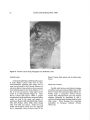
| OCR Text |
Show REPORTS i l l Shelley Smith, archaeologist at the Salt Lake City office of the Bureau of Land Management, gave major support and guidance. Alan Arveseth assisted in finding and recording 42Bo555. REFERENCES CITED DaUey, Gardiner F. 1976 Shallow Shelter and Associated Sites. University of Utah Anthropological Papers No. 96. Salt Lake City. Jennings, Jesse D. 1978 The Prehistory of Utah and the Eastern Great Basin. University of Utah Anthropological Papers No. 98. Salt Lake City. Jeppson, Roland W., et al. 1968 Hydrologc Atlas of Utah. Research Laboratory, University, Logan. Utah Water Utah State Madsen, Brigham D. 1986 Chief Pocatello-The White Plume. BonneviUe Books, University of Utah Press, Salt Lake City. Madsen, Dave B., and Kevin T. Jones 1990 Silver Island Expedition: Anthropology and Archaeology in the Bonneville Basin, vol. 1. Concepts and Contents, University of Utah Anthropological Papers. Salt Lake City, in press. Simms, Steven R. 1983 The Effects of Grinding Stone Reuse on the Archaeological Record in the Eastern Great Basin. Journal of California and Great Basin Anthropology 5(1 and 2):98-102. 1990 The Structure of the Bustos Wickiup Site, Eastern Nevada. Journal of California and Great Basin Anthropology, in press. Steward, JuUan H. 1938 Basin-Plateau Aboriginal Sociopolitical Groups. Smithsonian Institution, Bureau of American Ethnology, Bulletin 120, United States Printing Office, Washington, D.C. 1943 Culture Elements Distribution: XXIII Northern and Gosiute Shoshoni. University of California Anthropological Records 8(3)263-392. Berkeley. A CROOKNECK WOODEN STAFF FROM SAN JUAN COUNTY, UTAH Nancy L. Shearin, Department of Anthropology, 102 Stewart Building, University of Utah, Salt Lake City, Utah 84112 INTRODUCTION On 20 December 1980 a crookneck wooden staff was discovered by Fred Blackburn, White Mesa Institute, Blanding, Utah, in a tributary canyon, northeastern drainage of Grand Gulch, San Juan County, Utah (Figure 1). This paper reports the location, coUection, and curation of this weU-preserved crookneck staff. The prehistory of similar artifacts from the Southwestern archaeological record is reviewed along with a historic account of ceremonial use. ImpUcations concerning the function of the artifact with respect to cultural interaction, trade, and rock art motifs are discussed. STAFF LOCATION/DESCRIPTION The crookneck staff was found among pack rat debris in a low, protected space under a large talus sandstone boulder (Figure 2). A decision to document the site and coUect the staff was made based on increasing destruction of archaeological resources in the immediate area by artifact hunters. The gross appearance of the artifact is one of a use-worn, weU-made crookneck wooden staff in near-perfect condition, poUshed from wear along the entire length, especiaUy in midsection. The distal end has been carefully shaped into a blunt 112 UTAH ARCHAEOLOGY 1990 if • Location of San Juan County Crook Neck Staff («fc tl SA 17879) a a a r j «e MILES Figure 1. Map of southeastern Utah showing location of wooden crookneck staff site in San Juan County. wedge form and shows longitudinal abrasion to a distance of about 10 cm from the tip (Figure 3,4a). The crookneck staff represents an isolated find. No other artifacts or cultural debris were found on the ground surface at the site. The wood has not yet been identified and no radiocarbon dates have been obtained. The staff measures 143 cm from distal tip to top of the crook, 7 cm across the outside of the bow of the crook, and an average thickness of 1.5 cm. The staff has been placed in the Edge of the Cedars Museum's permanent collection, Blanding, Utah (Hurst 1986). ARCHAEOLOGICAL EVIDENCE FOR CROOKNECK STAFF Since there are no radiocarbon dates for the San Juan staff, it is not possible to assign a particular time frame for its use, and since there are a range of sites from early Basketmaker to Pueblo III within a three mUe radius of the discovery location, any or aU of these cultural periods could have played a role in the history. The form and appearance of the staff suggests a strong similarity to the Northern Arizona Basketmaker staffs especiaUy the crooked staff described in the White REPORTS 113 Figure 2. Photograph of crookneck wooden staff at discovery site in Grand Gulch drainage, San Juan County, Utah. The staff measures 143 cm in length and has an average width of 1.5 cm. 114 UTAH ARCHAEOLOGY 1990 P • J Figure 3. Line drawing of San Juan County wooden crookneck staff (not to scale). The drawing shows the knot at the point where the crook begins and the blunt taper at the distal end of the staff. REPORTS 115 P j^arbe.LanWt- Figure 4. Types of crookneck staffs - (a) staff: San Juan County, Utah (not to scale); (b)-(d) staffs: Room 32, Pueblo Bonito (Pepper 1920); (b) Type II; (c) and (d) other "ceremonial staffs; (e) staffs: Segi Canyon (Kidder and Guernsey 1919); (f) and (g) staffs: Kane County, Utah (Nusbaum 1922); (h) (i) and (j) staffs: Prayer Rock District, northeastern Arizona (Morris 1980). Dog Cave Basketmaker burial by Guernsey and Kidder (1921). Wooden staffs of various shapes and sizes have been previously documented in the Southwestern archaeological record. The excavations at Pueblo Bonito, Chaco Canyon, New Mexico, in 1896-99 produced the first description of wooden staffs (Pepper 1920). During the excavation of room 32 in Pueblo Bonito, 375 individual wooden staffs with various types of crooks, bends, and knobs were found standing in the northwest corner (Figure 4b, c, d). Comparative length measurements were not possible on these staffs due to the state of decomposition along the distal end, but, since all the staffs were in an upright position, the upper part was weU-preserved and, using end shapes for comparison, Pepper classified them into four classes or types. The first type had one end with a knoblike element, sometimes perforated; the second type had one end shaped like a bear claw (Figure 4b); the third type had one broad spatulate end, and the fourth type had one end wedge-shaped. Later excavations at Pueblo Bonito produced additional staffs with eight examples of Type II (Judd 1954). The largest (no dimensions published) of the Type 116 UTAH ARCHAEOLOGY 1990 II sticks was recovered from a burial and fragments of Type II sticks were observed in an adjoining room also containing burials. The method of creating the "bear-daw" effect (Figure 4b) on one end of the staff as described by Judd was to cut away one part of a forked branch or shoot and to flatten the inside of the remaining fork so it could be bent. During the field seasons of 1914-1915, Kidder and Guernsey (1919) excavated several ruins, mounds, and cliff houses in the Kayenta district of northeastern Arizona. Included in their report is a description of artifacts excavated from a burial in Segi Canyon opposite Keet Seel Ruin. The burial is described as being "disturbed" and containing three crooked staffs. The staff that was most carefuUy made had both ends neatly smoothed, the crook end was blunt, but the opposite end was pointed (Figure 4e). The crook was held down by yucca fibers sunk in grooves and the body of the stick was partly cut away leaving a round opening that Kidder suggests may have been for the reception of a cross stick. The length of the staff was 74 cm. A similar crook was found at a small cliff house in the Monument VaUey area by Kidder and Guernsey in 1914, but the shaft of this staff had been burned away and the length could not be determined (Kidder and Guernsey 1919). Additional excavations by the same group (Guernsey and Kidder 1921) were done in northeastern Arizona during 1916-1917. Artifacts were coUected from White Dog Cave and included several "planting sticks" that were excavated from a cist in the cave floor. One stick, the only one with a crook, was associated with a burial (Basketmaker) and was described as being 124 cm long, 1.5 cm diameter with one end worked to a flat point. The other crooked end was blunt. The stick was made from the peeled limb of some unidentified hard wood with knots rubbed smooth and having a dark surface that had been polished the entire length by handUng and wear. In another Basketmaker cave site located in Kane County, Utah (about 100 miles southwest of San Juan County), Nusbaum (1922) excavated "digging sticks" located in the "matted debris" on the cave floor. Six sticks were found with two having a crook at one end. One of these sticks had only a short portion including the crook preserved and it was not possible to determine the original length whereas the other stick, although intact, had a badly misshaped crook end more in a right-angle shape than a true crook (Figure 4f, g). Morris (1940-1941) describes "prayer sticks" located in the watt of Mummy Cave Tower, Canyon del Muerto, Arizona. From a total of fourteen sticks, all located in waU masonry, three sticks had a crook of some type, six were knobbed at one end, four were curved or slightly bent at the center, and one stick was completely straight. In this coUection aU of the crooked sticks were made from a Umb in which the crook was bent back after having cut away one branch of a fork, similar to the method described by Judd for the Pueblo Bonito Type II crooks. Elizabeth Ann Morris (1980) has organized and analyzed the notes from 1928-1931 excavations of Earl Morris in the Prayer Rock district of northeastern Arizona. Among the artifacts listed from these Basketmaker Caves are "cane-shaped digging sticks with pointed tips" (Morris 1980:135). Seven whole and five fragments of crooked staffs were collected. The shafts and ends of all the staffs were smoothed and aU the tips except one were ground to a rounded point (Figure 4h, i). The one exception had been flattened to a squared edge. The rounded tipped canes had a length of 36-90 cm, a diameter of 0.6-3.2 cm, the square-tipped cane was 146 cm in length and 2 cm in diameter (Figure 4j). ETHNOGRAPHIC EXAMPLES OF THE USE OF CROOKNECK STAFFS The use of crooked staffs has been observed and recorded by several ethnographers. In historic times pinon nuts were harvested in the Great Basin with "long hooked harvesting poles" (Fowler 1986). Since there is no wear pattern or scratches around the crook on the San Juan staff, it is doubtful that it was ever used for pine nut coUection. Staffs of this type may represent an early planting tool used for placing individual seeds in a small plot close to a water source and thus came to be associated with REPORTS 117 spring planting, water, life, growth, and fertiUty. A petroglyph panel located about three miles from the staff site depicts a crooked staff with fertiUty symbolism (Figure 5). The association of a crooked staff with the "weeding tool" during the Hopi Powamu ceremony at Oraibi observed by Voth (1901:118:Plate LXXI, Plate LIII) enforces an agricultural basis as the function. Voth (1901) describes the sand mosaic drawn for the Powamu Kachina initiation as representing the Sipapu or hole in the earth from which the human family emerged. From the center of the Sipapu a yeUow cornmeal line is drawn which represents the way of life the Hopi traveled when emerging from the Sipapu and travelling toward the rising sun. This line has four blue marks beside it which are the footprints of the traveler and four crooked sticks of different lengths representing the four stages of life: the longest, youth and the shortest, old age. When impersonating the God of Germination, Muyingwa, the Powamu priest carries a crooked stick, a water vessel, and a wooden implement used for weeding crops in his left hand as he descends into the kiva which represents the earth home of Muyingwa. Voth also describes events at Oraibi during Powamu when the female kachinas Cooyok-Wuhti frighten the village children to ensure their good behavior for another year. The Cooyok-Wuhti kachina carries a crooked stick that she uses to reach out, hook, and puU the chttd towards her. DISCUSSION The nature of the site reported here and the location of the staff beneath a protective boulder provides several functional possibilities. The site may represent a water or agricultural shrine with the staff being the remaining element of an altar constructed nearby or the site may represent a depository for a field tool close to a smaU cultivated area. The staff does not appear to be part of a burial as no human remains were observed on the surface, although this is not proof that the staff was not part of a burial in the vicinity and its location is secondary. Another possibility is that the site represents the ritual burial of the staff and was never associated with human remains. Parsons (1939) has described the widespread use of prayer sticks and canes among Pueblo societies. These- "sticks" are usuaUy about six to eight inches long, tied together in a bundle with specific types of feathers attached. They are measured on finger, hand or arm, the shortest a finger-joint long and the longest the length of the outstretched arms. The standard length at Acoma is from wrist to the tip of the middle finger and at Hopi Mesa from the center of the palm to the tip of the middle finger. At Zuni, Sia, and Acoma the sticks are flat at the base and may be whittled for about one inch above the base, however the Hopi and Laguna round off the base to a point or cut the base in four pieces to form a point. At Acoma a crooked stick or cane is given to travelers to provide strength for the journey and is given to the dead as a letter of introduction to the underground world. Prayer sticks may be planted at shrines, in a cornfield, beside a stream or seep or left at a burial to invoke blessings. Among aU the Pueblo societies the most common wood used for prayer sticks of any type is willow and is associated with water or rain. Crooked sticks are common at Zuni, Acoma, Laguna, and Jemez with a string tied bowlike across the crook or with the wood making a complete circle. At Zuni, they are explained as canes of longevity and the crook or closed circle as something for the spirits to come down on "to puU down the rain." At Zuni large crooked sticks belong to the high Rain Priest and are carried by kachina dance announcers in the winter dances. These Zuni crooked sticks are symboUc of authority and power and are a permanent part of the ritual procedures. A crooked stick is carried by the water-corn clan kachina at the Walpi winter solstice; a crooked stick is the office insignia of the Keresan town chief; each member of the clown societies of Cochiti has a crooked stick painted in cardinal colors and the standard of the Singers society of Oraibi is a crook. If the site where the crooked staff was found represents a burial or a shrine to the dead, then the function may have been one of status. Some of the burials associated with crooked staffs such as those at Pueblo Bonito in Chaco Canyon have been designated as "high status." The term "high status" has been used primarily because of the long-distance trade items of Mexican origin associated with the burial. Lister (1978), for 118 UTAH ARCHAEOLOGY 1990 M O CJ ja o o b u -d -u a o £ E/3 rufl B o <D £ -4-1 4 - 1 3 O X) CO fl • i-4 fl i * h-H hH hH o 1<2D fl * • tH-HH ^0 3<D fl PLH -a o locat I fl .r* ^^ pane X) 14-3 '•4-1 O s ( 4 -1 4-1 t/3 ^ o o 0 1 - u grs •a £53 uCu <D iS •s £3 D nty, fl o U fl S3 fl 9 CO 4-f kar 8 Vt\ vi £ 9 W> b *o CD 4Si 1v; is: | g 'Q Xi 1 .1? *4-l <4-4 4 J o <D T3 cl 4 ^ '3 REPORTS 119 4L . * **«• **v,-.* •a A«M^v H •a a oo 3 -fl a o o 60 •a o fl M oo (U Nr rfl a .a A o ca 4 ^ fl fl o U fl ca fl 00 15 se 120 UTAH ARCHAEOLOGY 1990 example, has included "ceremonial canes" as a cultural item that diffused from the Mesoamerican area into Chaco Canyon about A.D. 1000 and suggests that these canes may have been assodated with long-distance traders who moved into the Chaco Canyon area and directly accelerated the development of the Chaco Anasazi. A direct connection between crookneck staffs and Mesoamerica at this period, i.e., A.D. 1000, is not weU documented, but at a later time, i.e., the Aztec Period and post-Spanish conquest, good documentation is avaUable for the assodation of crookneck canes or staffs and the long-distance trade system operated and controUed by the "Pochteca" trade guild (Bittman and SuUivan 1978). Reyman (1978) has taken the association between trader and cane a step further and argues that the burials, especiaUy those in Chaco Canyon that are associated with staffs or canes, are actual Pochteca burials and represent an individual who traveled from Northern Chihuahua into the Southwest. The crookneck staffs associated with Basketmaker burials in northern Arizona (Guernsey and Kidder 1921) predate the Chaco expansion period (A.D. 1000 plus) and have been assigned dates of A.D. 1-400 (McGuire 1980). McGuire has used this information as evidence of a flaw in the argument for Mesoamerican influence in the Anasazi developmental sequence. Since the crookneck staff is used by historic Pueblo cultures as a symbol of both Ufe/fertiUty and status, this analogue can perhaps be extended into the past suggesting that in early Basketmaker trade networks an individual passed along information, ideas, and seeds among neighboring groups. The planting stick became a trademark of this process and, over time, the crookneck staff became an object symbolizing authority, knowledge, and life. To what extent a trade network existed during the Basketmaker-Pueblo III period in the San Juan region is unknown. However, some type of network must have been operational and agricultural items, horticultural knowledge, and other information exchanged between groups Uving in close proximity. An interesting petroglyph located about six miles from the staff discovery site profiles a walking human figure holding a crookneck staff (Hurst and Pachak 1989) (Figure 6). This motif is suggestive of the post-Aztec codex drawings of Pochteca in which a walking figure is sometimes shown, also in profile, holding a crookneck staff (Dibble 1981). Whether or not individuals traveled from northern Chihuahua into the Four Corners region remains to be determined. A locally controUed exchange system between neighboring areas could have transported the trade items within the Southwest. The archaeological record may never yield any information that would identify the origin of individuals buried with "ceremonial canes." However, new biochemical information obtainable from the DNA within the bones of these "high-status" burials may answer questions concerning population affiliation for individuals in prehistory and may provide clues as to whether or not actual persons from Mesoamerica or other non-local groups were living with the Basketmaker/Anasazi enclaves (Hagelberg et al. 1989). Some work has already been done (Shearin et al. 1989) on Southwestern prehistoric material but more samples need to be analyzed and the biochemical fingerprints identified before questions of prehistoric association between large geographic areas can be addressed. CONCLUSION Major similarities between the San Juan County crooked staff and those excavated in Northern Arizona Basketmaker sites have been identified. Rock art motifs suggest a ritual function of fertttity and status for the staff and historic Pueblo use of simttar staffs includes both themes. ACKNOWLEDGMENTS It would not have been possible to rescue the crooked staff without the help and unquenching good humor of the Nancy Patterson Village Field Camp personnel during the summer of 1986. Thanks go to Charmaine Thompson, Shane Baker, Patty Gunter, Byron Loosle, and Jennifer Hurst. Special thanks are due Winston Hurst for site recording and photography, and to Fred Blackburn for his discovery of the staff. The line drawings of staffs were done by Marlene Lambert, Utah Museum of Natural History. REPORTS 121 REFERENCES CITED Bittman, Bente, and Thelma D. SuUivan 1978 The Pochteca. In Mesoamerican Communication Routes and Cultural Contacts, edited by Thomas A. Lee, Jr., and Carol Navarrete, pp. 211-218. Papers of the New World Archaeological Foundation No. 40. Provo. Dibble, Charles E. 1981 Codex En Cruz, vol. 2. University of Utah Press, Salt Lake City. Fowler, Catherine S. 1986 Subsistence. In Great Basin, edited by Warren L. d'Azevedo, pp. 64-97. Handbook of North American Indians, vol. 11. WiUiam G. Sturtevant, general editor. Smithsonian Institution, Washington, D.C. Guernsey, Samuel James, and Alfred Vincent Kidder 1921 Basket-maker Caves of Northeastern Arizona. Papers of the Peabody Museum of American Archaeology and Ethnology, Harvard University, Vol. VIII. Cambridge. Hagelberg, Erika, Bryan Sykes, and Robert Hedges 1989 Andent Bone DNA Amplified. Nature (342):485. Hurst, Winston B. 1986 Collection of a Prehistoric Wooden Staff from Site 42SA17879, San Juan County, Utah. Edge of Cedars State Park Report No. U-86-40-1068. Blanding, Utah. Hurst, Winston B., and Joe Pachak 1989 Spirit Windows. Spirit Windows Project, Edge of Cedars Museum, Blanding, Utah. Judd, Neil M. 1954 The Material Culture of Pueblo Bonito. Smithsonian Miscellaneous CoUections, vol. 124. Smithsonian Institution, Washington, D.C. Kidder, Alfred Vincent, and Samuel J. Guernsey 1919 Archaeological Explorations in Northeastern Arizona. Smithsonian Institution Bureau of* American Ethnology BuUetin 65. Government Printing Office, Washington, D.C. Lister, Robert H. 1978 Mesoamerican Influences at Chaco Canyon, New Mexico. In Across the Chichimec Sea: Papers in Honor of J. Charles Kelley, edited by Carroll L. Riley and Basil C. Hedrick, pp. 233-241. Southern Illinois University Press, Carbondale. Morris, Earl H. 1940-41 Prayer Sticks in WaUs of Mummy Cave Tower, Canyon Del Muerto. American Antiquity 6:227-230. Morris, Elizabeth Ann 1980 Basketmaker Caves in the Prayer Rock District, Northeastern Arizona. Anthropological Papers of the University of Arizona No. 35. University of Arizona Press, Tucson. McGuire, Randall H. 1980 The Mesoamerican Connection in the Southwest. Kiva 46(1):11-15. Nusbaum, Jesse L. 1922 A Basketmaker Cave in Kane County, Utah. Indian Notes and Monographs Museum of the American Indian. Heyes Foundation, New York. Parsons, Elsie Clews 1939 Pueblo Indian Religion, vol. 1. The University of Chicago Press, Chicago. Pepper, George H. 1920 Pueblo Bonito. Anthropological Papers of the American Museum of Natural History Vol. XXVII. New York. Reyman, Jonathan E. 1978 Pochteca Burials at Anasazi Sites? In Across the Chichimec Sea, edited by 122 UTAH ARCHAEOLOGY 1990 Carroll L. RUey and Basil C. Hedrick, pp. 242-274. Southern Illinois University Press, Carbondale and EdwardsviUe. Shearin, Nancy L., E. J. King, and D. H. O'Rourke 1989 DNA Preservation in Pre-Columbian Remains from the American Southwest. Human Evolution 4:263-270. Voth, H. R. 1901 The Oraibi Powamu Ceremony. Field Columbian Museum Chicago, Pub. 61 Vol. 11. Chicago. THE NINE MILE CANYON SURVEY: A M A T E U R S D O I NG ARCHAEOLOGY Pamela W. Miller, CoUege of Eastern Utah Prehistoric Museum, Price, Utah 84501 Deanne G. Matheny, 1746 North 760 West, Orem, Utah 84057 A VOLUNTEER SURVEY IN NINE MILE CANYON Introduction In the faU of 1989, fifty-one volunteers worked under the supervision of four professional archaeologists for five weekends to record cultural manifestations in Nine MUe Canyon, Carbon County. The project was conceived and organized by amateurs who obtained funding to hire the professionals. The leaders among the amateurs are graduates of Level III of the Utah Avocational Archaeologist Certification Program (UAACP). Many of the other participants have completed levels I and II of the program. In this article we briefly review the history and goals of the Nine Mile Canyon Survey and the results of the first season's work. The background of the certification program and the use of volunteers and certified amateurs on an archaeological project is discussed. We consider the value of such participation from the point of view of both amateur and professional archaeologists. The Nine Mile Survey 1989 was an interesting test of the certification program and the experience that we gained may be useful to others who are planning simttar projects. HISTORY OF THE PROJECT In 1986 the Utah State Legislature appropriated one-time funds for the estabUshment of a training program for amateurs with an interest in archaeology and the preservation and recording of archaeological sites. The need for such a program had been felt for many years and increased with the required use of the Inter-Mountain Archaeological Computer System (IMACS) forms for recording archaeological sites throughout Utah. Professionals and amateurs saw the benefits of a training program that would famiUarize interested persons with the basics of archaeological method and theory, Utah prehistory, and IMACS. This one-time appropriation from the legislature enabled the Division of State History, Utah Professional Archaeological Council (UPAC), and the Utah Statewide Archaeological Society (USAS) to contract with James WUde of the Office of PubUc Archaeology at Brigham Young University to write the course materials for the UAACP. These have since been used by professional archaeologists around the state to train interested people in their areas. The program has been a success from the beginning with particular support from David Madsen, State Archaeologist; La Mar Lindsay, former Assistant State Archaeologist; and Kevin Jones, current Assistant State Archaeologist. The UAACP has been used to certify amateurs from aU over Utah to participate in archaeological projects. One of the most ambitious of these projects took place in Carbon County during the faU of 1989. In early 1989 members of the Castle Valley Chapter of USAS learned that there were historical preservation matching funds available to Certified Local Governments and that some archaeological projects could qualify for the program. They immediately expressed an interest in participating in historic preservation and after short consideration |