| OCR Text |
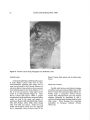
Show BARRIER CANYON STYLE PICTOGRAPHS OF THE COLORADO PLATEAU. Part One: Hypothesis and Evidence for the Existence of Post Circa A.D. 1300 Panels Steven J. Manning, Salt Lake Davis Chapter, Utah Statewide Archaeological Sodety, 791 Nancy Way, North Salt Lake, Utah 84054 ABSTRACT The date most commonly accepted for the creation and temporal span of the Barrier Canyon Style rock art of the Colorado Plateau is the Archaic period (ca. 7500-1500 B.P.) (Schaafsma 1986:225). A hypothesis is developed here that states many of the Barrier Canyon Style panels were constructed in circa A.D. 1300 to 1600. The Barrier Canyon Style may have developed or been introduced onto the Colorado Plateau in the Archaic period, but evidence advanced to date supporting this theorization is based upon conjecture and inference. Evidence for the extension of the Barrier Canyon Style, nearly to the Pueblo Historic Period, was initially indicated by the presence in the panels of elements strongly suggestive of fox pelt pendants. The fox pelt pendant, a characteristic feature of the Kachina Cult of the southwestern Pueblos, has not been found in any archaeological context in the Pueblo area before circa A.D. 1500. It is believed that the Kachina Cult entered the Anasazi culture from the Jornada Mogollon between A.D. 1325 and 1350. The fox pelt pendant, apparently appearing about 150 years later, may have been incorporated into both the Kachina Cult of the Anasazi-Pueblo culture and the existing Barrier Canyon Style at about the same time. This appears plausible because of the proximity (and possible overlap) of the Barrier Canyon Style province with that of the Pueblo TV Anasazi. Evidence to support concurrent acceptance is the absence of any object comparable to the fox pelt pendant in all known rock art in Utah from all time periods except the Barrier Canyon Style. Additional detailed evidence is presented that supports the hypothesis. Included in this evidence is the first reported presence of bows and arrows in the Barrier Canyon Style, an apparent temporal relationship between the Barrier Canyon Style artists, and the early historic Pueblo artists, and parallels of the Barrier Canyon Style with the Kachina Cult. INTRODUCTION The existence of a unique style of prehistoric pictographs, limited in extent to the west central region of the Colorado Plateau, was first hypothesized by Schaafsma (1971). Schaafsma maintained that the style was distinct from that of the Anasazi, Fremont, or Numic inhabitants, and she provided a name for it: "The name Barrier Canyon Style has been chosen as an overall designation for these paintings after the tributary of the Green on which the largest number of the striking panels has been recorded" (1971:68). A brief generalized description of Barrier Canyon Style was presented by Schaafsma, and is quoted here for the convenience of the reader. The dominant motif in the Barrier Canyon Style is the dark, tapering, immobile anthropomorphic form, painted in a dark red pigment. These figures are frequently ghostly in appearance, hovering in rows against a sandstone backdrop within arched alcoves and rock shelters. Isolated compositional groupings, centered on one or two large human forms, flanked by smaller ones or tiny birds and quadrupeds, as well as by zigzags or unidentifiable objects, sometimes occur. In other instances a number of these figures may be painted together as a group or arranged in long lines across the cliff. Large staring eyes, bulging heads, and the absence or near absence of arms and legs serve to emphasize the spectral aspect of these beings. Some border on the fantastic. Headgear may take the form of horns or "antennae" painted in delicate thin lines. Many figures wear a crown of white dots, and occasionally white dot patterns decorate their faces and bodies. Stripes and textilelike decoration are also depicted on the torso, as if robes were intended. Figures with arms may hold snakes or plants, and as UTAH ARCHAEOLOGY 1990 pp. 43-84 44 UTAH ARCHAEOLOGY 1990 mentioned above, zigzags and small naturalistic portrayals of animals may occur at their sides. Some are accompanied by dogs [Schaafsma 1980:61-64]. In the above statement, and others quoted below, Schaafsma mentions only painted figures (pictographs). This is because only pictographs were known when the style was first defined. It was not until recently that extensive panels of Barrier Canyon Style petroglyphs (hammered or pecked) were reported (Manning 1986, 1987). Therefore, both pictographs and petroglyphs panels of Barrier Canyon Style rock art exist. Pictographs appear to be predominant in the Barrier Canyon Style. Both types of panels exhibit a variety of anthropomorphic and other forms. Not all figures, however, fit into these poorly defined categories. Many Barrier Canyon Style figures (as well as Fremont) are both painted and pecked and were constructed utilizing a variety of techniques. An absolute date for the inception and temporal span of the Barrier Canyon Style has not been immutably ascertained, nor has the style been unequivocally ascribed to any culture. There are four reasons for this: First, direct dating methods do not yet exist for the rock art itself. Promising analytical techniques (for example, accelerator mass spectrometry radiocarbon dating [Hedges and Gowlett 1986]) have not yet been attempted in dating the Barrier Canyon Style. Such procedures are destructive because they require removal of pigment and are, therefore, not acceptable under normal conditions. Second, few Barrier Canyon Style sites that contain unique assodations with distinctive or datable artifactual materials have been identified and investigated. Material remains adjacent to most of the few Barrier Canyon Style panels thus far examined, show mixed occupations; i.e., varied combinations of Archaic, Anasazi, and Fremont material (Steward 1941; Gunnerson 1957, 1969; Lucius 1976). Several Barrier Canyon Style sites have been visited by the author where the only surface materials present were lithics and Fremont ceramics. Gunnerson (1969:37) reports the presence of a moccasin fragment from a Barrier Canyon Style site in North Wash (42Ga443-The Moki Queen) that, "resembles Basketmaker II type described by Guernsey (1931:66-68)." The moccasin fragment was located below what was later designated a Barrier Canyon Style panel (Schaafsma 1971:77,128). An aceramic open site (42Sal7092-Salt Pocket Shelter), in close association with a single possible Barrier Canyon Style figure under a small overhang] was recently tested and yielded a date of 1750-150d B.C. (Tipps and Hewitt 1989). The date was obtained from charcoal found in an unlined buried hearth. The figure consists of a red horizontal painted band from which descend thirteen vertical, tapering, red lines about 64 cm long. An indistinct pecked horizontal band 25 cm down from the top was pecked through the paint. No head or other appendages were visible. There are two problems with accepting this date as confirming an Archaic date for the Barrier Canyon Style: One, the figure type resembles the Chihuahuan Polychrome Abstract Style (Schaafsma 1972:61-71, 1980:49-55, see also plate 3) more than it does the Barrier Canyon Style. The Chihuahuan Polychrome Abstract Style is believed to predate the Basketmaker Period (Schaafsma 1980:54), therefore, the associative Archaic date at this site more likely supports this conclusion rather than an Archaic date for the Barrier Canyon Style. Two, as is true for the majority of material culture/rock art! associations, and as was conduded by Tipps and| Hewitt: "Based on limited testing it cannot bel certain whether the site was occupied during more than one time period, nor whether the midden deposit, hearth, artifacts and date are associated with the Barrier Canyon Style pictograph." Data from this site then provides valuable but inconclusive information. Before a firm cultural association for the Barrier Canyon Style can be derived under existing conditions, a statistically significant number of sites need to be located that contain either datable materials or artifact assemblages assignable to a specific culture. This has yet to be accomplished. The greatest difficulty in using assodative dates is the uncertainty that the rock art was constructed by the people responsible for the material remains., This uncertainty is compounded when there are only | a few associative dates, and when these dates conflict. BARRIER CANYON STYLE PICTOGRAPHS 45 Third, a paucity of elements appearing in the Barrier Canyon Style, which would provide information to date the panels, has been reported (Schaafsma 1971). Fourth, superposition, which has the potential of demonstrating that Barrier Canyon Style preceded (or postdated) other cultures, has not yet provided evidence that is irrefutable. This is because of the difficulty in assigning a cultural affiliation and a time period to overlying rock art figures. Superposition of rock art over Barrier Canyon Style is discussed below. PREVIOUS RESEARCH Various ideas have been expressed regarding the age of the Barrier Canyon Style. Most estimates place the creation and temporal span of the style in the Archaic period. Early investigators, however, placed the cultural assodation mainly with the Fremont, or occasionally derivative of, or assodated with the Basketmaker (Morss 1931:39; Malouf 1941; Steward 1941; Gunnerson 1957, 1969:158-159; Taylor 1957; Lister 1959; Grant 1967:117). Schaafsma was the first to propose an Archaic date. She noted: "Because of the heavy emphasis on anthropomorphic representation, very few objects are portrayed in the paintings. It is of considerable interest that the bow and arrow, which is commonly represented in Fremont art, is absent in all recorded examples of the Barrier Canyon Style" (1971:129). Citing this as evidence, Schaafsma concluded that the Barrier Canyon Style predated the introduction of the bow and arrow into southeastern Utah. She referenced the introduction of the bow and arrow as taking place,"... sometime between A.D. 650 to 700", which is in the Basketmaker III period. Also citing parallels to what are believed to be Archaic paintings along the Pecos River in Texas, Schaafsma tentatively concluded that: "The specific similarities between the Barrier Canyon Style and the Western Archaic Pecos River Paintings support the possibility that the Barrier Canyon Style artists were indeed participants in a wide-ranging Western Archaic Period rock art tradition, which was distinct from the Desert Culture rock art of the Great Basin" (Schaafsma 1971:131-135). In a later publication she refined this condusion: "Comparisons of the Barrier Canyon Style with other rock art in the Colorado Plateau suggest that the Barrier Canyon Style falls late in the Archaic sequence. It may have been, in part at least, contemporaneous with the Anasazi Basketmakers to the south and a rough tentative dating between 500 B.C. and A.D. 500 is suggested" (Schaafsma 1980:70). Schaafsma later revised this date for the Barrier Canyon Style extending it back even further: "Estimated dates for this art style fall somewhere between 2000 B.C. and A.D. 1" (1988:2). Schaafsma noted also that, "typological similarities between Barrier Canyon style painted anthropomorphs from the Great Gallery and day figurines found in an early context in a nearby cave (Hull and White 1980:122-125) suggest that much older dates are possible, perhaps as early as 5500 B.C." (Schaafsma 1986:225). Recently Schaafsma (1990) reiterated this position. Schroedl (1989:16-17), also citing the resemblance of the same figurine (found in Cowboy Cave from a layer radiocarbon dated to about 4000 B.C.) to the Barrier Canyon Style, in addition to a growing mass of data showing an extensive Archaic occupation in the Canyonlands National Park region concluded: "Barrier Canyon rock art could be much older than Polly Schaafsma hypothesized. Perhaps it could be the oldest rock art in the Southwest, dating to as early as 6,000 to 8,000 years ago." As is shown above, the result of continuing inquiry has been to inexorably push back in time the date for the Barrier Canyon Style. DEVELOPMENT OF HYPOTHESIS The objective of this paper is to report on the development of a hypothesis that significantly alters the period established for the Barrier Canyon Style. The objective is also to provide additional detailed supportive evidence for the hypothesis. The hypothesis is that many, although not all, of the Barrier Canyon Style panels were constructed in circa A.D. 1300 to 1600 and is, therefore, not restricted to the Archaic and/or Basketmaker period. 46 UTAH ARCHAEOLOGY 1990 This statement does not imply that all Barrier Canyon Style rock art was constructed between circa A.D. 1300 to 1600. Barrier Canyon Style rock art may have originated in the Archaic, but the date of the appearance of the first Barrier Canyon Style figure is unknown. Even the physical appearance of what would be considered the first Barrier Canyon Style figure is unknown. Evidence of a relationship between the Barrier Canyon Style and other Archaic styles of rock art present in Utah has not yet been shown to exist. For example, Glen Canyon Style 5 (Turner 1963), which occurs abundantly in southern and eastern Utah and which Turner (1971) believes to be archaic (dating 2000-6000 B.C.), should exhibit parallels to Barrier Canyon Style if it and the Barrier Canyon Style coexisted in the Archaic period. Additionally, if Barrier Canyon Style had its origins in the late Archaic, Glen Canyon Style 5 could be the precursor of the Barrier Canyon Style. Answers to these questions regarding the origin of the Barrier Canyon Style are unknown. One of the major impediments to arriving at a clear understanding of the Barrier Canyon Style's origin, and what limits an analytical discussion of the Barrier Canyon Style, is the lack of a clear definition of what constitutes the Barrier Canyon Style. There are considerable differences and variations in the rock art being designated by various people as Barrier Canyon Style. A wide variety of anthropomorphic types have been assigned to Barrier Canyon Style affiliation. For example, Morss (1931) distinguished two different types of painted figures in two adjacent panels in eastern-central Utah. Both of these types were later designated by Schaafsma (1971) as Barrier Canyon Style. Explanations for these variations within the Barrier Canyon Style are unknown. They may indicate changes over time or area, different ethnic groups within the same culture, or functional differences. This paper is presented without attempting at this time to remove the obstacles discussed above. (The above subjects are now being researched for later publication; however, be referred to Schaafsma's description at the beginning of this paper.) Additionally, since the purpose of this paper is to present evidence for the extension of Barrier Canyon Style into circa A.D. 1300 to 1600, panels with evidence of earlier affiliation will not be discussed at length here. Limitations of space require that subject to be presented separately. Fox Pelt Pendant in Barrier Canyon Style The first possibility for determining the age of certain Barrier Canyon Style panels was from an object that was discovered in the panels. The pictographs in which this initial discovery was made are located in a side canyon of Barrier Canyon1. The site is designated by Smithsonian number 42Wn369, and is popularly named The Blue-Eyed Princess (Figure 1). This name originated because of an anthropomorph in the panel apparently with blue eyes (Figure lc) (Gary Smith, personal communication 1973, and G. Smith 1976:147). Suspended from the waist of an anthropomorph in the panel is what appears to be a fox pelt pendant (Figure If). The pendant appears in the pictograph as a wide painted stripe that begins at the area just below the waist of the figure. It is painted with the same pigment as the anthropomorph. The pendant continues downward at about a 20 degree angle out from the axis of the anthropomorph's body, and it ends below the anthropomorph's feet. The end of the pendant is divided into three points or elongated triangles. The center point is longer than the two adjacent points, and it curves away from the feet of the figure. I suggest that the long center point represents the tail of a fox, while the two adjacent points represent the feet of the fox. The pendant appears to be attached to the back of the anthropomorph, not to the side, because the anthropomorph's feet are pointing away from the pendant. An important feature (to be discussed below) is that the head and upper torso of the anthropomorph are portrayed in a different perspective from the legs and lower torso. While the lower part of the figure is painted in a profile view, the upper portion is painted in a frontal view. Apparently the Barrier Canyon Style artist(s) who painted this figure was not sufficiently advanced artistically to use correct perspective in drawing the human figure, or the artist purposely chose not to use correct perspective. Two other anthropomorphs in the panel may also have a fox pelt pendant BARRIER CANYON STYLE PICTOGRAPHS 47 f Figure 1. 42Wn369, "The Blue-eyed Princess" panel. 48 UTAH ARCHAEOLOGY 1990 attached, but because of weathering the possible pendants are indistinct. Fox Pelt Pendant at Other Utah Locations Following the initial discovery of what appeared to be a fox pelt pendant at The Blue-Eyed Princess site, other Barrier Canyon Style panels were examined to determine if additional examples of the fox pelt pendant were present. Similar elements were found in pictographs in Barrier Canyon, Ferron Canyon, the San Rafael Reef, Canyonlands National Park, and Buckhorn Wash (Figure 2). This suggests, by association, that many of the Barrier Canyon Style pictograph panels with typological similarities to these panels may be temporally affiliated with the fox pelt pendant. Alternative Explanations for the Fox Pelt Pendant Alternative explanations for the pendant objects illustrated on Barrier Canyon Style anthropomorphs are almost nonexistent. Animal skins represent the main prospect. Animal skins were worn as clothing by most, if not all, prehistoric North American people, but they did not attach, or leave on their clothing, long cumbersome animal tails that touched the ground. Many of the Hopi drawings collected by Fewkes (1903) illustrate" objects of clothing that apparently are animal skins. These have occasional dangling appendages, i.e., portions of the leg and tail skin. However, these objects of apparel appear to be robes. They are illustrated differently from the fox pelt pendants. It is easy to distinguish them. The pendant objects also do not appear to be animal tails alone, because the ends of the pendants are divided into three distinct parts. The fox pelt pendants are such a unique and distinctive feature that it would be difficult to misinterpret then-representation in the rock art. Additionally, other styles of rock art in Utah-for example, those that are identified as Fremont (Morss 1931; Schaafsma 1971; Hurst and Louthan 1979; Castleton 1978, 1979) and Glen Canyon Style 5 (Turner 1963)-have not been found to contain objects resembling in any way fox pelt pendants. Therefore, it appears that objects resembling the fox pelt pendants were not part of normal clothing, if normal clothing was illustrated on the human figures in the panels. A review of the literature encountered no object in the rock art record of the United States, outside of the Southwest, that contains an element resembling the fox pelt pendant (Jackson 1938; Heizer and Baumhoff 1962; Grant 1967, 1983; Hill and Hill 1975; Wellmann 1979; McKera 1983; Keyser and Sundstrom 1984; Faulkner 1986, and others). Therefore, the uniqueness and the clarity of portrayal of the fox pelt pendant allows a rather precise definition. The Fox Pelt Pendant in Pueblo Context The possibility of the presence of fox pelt pendants in Barrier Canyon Style pictographs is significant because the fox pelt pendant is a widely occurring, and often recorded, element in the rituals of the early historic Pueblo Indians of Arizona and New Mexico. It remains in use today. If a temporal relationship between the Barrier Canyon Style artists and the Pueblo people could be established concerning the development and period of use of the fox pelt pendant, the information could assist in determining a general date for the Barrier Canyon Style panels with fox pelts. The following describes the fox pelt pendant in Pueblo context and suggests the existence of a temporal relationship between the Barrier Canyon Style artists and the early historic Pueblo people. This relationship is based upon proximity and the presence of Pueblo IV material remains in Utah. Occurrence The fox pelt pendant, as an article of ceremonial adornment, appears widely in historic Pueblo rites. Its use is well documented by early ethnographers, and others, throughout the southwestern Pueblos, for example: Bourke (1884:37-38), Hopi; Mendelieff (1886:509), Mishongnovi; Dorsey and Voth (1901:42, 44, 45), Oraibi; Voth (1901:89), Oraibi; Hough (1902:6), Hopi; Dorsey and Voth (1902:220), Mishongnovi; Fewkes (1903:103), Hopi; Voth (1903:237,306,345), Oraibi; Voth (1912:65), Oraibi; Bunzel (1932:870, BARRIER CANYON STYLE PICTOGRAPHS 49 a e Figure 2. Barrier Canyon Style pictographs with fox pelt pendants: (a) San Rafael Reef, (b) Ferron Canyon, (c) Barrier Canyon, (d) Buckhorn Wash, and (e) Canyonlands National Park. 50 UTAH ARCHAEOLOGY 1990 908, 920, 924, 936, 976, 1003, 1006-7, 1012, 1016, 1018, 1020-21, 1024, 1028, 1031, 1040-41, 1055-57, 1065, 1070, 1072-76, 1080, 1082), Zuni; White (1932:104, 115), Acoma; Stephen (1936:26, 28, 35, 114,120,167,171,174, 191, 207, 235, 242, 339, 359, 401, 409, 425, 440, 444, 474, 477, 486, 505, 531, 551, 570, 581, 708, 751, 754, 947, 974, 986, 990), Hopi; Keech (1937a, 1937b), Santa Clara; Parsons (1939:647, 648, 652, 666, 679, 682, 732, 773, 844, 851), Taos, Jemez, Walpi, Acoma, Zuni, and Shipaulovi; Roediger (1941:69, 136, 139, 182, 195, 200,207, 213,219, 220, 223,224), Hopi, Zuni, Tewa; Titiev (1944:157, 166, 236), Oraibi. (These references are being cited to this extent for the convenience of the reader, since indexes are absent in many of the references.) Description Early writers observed that the fox pelt pendant was assodated almost exclusively with kachina costumes, and that it was a primary characteristic of that ceremonial attire (Bunzel 1932:870; Parsons 1939:732; Roediger 1941:136). Virginia Roediger described the fox pelt pendant and its use in kachina ceremonies: Thomas E. Mails observed: A fox skin with the hair left on hangs at the performers back and extends from the tops of the kilt to within a few inches of the ground. This is the katchina emblem, and it completes the standard katchina outfit. The tip of the fox head is either tucked under a roll of the kilt or tied to the kilt, and the body and tail hangs straight down. Usually, the skin is not decorated, but I have seen a few specimens that had the animal's four paws wrapped and decorated with yarn and special appendages (Mails 1983:110). The animal whose pelt is used for the pendant is referred to throughout most of the literature as a fox. There are, however, a few references to the pelt as a "coyote-skin" and "wolf-skin" (Mendelieff 1886:509), and "coyote or fox skin" (Bourke 1884:160). Stephen indicates that the Hopi used both gray and yellow fox skins. For example: "Just at the small of the back, the head end of the skin of a gray fox (called pukya'ha'iini) is thrust in between kilt and girdle, the tail of the fox dangling back of the legs" (1936:401), and "Yellow fox (sikya'taiyo) hanging behind also" (1936:339). These references indicate the variability in the animal skins used. Roediger's description of the fox with "gray hair intermingled with amber" accurately describes the animal most commonly referenced. A noticeable feature of many of the costumes is the pendant fox skin, worn tail downward at the back of the belt (pis. 24, 35). This particular fox, formerly indigenous to the mountainous country of the Pueblos, is a small animal with gray hair intermingled with amber. It was hunted during the season of the year when the hair was long and thick and the hide tough. When killed, the body of the animal was skinned very carefully and all the parts were retained: the paws remained on the legs, and the ears were kept on the full head covering. For several days previous to each occasion on which they are worn, the pelts are buried in damp sand in order to bring suppleness to the skin and a soft, live quality to the fur. In most of the ceremonies the men dancers wear foxskins (Roediger 1941:136-137). Ruth Bunzel noted: A striking feature of the katchina costume is the fox skin, suspended by its head from the back of the belt. This is worn by practically all the dancing katchinas and many others. It is considered as a relic of the earliest days of man, for the katchinas were transformed while mankind was still tailed and horned (Bunzel 1932:870). Distribution and Proximity The use of the fox pelt pendant appears limited in extent to the Colorado Plateau (with two known exceptions: Merriam [1962:35] and Bowen [1983:236],2 both of which are within the realm of Pueblo influence [Dockstader 1985:4-6]). In the Southern Colorado Plateau fox pelt pendants appear to occur abundantly only in Pueblo kachina ceremonial context. In the northern Colorado Plateau fox pelt pendants have been found only in Barrier Canyon Style panels. This suggests that they may be temporally related (and perhaps also functionally related). Since both kachina ceremonies and the Barrier Canyon Style are in the same geographic province, and are in proximity to each other (and may even overlap), ideas and concepts could easily have been simultaneously shared or, at the very least, influence could spread from one to the other within a very short time. BARRIER CANYON STYLE PICTOGRAPHS 51 The distribution of the Barrier Canyon Style and the speed at which Hopi people could travel are important points to consider in the diffusion of the fox pelt pendant. Barrier Canyon Style rock art has a greater distribution than as first defined by Schaafsma (1971:65-68,128). Barrier Canyon Style rock art has been discovered in many locations in northern Arizona (Allen 1984,1986,1988; Manning 1985b; Schaafsma 1988, the Grand Canyon) and one location in northwestern New Mexico (Manning 1984:12, Chaco Canyon) (Figure 3). Additional sites are continually being found that expand the distribution of the Barrier Canyon Style. Thus the province of the Barrier Canyon Style and that of the Puebloan fox pelt pendant border on each other. Barrier Canyon Style rock art may exist within the boundaries of the historic Pueblos and the Kachina Cult. Information on the presence of Barrier Canyon Style rock art from this area is not available. Reliable statements, therefore, about the presence or absence of Barrier Canyon Style in these areas cannot be made at present. However, Barrier Canyon Style rock art occurs approximately 160 miles away from the Hopi mesas-traveling north, northwest or northeast. The time required for an individual, or a small group, to travel from the Hopi mesas, for example, to the nearest Barrier Canyon Style site is a lot less than might be expected. Long distance running is an integral part of Hopi life, and apparently always has been. Mails observed: Males are trained for this from childhood, and they often run for miles across the boiling desert without resting. Many of the fields are long distances from the villages, and although pickup trucks are in vogue, some farmers still make the round trip there and back on foot in a single day. In former times a sixty year old citizen of Oraibi had a corn field forty miles away. During the planting and growing season he camped at the field, and whenever he made the journey home for supplies he ran the entire distance, going both ways in less than twenty-four hours. George Wharton James on several occasions engaged a young man to take a message from old Oraibi to Keams Canyon, a distance of seventy-two miles. The youth ran all the way, delivered the message, and brought back the message within thirty-six hours. One old Oraibi man of James's acquaintance ran over ninety miles in one day (James 1919:90-91). Fred Volz, a trader at Canyon Diablo and Oraibi, once hired a number of the best Hopi runners to round up wild horses for him. They gathered in not only the horses, but also deer and antelope (Mails 1983:16). Barrier Canyon is about 175 miles due north of the Hopi mesas. If people traveled at rates like those above, they could be in Barrier Canyon itself in only three or four days. Even walking, a person could travel to Barrier Canyon in little over a week. Thus, the Barrier Canyon Style and the Kachina Cult of the Pueblos are not far apart in distance. Therefore, the concept and use of the fox pelt pendant could easily have been shared between the people or cultures in these two areas. This discussion is not meant to imply that the Pueblo people themselves constructed the Barrier Canyon Style rock art, only that the physical distance separating the two is minimal. (Physical evidence for the presence of late Pueblo people in the Barrier Canyon Style area is discussed below.) Date for Development of Fox Pelt Pendant If the date of the development or incorporation of the fox pelt pendant among the people of the Colorado Plateau could be ascertained, the information could form the basis for determining a "no-earlier-than" date for the construction of the Barrier Canyon Style panels with fox pelt pendants. The date of the introduction of the elements here interpreted as the fox pelt pendant into the Barrier Canyon Style area of the northern Colorado Plateau is unfortunately unknown. Since it is plausible that the fox pelt pendant could have been adopted at nearly the same time by both the Barrier Canyon Style people and the Pueblo culture, considering the proximity of the Barrier Canyon Style to that of the Pueblo Kachina Cult as discussed above, a determination of when the fox pelt pendant first appeared in kachina ceremonies may provide evidence for when the fox pelt pendant first appeared in Barrier Canyon Style pictographs. Unfortunately, the date for the first appearance of the fox pelt pendant in kachina ceremonies also has not been determined. There is, however, information available that suggests an approximate date. The inception of the Kachina Cult into Anasazi religious ceremonials is suggested by Schaafsma and Schaafsma (1974) to have taken place between A.D. 1325 and 1350, (This date is without archaeological substantiation.) Since the fox pelt pendant is characteristic of the 52 UTAH ARCHAEOLOGY 1990 Figure 3. Distribution of Barrier Canyon Style rock art. BARRIER CANYON STYLE PICTOGRAPHS 53 Kachina Cult, and if Schaafsma and Schaafsma's deduction is correct, its use would be expected to correspond to the introduction of the Kachina Cult, and thus be introduced at A.D. 1325 to 1350. However, the introduction of the fox pelt pendant into kachina ceremonial attire appears to have taken place, not at the cult's beginning, but during the efflorescence of these religious rites. Fox pelt pendants have not been reported as appearing in Pueblo IV kiva wall murals where kachina ceremonies are depicted. They do not appear in Awatovi murals that are dated by dendrochronology to circa A.D. 1300 to 1498 (W. Smith 1971:601) with final destruction at A.D. 1700 (Montgomery et al. 1949:20-24), Pottery Mound murals (Hibben 1975) dated circa A.D. 1300 to 1450 (W. Smith 1952:xii), nor Kuaua murals dated "between the late fourteenth and early sixteenth centuries" (Dutton 1963:22-25). Furthermore, no examples of fox pelt pendants appear on earlier elaborately decorated Sikyatki pottery (Fewkes 1919) nor on Mimbres pottery (found farther south) dated A.D. 1100 to 1200 (Brody 1977). Dockstader suggested an explanation for the paucity of kachina figures on ceramics: "There may have been a tabu against the decoration of utilitarian objects with religious figures" (1985:39). However, the difficulty of classifying ceramics as non-utilitarian and figures as religious or non-religious makes this statement difficult to substantiate. From the above information it appears that the fox pelt pendant did not become a part of the Pueblo religious ceremonies, at least in the areas where these sites and pottery occur, until sometime after circa A.D. 1500. A statement made by Fewkes in 1895 supports both of the above observations. He stated in describing the Kokop, or Firewood people: They were late arrivals in Tusayan, coming at least after the Flute people, and probably before the Houani or Badger people, who brought, I believe the Katchina Cult. Although we cannot definitely assert that this cultus was unknown at Sikyatki, it is significant that in the ruins no ornamental vessel was found with a figure of a katchina mask, although these figures occur on modern bowls (Fewkes 1898:633). Additional evidence for the incorporation of the fox pelt pendant into kachina ceremonies following the Pueblo IV period is found in the difference between Ololowishka (Ololowishkya or O'lolowicka) in his appearance in kiva wall murals at Kuaua (dated A.D. 1300-1500) (Dutton 1963:165-168) and his appearance at Zuni as recorded by Bunzel (1932). A conspicuous addition was a fox pelt pendant. Bunzel observed that elements of the costume consisted of, "white skirt, embroidered kilt, sash, red belt, fox skin" (1932:1007, also plate 33d). Although the above information does not provide an exact date, it does suggest a time frame for the introduction of the fox pelt pendant into the Kachina Cult; and, therefore, by extension, into Barrier Canyon Style pictographs. Based upon this information, a general date for the appearance of the fox pelt pendant on the Colorado Plateau is post A.D. 1500. This information suggests that Barrier Canyon Style pictographs with fox pelt pendants were painted after circa A. D. 1500. Location of Origin The location of the origin of the fox pelt pendant is also, unfortunately, unknown. If the source of the fox pelt pendant could be ascertained, the information would be applicable to further refining the date for the Barrier Canyon Style. As indicated above, Schaafsma and Schaafsma have proposed that the influence of the Kachina Cult diffused from south to north: "Recent rock art surveys in Arizona and New Mexico have led us to propose that many modern Pueblo religious concepts and ceremonial institutions, including the Katchina Cult, either entered the Anasazi world directly from the Jornada Mogollon (Lehmer 1948; Marshall 1973) between A.D. 1325 and 1350, or were rapidly developed in response to the new ceremonial concepts from this direction" (Schaafsma and Schaafsma) 1974:535). If this proposal is correct, and the fox pelt pendant was part of a Mogollon Kachina Cult, or was developed by the late Anasazi in response to Mogollon ceremonial concepts, then the incorporation of the fox pelt pendant into the Barrier Canyon Style pictographs would likely be later than its acceptance into the Anasazi-Pueblo Kachina Cult; since the fox pelt pendant concept most likely would have to travel through the Pueblo 54 UTAH ARCHAEOLOGY 1990 area to reach the Barrier Canyon Style artists. However, if the fox pelt pendant originated with the Barrier Canyon Style artists (in response to new ceremonial concepts?), then the presence of the fox pelt pendant in Barrier Canyon Style rock art would predate its acceptance into the Kachina Cult. There is at present no evidence to suggest that the fox pelt pendant did not occur first in the Barrier Canyon Style area. In response to these limitations the exact date for the appearance of the fox pelt pendant on the Colorado Plateau cannot be ascertained with absolute certainty. It is likely that the time required for the diffusion of the fox pelt pendant, in either direction, could not be great because of the proximity of the historic Pueblos to the Barrier Canyon Style area. Therefore, the date for the beginning or occurrence of the fox pelt pendant is broadened to between A.D. 1300 to 1600. SUPPORTIVE EVIDENCE The above information provided initial evidence sufficient to formulate the hypothesis. There is also additional information that contributes significantly to the substantiation of the hypothesis. The remainder of this paper will cover this additional evidence. The Fox Pelt Pendant in Pueblo Rock Art Since Pueblo rituals contain fox pelt pendants, and since much rock art is believed to be ritualistic, it should follow that Pueblo rock art should contain evidence of fox pelt pendants. If the Barrier Canyon Style is related temporally to the Pueblo IV-early Pueblo V people, it should also follow that there would exist parallels of illustration and use of the fox pelt pendant in pueblo rock art. This is found to be the circumstance. Hopi and Zuni petroglyphs and early historic paintings contain examples of fox pelt pendants, and parallels of illustration and use with the Barrier Canyon Style exist. A detailed discussion of one example is presented below. A fox pelt pendant is illustrated in what appears to be an early historic petroglyph on Second Mesa in northeastern Arizona near the center of the present Hopi Tribal Lands (Figure 4). The panel contains an anthropomorph with a small animal positioned vertically below its waist. The animal is in the likeness of a coyote, a dog, or a fox. Its snout is just touching the anthropomorph's waist. The animal appears to be attached to, or hanging from, the anthropomorph's side because of the frontal view of the upper torso. However, the animal (which will here be called a fox, since that is most likely correct) is attached to the back of the anthropomorph. This is apparent because of the appearance of the anthropomorph's feet. They are drawn in a profile view, and are pointing away from the fox pelt pendant. Schaafsma noted that the petroglyph on Second Mesa, "closely resembles the Hopi drawing of Tcakwaina, a warrior being, which is illustrated in Fewkes (1903:Plate IV)" and is, "probably rather recent" (Schaafsma 1980:293). This age estimate appears accurate because of the slight amount of patination on the petroglyph. The panel appears to have been constructed 100 to 300 years ago. Additional evidence for the construction of the petroglyph in early historic times is that the fox pelt pendant on the anthropomorph is depicted similarly to a fox pelt pendant in a Hopi painting from Fewkes's 1903 collection (1903:Plate XLI). This 1903 painting is a representation of the Tcub (Antelope) Kachina. The fox pelt pendant on the Tcub Kachina, like the Tcakwaina petroglyph (called that here for convenience), is positioned so the nose of the fox just touches the waist of the kachina. Ears also appear to be illustrated. The painting thus shows that an apparently unique, but limited method of illustrating the fox pelt pendant existed in the late 1800s on the Hopi mesas. A single person could easily have made both figures. The significance of the Tcakwaina petroglyph is that it demonstrates that the lower portion of the fox pelt pendant (i.e., the legs and tail) on a Pueblo (Hopi) petroglyph is depicted identically to the fox pelt pendants on the Barrier Canyon Style pictographs. This equivalence also provides evidence that the element in the Barrier Canyon Style pictograph panel is a fox pelt pendant. BARRIER CANYON STYLE PICTOGRAPHS 55 Figure 4. Teakwaina kachina, Second Mesa. Harvard University. (Drawn from a photograph, Scott Files, Peabody Museum, Additionally, the Tcakwaina petroglyph is shown holding a bow and an arrow. This indicates that the use of the bow and arrow existed concurrently with the fox pelt pendant. (The association of bows and arrows with the Barrier Canyon Style is discussed below.) One obvious difference is apparent between the Hopi petroglyph and the Barrier Canyon Style anthropomorphs. This is the additional detail shown in the Hopi petroglyph. The upper portion of the fox pelt in the Hopi petroglyph shows the front legs and ears while the Barrier Canyon Style pictographs do not. The additional detail shown in the rest of the Tcakwaina anthropomorph corresponds to the additional detail in the fox pelt on the petroglyphs. The characteristic of detail in illustration is representative of all the Hopi figures in Fewkes's collection. It is not surprising, therefore, that the fox pelt in the Hopi petroglyph is shown in more detail than on the Barrier Canyon Style anthropomorphs, even though the artists appear to be representing the same object. While the fox pelt pendant on the Hopi petroglyph in the example above was depicted by showing details of the whole pelt, the most common method of illustrating the fox pelt pendant in the Hopi paintings is to portray only the tail and the two rear legs. Of the twenty-five paintings of kachinas collected by Fewkes that have a fox pelt pendant shown, twenty-three were drawn showing 56 UTAH ARCHAEOLOGY 1990 only the tail and two rear legs. The Barrier Canyon Style artists illustrated the fox pelt pendant on their anthropomorphs in this same manner, i.e., they did not show the ears and front legs-at least none have been discovered so far. In addition to the fox pelt pendant being positioned (at the waist and side) and terminated identically (in three elongated triangles) on both the anthropomorphs of the Barrier Canyon Style painting and the Hopi petroglyph, the feet of the anthropomorphs in both examples are also depicted identically. The feet are painted in a profile view and they point away from the fox pelt pendant. Additionally, both artists combined a full frontal view of the upper torso and head of the anthropomorph, with a profile view from the waist down to the feet. Both anthropomorphs then are portrayed analogously. The equivalent method of portrayal of the anthropomorphs by both artists, in addition to the presence of the fox pelt pendants, presents further evidence for a sharing of traditions between the Barrier Canyon Style artists and the Pueblo (Hopi) Culture. (Again, this could occur either through a contemporaneous association or a common origin.) Geographic Context The very position and nature of many of the Barrier Canyon Style panels suggest they are of recent origin. All the Barrier Canyon Style panels exist in exposed positions on cliff faces or on walls of rapidly eroding rockshelters or shallow caves. None have been found in deep stable caves that parallel the Paleolithic paintings in Europe. Since most examples of this style are paintings, the erosive properties of sand, wind and rain would rapidly erase fragile paint in exposed locations. They would weather many times more rapidly than petroglyphs. That these pictographs appear as distinct as they do in some of their exposed locations suggests that they are of recent origin. Additionally, rock art on rockshelter walls may disintegrate rapidly because of the continued processes of formation of the rockshelter. Rockshelters or shallow caves in sandstone exist most often because the material that previously filled the rockshelter disintegrated at a faster rate than the material surrounding it. This is primarily due either to a weakness in the material that formed the rockshelter or to the presence of excess moisture, which, as it freezes at or just below the surface, expands and breaks off small fragments of the rock. In these instances the pictographs are lost when the rock surface containing the pigment flakes off or exfoliates. The rate of formation of these rockshelters may be constant over long periods, following, of course, climatic conditions. If the rate of deterioration of the surfaces containing Barrier Canyon Style figures could be determined, the information would provide data on the age of the panels. This has not been studied. However, rapid deterioration of several of these pictograph panels has been observed to have taken place since their discovery and documentation. If this deterioration has been occurring at a constant rate since the figures were constructed, then then-considerable antiquity is seriously in question. Unfortunately, not many Barrier Canyon Style sites were known 40, 50, or more years ago. Thus photographs and documentation of unvandalized sites that could be used in a comparative way to determine rates of natural deterioration are nonexistent. However, there are many general observations that demonstrate that rapid rates of natural deterioration have occurred historically. Seven examples should suffice. 1. A zoomorphic figure, at a well protected Barrier Canyon Style site in North Wash, shows historically observed deterioration. The site is on the back wall of a large deep rockshelter or alcove. The panel is about 4 m above the ground, and thus well protected from casual abrasion and vandalism. The site, called The Moki Queen, was first reported and photographed in 1932 by Julian H. Steward (Steward 1941:Plate 128A). Although faded in comparison with the rest of the figure, four legs, ears and a muzzle could still be seen in his photograph. In 1979 no evidence remained of these features. Dr. Castleton describing the site said: "The other figure, also painted in red, has an oval body with a head and tail. It has been referred to as a dog, bird or six legged duck, despite the fact that no legs are visible!" (Castleton 1979:136, Figure 4.1). BARRIER CANYON STYLE PICTOGRAPHS 57 2. The diminutive figures in a small and detailed painting in Horse Canyon have weathered so badly since E. J. Bird first copied them forty-nine years ago that they are now almost gone. The figures are at a panel called the Bird Site or Harvest Scene (Schaafsma 1971:Figure 77). Bird recorded them while working as an artist with the Utah Art Project (see below). The site is at the base of a high inward sloping cliff face formed by erosion and exfoliation. 3. Two anthropomorphs near the center of the panel called The Great Gallery in Barrier Canyon appear to have weathered extensively in the last fifty years. A comparison is possible because The Great Gallery (42Wn418) was accurately reproduced in 1940 by the Utah Art Project of the Work Projects Administration (WPA). Great effort was expended to accurately portray the figures (E. J. Bird, personal communication 1979; Anderson 1978). The painting is now on display at the University of Utah's Museum of Natural History. The two anthropomorphs on the cliff face that were faint when they were painted, are now so much more faded that they are almost indiscernible. This suggests rapid erosion. Several adjacent figures do not appear to have changed much in this interval. This is perhaps because the paint on the adjacent figures is thick enough that even weathering of 0.25 mm (for example) of the pigment would be difficult to distinguish in a photograph. Weathering of the thinner painted figures would, however, be easy to observe because removal of the same amount of paint-0.25 mm-would nearly destroy them. Pearl Baker, who grew up near Horseshoe Canyon and visited the site many times since her youth, provides additional information on the deterioration of the panel. She commented about The Great Gallery: "It seems to me that the figures are not as bright as they were forty or fifty years ago" (Baker 1976:152). 4. Comparison of photographs taken in 1968 by the author at Thompson Wash (a site located on a cliff face) with those taken in 1989, and a re-examination of the panel, show a general fading of the pictographs. This could be due to weathering over this 21 year interval. 5. A large Barrier Canyon Pictograph panel in a shallow rockshelter near the San Rafael River has been almost destroyed-just in the last 40 years. It has suffered extensive exfoliation. An individual from Castle Dale, Utah, whom I met while at the panel, saw the panel about 40 years ago when it was intact. At that time the panel was composed of three large animals, like dogs, with 20 to 30 human figures in two rows above the animals. Today almost nothing remains. He also said that once when he was passing the panel, he saw a large piece leaning out from the cliff just ready to fall. Sitting in the saddle of his horse, he rescued the piece of the panel and took it home with him to save it from destruction. Without his efforts, this piece of the panel would have shattered to small pieces when it fell from the back wall of the overhang. (If anyone observes a similar situation existing on public land today, they should report it immediately to the land managing agency.) 6. A previously extensive panel of Barrier Canyon Style pictographs in a shallow rockshelter near Green River, Utah, has suffered a similar fate as those above (Figure 5). An informant from Price, Utah, who provided directions to the panel, first discovered the remote site about 25 years ago. At that time the panel was almost complete. The elaborately painted figures have slowly been destroyed as the rock, on which the figures were painted, unremittingly exfoliated in small fragments. Today only a few small scattered remnants remain. 7. Sally Cole illustrates damage that has occurred to a panel of Barrier Canyon Style pictographs in the White River drainage in northwestern Colorado (Cole 1990:5, plates 3 and 4). The deterioration of the panel is shown by a photograph taken before 1987 and one taken after 1987. The latter photograph shows that three figures at the eastern end of 58 UTAH ARCHAEOLOGY 1990 Figure 5. Spalling Barrier Canyon Style pictograph in rockshelter near Green River, Utah. the panel have been almost completely obliterated. Other adjacent figures have suffered moderate erosion. Cole (1990:199) also indicates that similar deterioration occurred at another panel in northwestern Colorado (between 1976 and 1986), which "may represent art of Fremont people remaining in the area after A.D. 1250-1300." She indicates "that the paintings could not have survived more than a few centuries," yet Cole does not derive this same conclusion regarding the Barrier Canyon Style panel that is also undergoing comparatively rapid deterioration. These seven examples of historically observed natural deterioration-in roughly the last 50 years-show that these Barrier Canyon Style pictographs have, and are, rapidly undergoing various forms of degeneration. The examples also suggest that natural deterioration is occurring under different environmental conditions. The apparent rate of deterioration and the appearance of these Barrier Canyon Style Pictograph panels today suggests that they were painted in the very recent past. It is unlikely that they could have survived 6,000 to 8,000 years of the same rate of deterioration. Additionally, no evidence exists to suggest that these sites are being rapidly impacted by certain modern environmental conditions such as acid rain, auto exhaust, etc. Only two of the sites discussed above are near paved roads, and all but one are in sheltered areas protected from the impacts of potentially acid rainwater. Also, many of the Barrier Canyon Style pictographs are in remote, infrequently visited, wilderness locations. Of course, like other rock art panels from a variety of other cultures and periods (for example, Fremont and BARRIER CANYON STYLE PICTOGRAPHS 59 Ute), there are Barrier Canyon Style pictograph panels that appear as if they were painted within the last few years. These panels are in well protected locations that are not subject to rapid deterioration. Fox Pelt Pendant Incorporation into Barrier Canyon Style There are also Barrier Canyon Style panels that do not contain fox pelt pendants as anthropomorphic attire. This may be attributable to differences in subject matter. However, another possible explanation for this omission in some panels is that the same situation existed among the Barrier Canyon Style artists as existed with the Anasazi-Pueblo in regard to their utilization of the fox pelt pendant. The ceremonies involving the Barrier Canyon Style may have already been established before the incorporation of the fox pelt pendant. (This idea does not conflict with the hypothesis.) Substantiating the suggestion that the fox pelt pendant was incorporated into Barrier Canyon Style rock art painted after A.D. 1300 is the observation that there appears to be a distinct difference between Barrier Canyon Style pictograph panels where fox pelt pendants are illustrated and those where they are not. The difference appears to be that at sites where fox pelt pendants occur there is also the abundant use of white paint. The white paint is used as a main feature of adornment. It occurs principally as rows of dots on the head and torso of anthropomorphs. At panels where the fox pelt pendant is absent, white paint is usually absent. Further evidence suggesting that a time difference is associated with the use of white paint is found in Canyonlands National Park. Under a deep overhang, white Barrier Canyon Style figures are superimposed over faded, weathered-appearing, red Barrier Canyon Style anthropomorphs (Owen Severance, personal communication 1984) (Figure 6). The white figures superimposed over the plain red figures appear to be evidence of changes in the Barrier Canyon Style over time. White paint, principally in the form of rows and columns of dots, handprints, wavy lines, and occasionally anthropomorphic figures painted completely in white paint, occur at nearly every Pueblo II-III site with masonry structures in the Canyonlands area. In most instances white paint appears to have been used exclusively. In conjunction with this observation it appears that one specific figure-white painted handprints-exist at nearly all Pueblo II-III structural sites in and around the Canyonlands National Park area. (No statistics have yet been compiled to indicate the actual percentage of structural sites with these features.) The above evidence suggests that the abundant use of white paint occurred in this area during the Pueblo II-III period. Therefore, the Barrier Canyon Style artists may have been present during the Pueblo II-III period where they also began to use white paint extensively. Following this incorporation they then may have painted some figures exclusively in white paint, as the completely white Barrier Canyon Style figures suggest. Another Barrier Canyon Style Panel in white paint is present a few miles east of Canyonlands National Park. These white painted figures suggest the possibility of using the presence and non-presence of white paint as a broad temporal indicator for later Barrier Canyon Style rock art, and even more likely for Pueblo II/III petroglyphs. Additionally, if this difference could be substantiated, then there is a possibility that Barrier Canyon Style could be divided into two separate styles or sub-styles. Statistical compilations of the occurrence of white paint and fox pelt pendants, along with investigating possible stylistic differences associated with the use of white paint, needs further study before any firm conclusions can be reached. Barrier Canyon Style as Pictographs Perhaps another indication of a late date for many of the Barrier Canyon Style panels is the observation that they are almost exclusively elaborate paintings (pictographs). Very few are hammered or cut into the rock surface (petroglyphs). A gradual change in the nature of Pueblo graphic arts, which appears to have taken place in the Pueblo III through IV periods, may account for this general difference. The development of the kiva wall paintings is proposed to be responsible for this change. The first kiva wall paintings appear to develop at approximately 60 UTAH ARCHAEOLOGY 1990 Figure 6. White Barrier Canyon Style pictographs superimposing faded Red Barrier Canyon Style pictographs. A.D. 1000-in the Pueblo II period (A.D. 800 to 1100). Four early kiva wall painting sites with accurate dates in this period are: (1) Alkali Ridge, Utah (Brew 1946), (2) Near Cortez, Colorado (Prudden 1914), (3) Mancos Canyon, Colorado (Jackson 1875), and (4) Chaco Canyon, New Mexico (Ingersoll 1877). It is perhaps significant to note, in view of the above discussion concerning white paint, that most early kiva wall paintings are done in white paint. Kiva wall paintings gradually grew in complexity as they spread throughout the Pueblo region. They appear to culminate in the artistic, intricate, and beautiful paintings of circa A.D. 1300-1600 such as those located at Pottery Mound, Awatovi, Kuaua, and Kawaika-a. The introduction and efflorescence of kiva wall paintings appears to have led to the development of greatly improved painting techniques: fine detailed lines, great complexity, pigments of many different colors, etc. These techniques exist at later kiva wall painting sites but not at earlier sites. Some Barrier Canyon Style pictographs exhibit these same characteristics. The same colors are also used; i.e., reds, oranges, greens, purples, whites. As kiva wall painting became an accepted and established practice in the Pueblo areas, the concepts and technology may have spread to the Barrier Canyon Style artists. They then could have shifted almost completely from pecking, incising, and chiseling to painting. Additional evidence for this change is the apparent lack of intricacy and ornateness in the petroglyphs of the Pueblo III/IV period when compared to earlier petroglyphs. It appears that the ceremonially related artistic BARRIER CANYON STYLE PICTOGRAPHS 61 endeavors of the people became redirected, presumably from rock art to kiva art, as the kiva evolved into a ceremonial center. Kiva wall painting was at its peak in the 1400s through the 1600s when it is theorized that the Barrier Canyon Style pictograph panels with fox pelt pendants would have been painted. Thus, there may have been a parallel development in artistic techniques among the Barrier Canyon Style and Pueblo kiva art or a major influence from the Pueblo, indicating some relationship between the two groups. Superposition The principles of stratigraphy also apply to rock art. Superposition is a primary indicator of the relative age of rock art styles and types. When figures are constructed over the top of others, it indicates that the last ones added are the most recent. There is, however, a significant limitation to the amount of information obtainable from superposition. Lacking direct dating methods and patination differences (for petroglyphs), it is not possible to determine a time span between construction periods. The superimposed figures could have been added the next day or hundreds of years later. Barrier Canyon artists appear to have been selective in the placement of their panels. This may be attributable to their perceived sacred ceremonial nature. No Barrier Canyon Style sites have yet been reported where the style is superimposed over other styles. There are, however, at least three instances where the Barrier Canyon Style appears superimposed over itself. One site (in Canyonlands National Park) was discussed previously. Superpositioning of later rock art over Barrier Canyon Style, although not rare, is infrequent. Superpositioning seems to appear only along prehistorically well-traveled routes where the presence of other styles and ages of rock art occur in abundance. The literature contains three examples. A brief discussion of each of these follows. (Others exist, but an analysis of them has not yet been completed. A detailed discussion of superposition of the Barrier Canyon Style will be published in a following part of this series.) Site 1: Temple Mountain Wash, 42Em65. Here a, "large broad shouldered figure . . . believed to be of Fremont origin . . . is superimposed over a bug-eyed Barrier Canyon Style anthropomorph" (Schaafsma 1971:73). The cultural affiliation assigned by Schaafsma to the large figure (an anthropomorph) appears incorrect. More likely, it is also Barrier Canyon Style. Its shape is the same as other Barrier Canyon Style anthropomorphs found in Barrier Canyon, and so is its scale. (For comparison to Barrier Canyon Style figure shape see Schaafsma 1971:75.) Additional evidence that the later figure is Barrier Canyon Style is that no other painted Fremont anthropomorphs of this size have ever been found. Thus evidence suggests that Fremont artists did not paint extremely large figures (unless the Barrier Canyon Style is Fremont). Therefore, the superposition of Fremont over Barrier Canyon Style is at least a debatable conclusion. Sites 2 and 3: "At Moab and Thompson carved Fremont type quadrupeds overlay Barrier Canyon Style figures" (Schaafsma 1971:130). Quadrupeds in these instances are Mountain sheep. Mountain Sheep like these have not been shown to be assignable to a specific culture. The quadrupeds referred to also appear in Ute rock art. Panels of Ute rock art that also depict horses and shields (some of the horses have riders) occur next to the panel in Thompson and in the same drainage as the panel at Moab. Two large white painted shield designs are superimposed over the panel of Barrier Canyon Style pictographs at the Moab panel (Grant 1983, Figure 98) and are possibly Ute. Also bison, a principal indicator of Ute rock art, appear in the panels at both sites. Therefore, it is possible that late Ute rock art, not Fremont rock art, superimpose the Barrier Canyon Style figures at these two locations. A similar situation exists at an archaeological site in Westwater Canyon near Grand Junction, Colorado (Castleton 1978:174). A rock art panel here is said to prove that Fremont rock art is superimposed over Barrier Canyon Style. However, a close examination shows that the overlying panel consists of two petroglyphs, both quadrupeds that appear to be horses. One seems to have a rider. The mounted figure is superimposed over a Barrier 62 UTAH ARCHAEOLOGY 1990 Canyon Style anthropomorph. A bison and two anthropomorphs are part of the panel and exhibit the same degree of patination and similar percussion marks as the other figures. The petroglyph panel with the horse, rider and bison could have been placed over the Barrier Canyon Style figures as late as the 1800s. Therefore, like the other panels discussed above, superposition of Fremont rock art over Barrier Canyon Style pictographs at this site is seriously questioned. Additional evidence that some of the Barrier Canyon Style panels are post circa A.D. 1300 is the observation that in no instance where fox pelt pendants occur in Barrier Canyon Style rock art is there any evidence of superposition of that panel. Therefore, these panels could have been painted late enough in time that there was little opportunity for the early historic Indians to superimpose their rock art over them before European acculturation occurred. Fox Pelt Pendant Absent in Archaic and Fremont Rock Art The occurrence of the fox pelt pendant in the northern Colorado Plateau appears to be unique to Barrier Canyon Style pictographs and rock art of the Hopi. The fox pelt pendant has not been found in the most common and well defined Archaic period rock art, e.g., Glen Canyon Style 5 (2000 to 6000 B.C. [Turner 1971] and which apparently continued through to the Basketmaker period), or in what has been identified as rock art of the Fremont (circa A.D. 500 to 1300 [Marwitt 1970; Jennings 1978; Lindsay 1986]). If the Barrier Canyon Style with the fox pelt pendant came into existence in the Archaic period, it would be expected that the fox pelt pendant would appear in Archaic rock art. Likewise, if the Barrier Canyon Style with the fox pelt pendant came into existence in the Fremont period it would be expected that the fox pelt pendant would appear in what has been defined as Fremont rock art. Also the fox pelt pendant might be expected to occur in Fremont rock art since the Fremont appear to have descended from the late Archaic (Jennings 1966). However, the fox pelt pendant is absent in all known panels of both Glen Canyon Style 5 rock art and Fremont rock art. Therefore, it appears that the fox pelt pendant's introduction came after the demise of both the Archaic and the Fremont Cultures, or post circa A.D. 1300. Parallels Between Barrier Canyon Style and Anasazi Pueblo IV-V So numerous are the parallels between the Barrier Canyon Style and cultural evidences from both the Anasazi Pueblo IV and early Pueblo V periods, reported as occurring only in Arizona and New Mexico, that the people responsible for the rock art in these two areas appear in direct communication-and thus are related in time. Some specific comparative examples are: A. A symbol appearing to represent a rain cloud appears in Barrier Canyon Style panels. Figures appearing to be rain clouds are found in Barrier Canyon (Figure 7) (from author's photo, 1972; Smith and Long 1980:101), in the Maze district of Canyonlands National Park (Lucius 1976), and in panels around Moab, Utah (Figure 8). The rain doud symbol appears to have been in common use early in the historic period throughout the Southern Colorado Plateau Pueblos (Mallery 1893). It also appears commonly in late prehistoric kiva wall paintings (W. Smith 1952). In Utah the rain cloud has only been found in the Barrier Canyon Style. I have not yet seen a similar figure representing a rain cloud in any of about 5,000 Fremont or Anasazi rock art panels in Utah. Nor apparently has any rain cloud symbol been reported in the literature (Turner 1963; Schaafsma 1971, 1980; Castleton 1978, 1979; Weaver 1984, and others). B. An anthropomorph next to The Blue-Eyed Princess (Figure la) has a chevron torso decoration. Chevron torso decorations have not been reported as occurring in Utah Fremont or Anasazi rock art (see references above). They do, however, exist as a decorative element among the New Mexico and Arizona Pueblos (Fewkes 1919). BARRIER CANYON STYLE PICTOGRAPHS 63 m/ffimnm 10fW Mi?, • i \ Figure 7. Barrier Canyon rain cloud symbols. D. An apparent Squash Blossom hair style appears on an anthropomorph (Figure le) adjacent to The Blue-Eyed Princess. Schaafsma (1971:82) suggested the appearance of an example of this distinctivehair style on a Barrier Canyon Style pictograph in Buckhorn Wash. The Squash Blossom hair style is a well known early historic Pueblo characteristic. It is still in use today. Its presence in the Barrier Canyon Style suggests an association of the Barrier Canyon Style artists with the early historic Pueblo culture. , Birds appear in unusually high numbers in the Barrier Canyon Style, and they are given significance in the panels. This practice stands in direct contrast to the small number of birds in other rock art style panels in the Northern Colorado Plateau. This disparity may be accounted for by the observation that there is a great interest with birds in Pueblo ritual and ceremony. Hamilton A. Tyler noted: "The Pueblos have been watching their birds for centuries and during that time have incorporated these creatures into every aspect of community life. Even . . . mundane tasks . . . require the presentation of feathers from particular birds, while in the rituals that support religious ceremonials birds and their feathers become counters that keep a complex symbol system in order. As signs, birds relate to gods, act as messengers between men and gods, or stand as signals between man and man. As part of the surrounding world, birds relate to all manner of natural phenomena and to weather control" (Tyler 1979). 64 UTAH ARCHAEOLOGY 1990 Figure 8. Rain doud symbol in Barrier Canyon Style pictograph panel near Moab, Utah. E. The existence of many birds and the importance given to them by the Barrier Canyon Style artists, in comparison with the paucity of birds in other rock art styles from Utah, provides evidence that the Barrier Canyon Style artists may have been participants with the Pueblos in the incorporation of birds into their social and religious orders. Similarities between Barrier Canyon style anthropomorphs and clay figurines found in Cowboy Cave, which were dted as evidence by Schroedl (1989) and Schaafsma (1971, 1980, 1986) to suggest Barrier Canyon Style presence in the Archaic, were discussed above. Using the same features and the same method of analogy, Barrier Canyon Style anthropomorphs could also be theorized to be late Anasazi or historic Pueblo. Early historic Pueblo "figurines" or effigy figures, called kachina dolls, share typological similarities to some of the Cowboy Cave figurines illustrated by Hull and White (1980:124). The kachina dolls, both early historic and modern, also have distinctive parallel rows of dots along and across the torso, as do the "human" kachina figures they represent. Zuni artist Duane Dishta illustrates many modern kachina dancers that have vertical parallel rows of white dots on the arms and torso (Wright 1985). These dots are analogous to many white dot patterns on the Barrier Canyon Style anthropomorphs. BARRIER CANYON STYLE PICTOGRAPHS 65 Figure 9. Barrier Canyon Style anthropomorph with snake in hand, near Green River, Utah. Clay figurines have also been found in Basketmaker III period sites (Morris 1951). These figurines, with parallel rows of punctate dots, long tapering shape, and absence of arms, legs and facial features are as suggestive of Barrier Canyon Style, if not more so, than are the Archaic figurines. These examples represent only a few of the similarities that exist between the Barrier Canyon Style and the late Anasazi and early historic Pueblo cultural evidences of post A.D. 1300. The parallels between the two stand in contrast, and become more significant, when compared with the paucity of these parallels with other styles from other periods in Utah rock art. Parallels with Kachina Cult There are many parallels between characteristic anthropomorphs of the Barrier Canyon Style and "human" dancers in the Kachina Cult of the Pueblos. Kachina figures are assiduously described in ethnographic data that was recorded in the early historic period (Fewkes 1903; Bunzel 1932). (The historic period, as used here, began with Coronado's visit in A.D. 1540, and is defined as the Pueblo V period. It is recognized that the influences of European contact took time to spread throughout the Pueblo and adjacent areas, so that this period occurs at different times in different areas.) Comparisons, therefore, are easily made. A few examples are given here. 66 UTAH ARCHAEOLOGY 1990 Mk I Figure 10. Barrier Canyon Style pictographs near Hanksville, Utah. Holding Snakes Anthropomorphic figures holding snakes appear at many Barrier Canyon Style rock art sites. Anthropomorphs appearing with snakes exist in many rock art panels in the Colorado Plateau, but only in the Barrier Canyon Style are they commonly found holding snakes in their hands (Figures 5, 7, 9, 10). In at least one instance a snake appears in the mouth of an anthropomorph (Figure 8). These Barrier Canyon Style figures exhibit a graphic resemblance to Hopi snake dance ceremonies where snakes are held in the hands and mouths of performers (Bourke 1884; Mendelieff 1886; Fewkes 1894, 1897; Politzer 1894a, 1894b, 1894c; Hough 1902; Voth 1903, and others). Smith and Long (1980) and Martineau (1973) have also suggested that a relationship existed between some of the Barrier Canyon Style panels and the Hopi Snake Dance. Masks and Costumes Parallels exist between early historic drawings of kachina masks and costumes (Figure 11) and the Barrier Canyon Style anthropomorphs (Figure 12). Fewkes made a comparison between Barrier Canyon Style anthropomorphs and early kachina costumes achievable by assembling in 1899 a collection of kachina figure drawings made by native Hopi artists. These drawings were practically unmodified by European influence (Fewkes 1903:15-16). |