| OCR Text |
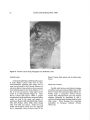
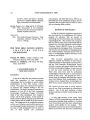
Show REPORTS 105 Morss, Noel 1954 Clay Figurines of the American Southwest. Papers of the Peabody Museum of American Archaeology and Ethnology Vol. 49, No. 1. Cambridge. Noxon, John S., and Deborah A. Marcus 1982 Significant Rock Art Sites in Arches and Canyonlands National Parks and in Natural Bridges National Monument, Southeastern Utah. Ms. on file at Canyonlands National Park, Moab, Utah. Schaafsma, PoUy 1971 The Rock Art of Utah: From the Donald Scott Collection. Papers of the Peabody Museum of American Archaeology and Ethnology, Harvard University, Vol. 65. Cambridge. Sharrock, Floyd W. 1966 An Archeological Survey of Canyonlands National Park. University of Utah Anthropological Paper No. 83. Salt Lake City. Stuiver, Minze, and Bernd Becker 1986 High-Precision Decadal CaUbration of the Radiocarbon Time Scale, A.D. 1950-2500 B.C. Radiocarbon 28(2B):863^-910. SulUvan, Alan P., Ill and Kenneth C. Rozen 1985 Debitage Analysis and Archaeological Interpretation. American Antiquity 50:755-779. Taylor, Dee C. 1957 Two Fremont Sites and their Position in Southwestern Prehistory. University of Utah Anthropological Papers No. 29. Salt Lake City. ToU, MoUie S. 1988 Macrobotanical Contents of CoproUtes. InArchaeological Synthesis of the Bighorn Sheep Ruin/42Sal563, Needles District, Canyonlands National Park, Southeastern Utah, by Susan M. Chandler, pp. B-20-B-30. Nickens and Associates Ruins Stabilization Report, Technical Series No. 51. Report on file, National Park Service, Rocky Mountain Regional Office, Denver. University of Washington Quaternary Isotope Laboratory 1987 Radiocarbon Calibration Program Rev. 1.3. Seattle. A WICKIUP SITE IN BOX ELDER COUNTY, UTAH Roy Macpherson, 5669 Laurelwood, Salt Lake City, Utah 84121 INTRODUCTION While conducting an archaeological survey of the Lake BonneviUe shoreline (U-88-US-152bsp), a site featuring the remains of four wickiup structures (42Bo555), was discovered. The site is located in the Grouse Creek vaUey, 14.5 km south southwest of the town of Grouse Creek, Utah (Figure 1). SITE DESCRIPTION 42Bo555 is located in a protected low-lying smaU cove of extinct Lake Bonneville, which forms a wind break to the south and west. A rise blocks the view from 42Bo555 to the east. The ground surface slopes slightly to the north northeast. The vegetational life zone could be classified as Upper Sonoran. A grove of juniper trees 3 to 4 m taU surrounds the site covering about 600 square m. Scattered among the junipers are high (up to 1 m) sagebrush, some grasses, and other low vegetation that is sparse in and around the site. Annual precipitation in this location is about 30 cm (Jeppson et al. 1968:31). The site contains the remains of four wickiup structures or wind breaks and scattered stone flakes (Figure 2). The present appearance of the four structures would indicate they were built by 106 UTAH ARCHAEOLOGY 1990 Figure 1. Location of wickiup site (42Bo555) in northwestern Utah. inserting juniper branches into a Uving juniper tree. The Uve trees that were used as supports for the structures were estimated to be 200 to 300 plus years in age. The cut juniper branches are 2 to 3 m long and are currently located 1 to 1 1/2 m above the ground with the thick end of the branches toward the trunk of the tree (Figure 3). The inserted branches suggest tepee-shaped structures that are 2 1/2 to 3 m in diameter at the base. The cuts on the branches are large (up to about 5 cm in length) and smooth indicating a steel ax had been used to remove them from a tree. Two disorganized piles of the same kind of cut branches (a total of 30 to 40) were found between the four structures. The cut branches in the structures and in pUes on the ground have few if any of their smaU branches removed, although the leaves and twigs had weathered away. No flaked Uthics or other artifacts were found in or close to the structures. No detectable entrances to the structure were located. The Uthic artifacts on the site included three large utilized flakes, a flake concentration, and assorted isolated flakes. The utilized flakes include a black obsidian, triangular-shaped flake measuring 3 cm at the base and 5 1/2 cm on the longest axis found between the structures, and two other large chalcedony flakes, rectangular in shape and measuring 3 cm by 4 cm and 3 cm by 5 cm found about 7 m to the west of the structures. One flake concentration of over 25 flakes covered an area of about 1 square m and was located about 12 m northwest of the structures. The concentration contained secondary flakes, tertiary flakes, and shatter of white and brown chert and chalcedony. Ten other isolated flakes of the same materials were found 15 to 20 m, north of the structures. 108 UTAH ARCHAEOLOGY 1990 4 5 I •a S I o I-I O .5 50 o S G. •1 C3 P g fa REPORTS 107 <2> X o North 7" Living Juniper Tree With Cut Limbs With Structure Lithic Flake F Large Lithic Flake LF Lithic Flake Concentration jT] Site Limit Draw Countour Line 3 Meters Apart *- ^ - 0 5 10 1 « • I Scale Meters rS&V ) Figure 2. Wickiup site (42Bo555) in northwestern Utah. REPORTS 109 The site does not contain historic trash, grinding stones, or pottery; at least, none of these types of artifacts were found on the surface of the site (no excavating was done). SIMILAR SITES IN THE AREA structures at the Bustos site were made with stone tools. The Bustos site structures were more substantial than the structures at 42Bo555 with larger diameter cut logs which in turn are covered with small branches and dirt to make them less permeable. The Bustos site has been dated between A.D. 1700 and 1825. Excavated archaeological sites in the Grouse Creek area have yielded a dearth of information about Numic speaking people (DaUey 1976:161). No other sites yielding structural remains have been reported in Box Elder County, Utah, on IMACS (Intermountain Antiquities Computer System). The closest IMACS recorded sites with structures similar to 42Bo555 are approximately 40 km to the southwest and located northwest of MonteUo, Nevada (sites CRNV-11-5194 and CRNV-11-5199). CRNV-11-5194 has mostly historic trash along with a few flaked Uthics. The historic trash suggests site use between about 1905 and the 1920s. One of the two reported structures is an aUgned "ax-hewn" pUe of limbs, 2 m in diameter and is more like a wind break or sun shade than the conical-shaped structure found at 42Bo555. The other structure is 4 to 5 m in diameter and has several 1 to 1 1/2 m, "ax-cut" Umbs inserted in the ground, butt-end first, suggesting a corral type enclosure. At CRNV-11-5199 there are 400 to 700 Uthic flakes, no historic trash, and a structure 5 m in diameter again constructed like a corral. Eight km farther west and northeast of Toano WeU Number 1 in Nevada are two additional wickiup sites (CRNV-11-3613 and CRNV-11-3619). Some of the 7 to 14 structures noted here are circular in form and measure about 2 m in diameter. They incorporate Uving juniper trees and appear to be more like the structures at 42Bo555. CRNV-11-3619 contained three Elko corner-notched points, two sherds of Late Prehistoric ceramics with a driU hole in each sherd, a mano, and other flaked Uthics. No historic trash was noted nor was the type of tool used to cut the Umbs for the structures indicated. One of the closer wickiup sites to 42Bo555 reported in the Uterature is the Bustos site (26Wpl742) near Ely, Nevada (Simms 1990). The ETHNOGRAPHY OF THE GROUSE CREEK AREA The steel ax marks on the cut branches of the structures indicate the site was occupied in the protohistoric or historic times. The occupants would have to acquire axes directly or indirectly from Euro-Americans. At historic contact the Grouse Creek Shoshone inhabited the northeastern Utah region and are described by Steward (Steward 1938:173-177 and 1943). Before European contact the Grouse Creek Shoshone were one of the groups of the Numic speaking people that may have arrived in the Great Basin some 600 years previous (Jennings 1978:235). Their material possessions were very limited. Their diet was varied but it depended primarily on plant foods, essentially pine nuts (they were called Tuba Duka, pine nut eaters, by the Shoshone, Steward 1943:268), grass seeds, roots, and berries, but also included large and small animals and salmon from the Snake River in southern Idaho (Steward 1943:268). Grasshoppers, ants, and other insects were roasted and eaten (Steward 1943; Madsen and Jones 1990). Because of the desert climate, resources were limited. To survive it was necessary to move from place to place when particular resources came in season. The extended family was the largest social unit although larger groups did get together for antelope and rabbit drives, trading sessions, and social events (Steward 1943:279). Many Great Basin Indians fashioned ceramics, but the employment of this technology is variable. Late Prehistoric ceramics are known from the Grouse Creek area (DaUey 1976). Steward reports that all Shoshones had made pottery but the practice was abandoned a long time ago (Steward 1943:273). The Grouse Creek Shoshone experienced a radical change in their culture or lifeway from just 110 UTAH ARCHAEOLOGY 1990 before Anglo contact to the time they were placed on the Indian Reservation at Fort HaU in 1876 (Madsen 1986). Initial contact, which occurred between about 1800 and 1825, introduced steel tools such as knives, pots, and axes. The acquisition of the horse in the 1840s (Madsen 1986:25) increased their mobiUty and their material possessions. With the use of the horse their hunting capability was improved so that they could hunt buffalo in eastern Idaho and Wyoming. With buffalo skins they made increasing use of tepees and moved away from wickiup type domicUes. Large masses of Euro-Americans moved into or through the Grouse Creek Shoshone area after about 1845. The Mormons came into the Salt Lake area starting in 1847 and spread out quickly to cover most of the arable land in Utah. They confiscated some of the best land and springs in the general area, taking from Native Americans a significant portion of the resources that they had been depending upon for survival. In 1849 the California gold rush started and over 10,000 people traveled through Box Elder County. The next year 15,000 traveled the same trail (Madsen 1986:19). These immigrants brought livestock with them that denuded the ground of grass, and these same immigrants shot and ate many of the available game animals. The Grouse Creek Shoshone depended heavily on the U.S. Government and the Mormons for food and other suppUes during the 1850s and 1860s. Most of the rest of their suppUes came from raids on Anglos or from materials that the Anglos had discarded (Madsen 1986; Madsen and Jones 1990). By 1876 most of the Grouse Creek Shoshone were pretty weU confined to the reservation at Ft. HaU (Madsen 1986:105). The best parts of then-land had been taken over by the white man. Without resources it was necessary for them to retreat to the reservation. SITE DISCUSSION There are strong indications that 42Bo555 is a Grouse Creek Shoshone site dating to the protohistoric time period. Its location, the wickiup structures with ax cut branches, the Uthics found, and the lack of historic trash are the leading indicators. The four wickiup structures at 42Bo555, which were described earUer, are somewhat temporary in construction. This would indicate the encampment was for a short period of time (days or weeks), but it may have been used more than once based on the quantity of Uthics found. The size of the cut Umbs at 42Bo555 indicate very frail wind breaks or wickiups were buUt and the cut limbs may have been leaned against the out branches of the trees that were used as supports. The large smooth cuts on the juniper limbs that are lying on the ground look like they might be trimmings from fence post preparation, but the juniper trees in the area do not show missing "posts" (Steven R. Simms, personal communication 1989). Although a relatively large number of Uthic tools and flakes were found, there were no grinding stones or ceramics. This could be a result of short occupations, an absence of women, or removal of grinding stones by later occupants for reuse (Simms 1983). The absence of ceramics is not unusual since Late Prehistoric ceramics, while known, are uncommon in the Grouse Creek area (DaUey 1976). Flaked Uthic tools and the steel ax could have been used at the same time at the site, since they served different functions and stone tool usage persisted into the historic period (Steven R. Simms, personal communication 1989). The available evidence suggests the site dates between A.D. 1800-1850. The steel ax used to cut the juniper branches could have been introduced to the Grouse Creek Shoshone around 1800 when the first trappers and traders came into the Great Basin. Euro-American goods would be expected to be more available to the Shoshone after 1845 when contact intensified. The wickiup may indicate the Shoshone had not yet obtained the horse (1840s) when they changed to buffalo skinned tepee type structures, although wickiups were used during historic times. Thus the site could date later than 1850, but several lines of evidence suggests a likely span of 1800-1850. ACKNOWLEDGMENTS Dr. Steve Simms, assistant professor at Utah State University, made a major contribution to this report by visiting 42Bo555 and making comments about the site and this article. REPORTS i l l Shelley Smith, archaeologist at the Salt Lake City office of the Bureau of Land Management, gave major support and guidance. Alan Arveseth assisted in finding and recording 42Bo555. REFERENCES CITED DaUey, Gardiner F. 1976 Shallow Shelter and Associated Sites. University of Utah Anthropological Papers No. 96. Salt Lake City. Jennings, Jesse D. 1978 The Prehistory of Utah and the Eastern Great Basin. University of Utah Anthropological Papers No. 98. Salt Lake City. Jeppson, Roland W., et al. 1968 Hydrologc Atlas of Utah. Research Laboratory, University, Logan. Utah Water Utah State Madsen, Brigham D. 1986 Chief Pocatello-The White Plume. BonneviUe Books, University of Utah Press, Salt Lake City. Madsen, Dave B., and Kevin T. Jones 1990 Silver Island Expedition: Anthropology and Archaeology in the Bonneville Basin, vol. 1. Concepts and Contents, University of Utah Anthropological Papers. Salt Lake City, in press. Simms, Steven R. 1983 The Effects of Grinding Stone Reuse on the Archaeological Record in the Eastern Great Basin. Journal of California and Great Basin Anthropology 5(1 and 2):98-102. 1990 The Structure of the Bustos Wickiup Site, Eastern Nevada. Journal of California and Great Basin Anthropology, in press. Steward, JuUan H. 1938 Basin-Plateau Aboriginal Sociopolitical Groups. Smithsonian Institution, Bureau of American Ethnology, Bulletin 120, United States Printing Office, Washington, D.C. 1943 Culture Elements Distribution: XXIII Northern and Gosiute Shoshoni. University of California Anthropological Records 8(3)263-392. Berkeley. A CROOKNECK WOODEN STAFF FROM SAN JUAN COUNTY, UTAH Nancy L. Shearin, Department of Anthropology, 102 Stewart Building, University of Utah, Salt Lake City, Utah 84112 INTRODUCTION On 20 December 1980 a crookneck wooden staff was discovered by Fred Blackburn, White Mesa Institute, Blanding, Utah, in a tributary canyon, northeastern drainage of Grand Gulch, San Juan County, Utah (Figure 1). This paper reports the location, coUection, and curation of this weU-preserved crookneck staff. The prehistory of similar artifacts from the Southwestern archaeological record is reviewed along with a historic account of ceremonial use. ImpUcations concerning the function of the artifact with respect to cultural interaction, trade, and rock art motifs are discussed. STAFF LOCATION/DESCRIPTION The crookneck staff was found among pack rat debris in a low, protected space under a large talus sandstone boulder (Figure 2). A decision to document the site and coUect the staff was made based on increasing destruction of archaeological resources in the immediate area by artifact hunters. The gross appearance of the artifact is one of a use-worn, weU-made crookneck wooden staff in near-perfect condition, poUshed from wear along the entire length, especiaUy in midsection. The distal end has been carefully shaped into a blunt |