| OCR Text |
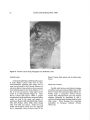
Show 66 UTAH ARCHAEOLOGY 1990 Mk I Figure 10. Barrier Canyon Style pictographs near Hanksville, Utah. Holding Snakes Anthropomorphic figures holding snakes appear at many Barrier Canyon Style rock art sites. Anthropomorphs appearing with snakes exist in many rock art panels in the Colorado Plateau, but only in the Barrier Canyon Style are they commonly found holding snakes in their hands (Figures 5, 7, 9, 10). In at least one instance a snake appears in the mouth of an anthropomorph (Figure 8). These Barrier Canyon Style figures exhibit a graphic resemblance to Hopi snake dance ceremonies where snakes are held in the hands and mouths of performers (Bourke 1884; Mendelieff 1886; Fewkes 1894, 1897; Politzer 1894a, 1894b, 1894c; Hough 1902; Voth 1903, and others). Smith and Long (1980) and Martineau (1973) have also suggested that a relationship existed between some of the Barrier Canyon Style panels and the Hopi Snake Dance. Masks and Costumes Parallels exist between early historic drawings of kachina masks and costumes (Figure 11) and the Barrier Canyon Style anthropomorphs (Figure 12). Fewkes made a comparison between Barrier Canyon Style anthropomorphs and early kachina costumes achievable by assembling in 1899 a collection of kachina figure drawings made by native Hopi artists. These drawings were practically unmodified by European influence (Fewkes 1903:15-16). BARRIER CANYON STYLE PICTOGRAPHS 67 Figure 11. Hopi kachinas drawn by native artists after Fewkes. 68 UTAH ARCHAEOLOGY 1990 Figure 12. Typical Barrier Canyon Style figures. BARRIER CANYON STYLE PICTOGRAPHS 69 Parallels between Barrier Canyon Style pictographs and kachina masks and .costumes become more important when the explanation of what the kachina dancers represent is understood. The Hopi religion is both pantheistic and very ritualistic. Within this context the word kachina is used in three different ways-with some variation. First, and perhaps foremost, the word refers to the supernatural beings of legends and myths-the "original" kachinas. Kachinas, in general, were supernatural beings who at one time lived with the people. They have the power to bring rain, exerdse control over the weather, punish offenders of ceremonial or social laws, and help in the everyday activities of the Pueblo. They left for various reasons-each Pueblo seems to have a slightly different version of the legend. One version states that the kachinas were all killed and exist today only as spirits. The kachinas return during the kachina dances that are held at specific times of the year. (The date on which each dance was to be held was previously determined by tradition, solar and lunar observations, and also by personal decision-depending upon the specific kachina.) Second, the word refers to the dancers who wear the masks and costumes representing the spirits. Young children and the uninitiated were told that these were actually the original kachinas. Fewkes stated: "The Hopi Indians represent their gods in several ways, one of which is by personation-by wearing masks or garments bearing symbols that are regarded as characteristic of those beings" (Fewkes 1903). In so doing they acquire the supernatural power of those beings: "A Hopi believes that when he wears the costume and mask of a particular katchina, he loses his personal identity and is imbued with the spirit of that being. As he not only gains certain spiritual powers but assumes tremendous responsibilities, the role is not lightly undertaken. He is subject to the requirements of pure thinking, pure action, ritual celibacy, and other prescriptions" (Dockstader 1985:10). At Zuni: "The mask is the corporeal substance of the katchina, and in wearing it a man assumes the personality of the god whose representation he bears. The Zuni expression for this process of transformation is 'to make him (the god) into a living person' (ho'i yakanaka)" (Bunzel 1932:847). At Acoma "the spirits of the katchina come and possess the persons of the masked dancers" (White 1932:67). Third, kachinas may also mean the small painted wooden dolls that are given to children and sold to tourists. Some of the anthropomorphs in the Barrier Canyon Style, especially those of the Great Gallery, appear to have masks and costumes of kachina figures. (No other rock art in Utah approaches the parallels to kachina figures as does certain of the Barrier Canyon Style pictographs.) If the masks, costumes, and symbols in both the Barrier Canyon Style pictographs and the kachina figures are equivalent, then these Barrier Canyon Style pictographs could conceivably represent, not the impersonated kachinas, since for the most part the pictographs do not have arms and legs, but the actual spirits or spirit beings that, "come and possess the persons of the masked dancers." The Great Gallery mural may contain the most impressive and significant depiction of early kachina spirits in existence. A detailed comparison of the Barrier Canyon Style anthropomorphs with kachina figures is outside the scope of this paper. Included here for illustrative purposes is Figure 11. Some of the similarities to Barrier Canyon Style are: large staring eyes (a primary characteristic of the Barrier Canyon Style), elaborate head and torso decorations consisting of vertical bands, zigzag lines, dots, etc. (I have seen no other rock art in Utah with features comparable to these), and elaborate masks (only a few early Basketmaker and Archaic petroglyphs appear to have masks, and they are simple when compared with the Barrier Canyon Style). One of the difficulties in directly comparing Barrier Canyon Style anthropomorphs and kachina figures (for example, Fewkes's Hopi paintings) is that the Hopi paintings are of the dancers impersonating the kachinas, rather than the original kachinas themselves. It is unfortunate that Fewkes did not make this distinction when collecting the paintings. One wonders what would have happened had Fewkes requested representations of the actual kachina spirits. 70 UTAH ARCHAEOLOGY 1990 Unique Color One of the principal characteristics of the Barrier Canyon Style pictographs is the distinctive and unique purplish color of many of the figures. This color appears to be entirely different from the pigment used by the Fremont. The Fremont characteristically used a distinctive bright red hue in their pictographs. The Pueblo people apparently painted themselves with a similar, or even the same color, as the Barrier Canyon Style pictographs. This was done as part of their impersonation of the kachina spirits: "A purplish body stain (kekwine) is obtained from the stalks and husks of black corn. The stalks are chewed and the mixture spread over the body" (Bunzel 1932:861). The paint is also considered to be sacred and spirit embodying, as are the kachina masks: "When no mask is worn, the same magical power that resides in the mask is imputed to the body paint" (Bunzel 1932:869). The uniqueness of an identical hue of body paint is further evidence of a direct relationship between the Kachina Cult and the Barrier Canyon Style artists, espedally when that specific color appears absent in all recorded rock art in Utah, except the Barrier Canyon Style. Parade Formation Further relating the pictographs to the Kachina Cult is the observation that the Barrier Canyon Style anthropomorphs are characteristically depicted in what appears to be a parade formation. The figures typically form a continuous line with individual figures separate from each other. This characterization is suggestive of a kachina ceremony. Parsons noted: "The katchina stand in line; with one exception, the K/anakwe, there are no circle katchina dances" (1939:732). This method of portraying Barrier Canyon Style figures stands in direct contrast to most other rock art panels in the Southern Utah Anasazi area. Many parallels exist then between the Barrier Canyon Style and the Kachina Cult of the Pueblos. These equivalencies suggest that a direct relationship existed between the Kachina Cult and the Barrier Canyon Style. The parallels become more significant when the absence of these parallels in other rock art styles in Utah is noted. Additionally, the relationships stated above appear to suggest that the Barrier Canyon Style is principally, perhaps even exclusively, ceremonial in character. For example, the historically recorded use of the fox pelt pendant is exclusive to ceremonial functions of the Pueblo Indians-to a lesser degree, so are plants held in the hands of performers and rain cloud symbols in Kiva wall murals. The presence of the fox pelt pendant in the Barrier Canyon Style suggests that the panels functioned in a ceremonial context-perhaps even a counterpart to the kiva wall paintings of the Pueblo ceremonies. Bows and Arrows in Barrier Canyon Style Rock Art The absence of bows and arrows in the Barrier Canyon Style, as objects providing dateable information, has previously been mentioned. Schaafsma (1971:129 and 1986:225) stated this absence as evidence for assigning an Archaic date to the Barrier Canyon Style. There are, however, circumstances in which bows and arrows might not ordinarily be portrayed in the Barrier Canyon Style, thus rendering this conclusion unfounded. The context of the topic illustrated might not be one where bows and arrows are normally found. For example, the gathering and processing of wild plants, the harvesting of crops, supplicating the gods for rain, or fertility rites, would not include bows and arrows since these objects are associated with hunting or warfare. There would, of course, be a few exceptions. For example, a fertility ritual may include bows and arrows as part of a desire to bear a child who would be a great hunter to provide meat or a great warrior to protect the people. The principal theme of Barrier Canyon Style rock art appears to be horticulture or the gathering of wild plants. If these deductions are correct, it would help explain why bows and arrows have not been reported as occurring in Barrier Canyon Style panels. Presented here for the first time is evidence suggestive of bows and arrows in Barrier Canyon BARRIER CANYON STYLE PICTOGRAPHS 71 0 cm J L. 4 -i Figure 13. Barrier Canyon Style anthropomorph holding bow and arrow. Style pictographs. Two examples are known. These consist of one petroglyph panel and one pictograph panel. (There is one other petroglyph panel, but the bow and arrow in it is not defined incontrovertibly enough to make a firm determination, so a discussion of it is omitted here.) The single painted example located so far appears to be in Red Snake Cave3. Red Snake Cave was excavated by the Claflin-Emerson expedition in 1930 (Gunnerson 1969). It was relocated by the author in 1981 and is now designated 42Ga2458. The cave contains a pictograph that appears to illustrate a bow and arrow (Figure 13). The anthropomorph appears in an action pose, one leg raised above the other, with both bent at the knee. (Figures showing action occur in several Barrier Canyon Style panels.) In the anthropomorph's right hand is painted a short arc with a line connecting the ends, thus appearing to represent a bow. The figure appears to be holding the bow in the middle of the bowstring. In its left hand is an object indicated by a long straight thin narrow painted line. This line appears to represent an arrow. The anthropomorph appears to have something attached to its back. The object is suggestive of an animal pelt. If so, this may suggest a hunting context for the panel. Other panels of rock art (likely Fremont) show crouched or crawling human figures holding bows and arrows with animal skins on their backs. A panel west of Moab, Utah (Castleton 1978:190) and several in Nine Mile Canyon are good examples of their pattern. In these panels human figures are shown approaching mountain sheep, as if they were hunters in disguise. If a hunting context is represented in the panel, then the presence of bows and arrows would be appropriate. Further suggesting a hunting context for the panel is the presence of what appears to be a human figure confronting an upright bear or other 72 UTAH ARCHAEOLOGY 1990 Figure 14. Barrier Canyon Style anthropomorph with bow. large animal (see Schaafsma 1971:79, Figure 78). On the opposite side of the animal are two vertical wavy lines and what appears to be a dog on its hind legs. The dog seems to be confronting the animal from behind. This scene suggests that the context of the panel is hunting, and, therefore, one in which bows and arrows would appear. The second example, and much more conclusive, is from a site recorded by the author near Hanksville, Utah. This Site, designated 42Ga3398, contains a petroglyph panel that shows a Barrier Canyon Style anthropomorph shooting a bow and arrow at what appears to be a deer (Figure 14). The anthropomorph is one of the typical Barrier Canyon Style anthropomorphic figures. It also has a head or headdress identical to those on Barrier Canyon Style anthropomorphs in Barrier Canyon. The representation of the bow is on the figure's right. It is next to, and parallel with, the body. The bow is depicted as a long arc with a straight line connecting the ends of the arc. The arc curves away from the anthropomorph's body. The bow is almost as tall as the body of the anthropomorph. At right angles from what appears to be the center of the bowstring, there is a horizontal line drawn so it connects to the front chest area of the deer. This line probably represents the desired path for the arrow to follow, or the outcome of shooting the arrow. This portrayal of a bow and arrow is analogous to many other rock art figures throughout Utah, and is unmistakable. The Barrier Canyon Style then, contains illustrations of bows and arrows and, therefore, was constructed after the inception of the bow and arrow into southern-central Utah. The date of the introduction of the bow and arrow into the Barrier Canyon Style area of Utah is at present undergoing revision. Geib and Bungart (1989:32-47) propose that proto-Fremont populations in certain portions BARRIER CANYON STYLE PICTOGRAPHS 73 Figure 15. Barrier Canyon Style pictographs displaying plants held in hands and possible lightning symbols. of the northern Colorado Plateau were using the bow and arrow in Basketmaker II times (see also Reed this volume). Horticultural Association The characteristic presence in the Barrier Canyon Style of rain cloud symbols, harvesting implements (some of which have been found in late Anasazi and possibly Basketmaker context [Schaafsma 1971:77, 129]), plants held in the hands of anthropomorphic figures, (Figure 15) and the relationship to the Kachina Cult (primarily a rain making ceremony) are evidence that many Barrier Canyon Style panels center on the principal theme of horticulture or the gathering of wild plants. The dearth of bows and arrows occurring in a ritual to promote rain, germination, or fertility was discussed above and may be further evidence of horticultural activities. If some of the Barrier Canyon Style rock art is part of a horticultural based economy, as the evidence suggests, then this rock art would be associated with a later sedentary culture, where crop production is practiced, and not with an Archaic hunter-gatherer economy. Horticultural activities then would be additional evidence to suggest that the Barrier Canyon Style continued into the Formative period. Two points are appropriate to discuss here. First, if the Barrier Canyon Style is assodated with a late horticultural population, it would have to be the population that has been defined as the Fremont, because no other horticultural population has been defined in the Barrier Canyon Style area. The areal distribution of Barrier Canyon Style almost exactly parallels Fremont rock art (excluding 74 UTAH ARCHAEOLOGY 1990 the Sevier Fremont [Jennings 1960] in the western half of Utah). Unquestionably, more research needs to be done to elucidate the cultural association(s) of the Barrier Canyon Style. Second, if the Barrier Canyon Style existed in the Archaic period, the nomadic hunter-gatherer activities of these people suggest that their rock art would be the same over a large area, since they traveled extensively. Hunters and gatherers have been shown to exploit large areas, as much as 300,500 square km (116,000 square miles), and to travel about 200 km (129 miles) or more in one annual round of settlement (Binford 1983 [The Nunamiut]; Silberbauer 1972 [The G/wi Bushman]). Steward (1938) also reports extensive movement within subsistence and trading areas in the Great Basin and in Idaho. If the Barrier Canyon Style is associated with later cultures, where agricultural activities limited the range of the people, then localized variations in the rock art would be expected to occur. If Barrier Canyon Style developed in the Archaic period, and continued through to circa A.D. 1600, then evidence should be found of a consistent character trait assemblage with underlying regional variations. Evidence from about 155 Barrier Canyon Style sites appears to suggest that regional variations exist. However, determinations of whether these apparent variations indicate temporal, areal, functional or ethnic variations have not been studied. Conclusions will have to wait for further analysis. One of the problems with determining variations is paucity of data. Schaafsma defined the Barrier Canyon Style from only approximately 15 panels at 11 sites. The author has now located about 155 sites (Figure 3). Therefore, the number is approaching a point where a study of regional variations may provide significant results. If certain of the Barrier Canyon Style panels are at some point proven to be present in the Archaic period, then regional variations will need to be explained. Horses in Barrier Canyon Style Rock Art The presence of illustrations of horses in the Barrier Canyon Style would certainly be an indication of a late date, since horses were not introduced into Utah until around one hundred years after the Spanish first arrived at the Pueblos. Like bows and arrows, horses would not be expected to occur in horticultural or gathering ceremonies, given the information that draft animals were not used by the Indians, so they might not be illustrated in the apparent ceremonial Barrier Canyon Style panels. At a Barrier Canyon Style pictograph site near Thompson, Utah, there are two horses painted with apparently the same color pigment and exhibiting apparently the same degree of weathering as the Barrier Canyon Style pictographs nearby. These horses appear stylistically different from about 50 Ute horse petroglyphs in surrounding areas. Mud runoff covered most of the horses at the site near Thompson for many years. Mud obscured the figures in 1968, as noted in the author's photographs. How long the horses were covered with mud is unknown. Sometime in 1987 or 1988 a major rainstorm apparently washed enough mud off the cliff surface that the paintings depicting the two horses became more visible. There are arguments for and against accepting these painted horses as Barrier Canyon Style. Arguments against such a conclusion are at least two: First, this site contains the only known instance of horses associated with a Barrier Canyon Style panel and appearing to be painted with a Barrier Canyon Style pigment. Second, the Utes were in the same area and could have painted the horses. There is a Ute rock art petroglyph panel directly across the canyon. The Utes could have painted the horses using a similar pigment, or even pigment from the same source if it was obtained locally. Supporting arguments include: First, the evidence that the horses are stylistically different from horses identified as Ute suggests that someone other that the Utes painted the horses. Second, there are no pictographs in the area that are attributable to the Ute where this same pigment was used; therefore, evidence for Ute use of this pigment is lacking. The possibility that horses exist in the Barrier Canyon Style then, cannot be entirely dismissed. Until direct dating methods are developed, or additional examples of horses are found painted in BARRIER CANYON STYLE PICTOGRAPHS 75 similar pigments, their presence in the Barrier Canyon Style remains a possibility. Physical Evidences Physical remains (besides the presence of rock art) that provide evidence for either the presence of Late Pueblo people in Utah or the association of Barrier Canyon Style artists with the Pueblo IV area have been found. They consist of painted stone slabs or tiles and ceramics. Each of these is briefly discussed below. Concerning painted slabs Watson Smith observed: An item of paraphernalia that often is used in certain modern Hopi ceremonies is a flat slab or tile on which are usually painted a variety of designs, including rain clouds, birds, butterflies, tadpoles, masked faces, and the like. These may collectively be called tiles, although they are made of stone wood or fired clay. They measure usually about 12 cm or 15 cm in each dimension, and for ritual use are set vertically against the kiva wall or the upright altar (W. Smith 1952:261). (Note that rain clouds, birds, and masked faces are characteristic of the Barrier Canyon Style.) Painted stone slabs like those described above were found at Kawaika-a in graves with Sikyatki Polychrome and Jeddito Black-on-Yellow pottery, and, therefore, are associated with the Pueblo TV period. Painted slabs have been found at many prehistoric Pueblo sites (W. Smith 1952:265). They have been found at: Awatovi, Chevlon, Canyon del Muerto, Homolovi, Kawaika-a, Kinishba, Pecos, Pinedale, Point of Pines, Petrified Forest, Pueblo Bonito, Showlow, Sikyatki, Winona, and others. In Utah painted stone slab fragments occur at two sites. One example was excavated from Floating House Ruin in southern Utah, and the other came from Barrier Canyon: Two fragments of a similar sandstone slab were found at a Pueblo ruin in Barrier Canyon, Utah showing two parallel bands in red, about 1 cm wide, one of them bordered by narrow black lines about 1 mm wide. The surviving specimen is about 8 by 11 cm and is 15 mm thick. This specimen was collected by Henry B. Roberts and is in the Peabody Museum, Catalog Number 33-3-10/411, 412 (W. Smith 1952:267) (emphasis added). The use of painted stone slabs appears to have been wide spread in Pueblo III and IV times, and to have extended into the historic period (DiPeso 1950). Their existence in a Pueblo ruin in Barrier Canyon itself provides evidence for a Pueblo influence in the heart of the Barrier Canyon Style rock art area. It should be noted here that objects of stone with evidence of paint have been found to occur in other time periods, as would be expected. For example, Hull and White (1980) described the presence of twenty-three stones with paint in Cowboy Cave. They were found from Stratum lib (8275 B.P.) to the surface and it was observed that there was no specific concentration of the stones either vertically or horizontally in the fill of the cave. The importance of the Pueblo painted slabs, irrespective of the fact that stones with paint exist far back in time, is that painted stone slabs are present in Pueblo contexts in both Barrier Canyon and the Pueblo area. J e d d i t o Corrugated and Jeddito Black-on-Yellow ceramics, associated with the Pueblo IV Anasazi, have been identified at sites in the La Sal Mountains of Utah (Hunt 1953:161,216). They also occur at site 42Gr583, on a tributary of the Colorado River, circa 25 miles to the northwest of the La Sals-well into the Barrier Canyon Style area. Jeddito Black-on-Yellow and Jeddito Tooled were reported at a site in Squaw Park, North of Arches National Park (Wormington 1955), very close to a Barrier Canyon Style site. A summary of the occurrence of yellow ware in southern Utah was compiled by La Mar Lindsay: Yellow ware has been identified at several sites on both the right and left banks of the Colorado River in the Glen Canyon (Fowler et al. 1959; Lipe et al. 1960; Sharrock et al. 1961; Sharrock et al. 1963). However, yellow ware, including Sikyatki Polychrome from the Red Rock Plateau (Lipe 1970), is principally concentrated in the "San Juan triangle" (Weller 1959). In addition a few sherds have been reported from the adjacent Kaiparowits Plateau (Gunnerson 1959; Lister 1959). Surface associations of the yellow ware at these sites run the gamut of Pueblo II and III Mesa Verde and Kayenta wares, but at the only two excavated sites, the ware is either unprovenienced or without artifact associations (Sharrock et al. 1961) (Lindsay 1976:36). Additionally, Hunt and Hunt (1967), discussing the relative abundance of Tsegi Orange wares and the later Tusayan Black-on-Red ceramics from the Henry Mountains area, suggested that the people "shared close ties and traditions with the 76 UTAH ARCHAEOLOGY 1990 Tsegi-Rainbow Plateau Kayenta country of Northern Arizona." The existence of Pueblo IV ceramics, sparse but widespread in southern Utah, provides additional evidence for Pueblo IV presence in the Barrier Canyon Style region, thus strengthening the possibility for the introduction or sharing of ideological concepts from that period-ideological concepts that correlate the Barrier Canyon Style to the post circa A.D. 1500 Kachina Cult of the Pueblos. ADDITIONAL DISCUSSION It appears that there are two primary plausible explanations, given the available data, for the origins and presence of the Barrier Canyon Style panels associated with fox pelt pendants. The first postulate is that in the Pueblo IV period, sometime after circa A.D. 1300, there was an expansion and modification of an undefined religious cult, which existed (with alterations) from the Archaic period on into the Kachina Cult (with possible influence from the Mogollon) changing artistic symbolism. This undefined Archaic cult, which evidence suggests expanded areally in the Basketmaker Period, was apparently responsible for a wide spread (both areally and temporally) anthropomorphic rock art tradition. Remnants of the Fremont were perhaps influenced by this expansion. Later, the fox pelt pendant was added to the Kachina Cult and the Barrier Canyon Style Rock Art. The remnants of the Fremont people then, before totally abandoning the northern Colorado Plateau circa A.D. 1600, or losing cultural identity, painted the Barrier Canyon Style panels assodated with the fox pelt pendant. The apparent concentrated emphasis in many of the Barrier Canyon Style panels on ceremonial activities related to rain and harvesting activities may be a representation of a subsistence system under stress. Additional evidence in support of this postulate is that the northern and central Colorado Plateau area may not have been completely abandoned (Rudy 1953:169; Taylor 1957:160-166; Cordell and Plog 1979:418, and others). It is possible there was instead a very large and drastic reduction in population. A few tenadous people could have remained. These people may have been responsible for some of the Barrier Canyon Style panels. The sparseness of Barrier Canyon Style panels, when compared with other styles, combined with what appear to be regional variations, may be evidence that only sparse, limitedly mobile, small groups of people partidpated in their construction.4 A second postulate is that a sparse remnant of the Fremont developed the fox pelt pendant and other elements present in the Kachina Cult of the Pueblos, which were absent before circa A.D. 1500, and added them to the anthropomorphic rock art tradition a short period of time before the Pueblo Historic period began. These concepts could then have been incorporated into the expanding Kachina Cult in the late Pueblo IV-early Pueblo V period. Which of these possible hypotheses, or others not considered, is correct may be determined by future research. The paucity of material remains at Barrier Canyon Style sites may make it difficult to substantiate, by current archaeological methods, both the presence of people at Barrier Canyon Style sites after circa A.D. 1300 and the late date hypothesized here for many of the Barrier Canyon Style panels. Jennings (1978) has proposed that there was a change of the climate and a corresponding change in cultural patterns on the Colorado Plateau at the time it is hypothesized the pictographs with fox pelt pendants were painted. The people were forced to return to a more nomadic hunting-gathering way of life, away from farming, permanent dwelling construction, and non-portable implements. If this were so, then the surviving material remains of these people would be few, thus difficult to locate and identify. Evidence of such a late semi-transient culture, which might have been responsible for many of the Barrier Canyon Style panels, would, in many instances, be surface materials in rock shelters and might now be missing. Vandalism, both intentional and unintentional, poses the greatest threat to the gathering of information. Increasing numbers of uninformed people because of publicity, ease of access, more off-road vehicles, and energy BARRIER CANYON STYLE PICTOGRAPHS 77 developments, in addition to a rapidly expanding interest in antiquities and the commercial value of artifacts, have increased vandalism and artifact collecting to devastating proportions in the Northern Colorado Plateau (Jennings 1978:243; Manning 1985a; U.S. General Accounting Office 1987; U.S. House of Representatives 1988). Many of the Barrier Canyon Style sites are heavily visited. Sites in Buckhorn Wash, Thompson Wash, and Mill Creek are very badly vandalized. An attempt to destroy a panel of Barrier Canyon Style pictographs near Courthouse Wash was made in thejecent past. A panel in Barrier Canyon itself was vandalized in January 1990 (Barker 1990). Black Dragon Canyon pictographs have and are being defaced with heavy chalking. Sites in the Maze, and the San Rafael Swell are showing increased evidences of vandalism and adverse impacts like erosion. This vandalism is principally due to an increasing number of irresponsible "guide book" publications and popular articles both in newspapers and magazines. Considerable illegal digging occurred at four Barrier Canyon Style sites around Moab in 1989. If Barrier Canyon Style rock art is of recent origin, then material remains needed to date these pictographs would be located on or near the surface. It is these easily visible artifacts that people collect. They have been, and are, vanishing rapidly. Data gathering activities at Barrier Canyon Style sites need to have the highest priority if the hypothesis presented here is to be tested. ACKNOWLEDGMENTS The author would like to thank Betsy L. Tipps, La Mar W. Lindsay, and Joel C. Janetski for reviewing this manuscript and providing helpful suggestions; and also Elizabeth (my wife), for her patience. The opinions and inferences expressed in this article do not reflect those of the reviewers. NOTES lrThe Blue-Eyed Princess is about two miles south of the location described on the site form in the files of the Utah Division of State History. *DAe presence of a fox pelt pendant outside of the southwest has been reported by Merriam (1962:35). He describes the presence of a fox pelt pendant in a Porno Indian ceremony west of Sacramento, California. Considering that Hopi Indians state that they traveled to the ocean to trade and collect shells, it is not surprising to find evidence indicating Pueblo presence there. Perhaps the Porno acquired some of their ceremonial practices from the visiting Hopi. The Seri Indians of the east cost of the Gulf of California also used a fox pelt: "The men's breechclouts are simple fox pelts, while the women's skirt is made of animal skins" Bowen (1983:236). 3The Claflin-Emerson expedition in 1930 (Gunnerson 1969) excavated an archaeological site and named it Red Snake Cave. They assigned number SR 16-10 to the site. In Gunnerson's discussion of Red Snake Cave there is no reference to the presence of any paintings on the back wall of the cave. This lead to some doubt that Red Snake Cave had been located, but a site matching Gunnerson's locational information was found by the author in 1981. However, in addition to other pictographs, several very small red painted snakes were found on the back wall of the cave. These could be the site's namesakes. Adding to the confusion is Schaafsma's statement that the paintings illustrated in her Figure 78 (1971:79), which are present on the back wall of the cave found by the author, are from SR 16-5. However, site SR 16-5 (now42Ga2459) was also located in 1981, and there are no paintings present at this site. (Site 42Ga2459 and its identity as SR 16-5 was recently discussed by Geib and Bremer [1988]). This second site is unmistakably SR 15-5. It is easily identified because of the structures present and the site sketch and description provided by Gunnerson (1969:523). The site also fits the limited site locational information provided by Gunnerson, which states that the site is "located on the east side of Willow Tank Canyon." Therefore, the pictographs illustrated in Schaafsma's Figure 78 are not from SR 15-5 as she stated. They are in the cave located on the west side of Willow Tank Canyon, which, from all evidence, is Red Snake Cave or SR 16-10. Additionally, the cave believed to be Red Snake Cave is situated in a white ledge about 13 m above a side canyon entering from the northwest. This is the same description as that given for Red Snake Cave. Therefore, the site on the west side of Willow Tank Canyon appears to be SR 16-10, Red Snake Cave, 42Ga2458. Gunnerson's omission of the rock art from Red Snake Cave and Schaafsma's assigning the wrong site number to a panel of Barrier Canyon Style pictographs appear to indicate that there is some confusion in the records left by the Claflin-Emerson expedition. These errors are also indicative of the problems inherent in the analysis of archaeological sites when the person doing the analysis has not visited the sites. Also making it difficult to determine the correct designations and locations for these sites is the fact that neither the site forms nor any field notes, which could be used to relocate these sites, could be found. They were not in the possession of the Utah State Historical Society, Bureau of Land Management, nor the University Of Utah (Personal correspondence 1981). Despite all these difficulties Red Snake Cave was finally located, but only after several days of intensive searching. 4Out of approximately 7,000 panels of Utah rock art visited by the author, only approximately 155 are Barrier Canyon Style. That is only 2.14%. And, this percentage is biased because of the priority given to locating Barrier Canyon Style rock art. In areas where I have conducted intensive rock art surveys, like 78 UTAH ARCHAEOLOGY 1990 Indian Creek near Canyonlands National Park, the percentage is less than 1%. This is likely a more realistic figure for the percentage of Barrier Canyon Style rock art on the northern Colorado Plateau. Northern San Juan County and Grand County contain a substantial number of Barrier Canyon Style panels, therefore, the percentage of Barrier Canyon Style panels, when compared to other styles, would be expected to be high. However, in a major drainage in the area, which is being intensively inventoried for rock art, and which so far contains about 200 panels, only three are Barrier Canyon Style. This is only 1.5%. Thus Barrier Canyon Style rock art is not common. Some possible explanations for this are: (1) the people making Barrier Canyon Style rock art were not spending a commensurate amount of time producing rock art when compared with other cultures, or (2) the style existed for only a short period of time, or (3) there were fewer people producing it. REFERENCES CITED Allen, Mary 1984 Rock Art of Northeastern Arizona. Paper presented to the Utah Rock Art Research Association, Salt Lake City. 1986 An Unusual Pictograph Site in the Grand Canyon (Spirit Shelter). Paper presented at the Utah Rock Art Research Symposium, Price, Utah. 1988 New Frontiers in Rock Art; The Grand Canyon. Paper presented at the 1988 American Rock Art Research Association Symposium, Ridgecrest, California. Anderson, Adrienne 1978 Archaeological Resources of Canyonlands, Capitol Reef and Arches Natural Parks and Natural Bridges National Monument, Southeastern Utah. National Park Service, Midwest Archeological Center, Lincoln. Baker, Pearl 1976 Robbers Roost Recollections. Utah State University Press, Logan. Barker, Vicki J. 1990 Information Sought in Rock-art Vandalism. Desert News, January 10. Salt Lake City. Binford, Lewis R. 1983 In Pursuit of the Past. Thames and Hudson, New York. Bourke, John G. 1884 The Snake Dance of the Moquis of Arizona. Scribners, New York. Bowen, Thomas 1983 Seri. In Southwest, edited by Alfonso Ortiz, pp. 230-249. Handbook of North American Indians, vol. 10, William C. Sturtevant, general editor. Smithsonian Institution, Washington, D.C. Brew, John O. 1946 Archeology of Alkali Ridge, Southwestern Utah. Papers of the Peabody Museum of American Archeology and Ethnology, Harvard University, Vol. 21. Cambridge. Brody, Jerome J. 1977 Mimbres Painted Pottery. University of New Mexico Press, Albuquerque. Bunzel, Ruth L. 1932 Zuni Katcinas, an Analytical Study. Forty-Seventh Annual Report of the Bureau of American Ethnology to the Secretary of the Smithsonian Institution, 1929-1930, pp.837-1086. Washington, D.C. Castleton, Kenneth B. 1978 Petroglyphs and Pictographs of Utah, vol. 1. Utah Museum of Natural History, Salt Lake City. 1979 Petroglyphs and Pictographs of Utah, vol. 2. Utah Museum of Natural History, Salt Lake City. Cordell, Linda S., and Fred Plog 1979 Escaping the Confines of Normative Thought: A Re-evaluation of Pueblo Prehistory. American Antiquity 44(3):405-429. BARRIER CANYON STYLE PICTOGRAPHS 79 DiPeso, Charles C. 1950 Painted Stone Slabs of Point of Pines, Arizona. American Antiquity 16(l):57-63. Dockstader, Frederick J. 1985 The Katchina and the White Man; the Influences of White Culture on the Hopi Katchina Cult. Reprinted. University of New Mexico Press, Albuquerque. Originally published 1954. Dorsey, George A., and Henry R. Voth 1901 The Oraibi Soyal Ceremony. Field Columbian Museum Publication No. 55. Anthropological Series 3(1): 1-59, Chicago. 1902 The Mishongnove Ceremonies of the Snake and Antelope Fraternities. Field Columbian Museum Publication No. 66. Anthropological Series 3(3):159-261, Chicago. Dutton, Bertha P. 1963 Sun Fathers Way: The Kiva Murals of Kuaua, a Pueblo Ruin, Coronado State Monument, New Mexico. University of New Mexico Press, Albuquerque. Faulkner, Charles H. (editor) 1986 The Prehistoric Native American Art of Mud Glyph Cave. University of Tennessee Press, Nashville. Fewkes, Jesse W. 1894 The Walpi Flute Observance: A Study of Primitive Dramatization. The Journal of American Folklore 7(27):265-288. 1897 Tusayan Snake Ceremonies. Sixteenth Annual Report of the Bureau of American Ethnology to the Secretary of the Smithsonian Institution, 1894-1895, pp. 267-312. Washington, D.C. 1898 Archaeological Expedition to Arizona in 1895. Seventh Annual Report of the Bureau of American Ethnology to the Secretary of the Smithsonian Institution, 1895-1896, pp. 519-744. Washington, D.C. 1903 Hopi Katcinas, Drawn by Native Artists. Twenty-First Annual Report of the Bureau of American Ethnology to the Secretary of the Smithsonian Institution, 1899-1900, pp. 3-126. Washington, D.C. 1919 Designs of Prehistoric Hopi Pottery. Tliirty-Third Annual Report of the Bureau of American Ethnology to the Secretary of the Smithsonian Institution, 1911-1912, pp. 207-284. Washington, D.C. Fowler, Don D., James H. Gunnerson, Jesse D. Jennings, Robert H. Lister, Dee Ann Shum, and Ted Weller. 1959 The Glen Canyon Archaeological Survey, Parts I and II. University of Utah Anthropological Papers No. 39, Glen Canyon Series No. 6. Salt Lake City. Geib, Phil R., and Peter W. Bungart 1989 Implications of Early Bow Use in Glen Canyon. Utah Archaeology 1989 2(l):32-47. Geib, Phil R., and J. Michael Bremer 1988 Prehistory of the Orange Cliffs Tar Sand Triangle and a Descriptive Model of General Site Location. Archaeological Report No. 997. Northern Arizona University, Flagstaff. Grant, Campbell 1967 Rock Art of the American Indian. T. Y. Crowell Co., New York. 1983 The Rock Art of the North American Indians. Cambridge University Press, Cambridge. Guernsey, Samuel J. 1931 Explorations in Northeastern Arizona. Papers of the Peabody Museum of American Archaeology and Ethnology, Harvard University, Vol. 12. Cambridge. Gunnerson, James A. 1957 An Archaeological Survey of the Fremont Area. University of Utah Anthropological Papers No. 28. Salt Lake City. 1959 Archaeological Survey of the Kaiporowits Plateau. In The Glen Canyon 80 UTAH ARCHAEOLOGY 1990 Archaeological Survey, Part II, edited by Charles E. Dibble, pp. 319-469. University of Utah Anthropological Papers No. 39, Glen Canyon Series No. 6. Salt Lake City. 1969 The Fremont Culture: A Study in Culture Dynamics on the Northern Anasazi Frontier. Papers of the Peabody Museum of American Archeology and Ethnology, Harvard University, Vol. 59, No. 2. Cambridge. Hedges, Robert E. M., and John A. J. Gowlett 1986 Radiocarbon Dating by Accelerator Mass Spectrometry. Scientific American 254(1):100-107. Heizer, Robert F., and Martin A. Baumhoff 1962 Prehistoric Rock Art of Nevada and Eastern California. University of California Press, Berkeley Hibben, Frank C. 1975 Kiva Art of the Anasazi at Pottery Mound, New Mexico. K. C. Publications, Las Vegas. Hill, Beth, and Ray Hill 1975 Indian Petroglyphs of the Pacific Northwest. University of Washington Press, Seattle. * Hough; Walter 1902 The Moki Snake Dance. The Passenger Department, Santa Fe Route, Chicago. Hull, Frank W., and Nancy M. White 1980 Spindle Whorls, Incised and Painted Stone, and Unfired Clay Objects. In Cowboy Cave, edited by Jesse D. Jennings, pp. 117-125. University of Utah Anthropological Papers No. 104. Salt Lake City. Hunt, Alice P. 1953 Archaeological Survey of the La Sal Mountain Area, Utah. University of Utah Anthropological Papers No. 14. Salt Lake City. Hunt, Charles B., and Alice Hunt 1967 Henry Mountains (Archeology). Ms. on file, Department of Anthropology, University of Utah, Salt Lake City. Hurst, Winston, and Bruce D. Louthan 1979 Survey of Rock Art in the Central Portion of Nine Mile Canyon Eastern Utah. Publications in Archeology, New Series No. 4. Brigham Young University, Provo. Ingersoll, Ernest 1877 Village Indians of New Mexico. American Geographical Society Journal 7:114-26. Jackson, A. T. 1938 Picture-Writing of the Texas Indians. Anthropological Papers vol. 2. University of Texas, Austin. Jackson, William H. 1875 Ancient Ruins in Southwestern Colorado. Bulletin of United States Geographical and Geological Survey of the Territories, 2nd Series, No. 1, pp. 17-30. Washington, D.C. Jennings, Jesse D. 1960 Early Man in Utah. Utah Historical Quarterly 28(l):3-27. 1966 Glen Canyon: A Summary. Univeisity of Utah Anthropological Papers No. 81, Glen Canyon Series No. 31. Salt Lake City. 1978 Prehistory of Utah and the Eastern Great Basin. University of Utah Anthropological Papers No. 98. . Salt Lake City. Keech, Roy A. 1937a The Rainbow Dance (At Santa Clara, New Mexico, August 12,1937). National Archaeological News 1(8):19-21. 1937b The Blue Corn Dance (At Santa Clara, New Mexico, August 12,1937). National Archaeological News l(9):26-28. BARRIER CANYON STYLE PICTOGRAPHS 81 Keyser, James D., and Linea Sundstrom 1984 Rock Art of Western South Dakota. South Dakota Archaeological Society, Sioux Falls. Mails, Thomas E. 1983 The Pueblo Children of the Earth Mother. 2 vols. Doubleday & Company, New York. Lehmer, Donald J. 1948 The Jornada Branch of the Mogollon. University of Arizona Bulletin 19 (Social Science Bulletin No. 17), Tucson. Lindsay, La Mar W. 1976 Grand County: An Archaeological Summary. Ms. on file, Antiquities Section, Utah State Historical Society, Salt Lake City. 1986 Fremont Fragmentation. In Anthropology of the Desert West, edited by Carol J. Condie and Don D. Fowler, pp. 229-251. University of Utah Press, Salt Lake City. Lipe, William D. 1970 Anasazi Communities in the Red Rock Plateau, Southeastern Utah. In Reconstructing Prehistoric Pueblo Societies, edited by W. A. Longacre, pp. 84-139. University of New Mexico Press, Albuquerque. Lipe, William D., Floyd W. Sharrock, David S. Dibble, and Keith M. Anderson. 1960 1959 Excavations, Glen Canyon Area. University of Utah Anthropological Papers No. 49, Glen Canyon Series No. 13. Salt Lake City. Lister, Robert H. 1959 Glen Canyon Right Bank Survey. In77i€ Glen Canyon Archaeological Survey, Part I, edited by Charles E. Dibble, pp. 27- 162. University of Utah Anthropological Papers No. 39, Glen Canyon Series No. 6. Salt Lake City. Lucius, William A. 1976 Archaeological Investigations in the Maze District Canyonlands National Park, Utah. Antiquities Section Selected Papers Vol. 3, No. 11. Utah Division of State History, Salt Lake City. Malouf, Carling 1941 Notes on the Archeology of the Barrier Canyon Region, Utah. The Masterkey 15(4):150-153. Mallery, Garrick 1893 Picture Writing of the American Indians. Fourth Annual Report of the Bureau of American Ethnology to the Secretary of the Smithsonian Institution, 1882-1883, pp. 1-256. Washington, D.C. Manning, Steven J. 1984 Expanding the Areal Distribution of the Barrier Canyon Style Rock Art. In Utah Rock Art, Papers Presented at the Forth Annual Symposium, pp. 12-20. Utah Rock Art Research Assodation, Salt Lake City. 1985a Utah Must Fund a Plan to Stop Archeological Vandalism. The Salt Lake Tribune 231(104):14A. Sunday, July 14. 1985b An Unusual and Spectacular Pictograph Site from the Grand Canyon. Paper presented at the Utah Professional Archaeological Council meeting, Boulder. 1986 Barrier Canyon Style Petroglyphs. Paper presented to Utah Rock Art Research Association, Salt Lake City. 1987 Implications of Barrier Canyon Style Petroglyphs. Paper presented to Utah Rock Art Research Assodation, Eight Annual Symposium, Price. Marshall, Michael 1973 The Jornada Culture Area. In Technical Manual: 1973 Survey of the Tularosa Basin, pp. 49-119. Human Systems Research. Martineau, LaVan 1973 The Rocks Begin To Speak. K. C. Publications, Las Vegas, Nevada. 82 UTAH ARCHAEOLOGY 1990 Marwitt, John P. 1970 Median Village and Fremont Culture Regional Variation. University of Utah Anthropological Papers No. 95. Salt Lake City. McKern, W. C. 1983 Western Colorado Petroglyphs. Bureau of Land Management Cultural Resources Series No. 8, Denver. Mendelieff, Kosmos 1886 An Indian Snake Dance. 7(174):507-514. Science Merriam, C. Hart 1962 Studies of California Indians. University of California Press, Berkeley and Los Angles. Montgomery, Ross G., Watson Smith, and John O. Brew 1949 Franciscan Awatovi: The Excavation and Conjectural Reconstruction of a 17th-century Spanish Mission Establishment at a Hopi Indian Town in Northeastern Arizona. Papers of the Peabody Museum of American Archeology and Ethnology, Harvard University, Vol. 36. Cambridge. Morris, Earl H. 1951 Basketmaker III Figurines from Northeastern Arizona. American Antiquity 17(l):33-40. Morss, Noel 1931 The Ancient Culture of the Fremont River in Utah. Papers of the Peabody Museum of American Archeology and Ethnology, Harvard University, Vol. 12, No. 2. Cambridge. Parsons, Elsie C. 1939 Pueblo Indian Religion. 2 vols. University of Chicago Press, Chicago. Politzer, J. H. 1894a Snake Dance of the Moquis. New York Herald, November 11. 1894b Mouthfuls of Rattlesnakes. San Francisco Examiner, October 21. 1894c The Moqui Serpent Dance. St. Louis Republic, November. Prudden, T. M. 1914 The Circular Kivas of Small Ruins in the San Juan Watershed. American Anthropologist 16(l):33-58. Roediger, Virgina More 1941 Ceremonial Costumes of the Pueblo Indians. University of California Press, Berkeley. Rudy, Jack R. 1953 Archaeological Survey of Western Utah. University of Utah Anthropological Papers No. 12. Salt Lake City. Schaafsma, Polly 1971 The Rock Art of Utah. Papers of the Peabody Museum of Archeology and Ethnology, Harvard University, Vol. 65. Cambridge. 1972 Rock Art in New Mexico. State Planning Office, Santa Fe. 1980 Indian Rock Art of the Southwest. School of American Research, Santa Fe. University of New Mexico Press, Albuquerque. 1986 Rock Art. In Great Basin, edited by Warren L. D'Azevedo, pp. 215-226. Handbook of North American Indians, vol. 11, William C. Sturtevant, general editor. Smithsonian Institution, Washington, D.C. 1988 Shamans' Gallery: A Grand Canyon Rock Art Site (AZ B:9:201). Submitted to Grand Canyon National Park Resource Management and Planning Division, Arizona. 1990 Shamans' Gallery: A Grand Canyon Rock Art Site. Kiva 55(3)213-234. Schaafsma, Polly, and Curtis F. Schaafsma 1974 Evidence for the Origin of the Pueblo Katchina Cult as Suggested by Southwestern Rock Art. American Antiquity 39:535-545. BARRIER CANYON STYLE PICTOGRAPHS 83 Schroedl, Alan R. 1989 The Power and The Glory, Shamanistic Arts of the Archaic Period. Canyon Legacy, A Journal of the Dan O'Laurie Museum Moab, Utah 1(1):13-17. Sharrock, Floyd W., Keith M. Anderson, Don D. Fowler, and David S. Dibble. 1961 1960 Excavations, Glen Canyon Area. University of Utah Anthropological Papers No. 52, Glen Canyon Series No. 14. Salt Lake City. Sharrock, Floyd W., Kent C. Day, and David S. Dibble 1963 1961 Excavations, Glen Canyon Area. University of Utah Anthropological Papers No. 63, Glen Canyon Series No. 18. Salt Lake City. Silberbauer, G. B. 1972 The G/wi Bushmen. In Hunters and Gatherers Today, edited by M. G. Bicchieri, pp. 271-326. Holt, Rinehart and Winston, New York. Smith, Gary 1976 Windsinger. Francisco. Sierra Club Books, San Smith, Gary, and M. E. Long 1980 Utah's Rock Art: Wilderness Louvre. National Geographic. January 157(1):94-117. Smith, Watson 1952 Kiva Mural Decorations at Awatovi and Kawaika-a, with a Survey of Other Wall Paintings in the Pueblo Southwest. Papers of the Peabody Museum of American Archeology and Ethnology, Harvard University, Vol. 37. Cambridge. 1971 Painted Ceramics of the Western Mound at Awatovi. Papers of the Peabody Museum of American Archeology and Ethnology, Harvard University, Vol. 38. Cambridge. Stephen, Alexander M. 1936 Hopi Journal of Alexander M. Stephen, edited by Elsie Clews. Columbia Contributions to Anthropology vol. 23 (2 vols). Columbia University Press, New York. Steward, Julian H. 1938 Basin Plateau Aboriginal Sociopolitical Groups. Smithsonian Institution, Bureau of American Ethnology, Bulletin 120. Reprint by University of Utah Press, Salt Lake City. 1941 Archaeological Reconnaissance of Southern Utah. Bureau of American Ethnology Bulletin No. 128 pp. 275-356. Anthropological Papers No. 18. Smithsonian Institution, Washington, D.C. Taylor, Dee C. 1957 Two Fremont Sites and their Position in Southwestern Prehistory. University of Utah Anthropological Paper No. 29. Salt Lake City. Tipps, Betsy L., and Nancy J. Hewitt 1989 Cultural Resource Inventory and Testing in the Salt Creek Pocket and Devils Lane Areas, Needles District, Canyonlands National Park, Utah. National Park Service, Denver, Colorado. Titiev, Mischa 1944 Old Oraibi: A study of the Hopi Indians of Third Mesa. Peabody Museum of American Archaeology and Ethnology, Harvard University, Vol. 22, No. 1. Cambridge. Turner, Christy G. II 1963 Petrographs of the Glen Canyon Region. Museum of Northern Arizona Bulletin No. 38 (Glen Canyon Series No. 4). Flagstaff. 1971 Revised Dating for Early Rock Art of the Glen Canyon Region. American Antiquity 36(4):469-471. 84 UTAH ARCHAEOLOGY 1990 Tyler, Hamilton A. 1979 Pueblo Birds and Myths. University of Oklahoma Press, Norman. United States General Accounting Office 1987 Cultural Resources: Problems Protecting and Preserving Federal Archaeological Resources. Report to Congressional Requesters. United States General Accounting Office, Washington, D.C. United States House of Representatives 1988 The Destruction of America's Archaeological Heritage: Looting and Vandalism of Indian Archaeological Sites in the Four Corners States of the Southwest: An Investigative Report. Subcommittee on General Oversight and Investigations of the Committee on Interior and Insular Affairs of the U.S. House of Representatives, 100th Congress, Second Session. Washington, D. C. Copies available from the Superintendant of Documents, Congressional Sales Office. Voth, Henry R. 1901 The Oraibi Powamu Ceremony. Field Columbian Museum Publications No. 61. Anthropological Series 3(2):64-158. Chicago. 1903 The Oraibi Summer Snake Ceremony. Field Columbian Museum Publications No. 83. Anthropological Series 3(4):263-358. Chicago. 1912 The Oraibi Marau Ceremony. Field Museum of Natural History Publication No. 156. Anthropological Series vol. 11, No. 1. Chicago. Weaver, Jr., Donald E. 1984 Images on Stone: The Prehistoric Rock Art of the Colorado Plateau. Plateau 55(2). Weller, Ted 1959 San Juan Triangle Survey. In The Glen Canyon Archaeological Survey, Part II, edited by Charles E. Dibble, pp. 543-676. University of Utah Anthropological Papers No. 39, Glen Canyon Series No. 6. Salt Lake City. Wellmann, Klaus 1979 A Survey of North American Indian Rock Art. Akademische Durck-und Verlagsanstalt. Graz, Austria. White, Leslie A. 1932 The Acoma Indians. Forty-Seventh Annual Report of the Bureau of American Ethnology to the Secretary of the Smithsonian Institution, 1929-1930, pp. 17-192. Washington, D.C. Wormington, H. Marie 1955 A Reappraisal of the Fremont Culture with a Summary of the Archeology of the Northern Periphery. Proceedings of the Denver Museum of Natural History, No. 1. Denver. Wright, Barton 1985 Katchinas of the Zuni. Northland Press, Flagstaff, Arizona. |