| OCR Text |
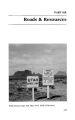
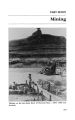
Show Brief History of Montezuma Creek Don Kemner I left California with a welding machine, a fourteen-foot trailer, and a light plant for electric power and arrived in Montezuma Creek on December 31, 1957. I was assured a job by Shell Oil Company on their lease work, building tank batteries and shipping lines for future oil development. On locating at the "water wheel," as it was called, I was grabbed by Superior Oil Company and did not get to work for Shell until later years. In the late 1950s it took at least five hours to go from the Aneth oil fields on the south side of the San Juan River to Shiprock, New Mexico. It took as long to go to Cortez, Colorado, from the north side. There were no roads, only trails. Very few automobiles were driven by the natives of the region. Sheep was their livelihood. The women of the Navajo tribe would hide until the "Anglo" was gone. No liquor was allowed on die reservation, and they would take it away from anyone caught with it. Punishment was severe enough so that you were barred forever from the reservation if you got out of turn. Oil shipping and gas lines for El Paso Natural and Four Corners pipeline were next in order. The El Paso plant was built about 1961. These tank batteries were tied in to the main lines and oil began to find its way to the outside world via pipelines instead of tank trucks. Oil wells were never developed unless they had a potential of five hundred barrels per day. It was not uncommon to have a well produce three thousand barrels a day. Gas was flared all over the basin just 303 San Juan County as is being done on the north slope today. The United States Geological Survey put a stop to this waste after the El Paso natural gas plant was built. Soon after production from the field leveled off at a high peak, engineers decided that the fields should be water-flooded even though almost all wells were still flowing a vast amount of oil. Water-flooding killed the gas pressure which brought the oil to the surface, and almost overnight the production of the field dropped to a fraction of what it was before. Salt water plagued the companies, causing leaks in pipelines and corroding everything it touched. When mixed with natural gas the salt water formed hydrogen sulphide which was highly corrosive. About this time the whole country was filled with government vehicles, and the tribe began to come into its own. Lunch break on an oil drilling rig in Glen Canyon. USHS Collections. 304 Montezuma Creek Pumping unit in the White Mesa oil field. USHS Collections. Navajos were employed and trained to build homes, irrigate, and work at gainful employment. In some cases they were trained and employed by the oil companies. Clinics were set up. Home training, cooking, and other crafts were taught to the Navajo women. Children of that era graduated from schools, then colleges or vo-ed centers. Government-sponsored schools were set up all over the reservation. El Paso Natural Gas Company built the elementary school being used now and sold it to the school district for the sum of $1.00. The bridge was completed joining the north side with the south side of the river. Merrit Carter, one of the old-timers, and his wife were caught in a flash flood while bringing books to the center of learning and many of them were soaked on delivery. There are few old-timers left in this community. The women saw to that. They gave their men the alternative of 305 San Juan County quitting and going elsewhere or they would leave anyway. Some did not even wait for that. They left, period. Merrit Carter, Marvin Miller, and I are the oldest old-timers. We have seen Montezuma Creek grow from hogans, construction camps, temporary air strips, dirt trails and uncontrolled washes, and rivers to a community in the making. Our only civic organization is the Montezuma Creek Lions Club. It has organized community participation and interest to provide a park, community building, high school, swimming pool, walkways for students, outdoor lighting, telephone service, tree planting, and a police substation. The Lions Club has promoted better public highways and bridges, cooperation with the Navajo police, and a true community spirit between whites and Indians. Our county commissioners deserve a big share of this credit although in many cases it was like moving a mountain to get them started. 306 |