| OCR Text |
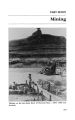
Show PART SEVEN Mining Mining on the San Juan River at Mexican Hat, c. 1894. USHS Collections. 263 Uranium Mining on the Colorado Plateau Gary L. Shumway One day in the summer of 1898, John Wetherfll led an archaeological expedition into a shallow cave in western San Juan County, Utah. There were no Indian ruins in the cave, and Wetherill, as the party's guide, had only stopped there for lunch to get out of the sun. However, once inside the cave, he saw something that momentarily made him forget the heat. In the cave wall was a petrified tree, surrounded by yellow stains, and, just outside the cave entrance was another petrified log whose carbonaceous material had been almost entirely replaced by vivid yellow, blue, black, and green minerals. While the archaeologists prepared lunch, Wetherill dug into the soft ore with his pocket knife, then, satisfied that his discovery was worth the effort, built a rock monument by the log outside the cave entrance. Between two flat rocks near the base of the monument he placed a piece of paper on which he had written his claim to the minerals located there. Wetherill never returned to the cave, nor did he record his claim. But he had fixed the location of his discovery indelibly in his mind. Forty-five years later, when he knew that his long, eventful career was closing, he described the cave with the yellow stains to a young friend, Preston Redd. Intrigued by WetheriU's account, Redd followed his directions to die cave in Red Canyon, found the outcrops, and soon uncovered the rich uranium deposits of the Blue Lizard Mine.1 WetheriU's interest in the petrified logs and associated minerals was not unusual on the central Colorado Plateau in 265 San Juan County Placer mining on the San Juan River, 1894. USHS Collections. 1898. For a number of years, explorers, prospectors, cattlemen, and others had stumbled across mineralized "logs" and other outcroppings and had submitted samples for assaying in the hopes that they contained valuable metals.2 Always in the past, the assays had shown only traces of gold, silver, or other important metals. However, as Wetherill left his home in Mancos, Colorado, that spring, the Colorado Plateau was abuzz with news that the riddle of the strange outcroppings had been solved and that there might be a market for the ore in the future. Some ore from one of the claims in western Colorado had been given to Charles Poulot, a graduate of the Paris School of Mines, who was doing technical work at the Cashin copper mine. When he was unable to complete the chemical analysis of this strange mineral, he had sent it to his professor, Charles Friedel, in Paris, who determined that it contained uranium and vanadium in a new mineral combination which he named carnotite. Perfectly timed with the identification of the Colorado Plateau ore was a demand for uranium and vanadium from a 266 Uranium Mining number of sources. Since 1871, small amounts of uranium occurring as pitchblende in the gold and silver mines of the Central City mining district of eastern Colorado had found a limited market in Europe. At first used mainly for pigments in dyes, inks, stained glass, and ceramics, after 1896 European scientific and technological interest greatly increased the demand for uranium. Of by far the greatest long-term importance was the discovery by Antoine Henri Becquerel in 1896 that invisible rays emanated from uranium ore; a discovery that, among other things, led ultimately to nuclear fission. But, though scientific fascination with radioactivity and its implications created a limited market from the outset, of much more immediate economic importance was technological interest in both uranium and vanadium as ferro-alloys in making fine steel. Active exploitation of carnotite began in the spring of 1898 when Gordon Kimball of Ouray, Colorado, obtained a lease on the Copper Prince claim, from which Poulot's samples had come. By June, Kimball had mined ten tons of carnotite, which contained 21.5 percent uranium and 15 percent Raplee's placer mining works in Oil Basin, twenty-five miles west of Bluff, 1894. Special Collections, Marriott Library, University of Utah. 267 San Juan County vanadium. By the next spring, local interest in the new industry was sufficient that when a cowhand named Tom Francis found some good deposits in Mclntyre Canyon, San Miguel County, Colorado, he precipitated a local rush. By 1906, the known deposits of carnotite extended from Cold Creek, just south of Price, Utah, to Coal Creek, near Meeker, Colorado.3 The problems of an uncertain market, low ore prices, and the demand for only high grade ore kept the carnotite industry very unstable from 1898 through 1906. Between 1906 and 1909, carnotite production was limited almost entirely to that extracted by claim owners doing the required $100 worth of assessment work each year. Most of this was stored on the mine dumps against the day the miners felt would yet come when there would be a good market for their ore. Beginning in 1910, the prospects for the miners and large companies alike appeared to be getting brighter as the demand for carnotite began to accelerate due to a new, exciting use for one of the elements it contained. Becquerel's discovery in 1896 that uranium would fog otherwise unexposed photographic plates set a number of scientists to exploring Big Indian copper mill in Dry Valley. Photograph Copyright 1979 Steve Lacy Wild Bunch Photos. 268 Uranium Mining the implications of uranium's radioactivity. Two of these scientists, Pierre Curie and his Polish wife, Marie Sklodowska Curie, soon concluded that pure uranium was much less radioactive than uranium ore, and in 1898 they proved the existence of a new, highly radioactive element in the ore, which they named radium. Almost from the moment of its discovery, a number of the properties of this unstable element aroused scientific interest, and by 1910 medical researchers began to look hopefully at the effects of radiation on cells. Noting that young, rapidly dividing cells subjected to moderate radiation were killed while more mature cells were less drastically affected, they perceived that radium held promise for the treatment of cancer. By 1913 a number of medical researchers, including the prestigious Dr. Howard Atwood Kelly of Johns Hopkins University, had conducted substantial research with the limited amounts of radium salts available and were convinced that if greater amounts of more nearly pure radium were available, radium radiation would have major efficacy in the treatment of at least some types of cancer. Their findings, boomed by Bureau of Mines officials and other Progressives who were excited by the curative possibilities as well as alarmed by foreign buyers, led to a major interest in radium in the United States. For a time, there was even serious consideration in Congress given to bills that would prohibit the exportation of much radium and perhaps even nationalize the carnotite deposits. Only through the concerted effort of Standard Chemical Company, which by 1913 had obtained most of the known carnotite reserves and secured contracts to sell in Europe all of the radium it could produce at $120,000 per gram, were sufficient anti-socialistic, free enterprise sentiments martialed to defeat the proposed legislation. Stung by opponents of the legislation who insisted that federal science was by its very nature inefficient, the Bureau of Mines officials and other Progressives turned to the National Radium Institute, formed as a cooperative arrangement between the Bureau of Mines, Dr. Kelly and other 269 San Juan County researchers, to demonstrate what could be accomplished through national planning. Between 1914 and 1917 the NRI produced seven grams of radium bromide at an announced cost of $37,000 per gram, an achievement that not only seemed to vindicate those who had faith in government science but also blunted the demand in Europe for Standard Chemical's and other radium companys' radium at $120,000 per gram.4 Between 1911 and 1922 there was a demand for carnotite not only for cancer treatment but for other scientific inquiry as well as for more mundane uses such as for making luminescent watch and instrument dials. However, in 1922, the already depressed domestic radium industry was dealt a death blow. The radium market was captured by Belgium with the opening of a huge new plant of the Union Miniere du Haut Katanga in Oolen, Belgium, which processed pitchblende, running as high as 80 percent uranium, from the massive deposits of the Luishwishi and Shinkolobwe mines of Katanga in the Belgian Congo. The loss of the radium market resulted in a decade in which there was almost no large company exploitation of the carnotite deposits. A handful of independent miners and prospectors, satisfying the very limited market for uranium for ceramic colorants and radium for patent medicines, retained their hope in a prosperous carnotite industry while high-grading the richest parts of a few exposed deposits. Elsewhere, the tunnels caved in or filled with water or tumbleweeds. Prospectors allowed their claims to lapse by failing to do the annual assessment work, and mining and milling equipment was left to rust. On every mine dump, lower grade ore stacked to one side began to leach to a bright canary yellow as if to remind miners it was there should a brighter day come in the future. The loss of the world radium market was as disorienting to the miners and prospectors of the Colorado Plateau as it was to the large radium companies. Long before 1923, most of these men had recognized the futility of trying to operate 270 Uranium Mining their own claims and had sold them to one of the large concerns, accepting employment as miners or going out to prospect for new claims. Because their livelihood depended Unidentified uranium miners in southeastern Utah, 1918. USHS Collections. 271 San Juan County on the ability of the large companies to sell carnotite, they shared with their employers the initial shock of the Union Miniere announcement, then the eventual realization that resistance was futile. For a decade after 1924 there was almost no market for carnotite. Howard W. Balsley managed to keep his Yellow Circle claims in San Juan County, Utah, operating on a small scale during most of this time, as did J. W. Lewis, who had some good claims near Gateway, Colorado. But no other independent miners produced more than a few tons. The ore was sold to the United States Radium Company of Orange, New Jersey, and to other refining companies. Part of the refined radium was used in the manufacture of luminous paint and for a limited amount of research; however, much of it was sold to quacks who used it for medicaments such as radioactive water, salves, tonics, and other nostrums.5 The purveyors of these remedies capitalized on the large amount of publicity given to the therapeutic potential of radium by the proponents of radium legislation and subsequently by the radium companies. At times raising false hopes for persons who had been informed by their doctor that they had diseases of a terminal nature, most preparations were designed for less vicious, if no more useful, purposes. These ranged from radioactive tonics to cure baldness to a glass bulb enclosing a rod smeared with radium paint which, according to the inventor, would, if suspended above one's bed, disperse "all thoughts and worry about work and troubles, and bring contentment, satisfaction and body comfort that soon results in peaceful, restful sleep."6 Neither Balsley nor Lewis was involved in these quack schemes. They delivered their ore to legitimate refining companies who found their own markets. However, it is doubtful that these two men or many of the other miners would have found anything too amiss in most of the medicaments advertised. The majority of the miners believed in radium cures, and some were patrons of the quack remedy business themselves, wearing sacks of high grade uranium around the neck 272 Uranium Mining to cure cancer of the throat and drinking bottles of water containing chunks of carnotite for the alleviation of rheumatism.7 This very limited market for carnotite had little impact on the fortunes of most miners, and the years between 1924 and 1934 represent the bleakest chapter in the history of the uranium industry. Nevertheless, this period was not devoid of bright spots. The very drabness permitted another springtime for the independent miners that would never have been possible otherwise. So disheartening was the outlook for the carnotite industry that the radium companies who had gathered in most of the known ore deposits permitted many of their claims to lapse. The companies, anticipating a burgeoning demand for radium, had built roads, blocked out reserves, and often even drifted to ore bodies before the sudden impact of Katanga uranium forced them to cease operations. As these claims became a part of the public domain once more, prospectors who had not lost their faith in the future of carnotite reclaimed them and thus found a greater reason to hope for a reinvigorated industry. Also, despite the adversity of this decade, many of those individuals who were to provide leadership in the areas of ore production and prospecting became known during this time. The most important of these new leaders was Howard W. Balsley. Balsley came to Moab, Utah, in about 1912 as an employee of the National Forest Service, fell in love with the area, and decided to settle permanently. As a federal worker, he had a steady income that was considerably larger than most persons on the Colorado Plateau, and it was inevitable that he would be approached by prospectors who were willing to share whatever they found for a grubstake. More out of consideration for the prospector than from a hope of becoming wealthy, Balsley agreed to grubstake several men. One of these was Charles Snell who, while out prospecting on Balsley's account, purportedly dreamed one night that he was in the Cane Springs area in northern San Juan County where he saw a yellow circle of carnotite in the 273 San Juan County Howard Balsley with truck used to haul uranium ore, c. 1917. USHS Collections. white sandstone. Snell went to the area he claimed to have seen in his dream, located the yellow circle, and discovered a number of good outcrops in the vicinity. Through generosity to Snell and a number of other prospectors, Balsley became half owner in some good carnotite claims. He quit his government job to develop these just in time to get in on the loss of the radium market. The next few years were the most trying of the more than sixty years Balsley devoted to the carnotite industry. He was inexperienced, had little working capital, and was hard put to find enough of a market to stay in operation. Through sheer determination, he survived the decade with his own interests while providing encouragement to the other miners.8 Balsley became a symbol of hope for the beleaguered miners and prospectors of the Colorado Plateau. In addition to buying their high grade, he listened to their problems, assisted them in any way possible, and encouraged them to 274 Uranium Mining retain their claims and look for a better future. He was honest in his dealings with the miners: his assays were correct, he paid top prices for both the uranium and vanadium content of the ore, and he paid promptly and fairly. If he had any fault it was in being so sympathetic to the plight of the miners and so generous with his own resources that he failed to pursue the kind of policies that most "good businessmen" would have recommended. When the government halted the sale of uranium in 1943, Balsley had little more wealth or property than many of the other independent miners. Of importance in another facet of the carnotite industry were the Shumway brothers. In 1910 Peter M. and Mary Johnson Shumway had moved their family of twelve children to Blanding, Utah. While the oldest son, Peter, moved to Moab, staked some of the first carnotite claims in that area, and married a woman he met in one of the carnotite camps, the rest of the brothers remained in Blanding, eked a precarious livelihood from the soil as small farmers, cattlemen, and gold miners, and began to raise large families of their own. Only occasionally did they visit their older brother who had become so involved in the carnotite industry. In the spring of 1931 Thomas A. Jones, a neighbor of Arah E. Shumway, brought a piece of yellow ore to him, stating that his sheepherder, Benito Sanchez, had found an outcropping of it in Cottonwood Canyon and wondered if it might be gold. Shumway immediately recognized the ore as carnotite and so informed his neighbor, indicating that if it were a good enough deposit there might be a market for it in the future. Jones was not interested in the discovery, and Sanchez was only interested to the extent of offering to tell where he had obtained the ore for an interest in a claim staked there. However, Shumway was quite curious about this sample of carnotite, found so far from any other known discovery. After advising his brother Harris of the sheepherder's find, these two men walked into the area described by Sanchez. Although their initial attempt was unsuccessful, they returned to the area and found that there were outcrops of 275 San Juan County carnotite up and down Cottonwood Canyon. Two more of the Shumway brothers, Seth and Lee, became interested in the report of Arah and Harris, and between March 20 and May 26, 1931, the four located and recorded thirty-seven claims. These claims were to be fairly important for the deposits of ore they contained, with the group still producing more than fifty-eight years later. They were also to contribute to the economic growth of the area by providing employment to miners, truckers, mill employees, and others. More important, however, was the introduction of the younger Shumways to the carnotite industry which these discoveries provided. During the next two decades, besides being active in ore production, the Shumways would more than match the rest of the miner-prospectors combined in the location of previously undiscovered claims in southeastern Utah.9 The Shumway brothers related their experience of mining the very rich ore from their Lonesome claim. This claim had been discovered west of Cottonwood Canyon by Lee and Harris Shumway in 1932 when they saw the vivid yellow outcrop while prospecting on the other side of a gulch. After Balsley began buying ore, Seth and Arah Shumway mined and shipped the ore from two high-grade trees that comprised the principal deposit on the claim. Because of the oxidized state of the ore, it was possible simply to scoop out the yellow powder with a shovel and place it in sacks, blasting being necessary only to strip off the overburden when it was no longer possible to reach the ore with a shovel. After several pickup truck loads of these sacks of ore had been shipped to Balsley, he sent an assay, informing the Shumways that the entire lot ran over 20 percent in uranium. As remembered by participants two decades later, these were simple, tranquil years. An occasional pickup load of sacks of high grade brought enough revenue to supply those things that must be purchased. Most of those mining at that time also kept pigs, chickens, a vegetable garden, and an orchard containing apple, pear, peach, cherry, apricot, and plum 276 Uranium Mining trees, with the fruit and vegetables eaten fresh or canned for winter use. The national forests surrounding the mines teemed with deer, which became a standard part of the miner's diet, in season or out. But if this combination of farming, mining, and poaching provided a subsistence for the miner and his family, it did not bring real prosperity. Nor did it provide the kind of community standing that the miners and their families wished for. Despite what in retrospect seems to have been an idyllic life of pastoral simplicity, the miners continued to hope for an opportunity to do more than sell an occasional few sacks of high grade. Late in 1936 it began to appear that the miners' long wait for prosperity might soon end. In response to a slight rise in the price of vanadium, a number of small companies began making plans to refurbish the small mills built before 1923 or to build new ones that would concentrate vanadium. Between 1936 and 1941 several small companies did begin Fry cabin, 1980. Crampton Collection, Marriott Library, University of Utah. 277 San Juan County operations, thus providing a limited market for miners' carnotite as well as encouraging prospecting by purchasing claims. However, miners' hopes that this activity would bring prosperity were ill-founded. Despite the persistence of the small companies as well as the miners, none of the mills proved successful. In part, this was attributable to the same factors that had made small mills uneconomic in the past: lack of experience, inefficient processes, the high cost of transporting chemicals and other supplies, and the fact that the margin of profit was not very great even under optimum conditions. More important was the fact that the milling companies were attacked by two large companies who considered the vanadium industry as their personal domain and who controlled much of the carnotite reserve. The details of the steps taken by the Union Carbide and Carbon Company and the Vanadium Corporation of America to control the production and sales of vanadium from carnotite during this time cannot be fully told here. In essence, Union Carbide's subsidiary, the United States Vanadium Company, in the late 1920s took over most of the mines once owned by Standard Chemical Company and through the next two decades added other properties. After some years of concentrating on production from its Peruvian Minasragra mine, the Vanadium Corporation of America during the early 1930s began to consider vanadium production from its own Colorado Plateau properties, the core of which were the Maggie C. and other Long Park properties earlier developed by the Bureau of Mines under the National Radium Institute agreement. Before the VCA could begin local production, Union Carbide offered an arrangement whereby its subsidiary, United States Vanadium Corporation, would mine vanadium which it would then sell to VCA who would remain in control of ferro-vanadium sales. This complicated agreement met a variety of needs, not only of the VCA but also of the USVC and other Union Carbide subsidiaries as well. Though their activities would eventually lead them into a quagmire of antitrust litigation, for more than a decade the USVC and the VCA 278 Uranium Mining controlled the vanadium industry on the Colorado Plateau. The determination of these two companies to beat down competition, especially after 1936 when worldwide demand for steel led to the formation of a number of small companies, compelled the USVC and VCA to ever more highhanded actions. Then, in May of 1942, the USVC received a superb opportunity to control the vanadium industry when it was designated as the government agent of the wartime Metals Reserve Company with the responsibility of bringing about unlimited production of vanadium for the war effort. Although instructed specifically to stimulate independent production, the USVC officials, now government agents, shared only with VCA the fact that it had been empowered to pay up to 50<t per pound for vanadium, and the two companies agreed between them to limit to 31* per pound the amount paid for almost all vanadium besides that produced by themselves. The rise in price for vanadium from 2It per pound, which the two companies had previously offered (having established this as their cost for mining ore from their own larger, easily accessible and relatively high-grade deposits), proved to be a substantial stimulus for independent miners, despite the collusion of the two large companies. When to this increase were added such government mandated inducements as haulage allowances for remote deposits, development assistance, loans for purchase of equipment, acceptance of low-grade ore, and the construction of additional mills, independent miners responded with considerable enthusiasm. Despite the reluctance of the two large companies to endanger their hold on the Colorado Plateau by truly encouraging independent activity, the federally sponsored Metals Reserve Company was highly successful in fostering production from independent miners' claims. For most carnotite miners, the Great Depression did not begin in 1929; it had begun at least in 1923, and it lasted until 1942. To be promised a market for all of the ore they could produce seemed like a dream come true, and the miners responded enthusiastically. 275? San Juan County Most of the outcrops had long since been high-graded, and few miners had possessed either the foresight or the money to drill their claims and block out reserves. Furthermore, either the USVC or the VCA had purchased most claims that promised to be commercially exploitable. Nevertheless, the independent miners contributed almost 40 percent of the total domestic vanadium production during the Metals Reserve period.10 In addition, as lessees, they accounted for most of the domestic production credited to the VCA and part of USVC's. Total domestic vanadium production, which in 1941 had been 2,513,051 pounds, rose to 4,439,130 pounds in 1942, then to 9,975,878 in 1943, before dropping to 3,527,054 pounds when the Metals Reserve program ended at the end of February in 1944.11 By the close of 1943, the miners had been successful in providing vanadium for any foreseeable wartime need, and when the USVC requested that the Metals Reserve program be discontinued, the government complied, terminating all contracts as of February 29, 1944.12 In February 1944 the independent miners of the Colorado Plateau faced a future that had not looked so dismal since the radium crash of the 1920s. The mines, earlier gutted of high grade ore, were now almost entirely devoid of known reserves of even low-grade carnotite. Additionally, in less than two years the miners had supplied enough vanadium to last the nation for years to come, even considering the greater demands of the war. There seemed to be little hope that there would be a market for vanadium beyond that which could be supplied by the two large companies. Furthermore, in 1943 the government had unaccountably forbidden the sale of uranium, even in small quantities for ceramic colorants. Looking at their depleted reserves and recognizing the futility of attempting to market carnotite even if they had some to sell, miners became convinced that the day they had waited for so long had come and gone again. Throughout the Colorado Plateau, the miners ceased to work their claims, sold their equipment, locked up their powder magazines, and 280 Uranium Mining began to look for other work. Even prospecting, which miners had fallen back on in the past, seemed to offer no hope. In San Juan County, Utah, where most of the new discoveries were being made, claim locations had numbered 151 in 1942 and 71 in 1943; in 1944 there were 4.13 In a day in which even the federal government was offering its carnotite mills for sale for almost nothing, the faith the miners had exhibited in the future of carnotite seemed to taunt them. They recalled the many times their wives had pleaded with them to settle down to a respectable job, even a WPA project, and begin to provide for their families as other men in the area did. They recalled the tears of their children who had been forced to go to school in shabby clothes and had been ridiculed because they had fathers who "didn't work, but just spent their time camping out in the hills." They had consoled their wives and children by telling them, for the hundredth time, that some day carnotite would be worth more than gold, and they would have a nice home, nice clothes, and would be proud of their father. But they had been wrong, they now realized bitterly. Most of the people of the United States endured the inconveniences occasioned by World War II knowing that the end of war would bring an end to austerity. For the carnotite miners, the end of the war would simply mean exchanging one kind of austerity, shared voluntarily by most of the nation, for another, more personal kind. While the rest of the nation bought new cars, refrigerators, electric stoves, clothes, meat, sugar, and gasoline, they would simply return to the other kind of austerity they had always known, in which the inequities of their life compared with their neighbors' were so noticeable. And now the miners could not even have the hope of a bright day in the future to sustain them. They had no way of knowing that the federal government had for some time been feverishly engaged in a project that would trigger a carnotite boom greater than their wildest dreams. They learned the truth on August 6, 1945, when President Truman announced that after years of intensive effort in the Manhat- 281 San Juan County tan Project, the United States had dropped an atomic bomb on Hiroshima. The beginning of the atomic age in August 1945, however, did not mean immediate prosperity for the beleaguered Colorado Plateau miners. In 1946 the U.S. Congress passed an Atomic Energy Act which created die Atomic Energy Commission and gave the commission control over the domestic uranium market. As the AEC stewardship began in January 1947, miners, anticipating a federally sponsored industry with ore worth $5.00 a pound and purchased at government mills, waited for the commission to circulate ore purchasing agreements. Instead, the AEC on April 12, announced that it had negotiated a contract for by-product uranium with VCA, and that company would purchase uranium on a schedule beginning at 35<t a pound for 0.20 percent ore, with a top price of $1.10 per pound of uranium in ore assaying 2 percent or better.14 Despite miners' strong complaints, 1947 passed without any marked improvement in ore-purchasing policy although the AEC did announce that the government had decided to retain the Monticello, Utah, mill instead of selling it to the VCA as earlier reported and that higher prices for ore were being contemplated.15 In April 1948 the AEC announced that it would pay $1.50 a pound for uranium in ore averaging over 0.20 percent and 31* a pound for vanadium averaging over 2 percent, if brought to the Monticello, Utah, mill.16 This program offered decidedly higher prices than those of the previous year and had the additional advantage of dealing directly with the AEC instead of with one of the two large companies. Nevertheless, the miners were still restive. Before they could begin production, they explained, they would have to search for new deposits of ore and go to the expense of reopening their mines which had not been worked since 1944.17 Sympathetically, the AEC added a 50- cent per pound bonus on uranium, to be used strictly for the development of the mines, and agreed to pay the expense of hauling the ore to the mills. The AEC also announced its 282 Uranium Mining intention to purchase the Durango mill and have it ready for production by early 1949.18 The government's favorable new ore-purchasing policy touched off a flurry of activity on the Plateau. By mid-June miners were establishing mining camps, building and repairing roads, buying new equipment, and doing the "dead work' necessary to find new ore deposits. At the same time, prospectors were actively staking claims for the first time since 1943.19 Prospectors' enthusiasm for the new AEC policy was apparent from the record of claims staked in San Juan County, Utah. From August 1, 1943, to December 31, 1947, only 94 claims had been filed. However, from January through September of 1948, 292 uranium claims were staked in that county alone. Despite their enthusiastic response to the new AEC policy, the miners and prospectors soon learned that the day of jubilee had not come. Assuming that the new policy would mean a return to the Metals Reserve prosperity of the early '40s, miners throughout the Plateau looked forward to the July 12 opening of the sampling plant at Monticello. When the date came, however, the AEC ordered a one-week delay because the sampling facilities were not ready. On July 19 the Monticello mill opened and 800 tons of ore poured in from throughout the region. After working for two days and processing sixty tons of ore, the sampling plant broke down. Several new attempts were made to crush the ore for sampling, but the available machinery could not process the flood of ore.20 Miners, comparing the cost of exploratory work, road building, machinery, mine renovation, and supplies with the amount paid by the AEC for the little ore that had been processed, rapidly became disillusioned. By the end of September even Fendoll Sitton, who owned some of the richest, most extensive ore bodies belonging to independent miners, declared that he was going to sell his equipment and lay off his men.21 He advised others to do the same. Miners were 283 San Juan County soon exclaiming that the AEC had been given $800,000,000 to spend in 1948 and seemed to have plenty of money for everything except the purchase of domestic uranium. Satisfied that a small annual yield was all that could be expected at a reasonable cost, the AEC, between 1948 and 1951, pursued a policy of encouraging production from mines that could produce larger amounts at a low cost, while offering little encouragement to owners of small ore bodies.22 This AEC policy left almost no one happy on the Colorado Plateau. Even those who did have mines that could be exploited under the existing price schedule were haunted by die fear that they would deplete their ore bodies in a market that offered very little profit, only to see the AEC raise the prices considerably in order to get the uranium from the smaller producers. Although the AEC policy of fostering only low-cost operations continued until 1951, the most discouraging period for the miners came in late 1948 and 1949. Low prices for ore and poor marketing conditions caused most miners to work unenthusiastically or cease production entirely. After the hope they had felt in mid-1948, the subsequent despair was felt even more keenly. However, by late 1950 the AEC was ready to make another reappraisal of the Colorado Plateau operation. With the Soviet Union now able to produce nuclear weapons, and with the United States at war with the Communist powers in Korea, there was a greatly heightened demand for a nuclear weapons stockpile. At the same time, the reserves of the Shin-kolobwe mine were getting low, and the known Canadian reserves were almost exhausted. Furthermore, as early as 1949 officials began to realize that the original estimates of the domestic reserve were far too low, just as the producers were insisting. During 1949 and 1950 a large number of new deposits were discovered, and the reserves on claims previously filed were found to be much greater than had been thought. It was also apparent that only the periphery of most favorable areas had been explored. Finally, John K. Gustafson, 284 Uranium Mining who had guided the ore procurement policy since the beginning of the Manhattan Project, retired in 1950, and his successor, Jesse C. Johnson, proved to be much less committed to a small, low-cost domestic industry.23 In January 1951, 150 members of the Uranium Ore Producers Association petitioned the Atomic Energy Commission, asking for higher ore prices, larger development and haulage allowances, and increased government drilling and other benefits. The AEC responded by announcing that, effective March 1, 1951, the government would purchase all of the ore the miners could produce at $3.50 a pound for uranium running over 0.20 percent and 31* a pound for vanadium. 24 With this announcement came the promise of prosperity to the Colorado Plateau. For fifty years miners had dreamed of this day as they filled their ore sacks with high-grade and shipped them to France or Germany via Galveston, as they went to work in the mining camps of Standard Chemical Company, as they sold their high-grade to the ever-encouraging Howard Balsley, as they worked their lease from the USVC or the VCA, or as they waited those last five years, each month confident that the wait would soon be over. It was over. And, as if to compensate for the half-century of waiting, the AEC on June 29 declared that persons who found new deposits would be paid an additional $3.50 a pound for up to 10,000 pounds of uranium mined from each property.25 Even before the promulgation of the 1951 program, mining and prospecting activity had begun to pick up. Ore production, which had decreased in 1948 and 1949 to 115 tons of uranium oxide, shot up in 1950 to 320 tons.26 Moreover, since early 1948, prospectors had been active throughout the Plateau, driven by the hope of finding a bonanza that would be exploitable under the existing price circular and by the belief that the AEC would soon improve its prices. However, this mining and prospecting activity was tame compared with the enthusiasm shown after the spring of 1951. By vastly increasing the number of mines that could be 285 San Juan County operated profitably and the amount of profit that could be made from each mine, AEC policies sent miners to work with an enthusiasm they had not shown even during World War II. The result was a rapid increase in ore production, with the 1951 total of 630 tons representing almost a 100 percent increase over 1950. Also, the very favorable price schedule and the $35,000 bonus offered for ore mined from a new deposit prompted prospectors to take to the canyons and mesas of the Colorado Plateau in a search for more outcroppings. With the old prospectors, who had dreamed of this day all of their lives, went a new generation of prospectors. Some were young men who benefitted from the things they had learned while accompanying their fathers. Others were farmers, ranchers, and merchants from the Plateau who previously had ridiculed the miners' faith in uranium's future but now put their acquaintance with the area to practical use. Most Head frame, shops, and hoist building in the Big Indian District. USHS Collections. 286 Uranium Mining were strangers to the Plateau who brought their Geiger counters and geological training to compensate for their ignorance of the terrain. From the combined efforts of these men came soaring uranium production beginning in 1954. As they came to record their claims in the county courthouses during 1951 and 1952, the Colorado Plateau began to hum with an excitement that it had never known before. All that was needed to trigger a boom of major proportions was for one of the prospectors to strike a bonanza. On the western slope of the Lisbon Anticline in northeastern San Juan County, Utah, a series of small outcroppings of uranium occurred in the Shinarump formation. These had been discovered in 1916, but recurrent attempts to mine them had failed even though many of the prospectors of the region had at one time or another staked claims there. In May of 1948, Dan Hayes, Jim Bentley, and W. Y. Brewer located twelve claims along these outcroppings and during the next few years mined a small amount of ore. One day in March 1951 a young petroleum geologist who had lost his job with one of the major oil companies visited these Big Buck claims, where Hayes was working at the time. After looking at the very definite anticlinal structure of the terrain behind the outcroppings, he asked if Hayes would mind if he staked some claims behind the Big Buck group. Upon receiving Hayes's good natured assent, the prospector located fifteen claims, giving them such names as Linda Mujer, Besame Mucho, Te Querio [sic], Mujer Sin Verguenza, and Mi Vida. The young geologist's name was Charles Augustus Steen. The next year and a half was a time of many frustrations for Steen. He was as optimistic as prospectors usually are. However, he did not have a job and he had a family to support. After many discouragements he decided to gamble all he had on an attempt to strike ore on his claims in the Lisbon district. He obtained a dilapidated core drilling rig which he moved to a canyon diat cut down through the Wingate formation on his Mi Vida claim. By thus lessening the distance he would have to drill, he hoped to reach the Shinarump 287 San Juan County formation before the rig broke down completely. From the beginning the project was rife with discouragement. Steen's wife and children were living in a tar-paper-covered shack with a meager supply of food and clothing. Nor were conditions promising at the Mi Vida. The rig, never in good condition, broke down, was repaired, then broke down again. Attempts to obtain parts and supplies from local mining supply outlets were met with a polite but firm rejection. Finally, Steen accepted money from his mother who mortgaged her home in Texas. Sinking the last money that he could hope to borrow into one final attempt to reach the Shinarump formation, Steen patched up his rig and began drilling once more. Then suddenly all of his hopes collapsed. Still several feet above the level at which he could hope to encounter ore, the diamond bit used to cut through the rock spun off the drill pipe and was left in the bottom of the hole. With no money to either fish the bit from the hole or to drill a new hole, Steen realized that his dream of finding uranium was ended. He now was faced with the necessity of going to his tar-paper shack and informing his wife and family that this venture, like others in his life, had ended in failure. Almost as an afterthought, Steen removed some of the rock cores from the core barrel of the drill pipe and tossed them in his jeep. After arriving in town he stopped at a service station where a friend was testing with a Geiger counter some rocks that his son had found while prospecting. Placing one of his own cores near the probe of the counter, Steen watched in disbelief as his unpretentious gray core "pegged" the needle of the counter, even in its lowest range. Before the drilling rig had broken down completely, he had drilled into the top of fourteen feet of a very rich uraninite-type ore in a deposit so extensive that it passed beyond the limits of the Mi Vida onto the Big Buck claims. Finding little difficulty now in getting capital to finance a drift to his ore, Steen began operations in the fall of 1952 and reached his ore the next February. By September of that year he had already mined over a million dollars worth of ore 288 Uranium Mining from the Mi Vida, and the roads to all of the mills in the area were packed with Utex company trucks going to and from his mine.27 The news of Steen's bonanza reverberated through the canyons and mesas of the Colorado Plateau and burst upon the national consciousness. As newspaper and magazine articles detailed this saga of a prospector who climbed from abject poverty to dazzling wealth, the effect was predictable. For months, people throughout the nation had heard fantastic rumors of the fortune waiting for them on the Colorado Plateau and of the number of persons who were already taking advantage of this opportunity. Joe Cooper and Fletcher Brunson, they heard, had paid $1,000 for a claim in a remote portion of San Juan County, Utah, and since discovered ore bodies so large that they were turning down offers of $10,000,000 for their mine. The Shumway brothers, after twenty years of successful prospecting, continued to make new discoveries in areas hitherto unsuspected and to find a good market for their claims. Fendoll Sitton, who paid $200,000 for some of the Shumway claims in western San Juan County got the AEC to drill them and on the first claim blocked out deposits containing several million dollars worth of uranium. While many people were able to come to the region and actively search, a far greater number preferred to remain at their secure jobs and merely sink their savings into the new El Dorado. The willingness of many thousands of such people to invest their savings in the uranium industry greatly influenced the nature of the uranium rush that flourished with such intensity between 1953 and 1956. At the outset this market for claims kept prospectors actively staking claims with even a very small outcrop of ore, which could be sold for at least $1,000. Even before the supply had been exhausted, investors had begun clamoring for any that were located in a favorable area where there was a possibility that through drilling (which the investor hoped he could get the AEC to finance), another Mi Vida would be discovered. Soon, 289 San Juan County most of the areas that were considered favorable for the discovery of uranium were claimed. Few of the miners who formed companies in late 1953 and early 1954 expected a rush to their doors for their stock. If they could just raise operating capital, they would feel repaid for their efforts. However, in their simple aspirations, they failed to consider the extent of speculative fever and the ability of certain promoters to stampede investors their way. A promoter named Jay Walters moved to Salt Lake City shortly after the news of Steen's strike broke in 1953. Sensing the possibility of interesting the public in uranium stocks, he bought a few claims and early in 1954 formed the Uranium Oil and Trading Company, capitalized at 3,000,000 one-cent shares. Finding the established brokerage firms reluctant to handle his stock, Walters enlisted the aid of a young agent named Jack Coombs. Coombs received permission from a friend, Frank Whitney, to peddle stock in the latter's coffee shop and the first week sold $10,000 worth of stock. With this promising beginning, Walters formed another company, Alladin Uranium, and promptly sold $43,000 worth of stock. Even more encouraging, within a few weeks after opening, both stock issues had closed and the market price of each had gone up at least 500 percent. Coombs and Whitney both left their post in the coffee shop, established their own investment firms, and prepared for the stock boom Walters anticipated.28 The rush was not long coming. By May the demand for uranium issues far outstripped the capacity of brokers to service the requests of customers. Daily sales soared from a manageable 200,000 shares in March to 7,000,000 shares in May. Between February and June 1954 speculative interest in the penny stock market was fanned to white-hot intensity by the continued announcements of bonanza uranium discoveries, the well-publicized success of some of the first companies who had offered stock, and the almost universal success of uranium stock offerings. Some of the hysteria subsided early in June, but uranium stocks continued to move very 290 Uranium Mining well for another year. Federal Uranium, with claims near Steen's Mi Vida, had begun its stock offering in January 1954 at a cent a share. By late May the bid price was over 20 cents. Lisbon Uranium, also having claims in the general vicinity of Mi Vida, opened its stock offering at 20 cents. It instantly jumped to 35 cents, then 80 cents, and one month later was at $2.25. Standard Uranium, also claiming property on the Lisbon Anticline, opened its public offering at $1.25 per share in May 1954. On the first day all 1,430,000 shares were sold. The demand for uranium stocks was so brisk that few investors took time to study the soundness of the stock they were buying. The company prospectus outlining property owned, development plans, remuneration of officers, and other details was seldom read carefully even if it was honestly presented. Furthermore, as the intensity of the boom began to affect all involved, the companies became increasingly embroiled in the speculative spirit of the times. For about eighteen months uranium stocks sold actively, if somewhat erratically. There was little basis for the price most of these issues obtained beyond the fact that investors, caught up in the fever of the rush, were willing to pay ever higher prices. With no dividends and few bonanza discoveries the stocks could not be sustained in their inflated state. By mid-1955 they had begun to fall. Many continued to be offered for years to come, but their fascination diminished quickly. By the end of 1956 stocks that had once sold for 30* were going for one-half cent per share, and shortly thereafter most of the companies quietly ceased to exist. Few of the penny stock companies survived the fall of 1955, but after the orgy was over they became the scapegoats. However, it was not the miner, given the title of company president in return for contributing his producing property, who garnered the stock profits. In fact, to a much greater degree than is usually the case, the risk capital was tunneled into the expensive search for uranium, precisely as it had been intended. That portion siphoned off went almost 291 San Juan County entirely to the promoters, who exhibited remarkable ability in extracting a maximum profit from a minimal investment. By purchasing stock before the public offering, running up the price by carefully placed rumors, and then selling at peak profits, a few of the promoters were charged with fraud. However, as one writer put it, "most got away with nothing Oil drilling rig in Lisbon Valley, c. 1962. USHS Collections. 292 Uranium Mining more punishing than money for their escapades."29 The decline of the stock market was just one symptom of the ebb in popular enthusiasm for uranium. By the end of 1956 there was little question that the rush was over. However, for the miners the boom in the uranium industry was not over. The mining boom, dating from the favorable ore purchasing policy of 1951, had preceded the uranium rush and did not, in fact, diminish appreciably for another decade. The wild, ecstatic days of the rush were simply the adolescent years of the uranium industry. As they ended, the industry became what one writer characterized as "a tough, mature business where the survivors are those big enough to find and mine enough high-cost ore to come out ahead."30 Some of these companies were survivors of the uranium stock market crash: Standard, Federal, Lisbon, and Atlas. But most of them were the large mining and oil companies of the United States such as Phillips Petroleum, National Lead and Zinc, New Park Mining, the Texas Company, New Jersey Zinc, Homestake Mining, Anaconda Copper, Humble Oil, Getty Oil, Kerr-McGee, and others who now saw an advantage to entering the uranium business. These companies expended millions of dollars to find, mine and mill what was often high-cost ore. At the same time, they profited from AEC milling contracts that provided for amortization of facilities within five years and a guaranteed market for all concentrates produced at a price originally designed to encourage production. 31 The AEC decision to continue the purchase of uranium even after the nation's strategic needs were met resulted from a fundamental shift in emphasis from military needs to a broad peacetime application of atomic energy for electrical power generation. If the generation of nuclear power by private industry was to come about, the AEC realized, the federal government would have to subsidize the uranium industry until the demand for nuclear fuel from private sources ended the need for government support. In May 1956 the AEC confirmed its commitment to the industry by guarantee- 293 San Juan County ing its ore procurement program until at least 1966.32 By deciding to push the development of peacetime nuclear energy the AEC provided a striking example of the federal government's power to make long-range plans for the benefit of the nation. No individual utility company could have funded such a mammoth, long-range, risky venture. If nuclear generation of electricity was to become a reality, at least before the near exhaustion of the world reserves of fossil fuels, it would have to be initiated by public rather than private enterprise. In committing itself to support the uranium industry until private enterprise could create its own market, the AEC put its prestige on the line for what was at best a risky gamble. The commission estimated that the private market would develop between 1965 and 1970, but there was no way to be certain. Much depended upon the utility companies' willingness to participate in the development of the technology necessary to make nuclear energy competitive with fossil fuels for the generation of electricity. There was a possibility that nuclear energy might not become competitive for many years. At a time when many experts were scoffing at its estimates as being far too optimistic, the AEC in 1962 projected that by 1980 the United States would have nuclear plants capable of generating 40,000,000 kilowatts of electricity. As early as 1964 these estimates began to appear too conservative, and in 1966 they were increased to 80,000-110,000 MWE. At the close of 1968 they were revised upward again with experts in the industry projecting a capacity of at least 150,000-170,000 MWE for 1980.33 The coming of age of the nuclear power industry had a marked effect on the domestic uranium industry. Instead of tottering on the edge of extinction, it showed more vigor in the late 1960s than it had during the feverish days of the mid-1950s. For, despite reserves that once seemed inexhaustible, it was apparent by 1966 that there was not enough uranium to supply the projected fuel needs of plants 294 Uranium Mining until 1980.34 The result was a mining boom of unprecedented dimensions. In 1967 and 1968 alone, uranium companies acquired mineral rights to over sixteen million acres of federal, state, railroad, Indian, and other lands.35 Drilling and other exploratory work also reached a new high. In the peak boom year of 1957 companies had drilled 9 2 million feet. The 1968 total was more than double that figure.36 Even the uranium stock market, once looked upon as a colorful, one-time spree, returned with part of its former allure.37 As has happened so many times before in the history of the uranium industry, however, the great promise of sustained prosperity once again proved illusory. For a few heady years there was a great demand for all of the uranium that could be produced. So great was the demand throughout the world and so limited the known reserves that there was even a concerted effort to establish a uranium cartel committed to pegging uranium at a price of $40 per pound. But if uranium producers in the Intermountain states were satisfied with their role and utility companies were grateful for nuclear energy in a day of skyrocketing costs for increasingly scarce fossil fuels, there were others in the nation who did not feel so comfortable with nuclear energy. Some Americans were genuinely concerned about the generation of fissionable materials that might fall into the hands of irresponsible individuals, the real danger of a nuclear accident that could expose large populations to radiation, and the nagging question of how safely to dispose of the mounting accumulations of very dangerous nuclear waste. These fears were fed in March 1979 when one of Metropolitan Edison Company's Three Mile Island turbines shut itself down. The Pennsylvania plant's operators became concerned about assuring that coolant not overfill the reactor. In so doing, they overrode the plant's core cooling safety functions, despite insistent system warnings, allowing the core to melt and release low-grade radiation into the air. Not one person was hurt when almost everything that could go wrong did at a sizeable nuclear power reactor in an urban area of the east- 295 San Juan County ern United States. This fact might have been reassuring to a nation that had been fed an almost constant antinuclear diet by the media. Instead, this accident became the symbol of nuclear disaster. Persistent, substantial construction cost overruns, caused partly by ever-stricter federal safety requirements, rising and sometimes raging environmentalist opposition to specific nuclear facilities, and the growing problem of the disposition of nuclear waste have led most utility companies to seek other means for generating electricity in the United States. At least temporarily the predicted shortages of uranium have instead become a glut. At a moment when huge new reserves of high-grade uranium have been located in northern Arizona, southern Utah, and in the old carnotite area, and Energy Fuels Company has constructed a large, highly efficient mill at Blanding, the domestic uranium industry seems headed for the greatest slump since the mid-1940s. There may come a day when the dumps of a thousand mines will have washed to the San Juan and out to sea and the portals will have filled with tumbleweeds. On the other hand, there have been other bleak times in the history of the uranium industry, and the day may quickly come when compressors and blasting powder once again compete with the pervasive quiet of a summer day on the Colorado Plateau. If it never happens again, few can really begrudge its demise, for a generation of independent miners who had waited and prayed for their ship to come in lived to see it safely home, and another generation enjoyed the prosperity it brought. NOTES 'Interview with Preston V Redd, Blanding, Utah, January 1, 1964. A typed trans cript of the tape recording of this interview is available in the California State University, Fullerton, Oral History Collection, and in Special Collections, Clark Library, Brigham Young University, Provo, Utah. A search of San Juan County, Fee and Entry Records, County Courthouse, Monticello, for the period from 1896 through 1906 showed that Wetherill failed to record his claim. However, Redd found the discovery monument with a claim paper inside when he followed WetheriU's directions to the claim in 1943. 2Howard W. Balsley, Address given before the Moab, Utah, Rock, Gem, and Mineral Society, May 12, I960, p. 8 (copy in auuior's possession); Kathleen Bruyn, 296 Uranium Mining Uranium Country (Boulder: University of Colorado Press, 1955), p. 99; "Uranium," Salt Lake Mining Review, February 23, 1914, p. 15; David Lavender, One Man's West (Garden City, New York: Doubleday, 1956), pp. 304-5. 3U.S. Geological Survey, Mineral Resources of the United States, 1901 (Washington, D.C, 1902), p. 270; J. M. Boutwell, "Vanadium and Uranium in South eastern Utah," U.S. Geological Survey Bulletin 260 (Washington, D.C, 1905), pp. 200-210; Don Sorensen, "Wonder Mineral: Utah's Uranium," Utah Historical Quarterly 31 (Summer 1963): 282-83; Mineral Resources of the United States, 1906, p. 526; Richard B. Moore and Karl L. Kithil, "A Preliminary Report on Uranium, Radium, and Vanadium," U.S. Bureau of Mines, Bulletin 70 (Washington, D.C, 1913), pp. 9-29; Herman Heck and William G. Haldane, "Study of Uranium and Vanadium Belts, Southern Colorado," Colorado State Bureau of Mines Report, 1905-6 (Denver, 1906). 4 For a much more extensive account of this important facet of uranium industry history, with source citations, see the author's Ph.D. dissertation, "A History of the Uranium Industry on the Colorado Plateau" (University of Southern California, 1970) pp. 11-79. 5Roy Gibbons, "Wanted: Old Time Radiation Victims," Science Digest 46 (September 1959): 532-37; Mineral Resources of the United States, 1926, pp. 265-68. ^Mineral Resources of the United States, 1926, p. 268. 'interviews with Howard Balsley, Pete and Hattie Dalton Shumway, and Seth Shumway. Typed transcripts of the interviews with Balsley and Pete and Hattie Shumway are located in the California State, Fullerton, Oral History Collection and in Special Collections, BYU, "interview with Balsley; San Juan Record (Monticello, Utah), September 6, 1934, p. 1. 'interviews with Pete and Hattie Dalton Shumway, Arah, Seth, Harris and Lee Shumway; San Juan County, Fee and Entry Records, "Book R," pp. 505-36; Minerals Yearbook, 1932-33, p. 329- Typed transcripts of the interviews with Shumway, located in the California State, Fullerton, Oral History Collection and in Special Collections, BYU. 10Blaire Burwell, "Chart of Carnotite Production, 1936-48," MS in Burwell papers; Minerals Yearbook, 1943, p. 663 "Minerals Yearbook, 1942, p. 665; Minerals Yearbook, 1943, p. 663, Minerals Yearbook, 1945, pp. 649-50. ,2Nisley v. Union Carbide, pp. 1369, 2153, 2777. For a much more detailed account of the collusion between the two large companies and the Metals Reserve period see Shumway, "A History of the Uranium Industry," pp. 92-138. 13San Juan County, Fee and Entry Records, "Book R-l," pp. 356-480. '4Times Independent (Moab, Utah), May 1, 1947, p. 1; June 26, 1947, p. 1; Minerals Yearbook, 1947, p. 1206. ^Times Independent, August 21, 1947, p. 1; January 1, 1948, p. 1. 16Jesse C. Johnson, "AEC's Uranium Procurement - Domestic and Foreign," remarks prepared for delivery before the Wyoming Mining Association, Riverton, Wyoming, April 17, 1959, pp. 4-5; Nisley v. Union Carbide, p. 1813; Deseret News, March 10, 1948, p. 6; Engineering and Mining Journal, May 1948, p. 108; Grand Junction Office, AEC, "Chronology of AEC Domestic Uranium Raw Materials Program," p. 1. ,7AEC "Chronology," p. 1; Times Independent, September 30, 1948, p. 1. mTimes Independent, May 13, 1948, p. 1; June 3, 1948, p. 1. 19Times Independent, May 20, 1948, p. 1; June 17, 1948, p. 1. mTimes Independent, July 1 , 1948, p. l;July 29, 1948, p. 1; September 30, 1948, p. 1. 21 Times Independent, September 30, 1948, p. 1. 297 San Juan County 22Times Independent, December 29, 1949, p. 1; February 16, 1950, p. 1. "John K. Gustafson, "Uranium Resources," Scientific Monthly 69 (August 1949): 115-20; Minerals Yearbook, 1950, pp. 1257-58; Harold B. Meyers, "The Great Uranium Glut," Fortune, February 1964, p. 159 "Grand Junction Office, AEC, Press Release No. 10, February 28, 1951, "Atomic Energy Commission, "Domestic Uranium Program Circular 6," p. 1. "'Robert D. Nininger, "World Production and Reserves of Uranium," Address before the 12th Annual Minerals Symposium of the American Institute of Mining, Metallurgical, and Petroleum Engineers, Moab, Utah, June 23, 1967, figure 4. 2~Engineering and Mining Journal, September 1953, p. 72, Perrin Stryker, "The Great Uranium Rush," Fortune, August 1954, pp. 89-93, 1 8; Bruyn, Uranium Country, pp. 117-20; Salt Lake Tribune, January 25, 1953, p. E-l; Deseret News, February 13, 1953, p. B-l; Salt Lake Tribune, July 29, 1953, p. 21; Times Independent, August 13, 1953, p. 1, August 20, 1953, p. 1; Thomas E. Gillingham, "Uranium," Mining Congress Journal (February 1954): 116-17; Charles A. Steen et at, "Uranium Mining Operations of the Utex Exploration Company in the Big Indian District, San Juan County, Utah," U.S. Bureau of Mines, Information Circular 7669 (Washington, D.C, 1953), pp 1-4. 28"Pennies for Uranium," Time, April 5, 1954, pp. 89-90; interview with Trent Parker, Salt Lake City, Utah, May 9, 1964. 29Meyers, "The Great Uranium Glut," p. 110. w"Coming of the Giants," Time, May 26, 1956, p. 90. *' Meyers, "The Great Uranium Glut," p. 159 "Allan E. Jones, "Address before the Ninth Annual Minerals Symposium Uranium Section," Moab, Utah, May 22, 1964, p. 2 (copy in author's possession); "AEC Announces New Uranium Procurement Program and Extension of Initial Production Bonus," AEC, Press Release No. 150, May 24, 1956. "Elton A. Youngberg, "The Present Uranium Situation," paper read before the Wyoming Mining Association, Riverton, Wyoming, May 13, 1967, p. 3; Glenn T. Sea-borg, "The Nuclear Industry - 1968 and Beyond," Financial Forum on Nuclear Energy, New York, October 30, 1968, pp. 4-5. '•"The Future of Nuclear Fuel," Magazine of Wall Street, March 1967, pp. 24-27, 43. "Allan E. Jones, "The Regional Uranium Picture," paper read before the Wyoming Governor's Conference on Uranium, Casper, Wyoming, November 1, 1968, p. 3 (copy in author's possession). ^Sanjuan Record, February 27, 1969, p. 12. 37Harold B. Meyers, "Another Big Whirl for Uranium," Fortune, April 1968, pp. 128-31. One miner, who sold his claims to a large company for $100,000 and 250,000 shares of stock in mid-1968 saw the stock shoot up almost 1,000 percent within a few months, increasing his paper assets over two million dollars. Interview with Devar Shumway, June 28, 1969. 298 |