| OCR Text |
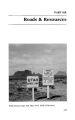
Show Roads and Resources of San Juan County Kenneth R. Bailey In my early memories of road developments in San Juan County, I recall the first road cut through the Comb Reef west of Blanding by contractors Whiting and Haymond with Jim Wardle their superintendent. Western Mine Supply Company, which I then owned, leased them a compressor and they started from the top with the cut through Comb Reef. Difficulties with fractures and slides made it desirable to come up from the bottom some 300 yards away. Whiting and Haymond said they would keep renting this compressor if I would deliver it to the bottom of the Comb. This made it necessary to take the compressor to Blanding, over Elk Mountain, through the Bears Ears, then across a road just brushed out with a cat to the bottom of the Comb, a major undertaking in itself. » About this same time my partner, E. J. Hall, and I furnished the compressors, steel, bits, dynamite, and supplies for Nick and Felix Murphy of Moab, Utah, to put in the first road off the rim of Dead Horse Point down the Shaeffer Trail. Many roads in the county have been built by private and public financing to reach and extract the natural resources of San Juan County. Several are still being built for this purpose, and there is cooperation between agencies to build these roads to county road standards, after which the county takes over the maintenance. In years past there has been a superhuman effort made to develop water, roads, and private property in San Juan County. The development of natural resources and the rise in 259 San Juan County assessed valuation is a good indication of the business and industrial activity in the county. It indicates the tax base available as a resource to provide the desired services. The assessed valuation from 1938 to 1982 reflects a tremendous increase and fluctuation. 1938 .... $ 1,282,961 1954 3,879,071 I960 132,839,639 Previous peak 1972 46,851,350 Decline 1982 213,375,509 Current all-time peak Looking south from Deadhorse Point above the Colorado River toward the Blue Mountains. Photograph by G. B. Peterson, © 1983. 260 Roads and Resources It would be well to note with the current all-time peak valuation of $213,375,509 that 90 percent of this valuation is assessed on mines, oil wells, and other natural resources. It would be very difficult to even provide the services of the courthouse without this natural resource tax base. In reviewing past commissioners' minutes about budgets, on March 2, 1881, we note the total budget for schools was $900. On October 6, 1898, bonds in the amount of $4,000 were to be issued "for the purpose of paying off the indebtedness accrued and that will accrue in consequence of the increased expense to the county by the change from territorial to state government and other causes." On December 28, 1929, the budget for state and county roads was $13,000, out of a total expenditure of $32,630. Two years later, on December 30, 1931, the budget for state and county roads was $7,500, out of a total expenditure of $24,875. Ten years later, on December 26, 1941, the budget for county roads was $500, out of a total expenditure of $7,500. By 1941 the state had taken over a number of roads. The 1982 budget called for: Collector and B. roads $2,435,066 Capital improvement roads 2,000,000 County roads 816,300 Total on roads $5,251,366 Many roads in the county are built on a cooperative basis. The largest current project, the road from Bluff to Montezuma Creek, is an example. The estimated cost for one structure, the grade, and drain is approximately $3,000,000. Of this amount, the Utah Division of Indian Affairs is contributing $750,000. The roads in San Juan County are really the lifeblood of our economy and survival. 261 |