| OCR Text |
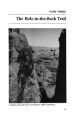
Show PART THREE The Hole-in-the-Rock Trail Looking down the Hole-in-the-Rock. USHS Collections. 87 The Hole-in-the-Rock Trail a Century Later Allan Kent Powell Because historic sites and places reverenced by a people tell much about their culture, development, and values, the Hole-in-the-Rock trail is of immense importance as a symbol of the pioneering effort throughout the Intermountain West from 1847 until into the twentieth century. There remains much of the original 180-mile road, opened in 1879 and 1880 through one of the most isolated, desolate, and difficult areas of the United States, to inspire, illuminate, and challenge us. Familiarity with the trail raises questions of why and how this unique relic of the pioneer experience came to be and how it can be best used and preserved for the benefit and enrichment of the people of this county, this country, and the world. For just as shrines like Jamestown, Plymouth, Independence Hall, the Alamo, and Gettysburg speak of freedom and the birth and survival of this nation, the Hole-in-the-Rock trail rings of commitment, dedication, and accomplishment in the settlement of the West. While there were many factors and forces in the pioneer process, no other single trail experience more vividly and forcefully etches the nature of the pioneer experience on one's consciousness. The Hole-in-the-Rock trail is a unique inheritance from our western pioneers. Unlike other treasured heirlooms from these people - such as a Bible, gun, stick of furniture, or piece of jewelry which conjure up memories of our predecessors in the comfort of our modern-day surroundings, the trail takes us back to experience physically the fatigue, heat, isolation, and sometimes danger these pioneers 89 San Juan County felt as we travel over and examine this unique historic site. The purpose of this paper is to describe the Hole-in-the- Rock trail as it remains today, a century later, while examining the background and history of its development. Implicit in this endeavor is the plea for greater recognition of and care for this priceless treasure of our pioneer past. In his book, The Gathering of Zion, the Pulitizer Prize winning author, Wallace Stegner, writes of the symbolic importance of the trail: For every early Saint, crossing the plains to Zion in the Valleys of the Mountains was not merely a journey but a rite of passage, the final, devoted, enduring act that brought one into the Kingdom. Until the railroad made the journey too easy, and until new Members of the 1880 Hole-in the-Rock expedition, c. 1930. Left to right: Parley Butt, Leona Walton Nielson, Margaret Adams, Sarah Jane Wilson, unidentified, unidentified, Caroline Nielson Redd, Sarah Perkins, Charlie Walton, Kumen Jones seated Special Collections, Marriott Library, University of Utah. 90 Hole-in-the-Rock Trail generatibns born in the valley began to outnumber the immigrant Saints, the shared experience of the trail was a bond that reinforced the bonds of the faith; and to successive generations who did not personally experience it, it has continued to have sanctity as legend and myth. . . Symbols of the trail rise as naturally out of the Mormon mind as the phrase about making the desert blossom as the rose - and that springs to Mormon lips with the innocent ease of birdsong. Those symbols - white bows of covered wagons, horned cattle low-necked in the yoke, laboring files of handcarts, booted and bearded pioneers, sunbonneted Mothers of Zion - are recurrent, if not compulsive, in Mormon art, which runs strongly to monumental sculpture and is overwhelmingly historical in emphasis. One might expect to find artistic treatment of Joseph's revelations from God or His angels, the early persecutions and martyrdoms, the massacre at Haun's Mill, the assassination of Joseph and Hyrum Smith in Carthage Jail. But these things, though remembered, have not emerged as abiding symbols. Instead, one finds the trail.1 While Stegner accurately assesses the experience of crossing the trail to Utah as a rite of passage which brought one into the Mormon Kingdom, by no means did the pioneering experience end as the last handcart or wagon rolled through the mouth of Emigration Canyon or Parley's Canyon and into the Valley of the Great Salt Lake. These wagons would carry the Saints to over three hundred settlements in the Intermountain West where the community-building experience, unlike that of the trail, would prove an ongoing, never-ending, and sometimes hopeless endeavor. Perhaps the trail is an important Mormon symbol because it illustrates the pioneer ability to conquer, to succeed, and to endure to the end - essential elements in any scheme to colonize and hold the deserts, valleys, and mountains of this vast land. In this settlement process nineteenth-century Mormons would draw time and again upon their trail experience. However, as the first band of Mormon pioneers traveled west from Nebraska in 1847 with few problems or obstacles, little did they realize that more than three decades later their legacy would drive a band of fellow Saints to find and open a 91 San Juan County trail which by all elements of reason should have been judged impossible. For the few whose pioneer saga encompassed both the trek to Utah and the Hole-in-the-Rock trail, the comparison voiced by Mons Larson was no doubt representative: ". . . the handcart journey . . . he made . . . from Winter Quarters to Salt Lake City was not nearly so hard as the journey through the Hole-in-the-Rock."2 The settlement of the San Juan area was not an isolated event in Utah's history but followed in logical sequence a colonization effort which encompassed portions of Canada, Mexico, all of Utah, and parts of Idaho, Wyoming, Nevada, Colorado, New Mexico, and California. The process began with the establishment of Salt Lake City in 1847 and continued over the next three decades until Brigham Young's death in 1877 at the rate of about a hundred communities each decade. The San Juan region was, and is still, one of the most isolated parts of the United States. The country is extremely rough and broken. The canyons of the Colorado River and San Juan River and their tributaries are characterized by sheer-walled cliffs several hundred feet high, while the surrounding mesas, hills, and washes with their bone-jarring slickrock, cedar forests, and sand presented their own obstacles to transportation. In addition, by 1880 the San Juan region was the last area in Utah to be occupied by a large number of Indians, as the San Juan River was something of a natural meeting area for Navajos, Utes, and Paiutes. Given the ruggedness of the country, the questionable agricultural potential of the region, the availability of more accessible virgin agricultural land in other areas, and the threat of Indian hostilities, it is understandable why the settlement of the San Juan area came in the twilight of the Mormon settlement effort. That the settlement was not delayed longer than 1880 can be traced to the need to cultivate better relations with the Indians, to insure Mormon control of the area and thereby increase the security of Mormon settlements to the west, to open new lands as the older Mormon 92 Hole-in-the-Rock Trail settlements had reached the limit of usable farmland, and to provide a springboard for future Mormon settlements to the east, south, and north. Also of great concern to church leaders was the occupation of all usable farm and grazing land, especially if non-Mormons threatened to acquire the land. Additionally, the San Juan region was felt to provide a more satisfactory home for converts from the southern states who found the winters too cold, yet, according to church leaders, needed the pioneer experience to get " . a good foundation temporally and spiritually."3 Finally, members of the Hole-in-the-Rock expedition were convinced that they were part of a divine plan. As one member of the expedition wrote in later years. Wagon coming up through Little Hole-in-the-Rock, during reenactment of the Hole-in-the-Rock trek. USHS Collections. 93 San Juan County My purpose in this humble effort in writing about it [the Hole-in-the- Rock trek] is to convince my children and my descendants of the fact that this San Juan Mission was planned, and has been carried on thus far, by prophets of the Lord, and that the people engaged in it have been blessed and preserved by the power of the Lord according to their faith and obedience to the counsels of their leaders. No plainer case of the truth of this manifestation of the power of the Lord has ever been shown in ancient or modern times.^ Plans for a colonizing mission to the San Juan were announced at the quarterly conference of the Parowan Stake held December 28 and 29, 1878. Although the specific location of the settlement had not been selected, people were issued calls to participate in the endeavor. For many this meant giving up comfortable homes in the older settlements of Parowan, Paragonah, Cedar City, Panguitch, and other communities. While those called were not compelled to go, many firmly believed that the call was divinely inspired and wherever the church authorities directed they would go. In early January 1879 Mormon Church President John Taylor appointed Silas S. Smith of Paragonah leader of the San Juan Mission. Seven months later Taylor called Platte D. Lyman of Oak City as an assistant to Smith. Because of Smith's absence from the group while securing funds and arranging for supplies, Lyman was the recognized leader of the expedition from mid-December 1879 until after their arrival at Bluff in April 1880. The 236 individuals included in the San Juan Mission came from sixteen different Utah communities and settlements. 5 Some, such as Woodruff, St. George, Junction, Kanar-raville, Kanab, Santaquin, Holden, and Bear Valley were represented by 1 to 5 individuals, most of whom were young single men. Oak City provided 7 for the expedition, all of whom were Lymans. Further south, the settlement of New Harmony produced 16, including Lemuel H. Redd, Jr., and his wife, Eliza Ann Westover. Beaver also provided 16 people including the William Willard Hutchings, Joseph Lillywhite, and Henry James Riley families. Panguitch furnished 20 individu- 94 Hole-in-the-Rock Trail als including the Danielson Baron Barney, James Pace, and George Washington Sevey families. But it was Iron County that provided the majority of San Juan pioneers. The three communities of Parowan, Paragonah, and Cedar City produced 145 individuals. Parowan was represented by 52, including 21 from the Decker families and the 9 children of Samuel and Ann Rowley which distinguished theirs as the largest family to undertake the journey. Paragonah provided 47 people, including the leader Silas S. Smith, 15 members of four Robb families, and a young man, Amasa Barton, who lost his life at the hands of Indians in June 1887 when they attacked his trading post on the San Juan River at the mouth of Comb Wash. The 46 individuals from Cedar City included some of the oldest and most experienced pioneers of the southern Utah frontier - the Perkins brothers, Benjamin and Hyrum, and Jens Nielson, a member of the 1856 Martin Handcart Company who, at the age of fifty-nine, was the unofficial patriarch of the group. In the spring of 1879 an exploring party consisting of 26 men, 2 women, and 8 children under the leadership of Silas S. Smith left to explore the trail to the San Juan River and select a permanent settlement location. Traveling southeast into Arizona, they crossed the Colorado River at Lee's Ferry and continued on to Moenkopi where they turned northeast through Navajo country, recrossed the Utah-Arizona border, and made their way to Fort Montezuma on the San Juan River. Here they spent two and a half months exploring the area, building a dam, digging irrigation ditches, and constructing a few houses before returning to the settlements for their families and equipment. The trail from Moenkopi to the San Juan River had proven very dry, and potential problems with Indians over the scarce water and feed led to the abandonment of this route as a practical way to the San Juan region from the southern Utah settlements. The exploring party returned to their homes by traveling north past the future sites of Blanding and Monticello and to the Old Spanish Trail at the south 95 San Juan County end of the La Sal Mountains. They followed the trail west to the crossing of the Colorado River at present-day Moab, on to Green River, through Castle Valley, and down Salina Canyon to the Sevier Valley and south to Parowan. In retrospect this northern route along the Spanish Trail would have been the most practical. However, it covered a distance of more than five hundred miles whereas a direct route would be half Dugway off the slick rocks, Hole-in-the-Rock trail. Special Collections, Marriott Library, University of Utah. 96 Holein-the-Rock Trail that distance. More exploration was ordered. During the summer of 1879 Andrew P. Schow and Reuben Collett of Escalante, in response to a request by Silas Smith, explored east from Escalante with a two-wheeled cart carrying a wagon box boat to the Colorado River. After crossing the river they returned to Parowan with a favorable report of the trail. Smith, who was a good friend of the men, was anxious to avoid both the southern and northern routes of the exploring expedition and on the strength of the Schow-Collett report announced in September 1879 that the expedition would proceed to the San Juan via the Escalante route. To those called to settle the San Juan region, the report that a direct route from Escalante to the San Juan River had been found must have been taken as evidence of God's help in the endeavor. Shortly after the announcement, members of the expedition began their journey to Escalante, then forty miles southeast to the camp and rendezvous point at Forty Mile Spring. From there several exploring parties were dispatched. They returned with negative reports about the feasibility of constructing a wagon road east of the Colorado River. However, the expedition was left with little choice but to push on ahead since the winter snows in the Escalante mountains blocked any return to their former homes, and the prospect of wintering in Escalante was ruled out. According to Lynn Lyman, long-time student of the trail, "Once the decision was made to push ahead, everything the pioneers did was rational and logical."6 This premise is a very useful guide for locating and documenting the trail today. The Hole-in-the-Rock trail began about one mile southeast of the town of Escalante where the old route leaves present- day Utah Highway 12 and followed south one mile to Alvey Wash where it continued down the wash to Ten Mile Spring. The spring did not offer much water for those who stopped, and one traveler, Samuel Rowley, claimed the water they found in Alvey Wash ". . . was so hard that peas and beans would not cook in it."7 Platte D. Lyman, who arrived 97 San Juan County at the spring on November 20, 1879, found it dry and had to send the stock seven miles to the east for water. At Ten Mile Spring the road left Alvey Wash and continued southeast across Ten Mile Flat, Cottonwood Wash, Half Way Hollow, and Seep Flat to Twenty Mile Spring. The soft, sandy road provided relatively easy travel, although double teaming was necessary across the washes. From Twenty Mile Spring the road continued southeast across Sunset Flat, where remains of the road are still visible, and on to Dance Hall Rock, approximately twenty-four miles southeast of Twenty Mile Spring. This sandstone formation with its amphitheaterlike shelter and smooth floor is a major landmark on the trail and derives its name from its use for dances by pioneers camped a mile away at Forty Mile Spring. Forty Mile Spring was the major expedition headquarters for more than three weeks as individual groups journeyed there between November 15 and December 5, 1879. The spring offered the best water supply between Escalante and the Colorado River and is presently piped into a tank for watering cattle. From Forty Mile Spring the trail continued soumeast across Sooner Bench along die edge of the Fifty Mile Mountain. Here the trail became more difficult as travelers faced a number of gulches and canyOns. Recognizing the accomplishment of building a road the sixty-five miles from Escalante through this area, David E. Miller wrote: If the San Juan pioneers had merely succeeded in building a wagon road through that part of the country - to Fifty-mile Spring - and then returned to the settlements, their achievement would have been outstanding. But this was really easy terrain to cross compared to what lay ahead.8 The remaining six miles from Fifty Mile Spring to the Hole-in-the- Rock gave the pioneers their first introduction to the slickrock against which they would battle for many miles on the east side of the Colorado River. Because of the scarcity of water, the camp at Fifty Mile Spring became the major headquarters during construction of 98 Hole-in-the-Rock Trail the road through the Hole-in-the-Rock. Here approximately half of the expedition remained while those working on the road returned to the camp on Saturday evening to spend Sunday with their families before returning to work on the road Monday morning. Construction of the road at the Hole-in-the- Rock required eight weeks on three major sections: the notch itself; the road from the base of the cliff below the notch to the Colorado River; and the dugway out of the river gorge on the east side of the river which had to be cut from the solid rock wall. Before work started down through the Hole-in-the-Rock, the cleft was nothing more than a very narrow crack - too narrow to allow for the passage of wagons and with a forty-five foot sheer drop that had to be cut back to provide a steep but manageable slope. Because of the shortage of blasting powder and tools and because of the limited working space at the top of the Hole, the men were divided into three crews and work proceeded simultaneously on all three projects. Those working at the top of the Hole had to be lowered over the forty-five foot cliff with ropes until a suitable grade had been cut. Jens Nielson, Benjamin Perkins, and Hyrum Perkins were in charge of the blasting. The Perkins brothers had become proficient in the use of blasting powder in the coal mines of Wales before emigrating to the United States. One of the most ingenious and daring road-building feats was the construction of Uncle Ben's Dugway at the base of the notch. At this point it was impossible to continue the straight descent downward and it was necessary to angle the road to the left across the long slickrock slope. Ben Perkins, proposed a suggestion, and with no other choice available the men went to work under his supervision. Charles Redd wrote: First Ben directed the smith to widen out the bits of the drills. Then men were set to drilling holes about four feet apart along the down-side edge of the slick-rock where the wagons had to cross. While the grade was nothing like that higher up, it was still 99 San Juan County so steep that men swinging the doublejack hammers had to be secured by a rope passed around their waists and steadied by a fellow-worker from above. The vertical holes they drilled were six to ten inches deep and large enough to admit a sizeable oak stake which was driven in and left sticking up two feet. Driftwood logs and poles were then piled against these stakes, and a screen of brush was placed over the logs to prevent the fill-dirt and rocks from seeping through. This crib was then filled to the level with solid matter, and the road bed for the lower wagon wheel was ready to be tried. Meanwhile, along die upper side of the road bed and parallel to the "tacked-on" fill with pick and drill they cut a rut, four to six inches deep in the rock and wide enough for a wagon wheel.9 Today the oak poles, rock, and brush have washed away, but the drill holes are plainly visible. By January 25, 1880, the road was completed and the next day about forty wagons were taken down through the Hole-in-the-Rock and twenty-six ferried across the river. The descent by wagon through the Hole required rough-locking the wheels and attaching long ropes to the wagons so that a dozen or more men could hang on and help slow the speed of the wagon. Women and children walked down through the Hole and were forced to slide down the forty feet at the top because it was so steep they could not walk. Writing to her parents on February 22, 1880, Elizabeth Morris Decker gave this account of the descent to the river. If you ever come diis way it will scare you to death to look down it. It is about a mile from the top down to the river and it is almost strait down, the cliffs on each side are five hundred ft. high and there is just room enough for a wagon to go down. It nearly scared me to death. The first wagon I saw go down they put the brake on and rough locked the hind wheels and had a big rope fastened to the wagon and about ten men holding back on it and then they went down like they would smash everyuiing. I'll never forget that day. When we was walking down Willie looked back and cried and asked me how we would get back home.10 Despite the dangerous descent there was no major tragedy - no animals were killed and no wagons were tipped over or seriously damaged. In 1880 the Hole-in-the-Rock offered die only possible 100 Hole-in-the-Rock Trail crossing of the Colorado River between Lee's Ferry on the south and present-day Moab on the north, a distance of approximately three hundred miles. In 1956 a rock fall in the gorge destroyed much of the road and has made it impossible for wagons, motor vehicles, or even horses to get down the trail. It is possible to hike through the gorge with some climbing and crawling over the fallen boulders. Within the gorge chisel marks remain and at the bottom of the gorge, where Uncle Ben's dugway was constructed, cribbing built and post holes drilled by the original expedition remain.11 Today the lower half of the trail is covered by the waters of Lake Powell. The section covered is a long, steep sandy hill on which little construction was done. Fortunately, the most spectacular features of the Hole-in-the-Rock are above the lake level and accessible to boaters. Once across the Colorado River the San Juan pioneers faced what Platte D. Lyman described as ". . . the worst country I ever saw. . . [it] is almost entirely solid sand rock, high hills and mountains cut all to pieces by deep gulches which are in many places altogether impassable."12 Yet pass through they must, and the first twenty-five miles east of the Colorado proved a test of their road-building skills almost equal to that required coming through the Hole-in-the-Rock. Leaving the Colorado River, they cut a dugway from a two-hundred-fifty-foot cliff. This dugway, other shorter dug-ways onto the bench land above the Colorado, and the road around the north side of Register Rocks - named by David E. Miller in 1953 for the names of several of the original company chiseled into the rock - and part of the trail up Cottonwood Canyon have been covered by Lake Powell. The road east from Cottonwood Canyon crossed a small stream several times to a grove of Cottonwood trees where camp was established. With the sheer walls of Cottonwood Canyon blocking further passage, the pioneers were forced to turn south and ascend a steep sandy hill, laying a large section of cribbing to provide a level bed as the road rounded the shoulder of what one traveler called a mountain of 101 San Juan County '. % -- V Little Hole-in-the-Rock, 1980. Photograph by Allan Kent Powell. 102 Hole-inthe-Rock Trail "almost pure sand."13 On top of the sandhill the road followed southeast a couple of hundred yards to the base of Cottonwood Hill. Here, putting to good use part of a recently arrived shipment of a thousand pounds of blasting powder, the road builders shattered a precipitous dugway from the solid sandstone's north face. Judging from the number of accidents this was the most dangerous spot along the trail. Henry John Holyoak recalled that when a chain broke the wagon overturned, spilling a hive of bees which had to be sacked ". . . before we could start packing the pieces of wagon and the load up the hill."14 Later in the spring while returning from a trip to Escalante for supplies, Platte D. Lyman spilled a load of flour over the red sandstone hill when on the morning of May 20th his wagon broke loose from the team " . . . and ran back and off the dugway and tipped over, breaking the reach, box, bows, flour sacks and some other things and scattered my load all over the side of the hill."15 The accident necessitated a day's delay while the wagon was repaired and the supplies collected. These were the only accidents reported during travel on the entire trail in 1880. Once this dangerous dugway on Cottonwood Hill was negotiated, the wagons rolled a short distance over a bed of slickrock, where rock cribbing laid to keep the wagons from sliding can still be seen, to a V-shaped notch named Little Hole-in-the-Rock, which leads to the top of a small mesa. Here the steep pull ends for a time and the trail jars across the slickrock in an easterly direction for three-quarters of a mile to Cheese Camp, so named for the forty pounds of cheese brought from the Panguitch Tithing Office by two men from that community who arrived to assist in building the road. The unnamed volunteers worked on the road through the slickrock and off Grey Mesa for nearly two weeks before they returned to Panguitch in disgust, claiming "the road wasn't finished, and never would be."16 From Cheese Camp the road continued over the slickrock for two miles to the base of the Chute. Elizabeth Deck- 103 San Juan County er described the terrain as ". . . the roughest country you or anybody else ever seen; it's nothing in the world but rocks and holes, hills and hollows. The mountains are just one solid rock as smooth as an apple."17 Her husband, Cornelius, saw the apple-smooth rocks as resembling "great hay stacks."18 Today much of the trail is identifiable by the cuts and cribbing that were necessary to allow safe passage across the treacherous sloping rock. At the Chute, " . . . there was no danger of slipping off the road or tipping over - there was simply nowhere to tip or slip."19 The Chute is a natural U-shaped notch, barely wide enough for wagons, which rises approximately five hundred feet in elevation in less than a quarter of a mile from the canyon floor to the relatively flat slickrock above. From the top of the Chute the trail crossed the solid slickrock for a mile and a half and on to the western extension of Grey Mesa for a mile, then down and up a ravine for Hole-in-the-Rock trail across the slick rocks with a section of cribbing 1981. Photograph by Allan Kent Powell. 104 Hole-in-the-Rock Trail a half mile before reaching the grass and sagebrush table of Grey Mesa. With a magnificant view of the Great Bend of the San Juan River and Navajo Mountain to the right and the peaks of the Henry Mountains to the left, the expedition rolled across the seven-and-a-half mile flat and sandy mesa top without difficulty. Despite the cold and snow there was plenty of feed for horses and cattle. It was on Grey Mesa that Olivia, wife of Mons Larson, gave birth to a son on February 21, 1880. Born within view of the San Juan River, the boy was named John Rio. The good time made in crossing Grey Mesa was quickly lost in the week required to blast and cut the half-mile of road through the slickrock off the east edge of the mesa which did not have a natural chute like the west end. The route off Grey Mesa was located by George Hobbs, one of the four explorers sent out in December 1879, who followed a mountain sheep - which he labeled a llama - down the slickrock. On February 20, 1880, Platte D. Lyman recorded that after driving seven miles over a smooth bench they camped at the top of the smooth rock over which we will build a road. Here the bench terminates abruptly, and a rough broken valley full of sand and low reefs of sandstone lays below us, and to reach it we will have to build a road Vi mile down through the steep hills and little pockets in the rock which extends from the top to the very bottom.20 Eight days later the road was completed and the dangerous descent made. Nearly sixty years later Cornelius Decker recalled this stretch of the trail: ". . . we had to drive down a sharp hill to where my lead wagon was on one side of the top of the hill and my trail wagon the other side. It was rainy and slippery, but I got down allright. . . . "21 At the top of the slickrock, parts from an abandoned wagon can be found and the trail can be located with little difficulty by. the cribbing, dugways, cuts, and wagon tracks that remain. Once off the slickrock, the pioneers made good time 105 San Juan County traveling in a northwesterly direction through what cowboys would later call Death Valley to the east side of Table Top Mesa and on to Lake Pagahrit - a half-mile long, quarter-mile wide, and fifty-foot deep lake which was created when sand drifted into Lake Canyon and formed a large dam which also served as a road for the pioneers. The dam washed away in 1915 under pressure of heavy rains. When the Hole-in-the- Rock expedition arrived on February 29, 1880, Platte D. Lyman wrote: "Cottonwood, willow, canes, flags, bullrushes and several kinds of grass grow luxuriantly, and it would make an excellent stock ranch. On a point of rock jutting into the lake is the remains of an old stone fortification built probably several hundred years ago."22 At the lake the travelers took time to repair wagons and gear, wash clothes, and rest after the arduous, month-long endeavor to push the thirty miles from the Colorado River. Today there is ample evidence of Lake Pagahrit in the stained canyon walls and dried deposits of algae on the canyon rim. Hole-in-the-Rock trail down the east side of the slick rocks showing wagon rut. Lynn Lyman in the background, 1980. Photograph by Allan Kent Powell. 106 Hole-in-the-Rock Trail The slick rocks, Hole-in-the-Rock trail. Special Collections, Marriott Library, University of Utah. The ancient town observed by Lyman is no longer there; however, pottery sherds, flint chippings, and dirt mounds concealing early structures testify that Lake Pagahrit was an important center long before the arrival of the Hole-in-the- Rock pioneers. After crossing Lake Pagahrit Dam the expedition turned in an easterly direction past a prominent rock cairn placed by the four scouts on their earlier trek. Nearly four miles further east a second rock cairn was placed. Today, approximately a mile further on, the remains of an old wagon manufactured in Dundee, Indiana, and secured to the slickrock by the Bureau of Land Management, can be found. The wagon marked the junction of the Hole-in-the-Rock road with the Hall's Crossing road that was opened in 1881 and proved a much better route west from the San Juan to the southern Utah settlements. The eastward course carried the 1880 pioneers another seven miles to a ridge that descended into Castle Wash. Here 707 San Juan County Platte D. Lyman wrote: "The country looks much better," and as he traveled down Castle Wash the road proved to be "very sandy, but even and tolerably good."23 Today the original pioneer road has been obliterated by Highway 263 which occupies much of the level terrain along Castle Creek. However, Green Spring and Irish Green Spring, which offered water for the travelers, still flow, and the Indian ruin, investigated by the four scouts in December 1879 while en route to Fort Montezuma, still stands, though not in the pristine condition described by Scout George B. Hobbs who wrote: ". . . there were 7 rooms, the bake oven being in such a perfect state of preservation that by cleaning out the dust it would be ready to bake bread in at this late day."24 The ancient residents left not only interesting fortifications and dwellings but also a clearly marked trail the Mormons could follow with little difficulty. The Cliff Dwellers trail, as designated by Hobbs and others, was followed for the three miles off Clay Hill Pass onto Whirlwind Bench nearly a thousand feet below. Here the pioneers worked for a week laying cribbing, making fills, and scratching a passable road out of the sticky blue clay. Much of the pioneer road remains although it takes a careful and knowing eye to discern the old trail from the more obvious road built by the Skelly Oil Company in the 1950s. On the night of March 13, as the group moved off the Clay Hill Divide, the weather turned bad. A howling blizzard struck the camps and caused Platte D. Lyman to suffer ". . . the coldest night I ever experienced, it was impossible to be comfortable in bed or anywhere else."25 Turning in a northeasterly direction the next morning to circle the head of Grand Gulch, the pioneers found the way along the base of the Red House Cliffs to be easy traveling. Here the eighty-three wagons spread out over a distance of thirty miles as those with stronger teams pushed ahead, leaving those with weaker animals to catch up as the expedition reached the cedar forest at the base of Elk Ridge. The sagebrush openings at Harmony Flat, Grand Flat, and Mormon Flat 108 Hole-inthe-Rock Trail 71 i f • < . . > 1 » «• ^^H ^^^^^^^S^^HMs9Sb?w * .-< ... j ' • ' $ /• \ *J -*"»» 4 * mJfc 1 0 \Wm«'W%v3m %*-^2{0 Aw -•** * • ' ' • ^T\ " "\ ^^MMIMI mm . «• - P v » ft***--.,, , f ' jr 8 jT • vw* \_ * * ~t*sS8S £ .-. j?sk * • - . * " ' * ' ' 6^ m ' X "ft f f • • • * , 7- • Hole-in-the-Rock trail across Grand Flat showing tree stumps cut by members of the 1880 expedition. Photograph by Allan Kent Powell, 1980. 109 San Juan County offered excellent camping spots while cutters moved in advance of the wagons to hew a passable trail though the often dense cedars. Today this portion of the trail is well marked and can be easily followed around the head of Grand Gulch as the well-known landmark, the Bears Ears, looms above the trail. Stubs of cedar trees cut over a hundred years ago can still be seen. However, in one section near Mormon Flat the trail has been obliterated by a chaining operation to clear land to increase its value for grazing. After the long detour to the northeast to avoid the impassable canyon of Grand Gulch, the trail turned to the south as it bypassed Salvation Knoll, a promontory about two miles to the east from which the four scouts were able to regain their bearings on Christmas Day when they located the Blue Mountains and Comb Wash. After approximately five miles the trail turned to the southeast for about twenty-five miles, crossing Long Flat then Snow Flat before descending the Twist into Road Canyon and on to the western face of Comb Ridge. The route down the Twist had been marked by the four explorers on their return trip from Montezuma Creek. Comb Ridge forced the travelers to resume a southerly course as the road followed approximately ten miles "through very bad sand" down Comb Wash to its junction with the San Juan River.26 By the time the group reached Comb Wash the prolonged and difficult trek had exacted a heavy toll from the participants. Many years later Cornelius Decker recalled his family's plight: The night we got down into Comb Wash, just before we got to the San Juan River, our meat and everything else had give out on us. My dear wife and my two little boys had to eat dry bread for their supper. There is where I thought my heart would break; to see them go to bed with nothing but dry bread to eat. My dear wife never did have much of an appetite, wiui the best of stuff to eat. That hurts me yet when ever I think of it. Yet none of them said a word; even those two little boys ate their dry bread and never said a word about it. I tell you that cut me to the quick. I never slept much that night; I was trying to think what could I do to get them something to eat. The next morning was 110 Hole-in-the-Rock Trail no better but that day about noon we landed on the San Juan River about 10 miles from our destination; my brother Alvin killed a calf and gave us quite a big piece of it.27 Once on the north bank of the San Juan River the pioneers had hoped to build their road along the north side of the river to Montezuma nearly thirty miles upriver to the east. But as so often on their arduous trek the pioneers found nature uncooperative and geography an especially troublesome adversary as the cliffs adjacent to the river blocked their passage. Consequently, the journey demanded one more grueling trial of the bone-weary and discouraged travelers. The task to build a road to the top of Comb Wash by way of San Juan Hill has left a colossal, though fragile, monument to the endurance, perseverance, ingenuity, and dedication of the San Juan pioneers. David E. Miller captured the sensation of the first-time visitor to San Juan Hill: I first examined this spot in March, 1953, in company with Dr. C. G. Crampton. Albert R. Lyman had described the region and told us where to look for the old road; but even then we could hardly believe it when our eyes caught the faint line angling up San Juan Hill, 1980. Photograph by Allan Kent Powell. HI San Juan County the face of that solid rock wall. What we saw from the benchland near the river bank looked as though it might have been an abandoned horse trail - but surely not a wagon road. However, there was nothing else in sight and no other place for a road, so we climbed up the face of that huge rock swell for a closer look. And sure enough, there was the old road up San Juan Hill!28 The difficulty of the road up San Juan Hill and the way it exacted the last reserves of strength and determination from the exhausted animals and men was recalled by Lemuel H. Redd, Jr., who was twenty-three years old when he drove his wagon to the top of San Juan Hill. Redd's son Charles wrote of San Juan Hill and his father: seven span of horses were used, so that when some of the horses were on their knees, fighting to get up to find a foothold, the still-erect horses could plunge upward against the sharp grade. On the worst slopes the men were forced to beat their jaded animals into giving all they had. After several pulls, rests and pulls, many of the horses took to spasms and near-convulsions so exhausted were they. By the time most of the outfits were across, the worst stretches could easily be identified by the dried blood and matted hair from the forelegs of the struggling teams. My father was a strong man, and reluctant to display emotion; but, whenever in later years the full pathos of San Juan Hill was recalled either by himself or by someone else, the memory of such bitter struggles was too much for him and he wept.29 After reaching the summit of San Juan Hill, the road followed a northeast direction along the top of Comb Ridge for a couple of miles, then entered Butler Wash which the wagons were able to cross after constructing a set of dugways at what is known as the Jump - about two miles north of present- day U.S. Highway 163- When the four explorers reached Butler Wash in late December 1879 they were fearful that because of the perpendicular cliffs they would have to go many miles up the wash, as they had at Grand Gulch, before they could cross. Three days without food and worried that he would not survive much longer, George B. Hobbs carved his name and the date "Jan 1" in the rock of a small wash which drained into Butler Wash from the west. The inscription was located on May 14, I960, but destroyed a few years later 112 Hole-in-the-Rock Trail when the highway was constructed through the wash. Once across Butler Wash, the travelers were able to resume their eastward course. Platte D. Lyman recorded his last miles on the trail: Drove 7 miles over heavy sandy road and camped in bottom of the San Juan 2 miles long where we propose to locate for the present. This land is rich covered with Cottonwood and about 6 feet above the river which runs with a pretty good current, but looks as if it would be hard to handle, the climate appears to be mild.30 The San Juan pioneers would find the climate mild except during the blastfurnace days of summer, and the river would indeed prove difficult to handle as it repeatedly washed out the dams and ditches they built. The historian David Lavender reminds us of the magnitude of the Hole-in-the-Rock undertaking: each day there was a causeway to build, a shoot-the-chutes to negotiate, a dugway to chip, a tight-laced forest to hack through with axes. We have heard much about the difficulties of the overland trail from the Missouri to the Pacific, but countless caravans traveled half the continent in less time than it took these Saints to cross the corner of one state. On all the overland trail there was not one obstacle comparable to what they conquered at Grand Gulch, the Slick Rocks, Clay Hills, or Comb Wash, to say nothing of Hole-in-the-Rock.31 The trials of these Hole-in-the-Rock travelers did not end once they reached the San Juan River. Indian hostilities were a continual threat to the isolated outpost at Bluff. Unlike other western Mormon settlers who encountered only Indians, the San Juan pioneers were considered interlopers by Colorado and Texas cattlemen who had pushed their large herds westward from Colorado into the easily reached virgin San Juan ranges just ahead of the Mormons. Irrigable land along the San Juan River proved insufficient and extremely difficult to water because the rampaging San Juan River frequently washed out dams and destroyed irrigation ditches. Many of the original group left after a short stay, and those who did remain were usually forced to haul freight or work 113 San Juan County the mines of Colorado to supplement their meager income. Yet prosperity did come in time. From the seed of Bluff communities sprouted at Verdure, Monticello, and Blanding. People persevered in their calling to serve their church as settler/missionaries in this remote part of the Mormon kingdom, even when economic opportunity and the promise of an easier life beckoned from many corners. Adaptations were made - first from farming to cattle, then sheep, and back to farming as the science of dry-farming developed and was applied in the county. Mining and transportation opened new, but initially limited opportunities. The whole process was not simple and certainly not easy. The Hole-in-the-Rock trek was an ample and appropriate foreshadowing of the hardships and trials that awaited those who stayed on to wrest a livelihood from the rugged country. But even after World War II when uranium, oil, tourism, and recreation greatly expanded and changed the nature of San Juan's economy, the mystique of the Hole-in-the-Rock experience continued to color and shape the character of San Juan County. NOTES 'Wallace Stegner, The Gathering of Zion (New York: McGraw-Hill, 1971), pp. 1-2. 2David E. Miller, Hole-in-the-Rock: An Epic in the Colonization of the Great American West (Salt Lake City: University of Utah Press, 1966), p. iv. JIbid., p. 6. 4Ibid., p. 13. ''Ibid. Appendix I contains a list of the Hole-in-the-Rock personnel including the community from which they left. 6Lynn Lyman interview, May 20, 1982. 7SamueI Rowley's Autobiography in Miller, Hole-in-the-Rock, p. 187. 8Miller, Hole-in-the-Rock, p. 71. 9CharIes E. Redd, "Short Cut to the San Juan," 1949 Brand Book, Denver Posse of the Westerners, Denver, Colorado, 1950, pp. 14-15. '"Elizabeth Morris Decker to Mr. and Mrs. William Morris, quoted in Miller, Hole-in- the-Rock, p. 197. "Miller, Hole-in-the-Rock, p. 108. Approximately 150 steps chisled from the solid rock are found; however, these were not cut by the Hole-in-the-Rock expedition but by citizens of Escalante twenty years later who were establishing an Indian trading post at the base of the Hole. The steps were to facilitate the packing of goods from the trading post to and from the top of the canyon rim. 12PIatte D. Lyman Journal, December 1, 1879 entry, copy at the Utah State Historical Society Library, Salt Lake City, Utah. 114 Hole-in-the-Rock Trail '^Excerpts from: Sketch of My Life by C.I. Decker, quoted in Miller, Hole-in-the- Rock, p. 193. '"Miller, Hole-in-the-Rock, p. 126. '5Lyman Journal, May 20, 1880. ,6Redd, "Short Cut to the San Juan," p. 21. '"Miller, Hole-in-the-Rock, pp. 128-29. ,8Ibid., p. 194. l9Ibid., p. 128. 20Lyman Journal, February 20, 1880. 2'Miller, Hole-in-the-Rock, p. 194. 22Lyman Journal, February 29, 1880. "ibid., March 3 and 4, 1880. 24Miller, Hole-in-the-Rock, p. 87. "Lyman Journal, March 15, 1880. 26Ibid., April 1, 1880. 27MiIler, Hole-in-the-Rock, p. 195. 28Ibid., p. 138. 29Redd, "Short Cut to the San Juan," pp. 23-24. 30Lyman, Journal, April 5, 1880. "David Lavender, One Man's West (New York: Doubleday & Company, 1964), p. 184. 115 |