| OCR Text |
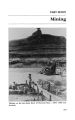
Show Uranium Mining in San Juan Hanson L. Bayles My first involvement with uranium was in the early 1950s. I hauled ore from the Posey mine in Red Canyon. We hauled it in two-ton trucks and averaged about seven and one-half to eight tons of ore a load. The road was dirt all the way, going from the northwest part of Blanding through Big Canyon, Brushy Basin, Cottonwood, then over the Elk Mountain through the Bears Ears and on to Grand Flat. We took bedrolls with us because we never knew how long the trip would take. It usually took about eighteen hours from Blanding to the mine and back. Today we can take a large diesel semi out to Red Canyon and haul twenty-five to thirty tons in six hours. I also hauled from Cottonwood to Durango, Colorado. Devar Shumway and Lark Washburn would take the truck out to Cottonwood and load it, usually with a wheelbarrow or horse and cart. I would take their pickup out about noon and take the load of ore to Durango. I later hauled from the Whirlwind mine. To get there we would go to Bluff through Monument Valley into Arizona, then back to Oljato Trading Post, then north to the San Juan River. We would climb up on a mesa, then back the truck down the other side on the edge of a ledge to the mine. The road was so steep that we could haul just part of a load at a time. We would take the truck back off the mesa, dump the load on the ledge, then go back and get another small load. We would then shovel enough ore on the truck for a full load. We hauled this ore to Monticello and Durango. 299 San Juan County Uranium mine in southeastern Utah, 1918. USHS Collections. At this time the way across the San Juan River at Mexican Hat was over the old swinging bridge. If we were driving one of the larger trucks some of the ore had to be dumped 300 Uranium Mining in San Juan in a bin on the other side of the river. The truck would then cross the bridge and dump the rest of the ore in a bin on this side, then go back across, load the truck out of the bin on the other side, cross the bridge, and load the ore on this side. The road south of Blanding was dirt or gravel all the way. This trip would take from eighteen to twenty-four hours - sometimes longer depending on the problems encountered. Sometimes the creeks would be flooded, or the sand was so deep we would get stuck. My first mining experience was in Cottonwood in the Morrison formation where the ore could be anywhere. Sometimes it was overhead or to the side of the drift or under the drift. Usually, if there is a trash pile in the mine, ore is found along the edge of it. The miners used to mine with wheelbarrows or mine cars on metal rails. Later, they started using horses and carts. They would make a mine cart which consisted of a metal bed with a hinged endgate mounted on a frame with rubber tires. It had two pipes sticking out in front so a horse could be put between them. The horse was then able to pull and turn the ore cart, which held a thousand to fifteen hundred pounds of ore. The ore was shoveled into the cart by hand. I later worked in the Shinarump formation. It is quite different from the Morrison. The Shinarump formation sits on top of the Meonkopi formation which is a red shell-looking rock. Usually the ore is found right on top of the Meonkopi. Also in the Shinarump are what we call "mud banks" of a clay-looking type of rock that is quite dangerous if it is in the top of the drift because it falls easily. Quite often ore is found along die side of the mud banks. Through the years the methods of mining have changed. A shuttle car was starting to be built which had a diesel motor and was safe to use in die mine. At first the ore was shoveled into it with shovels. Later front-end loaders were used. Today the shuttle cars can haul ten tons or more, and the loaders usually are rubber tired and are easy to operate. The first four-ton shuttle car I know of cost less than 301 San Juan County $5,000. Today shuttle cars are over $30,000. Loaders used to cost $10,000; now they are over $80,000. Jackhammers or air drills at first cost $250; now they cost $3,500. Dynamite was $6 a box and now it is $50 to $60 a box. Ammonium nitrate is now being used as an explosive when mixed with diesel. There is also an explosive that is called detaprime. It is about an inch and a half long and looks like a small red hose with the end bent over. A detonating cap can be pushed into the end of the detaprime and is used as a primer to set off the charge. Dynamite was used to set off the ammonium nitrate, using one stick to each hole that was drilled in the rock. Miners sometimes got what we called a "powder head," which is a severe headache, when they handled dynamite if they were not careful. After the ore was brought from the mine it was put into wooden bins or metal bins, then the trucks would pull under the bins to load. Today the ore is piled on the ground and loaded with front-end loaders. At the present time the uranium market is depressed, and because of this not many mines are in operation. It will be interesting to see the changes that will take place when the market opens again. 302 |