| OCR Text |
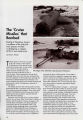
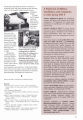
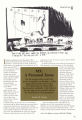
Show Developers built large numbers of homes in northern Utah, but when research and develop ment on the missiles ended, many houses However, this represented only 3.8 percent of the state's total manu-facturing jobs, down from nearly 7 percent in 1986 ( before the Berlin Wall fell) and Im ~ A: M inuteman missile is almost 25 percent loaded aboard a C- 133 B in 1963. Cargomaster at Hill Air Though the Force Base for shipment to missile industry the launching site, 1964. no longer plays a ABOVE: A worker puts the huge role in the finishing touches on a economy, it trans- Sergeant stable platform in formed the state a specially designed " clean where " land, elbow room " at Sperry Utah, ( n. d.). room and power and manpower are plentiful." It affected Utahns' lives even in rural areas. And it helped the state move toward a greater involvement in research, manufacturing, and high- tech endeavors. KRISTEN ROGERS IS THE EDITOR OF BEEHNE HISTORY. Sources: Leonard Arrington and Jon G. Perry, " Utah's Spectacular Missile Industry: Its History and Impact," UHQ 30 ( Winter 1 962). USHS newspaper clipping file. Conversation with Ken Jensen, Workforce Services economist, April 2002. Roger D. Launius and Jessie L. Embry, " Transforming Force: Military Aviation and Utah in World War 11," UHQ 63 ( Summer 1 995). Roger D. Launius, " Home on the Range: The US Air Force Range in Utah, a Unique Military Resource," UHQ 59 ( Fall 1991). Thomas G. Alexander, " Ogden, a Federal Colony in Utah," UHQ 47 ( Summer 1979). Antonette Chambers Noble, " Utah's Defense Industries and Workers in World War 11," UHQ 59 ( Fall 1991). Installations and Corn cts at GENEVA STEEL, BROWNING/ REMINGTON f Utah Ordnance Plant; it caliber and - 30- caliber amm MCCULLOUGH RADIO TUBE PLANT, UTAH 0 REFINERY, LEHI REFRACTORIES, and STANDARD PARACHUTE. |