| OCR Text |
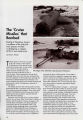
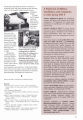
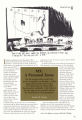
Show H unting, defense, aggression, sport: Whether for survival or cultural activities, humans and their ancestors have been using weapons for thousands of years. Perhaps the earliest weapons used by humans were bone, teeth and nails - termed the osteodontokeratic tradition by some early anthropologists. Rocks, fire, and wooden clubs would have been natural early weapons; later, humans would learn to sharpen sticks and from there would continue to invent more complex weapons. When the earliest humans arrived in the Intermountain West about 12,000 years ago, they traveled in nomadic groups, gathering plant foods and catching small animals such as rabbits, lizards, and birds. But they also hunted the great Ice Age mammals such as mammoths and now-extinct bison using spears tipped with stone points ( spearheads) and atlatls. Some have speculated that the atlatl - an efficient weapon that had also been developed in Europe by the Cro- Magnon peoples - contributed to the extinction of the Ice Age mammals. This weapon, a combination of throwing stick and projectile, enabled a hunter to throw a spear much farther and more powerfully than he could by hand alone. In fact, it increased the spear's velocity sevenfold. A hunter using an atlatl would hold the throw-ing stick in one hand and, with the other hand, would stabilize a spear or dart cradled in the throwing stick. Then with a powerful hurling motion he or she would release the spear. The Anasazi and Fremont cultures arose around 2,000 years ago, the Anasazi in the Four Corners area and the Fremont in central and northern Utah. These cultures also used atlatls. In addition, they used spears, nets, rock- fall traps, and throwing sticks for hunting. They made snares from plant fibers such as yucca and from human hair. Their throwing sticks, similar to boomerangs but with a greater angle at the bend, were used for hunting small animals. Using the resources at hand, they also made weapons from bone and rock. In about 500 A. D. the Fremont began to use the bow and arrow. According to Don Burge, director of the Prehistoric Museum in Price, the bow and arrow has been the most widely used weapon in recorded history. And no wonder. This weapon provided more accuracy than the atlatl, and it was easier to carry and use. So it increased the efficiency of hunters in obtaining both food and raw materials such as bone, sinew and hide. It took a fairly complex process to make a bow. In one method, the bow- maker cut a 6- foot- by- 8- inch section of wood from a tree and pried it loose with antler and stone wedges. The wood would season for six months. Alternately, the bow- maker might cut the section of wood but leave it in the tree to dry for some months, a method that kept the wood from warping. After the wood had sea-soned, the bow- maker would carve it into a 3- or 4- foot- long bow using stone tools. Chokecherry and mountain mahogany worked best for bows. Juniper ( cedar) and serviceberry also worked, but because juniper wood gets brittle quickly, it needs replacing after a year or two. The horns of mountain sheep could also serve as bows. The maker heated the horn, split it, then spliced the two pieces into a single curve with sinew wrappings. About 1,000 years ago, hunters began using sinew- backed bows, which were stronger than ABOVE: A prehistoric hunting blind, helpful for hunters in making effective use of their weapons. those made from wood alone. The makers would sinew. At the rear of the arrow they would glue " tease the animal sinew strands apart until it and wrap the split wing feathers of large birds resembled dental floss," says Peter Ainsworth, such as magpie, eagle, hawk, or owl. a BLM archaeologist. " Then they would lay A hunter would use a quiver - made perhaps thousands of strands on the back of the bow, from the skin of coyote, fox, bobcat, deer, smearing it all the while with glue made from mountain lion, antelope, or bear - to carry his deer hide." This glue was made by scraping arrows and perhaps a fire- starting kit as well. flakes from the hide and then boiling them. Not all bows shot arrows, however. Some, used Sinew- backed bows used the same principles somewhat like a slingshot, shot rocks. A bow with inherent in human bodies, according to Don a double string and a piece of leather between Burge. Like human bone, the wood in a bow is the strings could hurl a rock with sufficient speed rigid and tough. But the sinews, like sinews in the to kill an animal. body, give the wood greater power and flexibility. According to Burge, the bow- and arrow- Arrow shafts were often made from phrag- making technology of Utah shows a connecting mites, or arrowcane, a fluffy- head- link with other ed cane that grows, for instance, cultures. " All of the around the Great Salt Lake. To scientific evidence fashion an arrow, the maker would indicates that heat soapstone or another kind of these early rock in a fire, then use the hot rock weapons came to warm the shaft to make it more from other parts of pliable. After using another stone the world to the tool - a shaft wrench - to help American conti-straighten the shaft, the maker nent," he says. would use a grooved stone to Egyptians had polish and smooth it. used bows as early An arrow might be made from as 3500 B. C., and in a single shaft or it 1 1500 B. C. the might be compos-ite, with a main Assyrians devel-oped the shorter shaft made from cane and a fore-shaft from hard-recurved bow. Burge believes that groups from Asia and other areas brought their weapons technology with them when wood. " Native they migrated to the Americas. In fact, he . - Americans used says, some weapons found in Utah grease rendered strongly resemble prehistoric weapons from bear or deer from Asia. " Seeing this evidence of con-fat on the joints of nection tells us that the world was not as the arrow," says isolated as we once thought," Burge says. Ainsworth. " They However the early peoples of Utah used pine pitch or originally developed their weapons, the as~ haltumto bind bow and arrow remained the most im~ or- - -- x- -- - - - - - the arrowhead onto the fore-shaft, or the front piece; then they TOP: A man demonstrates how to tant weapon for them - until contact throw an atlatl. B O ~ MJ: ad e Enright with Europeans and Americans. By the holds a Rose Spring arrowpoint, 1800s the gun had replaced the bow and datingfi0m 19000 years ago* arrow among indigenous tribes. At the wrapped it with same time, the tribes were losing their sinew." freedom to hunt ( and fight) as they had Arrow or spear points were usually made from traditionally. obsidian or flint. The Utah peoples actually had Today, enthusiasts of traditional weapons still quarries where they collected these rocks, break- make stone points, bows, arrows, spears, throw-ing them into portable sizes. To make a point, ing sticks and atlatls. However, these weapons they would shape the flint by striking it with have lost the central role they once played in the another stone, flaking off small pieces at a time. lives of uncounted individuals who depended on Finally, they might polish their points by rubbing them for survival. them with an abrasive stone. After the arrival of Euro- Americans, Native Americans sometimes usedtheironfrombarrelhoopstomakepoints. CARoLmCAMPBELLISAFREELANCE- TER. To bind the arrowhead onto the foreshaft, the arrow- makers used pine pitch as an adhesive, then wrapped the point and shaft together with |