| OCR Text |
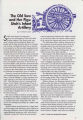
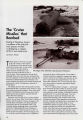
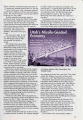
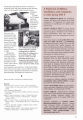
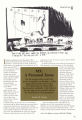
Show The Old Sow and Her Pigs: Utah's Infant Ar ti IIer y by D. Robert Carter S mall arms played an important role in the settlement of Utah and other frontier regions. How these arms were used is fairly well documented. Many emi-grants told in their journals, diaries or reminis-cences how a well- placed shot from a smooth-bore musket or a rifle provided supplementary food for grateful families, or how settlers occa-sionally used their small arms to stave off attacks from ne'er- do- wells or bands of Indians. On the other hand, the story of early Utah's big guns has remained, for the most part, shrouded in smoke, even though cannons also left a perceptible impression in the history of the Great Basin. Utah pioneers used them both while crossing the plains and after they estab-lished their initial settlements. During the first 10 years in the Great Basin, the territorial mili-tia collected an impressive array of artillery. However, it was not the Mormon pioneers who brought the first cannons into the Great Basin. General William H. Ashley transported a small cannon to the Bear Lake Rendezvous in 1827. This field piece shot a four- pound ball; hence, it was called a four- pounder. Then, in 1843, Captain John C. Fremont lugged a French-designed twelve- pound mountain howitzer through the basin and almost to the Pacific Coast before it bogged down in the snows of the Sierra Nevada. The story of Utah's artillery actually began in Missouri and Illinois. During their expulsion from Missouri in 1838, the Mormons possessed no artillery, but their antagonists did. This placed the beleaguered people at a distinct dis-advantage. Mother Nature stretched forth a soggy hand to help remedy this deficiency when a group of Missouri militiamen took the field against some ragtag Mormon troops one cold, rainy day in Caldwell County, Mo. When the state- owned cannon apparently hindered the militia's mobil-ity on the wet roads, the citizen soldiers decid-ed to cache the big gun and return for it later. The militiamen dug a shallow depression ir the roadway, took the cannon barrel from its carriage, placed it in the hole and covered it with soppy soil. They hoped that driving wagons over the cannon's hiding place would help conceal it from their enemies. Not long after the Missourians left, Mormon horsemen arrived at the scene. After some time, they noticed an old sow wandering about. " She went to the middle of the road and went to digging hog fashion," Daniel McArthur wrote later. " Lo and behold, there lay the old barrel. Of course the boys had some little shouting over it when they found it." After closer search, the men also found hidden cannon balls and a keg of powder. The Mormons had their first field piece, a six- pounder they named the " Old Sow" in honor of the prying porker. When they left Missouri, they took it to Nauvoo, Ill., with them. While in Illinois, the Mormons added to their artillery after the Nauvoo Charter permitted them to establish their own militia. Dr. . John C. Bennett used his position as quartermaster general of the Illinois militia to secure arms, including three cannons, for the Nauvoo Legion. However, when troubles between the Mormons and their neighbors escalated in 1844, the state forced the Legion to return those cannons. Church leaders made an effort to replace the state- owned cannons. Lorenzo Snow purchased a cannon with tithing money in 1845. Local artisans even tried to manufacture cannons. It appears that John Kay, working in the secrecy of the Nauvoo Temple, may have successfully ABOVE: A cast iron six- pound cannon. completed a six- pound cannon. The people of Nauvoo eventually added three cannons to the gun they had captured in Missouri. They now owned one twelve-pounder, two six- pounders, and a four- or five-pounder - collectively described as the " Old Sow and Little Pigs." The cannons left Nauvoo with the Mormons in February 1846 and stayed until spring in Winter Quarters in eastern Nebraska. In 1845, as harried church leaders planned the Saints' journey west, they recommended that each wagon train take along a few cannons to minimize attacks by hostile American Indians - a precaution that had proven useful to other emigrants. It was fairly common knowledge that, in the eyes of the Indians, the possession of a cannon marked the settlers as military superiors. The artillery often traveled at the front or the rear of the company it escorted, making it distinctly visible. As a pre-caution, then, Brigham Young took a cannon - likely the smallest field piece in the Mormons' possession - with him in the first company. The Pioneer Company spotted Indians on May 3. At 9 p. m. that night and again at 4 a. m. the next morning the artillerymen fired the cannon as a show of power. After that, Brigham Young ordered the men to keep the cannon ready for action. In what is now western Nebraska, the Pioneer Company met a group of Sioux. For the benefit of these Indians, the cannoneers went through a drill of loading and firing the field piece several times. Other pioneers demon-strated their six- shooter pistols and fifteen-shooter rifles. Whether or not such displays were a factor, the travelers encountered no problems from Indians. In the Salt Lake Valley, the cannon was first put to a peaceful use. On the morning of July 25, the pioneers gathered around the cannon wagon to hold a meeting. George A. Smith climbed aboard the vehicle and preached what may have been the first sermon in the valley. Other cannons came with subsequent emi-grating companies in 1847. On April 20, shortly after the first company started west, Brigham Young wrote a letter to his wife Mary Ann Angel1 Young: " If this letter reaches there before the next company starts they had better fetch the three cannon that are there." Two weeks later he wrote to the Saints at Winter Quarters: " Organize, & keep up strict disci-pline, bring all the cannon and take care of yourselves." George Whitaker, a member of Edward Hunter's company, recalled, " We had three cannon with us, which we placed in dif-ferent parts of the train, and appointed men to handle them if they were wanted." On July 22 and for the next two days, as a group of pioneers camped near the Platte River in western Nebraska, they acquainted them-selves with several hundred friendly Sioux. The first night, about 100 Sioux men came into camp. The emigrants fed them, put on a strong guard, and fired the cannon. No problems occurred. The next day, the emigrants tested their big-bang theory. Nathan Tanner Porter wrote: the Women & children then came forward, and - with the men were permitted to come within our lines. The Wagon baring the Cannon was drawn out to which their attention was directed. they gathered around to see the curious Wagon it was placed in position and on motioning to them they steped back. the torch was applied & off she went, causing a gineral stampede on the part of the Indians: men and Women, were struck with consternation for a few minutes. & We learned that the impression went out among the Indians - that all our wagons would Shoot. no one wished to correct the impression as it answered well; to deter them from molesting us by day or night. The loud report of the cannon did more than unnerve the Indians. Franklin Wheeler Young had ridden his mule into the river to let the mule drink. the bank was steep, the mule's front feet were in the water up to it's Knees, when - bang went the old Sow - the mule jumped backward, and I went forward head first into the river, and it over my head, but 1 hung to the halter rope and " Peggy" pulled me out! Is it any wonder I have always had a Kindly feeling for a mule ever since Seeing this one saved me from floating down the river to become food for fishes? Several emigration companies arrived in Salt Lake Valley in late September through early October, and Utah's infant artillery now num-bered four cannons. In 1848 some Mormon Battalion boys brought into the Great Basin two more cannons - a four- pounder and a six- pounder - giving the Great Basin gunnery a total of six big guns. They had bought these in California from John Sutter, paying him with gold dust they had panned. These two cannons added an interna-tional flair to the Utah artillery. Russians had captured the guns from the French when Napoleon retreated from Moscow in 1812. The Russians transported the cannons to Fort Ross, their trading outpost on the northern California coast, where Sutter acquired them. At least two more cannons made the trip to Utah before Johnston's Army entered the terri-tory in 1857- 58. In 1851 territorial judge Perry E. Brocchus brought a small brass mountain howitzer nicknamed the " Little Sow." Another cannon of unknown poundage traveled to the Great Basin in 1852 with the Allen Weeks Company. tamping the second powder cartridge into the cannon without first cleaning the barrel with a damp swab to douse any sparks left from the first cloth cartridge. They were in the act of forcing the powder charge down the barrel with a heavy hickory ramrod when sparks ignited the second cartridge. A deafening roar rent the stillness of the evening. The blast threw Dayton and Bean some 30 feet off the - - bastion, and they fell 12 feet to the ground. During the Saints' first two years in the val-ley, the sound of cannon shots nearly para-lyzed some of the neighboring Indians with fear. In March 1849, on the day after the announcement that a provisional government had been formed, the citizens celebrated with a 13- gun salute. Soon afterward, Dimick Huntington went to Chief Wanship's village on business. As he neared the encampment, Huntington could see not one Indian. He walked through the ghostly stillness to the chief's wickiup and peered inside. Some tell-tale lumps under the bearskin on the floor suggested the location of the household, and the chief peeked from under the edge of the covering. When he saw Huntington, Wanship said, " What have you come for, what have I George W and Elizabeth Baum Bean, 1853. From done now?" Huntington explained why the Flora Diana Bean Horne, comp., Autobiography salute had been fired, and the relieved chief of George W. kan. replied, " 1 heard the great gun, I thought the white men were going to war, and was Dayton was killed almost instantly when a dreadfully scared, we all lay down here and large splinter from the ramrod severed his dared not look out. I lay and shook with fear." jugular vein. Bean's left forearm, severed by When the pioneers settled Fort Utah in April the blast, landed in Celia Hunt's dooryard with 1849, one of the six- pounders was sent to the Bean's ring still on the little finger. The young new settlement to work its magic on the man's clothing was partially burned off, and his Timpanogots Utes. In late August workmen fin- eyes and face were so horribly powder- burned ished a ten- or twelve- foot- high log bastion in and filled with splinters that he was blinded. the middle of the fort and hoisted their cannon The right side of his neck, chest, and thigh to the top of it. were also terribly burned and full of splinters, Oddly enough, the cannon's first casualties and his right arm and hand were seriously were not Utes but colonists. In the late summer lacerated. and fall of 1849, hundreds of gold seekers ren- Dr. James Blake from Captain Howard dezvoused in Utah Valley before taking the Stansbury's Topographical Engineers amputated southern route to California. Longing for some- several inches of Bean's forearm and removed thing to break the monotony of camp life, they about 200 splinters from his body. During his convinced Fort Utah's fledgling gunners to fire long convalescence, Bean learned the Ute the cannon for amusement, then scrounged language. He eventually regained his sight enough powder for at least two charges for the and became an Indian interpreter, big gun. schoolteacher, clerk, and judge. On Sept. 1, Lieutenant William Dayton and During February 1850, when hostilities flared 18- year- old George Washington Bean mounted between the Timpanogots Utes and the settlers the ladder leading to the top of the bastion, of Fort Utah, the territorial militia received its rammed a charge down the cannon barrel and first chance to use artillery in battle against hos-fired it, to the joy of the watchers. But then the tile Indians. The results were less than sterling. citizen artillerymen became careless and began Through chill air and crusted snow, Captains George D. Grant and Andrew Lytle led about 100 men from the Salt Lake Valley into Utah Valley to aid Fort Utah's 50- man militia against a smaller number of Utes camped in a fortified position, protected by brush and the steep bank of an old channel of the Provo River. The officers planned to surround the camp, fire into it with artillery and small arms, flush the Indians to open land, and finish them off with a cavalry charge. With them the Salt Lake men brought a six-pounder they called the " Long Range." On the first day of battle, Captain Grant called the " Long Range" into service. Thomas J. Orr said the men charged the cannon " with black pow-der and loaded [ it] almost to the muzzle with scrap iron, bits of chain, rocks etc." However, the Utes stood their ground. George Mayer wrote, " The Indens Returnd the fire with Rifils and the boolets wised among us like hale." The officers ordered the a little lower!" Supposedly, at this point Riley G. Clark, a resident of Fort Utah, succeeded in putting a shot into the camp. During the second day of the battle, the mili-tia used a cavalry charge and moveable log batteries manned by infantry to demoralize the Utes. That night, the Indians left their fortifica-tions under cover of darkness and fled. The next morning the militia explored the deserted camp and found an Indian woman in a wickiup with her legs severed. Although the militia had deemed its artillery ineffective, the cannon apparently had caused some casualties. Settlers continued to use cannons to deter Indian attack. Parley P. Pratt and his men took one of the brass cannons when they explored the southern Great Basin and beyond. They men to pull the cannon back out of the range of small- arms fire. From this position, it contin-ued to barrage the Ute camp. Most of the shots apparently went over the camp and caused little damage. The Utes found protection under a six- foot- high riverbank and also hid behind log fortifications and in the dense trees and underbrush. " The firing of the cannon was kept up all day, the balls cutting large limbs from trees but availed nothing and the Indians laughed heartily at the ' harmless gun,"' William H. Walker lamented. Historian Edward ~ ullidgere lated a story the old settlers told him about the use of the cannon on the first day of battle. Jacob Hoffeins, a " Dutchman" from Salt Lake Valley, commanded the artillery piece. After being told that his shots were going over the camp, he replied with the order, " By Got, poys, elevate it Fort Utah, from Howard Stansbury, Exploration of the Valley of the Great Salt Lake. The cannon can be seen on the wall. never used the piece against Indians, but they fired the cumbersome toy to announce their arrival at the new colony in Sanpete Valley, to guide in absent members of the camp, and to celebrate special occasions. During the first 10 years in Utah Territory, the artillery was used more for celebration than for defense. Isaac C. Haight recorded Utah's first Thanksgiving celebration. On August 10, 1848, he wrote in his journal, " Met to celebrate the first Harvest raised in the Valley with songs of praise, thanksgiving. Musick and Dancing, the fireing of Cannon and the Shout of Hosannah to God and the Lamb forever and ever - Amen." On July 24, 1855, Provo's six- pound cannon met its demise, killing another citizen in the process. The village's holiday celebration began at daybreak with the militia firing the cannon. All went well until the fourth firing of the big gun. For this shot, the men loaded the cannon with a wad of potter's clay, 2 pounds, 3 ounces of rifle powder ( about twice the usual charge), some hay, and another wad of clay. They packed the load in tightly by pounding the ramrod with a sledgehammer. Although at least one man remonstrated that the piece was bound to burst, the officer in charge appeared confident that there was no danger. Twenty-four- year- old William Nixon stepped forward and applied the match. A terrific explosion burst the gun, tearing up the gun carriage and throwing pieces more than 500 feet. The affable, English- born Nixon was killed instantly. When United States Army troops came to the territory in 1857- 58, they brought many cannons, and the significance of the territorial militia's small artillery waned. However, in recent years, one item from Utah Territory's infant artillery has regained importance. A local official in Missouri asked the LDS Museum of Church History and Art to return the Missouri State Militia's hijacked cast- iron cannon. Unfortunately, the museum most likely will be unable to honor that request. It appears that the gun that exploded in 1855, killing William Nixon, was the legendary " Old Sow." In 1850 there were only three six- pound cannons in Utah Territory - two cast iron and one brass. Both of the cannons used against the Utes in the Utah Valley campaign were iron. Since the Salt Lake Valley militia brought the cannon named " Long Range" to Utah Valley, the gun already on the bastion at Fort Utah, which Thomas Bullock had referred to as " the old pioneer gun," was almost certainly the Old Sow. A Deseret News article covering the death of William Nixon in 1855 called the burst Provo cannon " a six pounder from Nauvoo . . . [ that] presented the appearance of being a most perfect piece of workmanship, made of very fine, soft iron." Historian Andrew Jenson's account of the explosion identified the cannon as the Old Sow. It appears, then, that the Old Sow, the brood mother of Utah's infant artillery, went to the figurative slaughterhouse in Provo on the 24th of July 1855, and Utah no longer has a cannon to return to Missouri. ROBERT CARTER IS A FORMER HISTORY TEACHER AND HISTORIAN WHO SPECIALIZES IN UTAH COUNTY TOPICS. Sources: Harry William Gibson, " Arms and Armaments on the Mormon Frontier, 1 83 1- 1 869," Master's thesis, University of Utah, 1972. Juanita Brooks, ed., On the Mormon Frontier: The Diary of Hosea Stout, 1844- 186 1 ( Salt Lake City: University of Utah Press, 1964). John Steele, " Extracts From the Journal of John Steele," UHQ 6 ( Winter 1933). Diaries, journals and reminiscences of Thomas Bullock, William Clayton, Evan Melbourne Greene, Isaac Chauncey Haight, Charles Alfred Harper, Oliver Boardman Huntington, Zebulon Jacobs, Nathan Tanner Porter, Albert P. Rockwood, Charles C. Rich, Andrew Hunter Scott, Daniel Spencer, Leonora Cannon Taylor, Chauncey Walker West, George Whitaker, Horace Kimball Whitney and Franklin Wheeler Young. Howard Egan, Pioneering the West, 1846 to 1878 ( Richmond, Utah: Howard R. Egan Estate, 191 7). Donna Toland Smart, Mormon Midwife: The 1 846- 1888 Diaries of Patty Bartlen Sessions ( Logan: Utah State University Press, 1996). George Benjamin Wallace, Emigrating Company journal. Gertrude F. Lobrot, " Bell, boat and cannons trekked west together," Deseret News Church News, July 14, 1985. Norma Baldwin Ricketts, The Mormon Baftalion: U. S. Army of the West, 1846- 1848. Martin Cole, " Ballad Of A Cannon," Old West 23 ( Winter 1986). Sarah DeArmon Pea Rich, " Autobiography of Sarah DeArmon Pea Rich," An Enduring legacy ( Salt Lake City: Daughters of Utah Pioneers). William B. and Donna T. Smart, Over the Rim: The Parley F! Pratt Exploring Expedition to Southern Utah, 1 849- 50 ( Logan: Utah State University Press, 1999). Robert Carter, Founding Fort Utah ( Publication pending). |