| OCR Text |
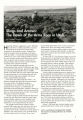
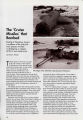
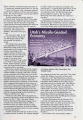
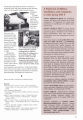
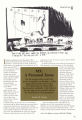
Show T he Cold War was good business for Utah. As hatred and mistrust between the U. S. and the Soviet Union grew, Utah companies nabbed a bucket load of military contracts and testing pro-grams. The missile industry, in particular, explod-ed during the early 1960s. By then, missiles had already gained a foothold in Utah. During the 1950s, Utah compa-nies made missile engines, liquid fuel, and guid-ance systems. But that was just a beginning. " Other missile- connected industries are bound to follow these pioneer leaders into the western it could confuse the enemy by moving the mis-siles around - a concept that would return in full force in the late 1970s with the MX missile plan ( see separate story). The Hill Air Force Base pilots assigned to learn to " fly" the Mobile Minuteman Test Train called it the " choo- choo that flies." In February 1961, the Deseret News wrote that the Minuteman had become the nation's most effective weapon " should the cold war suddenly become hot. Minuteman is Uncle Sam's ace in the hole in the deadly game of life and death that welcomed military spending. Minuteman missiles probably had the biggest impact on Utah. These intercontinental ballistic missiles ( ICBMs) would fly 6,300 miles carrying nuclear warheads with 50 times the force of the Hiroshima bomb, be aimed at Soviet targets from underground silos in the Midwest, and launch instantly at the touch of a button. When the military announced the contracts on this missile, Utah companies had landed the lion's share of the work. Hercules would make engines, Thiokol would make revolutionary solid- fuel boosters, Geneva Steel would make the steel for the silo casings, and Graver Tank & Manufacturing would make the casings. Boeing would assemble the missiles at Hill Air Force Base. During the early 1960s, the Utah papers ran frequent, enthusiastic stories on all aspects of the project. On Feb. 7, 1960, a Salt Lake Tribune reporter described a Minuteman engine test at " a barren area of Box Elder County." With a thunderous roar, the engine, bolted to a huge concrete- and- steel structure, burned thousands of pounds of propellant in a few seconds, creating a " searing white flame." Another article discussed the Air Force's idea of putting missiles on trains. The military thought An Athena missile at the Green River Test Complex ( n. d.). may depend upon the first card dealt." That same month, the Tribune ran a story on how local businesses could " bag" Minuteman contracts. Meanwhile, some farmers and ranchers in the high- plains states balked as the military began acquiring land for the missile silos. " Why does it have to go here?" they asked. The Air Force PR officer would give them a stock, somewhat callous reply: " Just lucky, I guess. You have as much right to be protected as anyone." Later, the same Utahns who were benefiting from the Minuteman contracts would know how it felt to be the " lucky ones" when the MX planners turned their eyes to the West Desert. The first Minuteman test, in February 1961, went well, but during the next three shots one missile went " wild," one blew up in the silo, and one fell short of its target. When a test in November 1961 finally succeeded, the Deseret News expressed relief that the Minuteman was almost ready, given " the present international situation." In the midst of the extraordinary military buildup on both sides of the Iron Curtain, the Bay of Pigs and Cuban Missile Crisis played out. The classic film Dr. Strangelove satirized the arms race and attitudes of the time. In 1962 Leonard Arrington and Jon G. Perry wrote in Utah Historical Quarterly, " From bases in the continental United States or from mobile launching bases on submarines, it is now possi-ble, within an hour of launching time, to drop nuclear or thermonuclear warheads upon any spot on the globe." Americans placed great stock in the ability of the missiles to prevent hostile attacks. " So far, [ the] theory of deterrence has proven correct," the Ogden Standard Examiner wrote in 1963. " We can only hope it will continue to pay off. But, meantime, the Utah plants will - and must - continue to play their vital roles in the over- all effort." In 1964 the military began to use another Utah resource - uninhabited land - for missile testing. Test shots out of Green River and Blanding would send Athena and Pershing missiles to White Sands, N. M. The military planned to watch each flight and retrieve stages and other pieces that fell to earth. Because the goal was to learn how to build better weapons, the military named the Athena missile after the Greek goddess of wisdom. In response to worried citizens, the White Sands safety director emphasized, " If there were any chance that [ the tests] would endanger resi-dents of the area, we just wouldn't do it." If a mis-sile malfunctioned, he said, it would be destroyed midflight. Yet the very first missile veered off course and continued flying until it slammed into the ground near Durango, Colo. Nevertheless, regular testing began. Every time a test took place, the military would close roads, reroute airlines, and evacuate the few ranchers and sheepherders living in the flight path. " The rocket took off like a flaming arrow shot from some giant's bow," a Los Angeles writer wrote after a 1968 Athena test. " Fire and thunder trailing in its wake, it pushed back the night and rattled the ears of the shivering little group watching from a windy ridge a mile away. In moments, the missile was another star speck in the cold, clean heavens." By the early 1970s, Green River's Utah Launch Complex had significantly boosted the town's economy. Town businesses that once had found the winter months slow indeed could now stay open year- round. Through the 1960s and ' 70s, Utah industries continued to land missile contracts. Utah compa-nies built engines for and assembled the Minute-man I1 and Minuteman 111. They also played a large part in the fabrication of Bomarc, Sergeant, Persh-ing, Polaris, Trident, and Cruise missiles. The nuclear submarine- launched Poseidon missile was built almost entirely in Utah. " The work's interesting, but it's discouraging sometimes when you think about the product you are making - a weapon for destruction," said Ronald Toone, an employee of Sperry Utah, which landed a contract to build Sergeant missiles in 1966. One missile program scored a near miss in Utah. In 1968, the military announced it would install 10 antiballistic sites around the country - one of them right in the Salt Lake Valley. Officials promised that the Sentinel antiballistic missiles would guard against both intentional and uninten-tional ICBM launches from other countries. In particular, the government named China as a possible aggressor. Each Sentinel missile would carry nine warheads " which - hopefully - will destroy enemy missiles in vast explosions high above the earth," wrote the Deseret News. Sen. Wallace Bennett touted the economic benefits for Utah, but critics responded that the Sentinels would not work and were a waste of money. State representative Allen E. Mecham, one of a few local officials to denounce the plan, pointed out that the Sentinels would make Salt Lake City a target for attack. The city was " asking for trouble if it allows the defensive weapons practically in the middle of town," he said. In the end, the Sentinels never came to Utah. A lawsuit challenged the plan, and Richard Nixon cancelled the program in 1970. By then, the missile industry had greatly cooled down. In 1963 almost 14,000 Utahns held jobs in manufacturing " transportation equip-ment," almost all of these being missile jobs. In fact, the number of missile jobs at that time nearly equaled the number of jobs in agriculture. However, by 1969 the number had shrunk to 4,900. During the missile heyday, many Utahns had banked on continuing large military contracts. Thiokol Chemical Corporation technicians cleaning a mix of solid propellant out of a 30O- gallon mixer. The propellant was used in Thiokol's first- stage engine for Minuteman missiles ( n. d.). Developers built large numbers of homes in northern Utah, but when research and develop ment on the missiles ended, many houses However, this represented only 3.8 percent of the state's total manu-facturing jobs, down from nearly 7 percent in 1986 ( before the Berlin Wall fell) and Im ~ A: M inuteman missile is almost 25 percent loaded aboard a C- 133 B in 1963. Cargomaster at Hill Air Though the Force Base for shipment to missile industry the launching site, 1964. no longer plays a ABOVE: A worker puts the huge role in the finishing touches on a economy, it trans- Sergeant stable platform in formed the state a specially designed " clean where " land, elbow room " at Sperry Utah, ( n. d.). room and power and manpower are plentiful." It affected Utahns' lives even in rural areas. And it helped the state move toward a greater involvement in research, manufacturing, and high- tech endeavors. KRISTEN ROGERS IS THE EDITOR OF BEEHNE HISTORY. Sources: Leonard Arrington and Jon G. Perry, " Utah's Spectacular Missile Industry: Its History and Impact," UHQ 30 ( Winter 1 962). USHS newspaper clipping file. Conversation with Ken Jensen, Workforce Services economist, April 2002. Roger D. Launius and Jessie L. Embry, " Transforming Force: Military Aviation and Utah in World War 11," UHQ 63 ( Summer 1 995). Roger D. Launius, " Home on the Range: The US Air Force Range in Utah, a Unique Military Resource," UHQ 59 ( Fall 1991). Thomas G. Alexander, " Ogden, a Federal Colony in Utah," UHQ 47 ( Summer 1979). Antonette Chambers Noble, " Utah's Defense Industries and Workers in World War 11," UHQ 59 ( Fall 1991). Installations and Corn cts at GENEVA STEEL, BROWNING/ REMINGTON f Utah Ordnance Plant; it caliber and - 30- caliber amm MCCULLOUGH RADIO TUBE PLANT, UTAH 0 REFINERY, LEHI REFRACTORIES, and STANDARD PARACHUTE. |