| OCR Text |
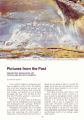
Show PETROGLYPH PANEL IN NINE MILECANYON, CARBON COUNTY, DEPICTS A SPECTACULAR HUNTING SCENE. Pictures from the Past PREHISTORiC INDIAN ROCK ART PUZZLES AND DELIGHTS VIEWERS BY MIRIAM B. MURPHY Utah could be called one of the great out-door art galleries of the world. The Indians who lived here centuries ago painted and pecked thousands of human and animal fig-ures, designs, and symbols on rock surfaces throughout the state. How did they do this? And why? The first question is much easier to answer than the second. There are two main kinds of prehistoric Indian rock art: petroglyphs [ rock engravings] and pictographs ( rock paintings]. Different materials were used to make the two kinds. Petroglyphs are designs that are pecked or scratched or carved in stone, To make these rock engravings, the artist needed a sharp piece of stone harder than the rock on which he was going to peck or scratch his design. Or, he may also have pounded a stone chisel with a stone hammer to cut or carve his design into the stone. Very often the Indian artist chose a rock surface covered with desert varnish as a place to make his peboglyp hs. Desert varnish looks like a dark stain or patch on the stone. Actually, it is caused by the oxidation of minerals, such as iron or manganese, over many years. The desert varnish made an ex-cellent background for petroglyphs. When the artist pecked or carved on it, the lighter rock underneath would show through, makm ing the design stand out by creating a light-dark contrast. PETROGLYPH NEAR MOAB REPRESENTS A MASTODON. Since pictographs are paintings, they re-quired different artistic materials - paints and a brush or brush substitute. Basic paint colors came from common minerals. Iron oxides produced reds and yellows. Copper . . ores gave greens and blues. Black came from manganese, roasted graphite, or charcoal. Chalky deposits, gypsum, or kaolin gave white. Red was the most easily found and most commonly used color. When the earth colors had been found and very finely ground in stone mortars, the artist mixed them with a binder such as animal or vegetable oil, blood, or egg white. WARRIOR WITH A SHIELD, ABOVE, AT DEFIANCE HOUSE, SAN JUAN COUNTY. BELOW, STYLIZED HUMAN FIGURE ( ANTHROWMORPH) CON-FRONTS SNAKELIKE CREATURElN BUCKHORN WASH, EMERY COUNTY. LEFT: HOLY GHOST PANEL FROM THE GREAT GALLERY, WAYNE COUNTY. LARGEST FIGURES ARE SEVEN FEET TALL. - CHESTER- MUDI: REE iTROGtYPH$, E a r n ; W NTY IC FIGURESANDA RAINBOW ARRANGEMENT OF LINE NTH ROPOI |