| OCR Text |
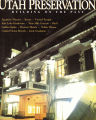
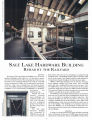
Show An award winning rehaf$ litation ha \\ REHABB Y THE RAILYARD Judy Reese The historic Salt Lake Hardware Building is one of the true landmark buildings of Salt Lake City. Its size alone is impres-sive: five stories tall with each floor spanning more than one acre. Its history is also important, linked closely with the early 20th century development of Salt Lake's transportation and industri-al district. After years of marginal use and minimal mainte-nance, the building regained its original prominence in 1996 upon completion of an award- winning rehabilitation by SLHNET Investments and Gastronomy, Inc. Though this huge structure presented - many challenges, the completed project was well worth the effort and has contributed greatly to the vitality of downtown Salt Lake's Westside. The Salt Lake Hardware Building was constructed in 1908- 09, just as the rail-roads were coming into their heyday and as the city was emerging as a commercial and industrial center. The building, located at 155 N. 400 West, relied heavily on the nearby Union Pacific and Rio Grande railroads for transportation of goods throughout the Intermountain region. Billed as " The largest hardware store in America," the ware-house originally consisted of 20 large rooms and, at 225,000 square feet, had a combined floor space of over six acres. Over two million bricks were used in the construction of this massive warehouse, along with more than two million board feet of lumber. The amount of Oregon fir used for the project was so massive that a mill was actually set up on- site to mill the lumber. The building was also unique in that it had many conveniences that were rare for this time period, including three electric eleva-tors, one of which was designed to handle a large dray. The Hardware Building was also one of the first to run wires in lead conduit to minimize the risk of electrical fire, and to utilize a fire sprinkling system, whose water was stored in the water tower on top of the building. " The building has tremendous character," states John Williams, one of the principals of Gastronomy, Inc. However, because of its massive size, restoration presented a myr-iad of challenges. ATRIUM In order to make the interior space more desirable to potential users, and because the floor size is 45,000 square feet, the devel-opment team constructed an atrium and skylights to bring natural I"' ' One ut trro harrlware chutes was \ a, ed, prorarling American Heritage Window Rebuilders Innovative Restoration and mermal Upgrading years of collective experience. They still practice the fine art of wood American Heritage Window Rebuilders 46 East Herbert Ave. Salt Lake City, UT 841 11 ( 801 ) 359- 6639 American Heritage Window Rebuilders is a ten- year- old business committed to the preservation of the wood sash window. That commitment is not just blind, antiquarian devotion either. " We've developed a process for restoring wood windows so they not only work again but are also quite cost effective," notes proprietor Phil Kearns. " Plus, by restor-ing the original windows, we help preserve the historic quality of the building." American Heritage craftsmen have over 60 joinery, using solid stock and mor-tise- and- tenon joints when malung repairs or fabricating new window components. " We combine hand-crafted restoration with our unique weatherstripping system to give you the best of both worlds-- the quality and character of the original wood window plus very good energy per-formance." Respectful of tradition but innovative as well, these crafts-men also fabricate an original- style storm and screen sash that outperforms most new windows. American Heritage Window Rebuilders' pro-jects include the Vernal LDS Temple, the Governor's Mansion, the old Washington County Courthouse, the Rio Grande Depot, and numerous historic homes. Knowledgeable con-tractors and homeowners understand the eco-nomic and aesthetic value of window restora-tion; it's something they can't get in a cheap, new window that wasn't built to last. I Changing the Face of Salt Lake City 1 rn FORD MOTOR BUILDING - Our Next Proiect I P r e s e r v i n g O u r P a s t FIRE STATION NO. 8 Market Street Broiler SALT LAKE HARDWARE Commercial Offices NEW YORK BUILDING rn PIERPONT BUILDING Market Street GrillIOyster Bar: Baci Trattoria, Club Baci: Cafe Pierpont, Commercial Offices, FFKR ArchitectsIDesigners, The New Yorker* Commercial Offices * A private club for members P R O P E R T I E S 48 Market Street 239- 2427 UTAH PRESERVATION light into the center of the building. were uneven in some areas by as much of the building facades, the effect on the Although a wide open, unobstructed atri- I as five inches. Rebar was drilled into I exterior of the building was also minimal. um was originally planned, it was decided I walls and anchored to the original floor- I Thoughtful placement of the mechan-to retain the exposed Oregon fir columns and beams and the original brick wall in the center of the building as elements of the atrium. Several brick- arched open-ings were also created within the atrium to match others already in the building and to make the atrium " flow" from one side of the brick wall to the other. While the hished result was aestheti-cally pleasing, the open atrium was a cost-ly decision because of the smoke evacua-ing, then concrete was poured over the top to reinforce the exterior of the build-ing and tie it into the floors. tion svstem that needed to be installed to I mechanical svstem ical equipment and air handlers on the roof was necessary in order to avoid blocking the drains, which are located in ROOFTOP MECHANICAL EQUIPMENT facilitate these open comdors as iire exit and placing it on the comdors. roof without the the center of the building. Since all of the building facades are visible to the public, the rooftop equipment could not just be SEISMIC benefit of a parapet Structural modifications were neces- wall to screen the By far the biggest pushed to one side. Reducing challenge was build- " The building the visualimpact of the system ing a new energy was a big priority, and to do so efficient, environ- the rooftop units were reduced mentally fi- iendly has tremendous in height and moved toward sary for the building to meet seismic code requirements. To prevent the brick from shearing on the east and west elevations, the center of the building to equipment. The 45,000- square- foot floor plates required epoxy over fiberglass mesh was utilized which allowed the brick to remain exposed beneath the mesh material. Steel straps were used to reinforce all vertical columns, the signature water - character," states reduce site line exposure. The curb walls on which the sir a complex distribu-tion system effective to all locations on the floor. Ductwork options were limited, handlers were placed were also John Williams, lowered. WINDOWS One Of the Refurbishment of the origi-nal windows on the east side principals of was an additional rehabilita-tion challeng- e. Wherever possi-ble, original frames were main- In'* tained, repaired and repainted. tower on top of the building was rein- however, because of The painted sandstone and forced with steel angles, and the south- I the desire to keep the historic ceiling beams I concrete headers and sills were water east corner of the building was excavat- I and joists exposed and to retain much I cleaned and painted, and window panes ed and underpinned for additional foun-dation support. Seismic strengthening was also achieved through the process of leveling the floors, which, due to settling, Company salesmen lined up in front of the massive ceding h a t as possible. A system with indirectldirect evaporative cooling humidifi-cation was selected, as it minimized the impact. Because no louvers penetrated any and west elevations. The new windows also provided sound insulation from the adjacent viaduct and the rail yard. and sashes were refurbished. New dou-ble- insulated, energy- efficient windows designed to match the original windows were used as replacements on the south ADDITIONAL REFURBISHMENT To keep the feel of an industrial building, the development team tried to utilize materials that had an industrial " feel." For example a city storm sewer grating was turned on its side and given a powder- coated finish for the atrium railing, then topped with a hickory handrail. Energy efficient fluorescent bulbs were used to blend with the decor, and ductwork and cable trays were left exposed along the ceiling. One of the most striking features of the Hardware Building renovation was the retention of the large spiral parts chute. The chute was added to the building in 1938 and was designed to allow boxes to be sent from the upper floors to the shipping area on the main floor. One of the two original chutes was cleaned, painted and left in the atrium. A freight elevator, no longer functional, was repainted and UTAH PRESERVATION v *- ~ esto3edih 1996, the building has helped spa& ambitious revitaWion ' v ., I *' . A. 4 .- L C 4 b , . k . ' I hi?! restore this magnificent building using materials and finish details that complemented the original structure, yet allowed Gastronomy to bring the building up to current standards and become economically viable once again. It was a constant challenge to satisfy the conflicting demands of retaining the original characteristics of the building while at the same time meet modern code requirements. However, virtually all of the character defining features of the building have been retained. All windows match the original win-dows, all facades remain as they were and almost all of the exposed and industrial elements remain intact. Where necessary, new materi-als have been utilized that blend in with the original materials of the building. The efforts have been worthwhile. also used as a design element. Another freight elevator was refur-bished and is now used as the freight elevator for the building. More challenges awaited in the tin ceiling used in the original office areas. Useable portions of the ceil-ing were water- cleaned and painted, and new matching tin was located to replace sections which had deterio-rated beyond repair. Other refurbishing projects included cleaning the interior brick and timbers and the exterior brick facade using a chemical- based water wash, and refurbishing the south loading dock and corrugated metal canopy. Additionally, the door open-ings where overhead garage doors had been located were replicated to match the original openings. Throughout this renovation pro-ject, the ongoing objective was to The Salt Lake Hardware Building has received a tremendous reception from the community and has been recognized by both the American Institute of Architects and the Utah Heritage Foundation. " The Salt Lake Hardware Building is now a Class- A office building in a historical shell," says Jeff Gochnour, project director. " It has the charm of the old historic structure with all of the amenities of a brand new structure." *:. Judy Reese has worked for Gastronomy, Inc., for over 19 years. In her position as administrative director, Ms. Reese has assisted with both the Salt Lake Hardware Building Project and the current Ford MotorlEZMCO Building Renovation. chitectural Architectural Design West, Inc. Salt Lake Office: 533 So. 700 E Salt Lake City, UT 841 02 ( 801 ) 539- 8221 Park City Office: 2064 Prospector Ave Park City, UT ( 435) 655- 9337 Design West, Inc. have been designed to repli- 7 cate the historic Daly Mine and the boarding house where miners once lived. Project architect Richard Pittam explains, " There are rchitectural Design West, a full-service architectural firm, blends the grace and charm of A the past with the efficiency and technol-ogy of the future. Two houses under construction on Treasure Hill above Park City's historic district are prime exam-ples of the firm's ingenuity and dedica-tion to the preservation ethic. The Hill and Sweeney residences, though new, no shooting ranges or swim-ming pools. These homes have been designed to look like they were built 150 years ago and then renovat-ed." An underground tun-nel/ road provides access to the homes, leaving the landscape undisturbed. The firm's historic preservation pro-jects include the Park City train depot, the Union Pacific train depot in Logan, and the Old Rock Church in Providence. With offices in Logan, Salt Lake City and Park City, Architectural Design West provides clients with the sensitivity to detail and flexibility vital to both historic rehabilita-tion and new construction projects. Mont L. Cmland, S ~ ~ l p t ~ r - - ~ r e s eOruvr iHner~ it age in Bronze " See that ye holdJast the heritage we leave you, yen and reach yorir children its v~ 11ue"-- S1' Fr rflnci~ D rake " The Rescue" stands as a monument to the courage and faith of those who helped save the ill- fated Willie and Martin Handcart Companies in 1856. It depicts Stephen W. Taylor, David P. Kimball, George W. Grant and C. Allen Huntington as they carried members of the Martin Handcart Company across the ice- choked Sweetwater River near Devil's Gate, Wyoming, that cold November day. Crosland's bronzes cap-ture the " spirit" of his favorite subjects-- the pioneers and heroes of a bygone era - and are prized by collectors throughout the Western United States. Mont accepts private commissions from individuals and organin-tions to help them preserve their stories in bronze. He offer\ free lec-tures to groups about the history that inspired his heritage sculptures. For more information about Mont's heritage bronzes and avail-ability for private commissions please phone Mont at his studio in Sandy, Utah, at ( 801) 942- 4436. Alfa Lite 380 E. 1700 So. Salt Lake City, UT ( 801 ) 487- 3451 l( 800) 388- 5456 Fax ( 801 ) 487- 7992 ving Lighting Pmbk Alfa Lite houses the unusual, the origi-nal, the old, the one- of- a- kind, as well as an engaging selection of Cappo di Monte, Cordey, Lennox and Aladdin lamps-crystal and brass fixtures from years gone by. More contemporary offerings can also be found. Alfa Lite's diversified services include brass polishing, ceramic mending, and reviving finishes of corroded metals, in addition to simple lamp repairs. They pro-vide the artisan's hand in the repair and restoration of customers valued pieces, whether historic or not, with the skills and the means to give new life to broken or seemingly useless items. Alfa Lite recov-ers existing lampshade frames as well as manufactures baroque, leather and fringed shades. Shades can be pleated, shirred, laminated, stretched, or hand- sewn in a square, hex, oval, rectangle, or round shape to best complement a lamp From the beginning Alfa Lite has pio-neered with technique. Now, they lead the way with texture and color. Customers delight in the possibilities of Alfa Lite's parts rooms. Here they find replacement glass and chimneys; bases, columns, sockets, swivels, plugs and wire; harps, necks, and nipples; oil lamp wicks, Aladdin components, candle covers, bobesches, student shades, crystal pen-dants. In an old coin display case, cus-tomers find a comprehensive array of finials to secure lampshade to lamp. After operating the decorating studio Design & Decor for several years, Barbara Gardner created Alfa Lite in the 1960s because she saw few options for lighting needs- specifically lampshades- locally. Lighting soon took over and became her focus, at times involving members of her fam-ily in the manufacture, repairs and administra-tion of the work. Gloria Gardner Murdock began a full- time involvement in 1987. " Alfa Lite has become a place people bring their houseguests for a visit, much like they might take them to a museum," says Murdock. It's not uncommon for those house-guests to return on their next visit to Salt Lake canying a cherished relic for Alfa Lite's imag-inative and skillful restoration. |