| OCR Text |
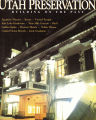
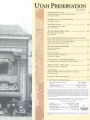
Show Roger P. Jackson, AIA FFKR ArchitecturelPlanningIZnterior Design I n the early morning hours of November 2,1997, President Gordon B. Hinckley dedicated the LDS Church's 51st operating temple and the 10th temple in the State of Utah. This temple is like no other. It is the first temple to be built from an existing structure. The popularity of this building and its new use was attested by the steady stream of over 120,000 visitors to the building during the two- week open house, and by more than 20,000 I participants in the eleven dedication ses-sions. As he placed d- the mortar to the cor-ner stone and then read the dedicatory prayer, President Hinckley completed BUILDING HISTORY AND DESCRIPTION Formal LDS colonization efforts in the Ashley Valley began in 1877. For the next several years, these hardy set-tlers suffered from the harshness of the climate and meager harvests but eventually prospered, and their communities grew. Their numbers were large enough within ten years to justify formation of their own stake ( an LDS ecclesiastical unit roughly equivalent to a diocese). Soon after, they started planning for the construction of a tabernacle building. A " tabernacle" is loosely defined as an assembly building pro-viding a place of worship large enough to accommodate all the'church members in a given locality, which usually includ-ed several towns and communities for many miles around. Tabernacles were generally built near the center of town and were large and prominent buildings, serving community and civic functions in addition to their religious uses. Construction began for the Uintah Stake Tabernacle in the fall of 1899. A building lot had been purchased and building materials had started to be collected. The native sandstone for the foundation and decorative trim on the building was quarried from the hills in North Steinaker Draw, just a few miles north of town. The rough stones were hauled to the site on open wagons, then cut, shaped, and dressed on the site. Sand and gravel used in the cement and mortar were taken scrapers* ? pares ;!> A r c t - i t e c t u r e / P a n n i n g 1 I n t e r i o r D e s ~ g n Vernal Temple Vernal, Utah Rice Stadium Expansion University of Utah Noyes Building Renovation Snow College Joseph Smith Memorial Building Salt Lake City, Utah Salt Lake Hardware Building Salt Lake City, Utah Gardner Hall Renovation & Concert Hall University of Utah I32 Pierponc Avenue, S u i t e 200 Salt Lake City, U t a h 84101 801.521.6186 Fax: 801.539.191 6 Website: www. ffkr. com H EATH Engineering Company Mechanical I Electrical Consultants 377 W. 800 N. SALT LAKE CITY, UT 84103 ( 801) 322- 0487 FAX ( 801) 322- 0490 HEATH ENGINEERING COMPANY, MechanicaVElectrical Consultants Providing quality Consulting and Design Services for 50 Years. SERVING: Architects, Building Owners, Institutions, Utilities, Governmental Agencies, and the Contracting communities. SPECIALIZING IN MECHANICAL AND ELECTRICAL DESIGN SERVICES FOR: Libraries Event Centers Churches Laboratory Facilities Historical Restorations Hospitals Auditoriums and Theaters Jails and Prisons Performing Arts Facilities Retail Establishments Schools Industrial Buildings Housing Complexes College and University Facilities Office Buildings Telecommunication Facilities Heath Engineering Company is proud to have participated in the design of the krnal, Utah Temple. UTAH PRESERVATION from a stream bed near Jensen, a 32 mile round trip with teams and wagon. The excavation for the foundations was done by horse- drawn slip scrapers. The brick for the building was made by local brick builders from native clays and fired in kilns. Lumber for the build-ing was cut in the Uinta Mountains and hauled to a local saw mill, where it was milled into rough framing members and finish trim. The doors and windows were shipped in, probably from the mills in Salt Lake City. Though there was no electricity in Vernal at the time, the building was originally wired for electric lights by a Vernal resident ( who was not a church member) who did much of the work himself. The interi-or finish work of plastering, painting, and finish carpentry took over a year to complete. Though a builder was'hired, much of the labor was furnished on a donated basis by the local people, sometimes by assignment from their local church leaders. but most often volunteered. Funds for the project were paid by the stake and were collected from local church members and the larger com-munity. On the eve of the scheduled dedication, all the funds were secured except about $ 1,800. Then Church President Joseph F. Smith said if the locals would raise their portion, the church would donate the remainder. The necessary funds were collected in a matter of hours, and the building was dedicated debt- free on August 24th, 1907. The total cost for the project was about $ 37,000. President Smith com-rostrum, and a horseshoe gallery on the two sides and rear of the space. The building is the most prominent structure in Vernal and is considered the finest building in all of eastern Utah. It was much loved by the resi-dents of Ashley Valley, primarily because it had become an important part of many family histories. Many people have stories from their families about great grandfather so- and- so who had worked on some part of the build-ing. These stories, passed down from generation to generation, are part of a tremendous legacy of faith and sacrifice related to this revered building. Over time, the ecclesiastical uses of the tabernacles were replaced by newer multi- use " stake center" buildings. mented at the dedication ceremonies that he would not be surprised " if a temple was built here someday." The Uintah Stake Tabernacle was modest in both detail and construction. It was built of a simple hand- made brick with rusticated stone base, win-dow heads and sills, and arches at the entrance doors and the upper- level win-dow heads. A simple octagonal tower with a painted metal dome sat just above the entrance porch on the west end of the gabled roof. The building exterior lacked much of the detailing seen on many of the other tabernacles built by the church; it is simple and direct in character, consistent with the thrift and economies of its humble pio-neer builders. The interior was as sim-ple and unassuming as the exterior, with painted wood trim ( grained to look like the oak doors), a traditional raised These facilities functioned as meeting houses for several regular ward units and as multi- ward, or stake, meeting halls and the necessary administrative space. This pattern was repeated in Vernal. By about 1948, the tabernacle could no longer accommodate the crowds for the regular stake confer-ences, so a new stake center was built next to the tabernacle on the same block. From then until about 1984, the building was used only on an inter-mittent basis for an assortment of church and community functions: con-certs, community theater, graduation ceremonies, lectures, town meetings, etc. However, the building never again fit into the regular program of the church. Seismic stabilization required anchoring rebar to the un- reinforced masonry walls then covering with four inches of concrete. UTAH PRESERVATION Celestial Room, Vernal Utah Temple of The Church of Jesus Christ of Latter- day Saints. SAVE THE TABERNACLE In 1984, the LDS Church announced that it would close the building. At about the same time, the city building official closed it for public safety reasons: lack of toilet facilities ( visitors were required to go next door to use facilities in the stake center), exiting deficiencies, no access for the disabled, etc. Thus began a period of worry and hand- wringing regarding the uncertain future of the building. The local preservation community formed a " Save the Tabernacle" committee and began looking for alternate uses for the building and possible sources for funding. One of the uses actually proposed was the conversion to a smaller temple build-ing. In 1989, a formal preservation study was prepared by Cooper/ Roberts Architects that outlined both necessary and desirable restoration tasks for the continued use of the building. In the back of peoples' minds, however, was the lingering fear that the building would eventually be tom down. THE BIG ANNOUNCEMENT In February of 1994, at a local stake conference of the church, a letter was read from the LDS church's First Presidency stating that the decision had been made to convert the building to a temple, preserving and restoring the exterior of the building but changing the interior. One of the stated objectives of the project was to preserve the original aspect of the historic structure as a memorial to the faithf~~ ple ople who built it with much sacrifice. THE DESIGN PROCESS FFKR's involvement began only days before, when FFKR partner Jeff Fisher and I were invited to meet with project managers for the Temples and Special Projects Division ( T& SP) of the LDS Church. This was the same Syn. replacement, rehabilitation, revival, renewal, McCullough Engineering and Contracting Vernal Utah Temple Fair Park Grand McCullough Engineering and Contracting 1567 EAST STRATFORD AVE. SALT LAKE CITY, UT 84 106 PHONE ( 801) 466- 4949 FAX ( 801) 466- 4989 UTAH PRESERVATION project management team we had worked for on the remodel of the Hotel Utah building ( now the Joseph Smith Memorial Building). The suc-cess of that project and the great working relationship we developed with T& SP enabled them to recom-mend to their management that we should do this project. Traditionally, temple projects within range of the Wasatch Front are done by the church's own architectural and engi-neering staffs ( e. g. the Bountiful and the Timpanogos temples), so we were especially pleased with the opportuni-ty and the tremendous trust placed in us. We were told of the project and invited to participate. We were given a few snapshots of the building and a preliminary plan, prepared by church architects, showing the anticipated configuration. In this plan, a signifi-cant portion of the building facilities were shown entirely underground with only a small entrance area expressed. One of our first tasks was to secure the necessary preliminary investiga-tive studies: a geotechnical and soils report, a survey of the site boundaries and topography, hazardous materials, etc. Since there were no available drawings of the original building, we contracted with Tim Maxwell, an experienced historical architect with whom we had also worked on the Joseph Smith Memorial Building, to prepare a set of " as- is" documents of the building. A particular emphasis of the drawings was the existing struc-ture and the decorative elements. We realized that we were going to change i n This situation gave us the opportunity to re- examine the pre-liminary design. Alternative schemes were generated that placed the new section entirely above grade and introduced natural light into the building that before had been entire-ly underground. Allen Erekson, . F- ' z C .- tn w . c rn --= 0 8 c- = D , -- 0= 8 - E 7 2 5 0 0 - L a eternities. Our primary focus in the design of the building was the per-sonal experience of the individual patron visiting the temple. We want-ed the architecture of the building to reinforce this concept of progression by arranging the rooms in sequence and splitting the ordinance rooms into two stages. Another feature of this is that each room is slightly ele-vated above the previous room so participants in the temple will have the physical sensation of rising upwards as they move from one room to the next. People often ask us if it was diffi-cult to fit all the programmatic requirements into the existing build-ing. The response is " yes," but the restrictions and constraints imposed on us by the size and configuration of the old building have, in a way, freed us up and allowed us to be more creative. There were many instances of give and take with the the tabernacle architect with T& SP, sug-building forever, President Smith gested we place the new por-and that this tion of the building half would be the only commented at the underground and integrate documentation of the building into a perimeter the original build- [ l907] dedication fence structure. If the fence ing. We also sent had elements of solid wall someone from that he and open fencing, the visual our office with a emphasis would be placed camera who took on the old building and not about 400 pho- not be on the new building. The re-tographs. This design allowed us to take documentation, ~ ~ r ~" kifae addvan tage of a large window drawings and opening on the east side of p h o t o g r a p h s , temple was built the building that had long was invaluable in ago been bricked over. This providing us the heye some~ ay." window is in a large stair basis for the work to continue. One of the major discoveries of this phase was the presence of groundwater at about fourteen feet below grade. If the original plan was followed, the addition to the building would be partially in the water and would require expensive waterproof-used by all patrons as they go through the temple. The need to re- design also allowed us to reconfigure the interi-or spaces of the building. The tem-ple ceremony itself is very " proces-sional" in nature - it teaches of the progress of mankind through vari-ous stages of life and our progress through this life and through the UTAH PRESERVATION Temple Department. Their other projects are built from the ground up and they have the opportunity to do things the way they want to by build-ing on the successes and lessons learned in prior temples. Many of these " formulas" and usual ways of doing things needed to be re- thought as we stretched and squeezed the nec-essary functions into the shell of an existing building. The original plans for the temple called for retaining and refurbishing the existing tower on the tabernacle. We had earlier proposed using a fly-ing angel Moroni weather vane for the top of the tower ( similar to the Nauvoo temple) but it was decided by the design committee to leave the tower without an angel. ( There are several temples with no angels and several with angels facing west, instead of the traditional east.) At the ground breaking ceremony President Hinckley, sitting on the temporary podium in the parking lot, noticed that the spire on the adjacent stake center looked higher than the tower on the tabernacle. ( He was right: nine feet!) We were asked to develop several options to have the temple tower taller than the stake center spire. We showed sev-eral schemes cutting down the spire, a few schemes with free- standing towers, and several showing modifi-cations to the existing temple and tower. The option selected added a new larger tower on the east side of the building with the traditional standing angel Moroni facing east. President Hinckley commented that this placed the emphasis appropri-ately- on the east end of the temple, The Good Shepherd window, salvaged from the Hollywood California Chapel, found a fitting home in the Vernal Temple. and left the other building alone. This work was added to the project by change order. The construction contract for the building was awarded by a lowest bid process to McCullough Engineering and Contracting of Salt Lake City, with a majority of the subcontracts being awarded to Wasatch Front companies. Many of the tradesmen and women were from the Ashley Valley. Because of the age and construc-tion of the original building, it was necessary to reinforce the building against the forces of wind and earth-quake. This was done by the process of removing the inner wythe, or layer, of brick ( the walls were four wythes thick), drilling and epoxying dowels and rebar into the remaining brick, and building back with four inches of shotcrete, or sprayed on concrete. With additional reinforcing around window and door openings, this provides a very stiff structure. The walls were then insulated and finished on the inside, with no significant increase in wall thickness. INTERIOR FINISHES Detailing of the interior door and window wood trim was made to match the details in the original building. The interior design for the building was provided by designers on staff in Temples and Special Projects. Lawrence Wyse and Greg Hill selected paint colors, carpets, furnish-ings, decorative light fixtures, and art-work for the building. The furnishings were selected to specifically relate to the original building and many are repro-ductions of antique pieces. The exten-sive stencil painting throughout the building was done by Daniel Peterson, who also did the decorative painting in the Governor's Mansion, the Cathedral of the Madeleine, and the work for us in the Joseph Smith Memorial Building. Daniel generated over twenty different patterns for the major spaces through-out the building. There are several pieces of art glass in the building. The most prominent is the " Good Shepherd" piece in the grand stairway. This piece was originally in the building bought by the church in 1939 for the Hollywood California Ward. In one of many subsequent remodel projects, the stained glass was removed, restored, and placed in stor-age. When the opportunity presented itself to open up the old east window, we were told of the window and had the opportunity to use it if we wanted. It is a beautiful piece showing Christ as a shepherd holding one of several sheep. This piece was the right shape, general-ly, but not the right size, so additional glass was added in the frame around it to fill the old window opening. All the stained glass was designed and executed by Willie Littig of Salt Lake City. The entire building has a feel of com-patibility with the age and time of the original building. With modern building technology, we tried to preserve the hand- made feel of this great pioneer building. Our specific intent was to not do anything that would detract from the simple elegance of the original building, but at the same time create a space con-ducive to the building's new role. .:* Roger P. Jackson is a senior associate at FFKR Architecture / Planning / Interior Design, Salt Lake City. He was project architect for the Vernal Temple, the Joseph Smith Memorial BuildinglHotel Utah remod-el, and the new East High School. KeyBank o KEYBANK OF UTAH KeyBank Tower 50 S. Main St. Salt Lake City, UT 841 44 ( 801 ) 535.4 000 ( 801 ) 535.1 146 1' Caro mesid e(", ,, restoration of landmark buildings, the organization has been a major provider of financing to rehabilitate commercial build-ings such as the Pauline- Downs Apartment Complex in Salt Lake City and the Marion Hotel in Ogden. Through a combination of construction financing, tax- credit part-nerships, and long- term financing, KeyBank continues to play a significant role in restoration programs throughout Utah communities. 19 delivery channels," Ms. Davenport explains, " including KeyBank branches, ATMs, telebanking, and PCs. We will provide real- time access to Key accounts and continue to broaden our services to provide one- stop- shopping to meet cus-tomers changing financial services needs. We continue our push to integrate our services to enable our customers to manage their finances when it's conve-nient to them- whether that be at 2: 00 in the afternoon, or 2: 00 in the morning." Carol Davenport serves on several boards including: the Economic Development Corp of Utah; Salt Lake City Area Chamber of Commerce; Young President's Organization, Utah Chapter; Utah Symphony Board of Directors; Utah Arthritis Foundation; and Utah Bankers Association. She is also a mem-ber of the Rotary Club of Salt Lake City. |