| OCR Text |
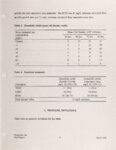
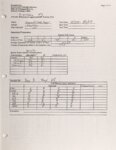
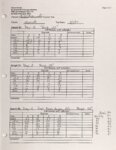
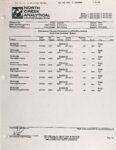
Show dilution water were 43, 41 and 8 mg!L, respectively. The TOC, DOC, and TSS concentrations measured in the dilution water are characteristic of the GSL (Domalgaski et ale 1990). Therefore, although these concentrations are higher than would normally be used in a laboratory toxicity test, they are appropriate for evaluating the site-specific conditions of the GSL. analyses can be found in Appendix B. Results of the Dilution water was filtered through a I-p.m glass fiber filter prior to sampling for TOC, DOC, and TSS analysis and bioassay testing. 2.5 Water Quality Parameters Water quality parameters (PH and salinity) in each test treatment were measured at test initiation I and termination. Temperature in the physical system was measured at test initiation and everyday thereafter. Test solution pH was measured using a Cole-Parmer Model 5398-00 digital pH meter. Salinity was measured using a Reichert temperature compensated refractometer. All instruments were calibrated the day of use, with the exception of the thermometer, which is calibrated every six months. 2.6 Test Methods Details for the methods used to conduct this test were those described in Parametrix' s protocol entitled, "Procedures for Determining the Chronic Toxicity of Selenate to the Alga Dunaliella -' viridis;" a copy of which can be found in Appendix C. A summary of test conditions for this study can be found in Table 1. the freshwater Chronic The bioassay was conducted according to methods described for algae, Selenastrum capricornutum in Short-term Methods for Estimating the Toxicity of Effluents and Receiving Waters to Freshwater Organisms. EP A/600/4- 911002, July 1994. Test methods were modified, as detailed below, for testing with D. viridis. Additionally, data analysis were performed in accordance with the Official Journal of European . Communities Algal Inhibition Test (European Union 1992). Parametrix, Inc. Final Report 4 March 1998 |