| OCR Text |
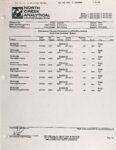
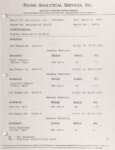
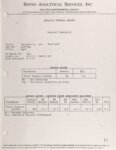
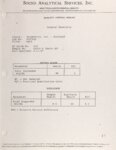
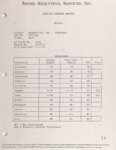
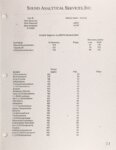
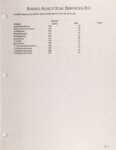
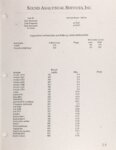
Show 2.3 Source and Condition of Test Organisms Dunaliella viridis was originally obtained from Murdoch University School of Biological & Environmental Sciences in Perth, Australia. It has been cultured in Johnson's media (Appendix D) at Parametrix since January 1996. D. viridis at 4 to 7 days from culture renewal were obtained from laboratory stock cultures that were maintained at constant log growth phase at a culture temperature of 25 ± 1°C under continuous fluorescent lighting (400 foot candles). Dilution/Control Water 2.4 Dilution and control waters consisted of GSL water collected from a reference site on the north side of Antelope Island, approximately 60 miles north of Salt Lake City, in the south ann of the GSL. The dilution water, with a salinity of 94 gIL, was collected by Parametrix staff and transported to the testing laboratory for storage in leached, 1,000 gallon HDPE tanks on site. Aeration of the dilution water during storage was facilitated by the circulation process in the outdoor storage tanks. The dilution water was sent to Sound Analytical Services for analysis of priority pollutants. Priority pollutant metals were below detection limits with the exception of copper (0.15 mgIL total and dissolved) and lead (0.48 mgIL total and dissolved). are recognized to be biased on the high side due to chloride interference in the GSL water and therefore are unreliable. ann These values Domagalski et al. (1990) reported copper and lead levels in the south (upper brine) to be 5 and 7 ug/L, respectively. Additionally, Ecology Planning and Toxicology (1997) reported copper levels (using techniques to remove chloride interference) in the south end of the GSL to be 3.4 ug/L, 1,000 meters from shore. pollutants bis(2-ethylhexyl)phthalate (7.6 ug/L) and Detected organic priority di-n-butylphthalates (0.79 JlgIL) commonly detected when plastic sample bottles are used, as in this study. are The detection of the volatiles 2,4-dimethylphenol (0.63 ug/L), benzoic acid (0.72 ug/L) and acetone (16 JlgIL) are unlikely in continuously aerated water and are most likely associated with contamination at the analytical laboratory. Total organic carbon (TOC), dissolved organic carbon (DOC) (North Creek Analytical), and total suspended solids (TSS) (Sound Analytical Services) concentrations in the Parametrix, Inc. Final Report 3 March 1998 |