| OCR Text |
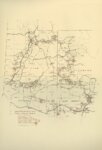
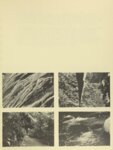
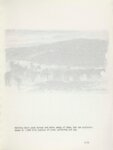
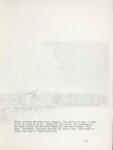
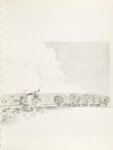
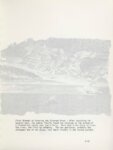
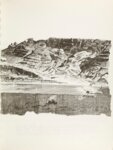
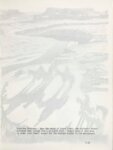
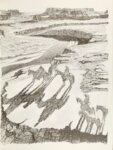
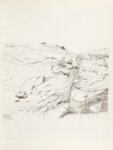
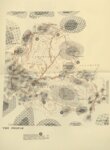
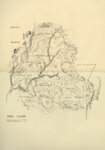
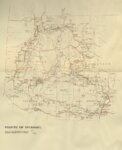
Show Uinta Mountains, some higher than 13,,000 feet, were extensively eroded The padres during the Ice Age, forming great Matterhorn-type peaks Las de named them Las Sierra Blancas Lagunaso 0 The explorers left the Duchesne where it comes down from its northern At this location, they began to follow the headwaters in the Uintaso the Duchesne) to its source in the Wasatch feeds River (which Strawberry The Wasatch Range, a continuous wall 200 miles Mountains to the west. long, is the extreme western margin of the middle Rocky Mountains. Run ning along the east edge of the Wasatch are the Pink Cliffs, a sinuous sandstone formation that extends far south forming Bryce Canyon, Cedar On the west edge is the long Wasatch Breaks, and Zion National Park. Mt. Ti mpanogos, one of the mos t dramati c peaks of the Faul t Line. Granite is the prevalent stone in the range, reaches lls957 feet. valleys and canyons that were shaped by glaciers (one of which still . remains) instead of river erosion. From Strawberry Ri ver, Di amond Fork Canyon leads down to Spanish Fork Canyon, which, in turn, cuts down into the Utah Valley. The padres used this route to leave the high country and rapidly drop to a 4,000 Utah Valley and Utah Lake are remnants of the eastern foot elevation. In the Pleistocene era, the great shore of ancient Lake Bonneville. of miles the Great Basin of Nevada and lake covered 19,750 square shoreline (still visible today), this south western Utah. along Heading followed the Grand Wash, the western edge of the Colorado the padres The Wash is a lowland composd of sands arid.grave1 deposited Plateau. seasons 1 runoffs from the Tushar and Pahvant ('"1 ateaus south of the by The sandy alluvial fans halted the expedition when, the Wasatch. during a severe winter storm, the Wash became a miry trap at Escalante Valley near present-day Milford, Utah. Southward is Escalante Desert, a barren area once submerged under Lake Bonneville buts in 1776, inhabited by the timid and resourceful Paiutes. Escalante Desert, the group entered Cedar Valley at the Following the base of-Hurricane Cliffs near present-day Cedar City. the padres reached base of these cliffs southward for forty miles, The Utah. Hurricane and crossed the Virgin River near present-day tremendous carved the down the plateau, muddy Virgin River, which comes pink and white sandstone cliffs. of Zion Canyon, a feat remarkable for Leaving the such a small river. After fo 11 owi ng the base of the Hurri cane Cl i ffs fo.r another forty miles, they finally found a suitable place to climb it in northern From there the explorers struggled onto the plateaus to the Arizona. This area north of Grand Canyon, now known as the Arizona Strip. has little water or vegetation today, though it was covered with-high quality range grass during the time of early Mormon settlement. The plateaus are bordered on the north by a series of cliffs called the Chocolate, Vermillion, White and Pink Cliffs. Along the southern edge of this dry area is the Kaibab Forest with its pine trees and Lucki 1y, the padres turned east before reaching the 1 ush meadows. Grand Canyon; Otherwise, they would have encountered the steep impassap1e cliffs of the most remarkable canyon in the United States. On the other hand, they would have found ample deer to ease their G-4 |