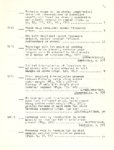
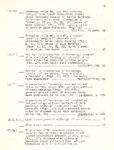
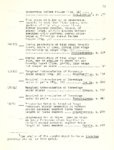
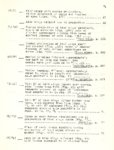
| OCR Text |
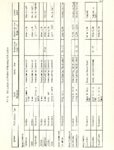
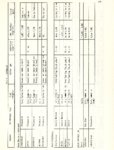
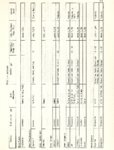
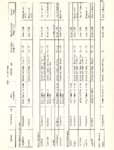
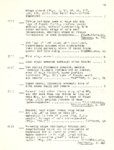
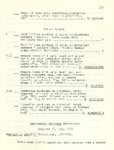
Show 77 usually wi th pos terior margins of .t e r-g a black; caudal filaments uniformly pale, without dark annulations Stenonema, p. 198 Forewing veins variable in color, if as above, abdomen conspicuously marked with red or brown, or caudal filaments with dark annulations Heptagenia, p. 177' p. 151 p. 161 •••••• __ •••••••• 37(34) Basal costal crossveins of forewings well developed, appearing attached anteriorly; wings usually yellowish brownish at least in basal half. 63-64); subanal plate with well or (Figs. developed deep V-or U-shaped postero-median 75) emargination (Fig. Cinygmula, Basal --- crossveins costal of forewings weakly developed, appearing detached anteriorly (Fig. 65); wings hyaline although crossveins may be darkened; subanal plate with postero-median emargination not as. well developed as above (Fig. 74) Epeorus, in part, ••••••.• Nymphs 1 notum enlarged to form a extending to abdominal segment 6, gills enclosed beneath the shield Thoracic 1 • • • • • • • • • • • • • • • • • • • • • • • • •.• • • • • • • • shield the • •• BAET ISC Baetisca, Thoracic notum not enlarged as abdominal gills exposed (Figs. 62, 152-153, 196, 212) IDAE, 303 p. above; 3, 30, ••.••••••.••••..•••••••• 2 Mandibles with large tusks projecting forward and visible from above head 2(1) ( Fig s , 146, 196 ) ••.•.•.•..••••••.••.•..•.••••• 3 - the can lYoung specimens are sometimes impossible to key. In family Baetidae, only those with well developed wing pads be keyed to genus with certainty. |