| OCR Text |
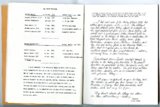
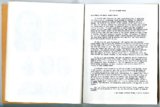
Show Willard G. Smith - page 8 September 8, of that first year, a son, Willard Gilbert, Jr. 'Ihen within ano~er two years, on July 29, 1872, David Franklin was born after a d~livery so prolonged and diff icult that Hulda Cordelia alrrost lost her swedish mid-wife was in charge. She had graduated from the li~e. Urnversi ty of Stockholm and knew how to use instrurrents. · However, in this extr~ly diffi_c ult delivery, the pelvic bone was broken in two places and not discovered 'due to excessive hermorhage. So mu:::h blocxl was lost that ~~ther hovered for t¼D days on the verge of death. Inflarrrnation set in with resultant severe fever which they treated for ove:r four weeks before a close examination was made and the broken bones discovered treated ~d bound up so they were no longer torn apart when she rrov~. After this horrendous start, reoovery was very slow; it was three rronths rrore before she oould stand and quite a little later before she could walk. Gran~ther wr'?te: "If this had been a terrible ordeal for rre it was also t~rrible for kind-hearted, patient, loving Ingri, who never once corrp~amed about th~ housev.Drk, or grew impatient with rre or with the new infant who was_ill and ~retful from being nursed by his feverish rrother so fqll of inflarmation, or with the three older children whom she pe~ted and loved. dear l f. Without her help, I should rrost ce;tainly hav~ died• She remained with us until the following Februa:ty when I was again on ~.way to health and able to take things over. She left to go ~st to visit her family and get a well-earned rest. I have never seen her since, but we corresponded for several years. She later married a "Mr Gardner" and lived in Seattle where, at her last report to rre she wrot~ that they had four children." A ~ew letters to Willard have been preserved and are now in the fX?SSession o~ Joyce Whittier, a daughter of Aunt Delia Reeder. The fir~t was ~itten from Rawlins on Mci.rch 14, 1873. Another told of her coming marriage to a good man on June 12, 1876, and was mailed from New Tacoma where she was_staying with her brother who had rroved from Rawlins. H~r last letter to_Will~d told him they had then three children: Hattie, six years old; Susie, five years; and a son Alex, then two, and that her husband was very gocxl to them all and she was happy. So af~er all, this sad tine seems to have had a happy ending but leaves us with so many unanswered questions. Did she stay in the Church? ¾ere her family in Washington rrembers? What was Mr. Gardner's full nane · and what has happened to each of them. Perhaps we should find tine so~ow to seek out these possible rrernbers of Willard Smith's posterity. My In?ther, Estella Smith Mulliner, writes: "As the tenth child of . Willard Gilbert Smith (whom he used to jokingly say should have been turn~ in for tithing) I can truthfully say that I cannot rerrember ever hearu:ig IIo/ father speak harshly to, or chastise one of his children. His te~c~u:igs were always inspirational and never once did I ever hear him criticize a church l~ader. He had a philosophy which is rrore understandable tone now than it was when I was a child. vilhenever I sought his s~thy f'?r sone real or fancied injustice, he invariably said: "Never mind, IIo/ li!tle dear, if_s~e can afford to act that way, you can afford t? let ~er. . He had a living testirrony of the truth of the gospel and his entire life was patterned on the teachings of Christ and the simple truth of the Golden Rule. _Father was extrenely proud of his children, who always seemed perfect in his eyes so he was quite oontent with the arrount of schooling his wife Willard G. Smith - page 9 However, their rrother realized the inadequacies and made opportunities for the younger ones to attend school in Ogden as often as circumstances permitted. She was assisted in this by her eldest daughter, Delia, and husband Tom Reeder, who had both Alberta and ne live with them at different tines in order to go to school. and the snall cornrunity provided. Grandfather's gentle, loving spirit was recognized not only by his countless .Pioneer frierrls in the M:>rgan area, but by its Indian population as well, for they saw in him a friend and provider. He learna:1 to comnunicate with them and to serve them in many ways. And so they cane to him from miles arourrl to visit, seek advice, and to ITEke demands and carplaints, and usually to ask for food. Braves, squaws, and children were a camron sight in the dooryard and they occasionally carried away with them things which had appealed to them. One day after the departure of such a group, the Smith children discovered that every one of their pet cat's litter of fat kittens had disappeared. The horrible possibilities of their fates haunted the little girls for rronths. Another story is recalled for us by Bess .Adams, daughter of Aunt Alberta Porter, who writes: "When a baby lamb was left without its nother, grandfather told his snall daughters they could atterrpt to raise it. With a baby bottle and loving care the lamb thrived. It grEM so rapidly that before the girls were much older the lamb had becorre too rough and strong for them to play with. A family conference was held and reluctantly and tearfully, the children agreed to let their father take it to be sold in town. After carpleting the sale, grandfather decided to surprise his family with a nice roast for their dinner. Whatever in the ¼Drld, one v.Dn::lers, possessed him to choose a leg of lamb! Not a single child could eat a bite of it!" He was not always so lacking in sensitivity and was instead a gentle kindly man who rrade pets of all his farm animals. Alberta writes: "Our older brother, Willard, said 'We made fools of everything. ' The CCMS, for exanple, could not believe we rreant it when we tried to drive them from the yard. '!hey v.Duld calmly turn their faces up to be rubbed. I rerrenber our old farm horse was sedately ploughing a furrow in the potato field when suddenly he saw rre standing near and he veered out of line and cane over to have his chin stroked--a jesture he loved. Needless to say, IIo/ brother was exasperated, and SOire potato plants were uprooted by the plough." Again--"Many animals did interesting things. Once, late in the surmer, a hen hid away and hatched out a brood of chicks. She piloted them back to the yard but as nights already were frosty, father said he v.Duld i:rake a pen , for her inside the barn and we ¼Duld have to catch her and her family to keep them from wandering. Before this was done, she disappeared--probably eaten by a mink or skunk--and the deserted babies were wandering about peeping piteously. Before the day was over, we noticed that an old rooster was gathering the orphans and hovering them from the cold. 'Ihey v.Duld answer his throaty clucks and run to his sheltering wings. He rrade the suprene sacrifice of giving up his place on the highest perch in the coop to squat in a comer and care for the family. He successfully raised the lot. He was very awkward at his job of being a nother, but he was very faithful. Of course, dogs were inp:)rtant in our fanu life and we always. had one or two. Many stories could be told of their intelligence and devotion. |