| OCR Text |
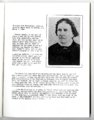
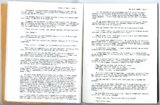
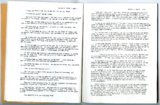
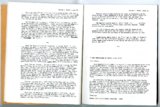
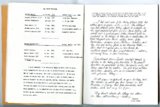
Show Willard G. Smith - page 2 ~illard_was born on May 9, 1827, at Arrherst, Lorraine County, Ohio, the first child of Amanda Barne s and Warren Smith. They joined the L.D.S. chur?h u:11831,_just one year aft~r its organization. Willard was bapt ized 01: his eighth bi rt~day by Elder SllTEOn D. Carter, and was closely associated with the chur?1 rrost all of his l i fe. His earliest activity in a religious way was carrying water for the wor~n on the building of the Kirtland Temple, since the family had rroved there to join the body of the church. Through the violent persecutions of the saints, Willard's parents were soon forced to sell their home and all other possessions there so cheaply they could procure only a meager outfit with which to start for 1-"..issouri in the Spring of 1838 . Willard, though a boy, was old enough to sense and fully realize these persecutions and the dangers with which they were menaced all the way on the terrible journey--every mi.le of which was full of uncertain dread. Often they were warned by complete strangers to travel other roads, as nnbs were congregated to kill them. They would tn1;1s be fcrce. d to travel unbeaten trails at night with only the stars as qLudes. Ho,.,.rever, they were obliged to canp occasionally to get a few days ' work to replenish their scant provisions. 'Ihey left Chio in April and reached Missouri in late October. On the 23rd day they were stopped by an armed rrob. All their fire-arms and amrrn.mition were taken from them before they were taken back five miles, placed under guard and detained for three days with no consideration and little to eat, ciild constantly threatened with complete annihilation. HCMever, they were released and continued the journey. On the rrorning of October 30, t ho_v ar:'.·ived at a little place called Hauns Mill, a srrall settlerrent on i,c ~,;:,J_ Crc.ek , ·:x::irnp,.")sed of Latter-day Saints. 'Ihey received a cordial W;.=J.cone. Fat-lier said the people had bees and had just taken out their hives' ·honey, which was in pans and buckets. They were told, "Help yourselves; eat all you want." 'Ihey passed a few hours in this friendly atrrosphere before they noticed a sort of surpressed anxiety arrong the P.E;ople . The men all gathered in groups and seemed to be discussing some VJ.tal pr?blem. Great grandfather and his three little boys, Willard, Alma and Sardis, were standing at a brush fire heating a wagon tire to re-set. Great grandrrother was busy with the usual work of a pioneer rrother and traveler. I will try to give you the story of the subsequent events in Wil~ard's own graphic words, as related to his daughter Delia Smith Reeder. 0 '' I and two little brot.'1-iers were with father when without warning a large body of rrounted ID2n, blackened and painted like Indians, rode up yelling and comrenced shooting at the crowd. The men at the shop called for ' quarters; to this the rrob paid no attention. The men then called for the women and children to run for their lives. We were surrounded on three sides by the rrob; tt'1e old mill and millpond were on the fourth side. The ~n ran for the blacksmith shop, taking the little boys with them. My two little brothers ran in with father. I .follCMed, but when I started to enter the_shop_my arms flew up, preventing my entrance. In my frenzy of fear, I agaJ.n tried to enter, and again my arms were thrust out to prevent entrance. After the third futile attempt, I ran around the corner of the shop and crawled into a pile of lumber , hiding as best I could. I had bee1: there only a few seconds when the rrob began shooting at ne and the splinters flew all about me. I crawled out and ran into an empty house on the slope near the pond. I had been there only a few minutes when I heard a surpressed groan .. I listened again and then I saw a board over a potato cellar rrove very slightly. I raised the board and there found an old Revolutionary Soldier by the name of Thomas M:::Bride, who had been wounded Willard G. Smith - page 3 before the women fled. They had hidden him in this pit. He aske:i to be helped out and begged for water. I went with a cup to the pond, or mill race, for water. There I was deliberately fired upon, but escaped without a scratch. I gave the suffering patriot a drink and pleaded with him to rerna.in in the pit, telling him the nob would kill him if they found him. He replied . "Help :rre out; I am dying in here. " This I did • . • I leame:i later the rrob four:rl him and as he raised his age:i hands in supplication they were out and hacked, the fingers split down with an old dull com cutter. 'Ihe bullets were flying thick around us and I decided I nust seek safety elsewhere. I ran out of this house into another one ·close by. Here I heard sobs and whispered canfortings which seemed to cone fran the comer where the bed stood. I lifted up the bed valance and crouched way back were six little girls. The rrob had seen them before, and when I went in there the bullets and splinters starte:i to fly again. I said that we Im.1st get out of there or we would be kille:i. So we left and ran tCMard the mill darn, finally reaching the mill race, which we crossed on a board. The rrob fired at us as we went up the bank on the other side. The bullets spattere:i again in the water and cut down the brush on all sides of us, but not one of us was graze:i by a bullet, although several passed through the clothing of the girls. I afterwards knew two of these little girls. They were the daughters of Brother Charrplain, the nan who was knocke:i down in the shop, and was thought to be dead, thus hearing all the controversies of the m:::b when they entered the shop to finish their fiendish work. After our race for life, the little girls scurried off like prairie chickens into the brush and tall corn. I, knowing father and my little brothers were in the shop and the rrob were still firing at them, took shelter behind a large tree, where I could be pretty safe and still watch the rrob. This I did until they ceased firing, when they disrrounted and went into the shop where. they finished by killing all who were not dead. From here they went into all the cabins and tents and destroyed the groceries and furnishings. After taking the horses and belongings of their victims, they rode off hCMling like Indians. As soon as I was sure they had gone, I started for the shop. I was the first person to enter this holocaust, stepping over the dead body of my father in doing so. I looked around and found my brother Sardis dead with the top of his head shot away; and my little brother Alma alrrost lifeless, lying arrong a pile of dead where he had been thrcMI1 by the m:::b, who evidently thought him dead. He was unconscious, so I pulled him up from the dirt and was carrying him on my back and shoulders from the shop whem I net my rrother who screaned and said, "Ch, they have killed . my little Alma!" I begged rrother not to c:p in but to help ne with A.lIIa. Our tent had been devastated by the m::b, even the straw tick cut open and straw scattered about as they took the tick with them. M:>ther levele:i the straw, laid sooe clothes over it and on this awful bed we placed A.lIIa. We cut his pant off so we could see the extent of his injury. The entire ball and socket joint of the left hip was shot away, leaving the bones three or four inches apart. It was a sickening sight, one I shall never forget. M:>ther was full of divine, trusting faith, a rrost marvellous, wonderful She was inspired to take the white ashes from the campfire, place them in water to make a weak lye, with which she washed the wound, leaving it clean anq white. Then she was prarpte:i hCM to make a poultice. ·She asked me if I knew where I could get sare Slippery El.Jn tree roots. I said I knew woman. |