| OCR Text |
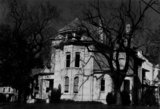
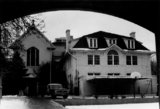
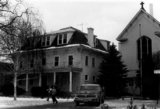
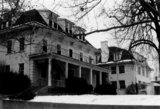
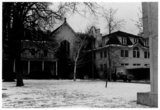
Show Form No. 1O-300a {Hev 10-74) UNITED STATES DEPARTMENT OF THE INTERIOR NATIONAL PARK SERVICE NATIONAL REGISTER OF HISTORIC PLACES INVENTORY -- NOMINATION FORM CONTINUATION SHEET ITEM NUMBER PAGE George D. Wall-Thomas W. Haskins House he original Rowland Hall was In a home that was built by George D. Watt. Watt, a Mormon convert from England, came to Nauvoo, Illinois, in 1842. Just before the Mormons were driven out of this area, George was called on a mission to England. In 1850 he was released from his mission and he and his family came to Utah. George worked for the Deseret News, the Mormon newspaper, after he came to Salt Lake City. He was hired by Brigham Young as a clerk and as a reporter for the Utah legislature in 1853. Watt also published a journal which included the speeches of the Mormon leaders. He continued to publish Journal of Discourses until 1868 when he left the office of Brigham Young. Watt also was one of the main promoters of the Deseret alphabet, a phonetic alphabet that was to help the immigrants learn English easier and the sencultural industry in Utah. In 1868 Watt, who had been one of the strongholds in Young's office, left the employ of the church. He set up a mercantile business with Robert SIeater and William Ajax. According to family tradition, the store eventually went out of business because the Mormon leaders advised the church members not to patronage it because it had "gentile" business connections in Chicago. In 1869 Watt became interested in the Godbeites, a group of Mormons who had broken off from the main body partially because of a dispute over the role that Brigham Young, a prophet, should play in temporal affairs. His interest in the Godbeites grew and by 1874 he was a member of that gruop. This house was built in approximately 1862 on some property that Watt had received from Brigham Young. During that year Watt was working in Young's office and he received credit for some carpentry work and some lime from the church. He was probably building this adobe house then with these materials. Watt lived in this house until about 1869 or 1870 when he moved his family to Kaysville. Watt sold the home and property and by 1870 Warren Hussey, the banker who persuaded Bishop Tuttle to come to Utah, owned the house. He sold it in 1871 to Thomas W. Haskins, one of the Episcopal missionaires. Thomas might have lived in this house for about the next three years. According to Tuttle, Haskins had been living in the rectory while Tuttle was in Montana and Idaho. When he returned to Salt Lake in 1871 Haskins moved so Tuttle could have the house, but Tuttle does not say where Haskins lived. During the period that Haskins lived here he was the principal of the St. Mark's School which met at the nearby St. Mark's Church. For a while he was the chaplain at Fort Douglas. In about 1873 he left Salt Lake and by 1891 he was in Los Angeles. Haskins probably maintained the George D. Watt House, but he enlarged it. To increase the floor space, he removed the gable roof and added a section on to the rear of the house. He then put a truncated roof on the house. According to the photographs at the Utah State Historical Society, this change took place in about 1871 when Haskins acquired the property. |