| OCR Text |
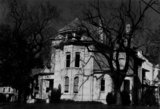
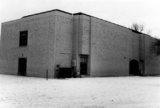
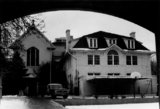
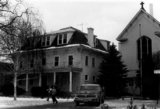
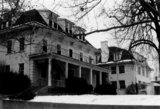
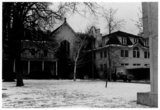
Show Form No. 10-300a (Hev. 10-74) UNITED STATES DEPARTMENT OF THE INTERIOR NATIONAL PARK SERVICE NATIONAL REGISTER OF HISTORIC PLACES INVENTORY » NOMINATION FORM CONTi NUATION SHEET ITEM NUMBER ' PAGE z___________________ gable end. On the second floor is the sanctuary with its altar at the north end. The chapel interior has exposed wood roof trusses, small stained glass windows set high in the unplastered red brick walls, and dark wooden pews that step up parallel to the side walls. Natural lighting comes from a large leaded glass Gothic window with simple tracery at the south end of the chapel. The first story of the chapel contains classrooms and a hall connecting the Watt-Haskins houses with the 1910 classroom structure. The main entrance to the school, sheltered outside by a bracketted hood, opens onto the hall. The three main buildings of Rowland Hall-St. Mark's School looked out over the Salt Lake Valley to the south until 1970. In that year a new classroom building was built along First Avenue on the south portion of George Watt's original half-block lot, creating a campus "quadrangle." The new building is a modern two-story brick structure by architects Snedaker Budd § Watt with blank walls, and windows set in the chamfered corners. The structure's shallow mansard roof and grey brick echo in modern form the original buildings of the school. An arched walkway through the center of te building creates a dramatic frame for the older structures to the north, and maintains a visual link with the valley to the south. On the east half of the block along B Street are three mansions purchased by Rowland Hall and St. Mark's in 1922 and 1956 for use as classrooms and faculty housing. The homes are painted grey with whie trim to match the buildings on the "quadrangle" to the west, but they remain separate from it, not integrated by any landscaping. The Joseph Rawlins house, 231 First Avenue at the corner of B Street, was built in 1887 and purchased by Rowland Hall in 1922. It is a two-and-one-half story Italianate Style brick structure. It has a complex irregular plan with gable roofs and dormer windows. The southest front entrance of the house is marked by a two-story rectangular tower. Next to the tower is a segmental brick bay window that extends through the roof of the house with a wooden dormer section. On the east (B Street) side of the house is a shorter segmental brick bay window, as well as two elaborate chimneys with corbelled brick work. A one-story southeast porch, now partially enclosed, has wooden ionic columns, the house has segmental arched second story windows and round-arched first story windows, and several corbelled brick belt corners. The 1888 Joseph E. Caine Mansion at 67 B Street is notable for its unusual brick and stone decoration. It is made up of a small main hip-roofed section with two story north, south, and east gabled projecting bays, and a gabled one-and-one-half story rear wing. Around the edge of the roof is a corbelled brick parapet with a wooden cornice that has tiny pediments at the corners. At the peak of the gables the cornice rises into a single corbie step above the ridge line of the roof with checkerboard pattern brickwork. Windows have stone and brick rim including a variety of corbelled drip molding. |