| OCR Text |
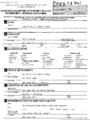
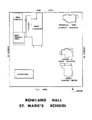
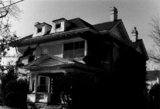
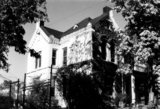
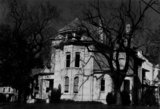
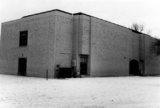
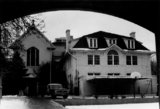
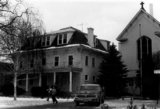
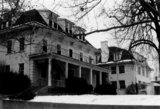
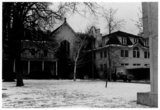
Show DESCRIPTION CHECK ONE CONDITION -EXCELLENT _FAIR CHECK ONE -DETERIORATED -UNALTERED ^ORIGINAL SITE -RUINS 2LALTERED -MOVED DATE. _UNEXPOSED DESCRIBETHE PRESENT AND ORIGINAL (IF KNOWN) PHYSICAL APPEARANCE Rowland Hall-St. Mark's School today occupies a block in the Avenues Historic District bounded by A and B Streets on the west and east, and by First and Second Avenues. They originally faced south, looking across lawns and tennis courts toward the Salt Lake Valley. A new classroom building along First Avenue now closes off the view and creates a partially enclosed "quadrangle" in the west half of the block. The east half of the block contains three mansions purchased by the school in the Twentieth Century for additional classroom space and faculty housing. The first building of Rowland Hall was the Watt-Haskins home, one of the most impressive adobe houses in the Avenues. It was built as a two-story gable roofed structure about 1862 and enlarged in the Georgian style with a truncated-hip roof about 1871. After the house became the home of Rowland Hall in 1880, it was remodeled again. A new mansard-like double hip roof with large (south) front and side dormer windows was added to provide third floor dormitory space. The panelled wood cornice is decorated with pared brackets. Quoins accent the corners of the building. Windows are six-over-six pane double-hung units with wide, plain trim. A long one-story front porch with panelled cornice and square colunns cover the front of the house. Inside, the first floor still has Nineteenth Century interiors, including a southwest front parlor, a central stair hall with lincrusta wainscoting and a carved banister, and a large east-side library withleaded glass front bookcases. At the rear of the Watt-Haskins house are two large brick additions, containing dormitories and dining facilities, that triple the size of the oringinal house. Built in the late Nineteenth Century they continue the dormered double hip roof and bracketted cornice of the house, but may be easily distinguished from it by the brick construction and narrower arched windows with corbelled drip molding. To the east of the Watt-Haskins house, separated from it by the narrow chapel, is a large brick classroom building constructed in 1906. The building is a factory-like structure with a two-story rear section and three-story center section, both with flat roofs. The south front portion of the building is decorated in the Georgian Revival Style to echo the Watt-Haskins house, with a dormered roof, bracketted cornice, quoins, and six-over-six pane windows. The front center second story window has a semi-circular fanlight under a gable in the Georgian manner. There is a one-story front addition. Inside, the large second floor front library has a dramatic two-story height with a complex wood beamed ceiling. The chapel between the Watt-Haskins house and the classroom building was conceived at the same time as the classroom structure but was not built until 1910. It is set back creating a small three-sided court yard that serves as the main entrance to the three buildings. The chapel building has a long gable roof with a bracketted cornice topped by a cross at the south (front) |