| OCR Text |
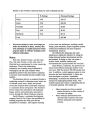
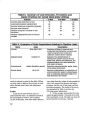
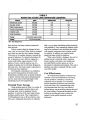
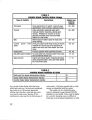
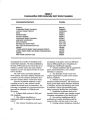
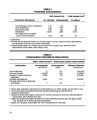
Show , osmosis and distillation, are evaluated as alternatives to home ion exchange for providing hardness removal. These are the only other processes that could be considered as comparable substitutes for ion- exchange type softeners. A discussion on use of magnetic fields for water softening is included for information purposes. Reverse Osmosis is a process where water is forced through a semi- permeable membrane to separate dissolved solids from the water. The process is less efficient, in terms of water use, than ion exchange, producing a little more than three gallons of treated water for every four gallons of raw water. Some treatment systems require ion- exchange as a pretreatment to prevent fouling of the membranes. The process removes varying percentages of cations and anions. Hardness removal is typically between 85 and 95 percent, which means in Utah the product water would contain about 20 mg/ 1 hardness. The process actually provides a higher level of overall treatment than ion- exchange and does not add TDS to the waste stream. Reverse osmosis treatment is more expensive than ion- exchange. Capital costs for a comparable household unit are approximately $ 3,500. Operation and maintenance costs total about $ 280 per year. The total annual cost per household would be $ 560 or $ 5.60 per 1,000 gallons treated. Distillation was found to be unacceptable as an alternative softening process. It is generally used in large scale industrial applications or for point- of- use devices. Units sized to treat an individual household supply are uncommon. The process has a low water efficiency of 33 to 50 percent. While distillation provides a superior level of hardness removal, the process is very expensive and the product water may be very aggressive, requiring the addition of stabilization chemicals. The annualized treatment cost would be more than $ 4,000 per year. Magnets, in theory, condition water in a way that the materials which constitute hardness do not precipitate as soap scum or scale. Magnetic treatment device suppliers claim all of the benefits of softening without altering the water chemistry. The process does not remove hardness related ions, but manufacturers claim it sequesters their effects. This process would generate no waste stream. For the purposes of this report, magnetic water softening is considered experimental and unproven and therefore cannot be considered a viable alternative. In Utah, the Fountain Green Irrigation Company has used magnets to reduce scale buildup in an irrigation supply line. The magnetic field appeared to stop the buildup of scale in the problem area, but it did not reverse the process and the pipeline is being replaced. No Treatment was also evaluated as an alternative for purposes of economic comparison. The costs of this alternative are, of course, entirely related to household operation and maintenance associated with hard water. As previously discussed, these maintenance items include cleaning agents, energy consumption, plumbing and cleaning equipment, and clothing. The total additional cost related to hard water for the average Utah household is estimated to be $ 180 per year. Of this total, $ 30 is required for additional cleaning agents, $ 50 is required for added energy costs to heat water, $ 25 is added for the reduced life of plumbing facilities and cleaning equipment, and $ 75 is added to cover clothing life reduction. It is important to understand that these additional costs may vary significantly depending upon household size/ use and degree of hardness of source waters. Those presented herein are based on a number of assumptions for average Utah households and interpolations of reported cost/ hardness relationships. Cost Effectiveness The relative costs of the various alternatives are listed in Table 2. Potential Water Savings Conservation of water resources could be accomplished either by the adoption of rules to regulate the use of softeners or by using an 82 |