| Title |
Spanish speaking peoples in Utah, oral histories: book 9, numbers 91 through 101 |
| Alternative Title |
Gene Hernandez, Burley, Idaho: an interview by Greg Coronado, June 6, 1973; Mr. Manuel F. Lopez, Burley, Idaho: an interview by Greg Coronado, June 7, 1973; Joe Romero, Salt Lake City, Utah: an interview by Bernice Martinez and Greg Coronado [May 20, 1973]; Tony Rodriguez, Lark, Utah: an interview by Bernice Martinez and Greg Coronado, May 20, 1973; Gerardo Melendez, Midvale, Utah: an interview by Bernice Martinez, May 23, 1973; Mr. Harold Nielsen, Sandy, Utah: an interview by Vincent Mayer and Phil Nortarianni, July 20, 1973; Jesus Avila, Lark, Utah: an interview by Greg Coronado, May 6, 1973; Jesus Avila, Lark, Utah: an interview by Bernice Martinez and Greg Coronado, May 19, 1973 (part 2); Jesus Avila, Lark, Utah: an interview by Greg Coronado and Bernice Martinez, May 19, 1973 (part 3) |
| Creator |
Hernandez, Gene, 1919- ; Lopez, Manuel F.; Romero, Joe, 1901- ; Rodriguez, Tony, 1920- ; Melendez, Gerardo, 1925- ; Nortarianni, Phil, 1919- ; Avila, Jesus, 1927- |
| Contributor |
University of Utah. American West Center; Martínez, Bernice; Coronado, Greg, 1946-2012; Mayer, Vincent, 1944- ; Nortarianni, Phil |
| Publisher |
Digitized by J. Willard Marriott Library, University of Utah |
| Date |
1973-05-06; 1973-05-19; 1973-05-20; 1973-06-06; 1973-06-07; 1973-07-20 |
| Date Digital |
2015-01-15 |
| Spatial Coverage |
Midvale, Salt Lake County, Utah, United States, http://sws.geonames.org/5778244/ ; Salt Lake City, Salt Lake County, Utah, United States, http://sws.geonames.org/5780993/ ; Bingham Canyon, Salt Lake County, Utah, United States, http://sws.geonames.org/8604824/ ; Sandy, Salt Lake County, Utah, United States, http://sws.geonames.org/5781061/ ; Lark, Salt Lake County, Utah, United States, http://sws.geonames.org/5777063/ ; Burley, Cassia County, Idaho, United States, http://sws.geonames.org/5587385/ |
| Subject |
Utah--Ethnic relations; Idaho--Ethnic relations; Mexican Americans--Utah--History; Mexican Americans--Utah--Biography; Mexican Americans--Utah--Social conditions; Mexican Americans--Idaho--History; Mexican Americans--Idaho--Biography; Mexican Americans--Idaho--Social conditions; Chicano movement--Utah |
| Keywords |
Miners; Copper mines; Copper miners; Discrimination; Great Depression; Ethnic relations; Chicanos; Farm labor; Agricultural laborers; Railroad workers; Mexican Revolution; Mexican traditions; SOCIO; Catholic Church; Guradalupe Mission; Mexican immigrants; Mexican American children--Education; Bartenders; Community Action Program; American G.I. Forum; LULAC; Civilian Conservation Corps; Puerto Ricans |
| Description |
Transcript of interviews held in 1973 at Salt Lake City, Sandy, and Lark, Utah, and Burley, Idaho, with several (mostly Hispanic) residents of Utah and Idaho: Gene Hernandez (b. 1919) and Manuel F. Lopez (b. 1901), of Burley, Idaho; Harold Nielsen of Sandy, Utah; Joe Romero (b. 1901) of Salt Lake City; Gerardo Melendez (b. 1925) of Midvale, Utah; and Tony Rodriguez (b. 1920) and Jesus Avila (b. 1927) of Lark, Utah. Some interviews are in Spanish |
| Type |
Text |
| Genre |
oral histories (literary works) |
| Format |
application/pdf |
| Language |
eng; spa |
| Rights |
 |
| Relation |
For description of each interview, see: http://nwda.orbiscascade.org/ark:/80444/xv23580 |
| Scanning Technician |
Matt Wilkinson |
| Conversion Specifications |
Original scanned with Kirtas 2400 and saved as 400 ppi uncompressed TIFF. PDF generated by Adobe Acrobat Pro 10 for CONTENTdm display |
| ARK |
ark:/87278/s6kw75ss |
| Topic |
Mexican Americans--Biography; Mexican Americans--Social conditions; Chicano movement |
| Setname |
uum_sspu |
| ID |
1036884 |
| Reference URL |
https://collections.lib.utah.edu/ark:/87278/s6kw75ss |
| Title |
Page 67 |
| Format |
application/pdf |
| Setname |
uum_sspu |
| ID |
1036651 |
| OCR Text |
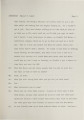
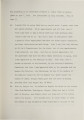
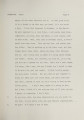
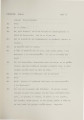
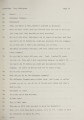
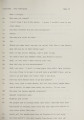
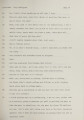
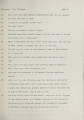
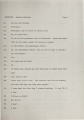
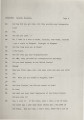
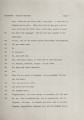
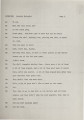
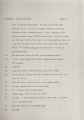
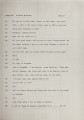
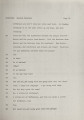
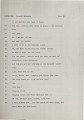
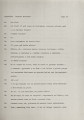
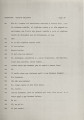
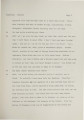
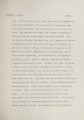
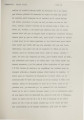
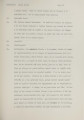
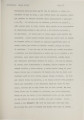
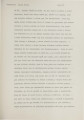
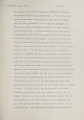
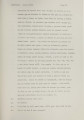
Show INTERVIEW: Lopez Page 5 wrong, I think it ought to be in groups. I would like to s~it united, even though with different ideas, but still the same goal, you know. Because if we don't do that, we're going to be the same shape we were twenty, thirty or forty, or fifty years back. It was the same thing. Like the revolucionaristas [revolucionarios] in Mexico, they had one leader. Thousands of people would follow that leader, but if they kill that leader, everything went to hell. Nobody could follow it. Take the Japanese war, it was the same thing, they had it you know, their leaders, their captains or whatever what, but if you kill that captain, all the soldiers will run, different directions, then it take you years to get them back again. And I think this is what's happened with our leaders, you know, all over. I think if we'd of worked like we've been trying now to change this, to unite all the leaders, all the organizations, all the Indian tribes and all the Chicano's organizations into one round table, where we can have a nationwide power then. And I don't mean the power to overrun, overthrow, and anything like that, but I mean with the same idea, where it can be a nationwide thing, instead, because we've travel a lot, and it's, is bad say, well we say food stamps, for instance, which is one of the biggest issues, if they got |
| Reference URL |
https://collections.lib.utah.edu/ark:/87278/s6kw75ss/1036651 |