| Title |
William H. Thompson, Salt Lake City, Utah: an interview by Winston P. Erickson, January 19, 2001: Saving the Legacy tape nos. 137 & 138 |
| Alternative Title |
William H. Thompson, Saving the legacy: an oral history of Utah's World War II veterans, ACCN 2070, American West Center, University of Utah |
| Creator |
Thompson, William H., 1918-2001 |
| Contributor |
Erickson, Winston P., 1943-; University of Utah. American West Center |
| Publisher |
Digitized by J. Willard Marriott Library, University of Utah |
| Date |
2001-01-19 |
| Date Digital |
2015-12-16 |
| Access Rights |
I acknowledge and agree that all information I obtain as a result of accessing any oral history provided by the University of Utah's Marriott Library shall be used only for historical or scholarly or academic research purposes, and not for commercial purposes. I understand that any other use of the materials is not authorized by the University of Utah and may exceed the scope of permission granted to the University of Utah by the interviewer or interviewee. I may request permission for other uses, in writing to Special Collections at the Marriott Library, which the University of Utah may choose grant, in its sole discretion. I agree to defend, indemnify and hold the University of Utah and its Marriott Library harmless for and against any actions or claims that relate to my improper use of materials provided by the University of Utah. |
| Spatial Coverage |
Denmark; Hawaii; England; France; Germany |
| Subject |
Thompson, William H., 1918-2001--Interviews; Veterans--Utah--Biography; World War, 1939-1945--Personal narratives, American; World War, 1939-1945--Military operations, American; World War, 1939-1945--Artillery operations, American; World War, 1939-1945--Campaigns--Europe, Northern--Personal narratives, American; Latter Day Saint missionaries--Denmark; Dachau (Concentration camp); Germany--History--1945-1955 |
| Keywords |
Great Depression; National Guard; Island defense; Honolulu; 515th Field Artillery Battalion; Dachau; Allied occupation of Germany; Military engineers; Hill Field |
| Description |
Transcript (75 pages) of an interview by Winston Erickson with William H. Thompson on January 19, 2001. From tape numbers 137 and 138 in the "Saving the Legacy" Oral History Project |
| Collection Number and Name |
Accn2070, Saving the Legacy oral history project, 2001-2010 |
| Abstract |
Thompson (b. 1918) discusses his family, the Depression and schooling. He joined the National Guard at age sixteen. He recalls experiences in Europe before being evacuated back to the US. Thompson was reactivated in the Guard as a supply sergeant with the 145th Field Artillery, the 40th Infantry Division, in January 1941. He was shipped to Hawaii after Pearl Harbor for island defense. He was later returned to Camp Roberts to lead training and was then reassigned to the 515th Field Artillery Battalion and shipped to England and later crossed the channel, landing on Utah Beach in September 1944. He entered battle near the French/German border. He describes his activities and occupation duty in Dachau before discharge in 1945. He joined the National Guard in Utah and was called up for active duty during the Korean War, where he served stateside and in Germany in the 115th Engineering Battalion. Discharged in 1954, he was called up again during the Cuban Missile Crisis for one year. Mr. Thompson continued active in the National Guard and served as Assistant Adjutant General of the Guard for Utah. He worked in civilian positions at Hill Field for eighteen years before retiring. Interviewed by Winston Erickson. 75 pages. |
| Type |
Text |
| Genre |
oral histories (literary works) |
| Format |
application/pdf |
| Extent |
75 pages |
| Language |
eng |
| Rights |
 |
| Scanning Technician |
Mazi Rakhsha |
| Conversion Specifications |
Original scanned with Kirtas 2400 and saved as 400 ppi uncompressed TIFF. PDF generated by Adobe Acrobat Pro X for CONTENTdm display |
| ARK |
ark:/87278/s6t74khn |
| Topic |
Personal narratives--American; Veterans; World War (1939-1945); Military operations, Artillery--American; Dachau (Concentration camp); Mormon missionaries--Denmark |
| Setname |
uum_slohp |
| ID |
1035110 |
| Reference URL |
https://collections.lib.utah.edu/ark:/87278/s6t74khn |
| Title |
Page 49 |
| Format |
application/pdf |
| Setname |
uum_slohp |
| ID |
1035083 |
| OCR Text |
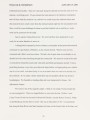
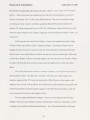
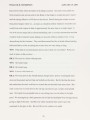
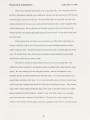
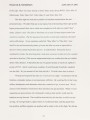
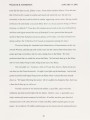
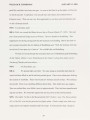
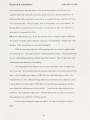
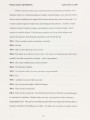
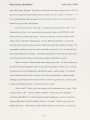
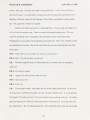
Show WILLIAM H. THOMP ON J U R 19,2001 I was only there a week or ten days when I got orders to report to this G-4 section of the Third Army. [Editor 's note: G sections are staff sections in Army Division and higher level organizations. G4 is the logistics section of a Division, Corps, or Army just as S4 is the logistics section at the battalion level.} And this was up in Germany, east of Ulm. So I reported in, and finally they found the officer responsible for my coming. He said, "I want you to go over to Dachau, the prison camp at Dachau. There are a whole bunch of warehouses just brimming full of stuff. I want you to inventory it. Sit on it and don't let anybody have it. Get guards on the warehouses." So they gave me a driver and a vehicle and I got up to Dachau, which is fifteen miles northwest of Munich. There was a major there, who was a camp commander. I was his exec and post-engineer and whatever supply officer. We had a bunch of former SS troops quartered there, as well as these thirty thousand people who had been former prisoners who were hospitalized at an American hospital plant. A field hospital was brought in with doctors and nurses to make sure they didn't spread this typhus throughout all of their homelands and all throughout Europe. We were quartered in some beautiful quarters. At the post at Dachau there had been an SS training camp, as well as a prison facilities. They had several warehouses. There was a warehouse full of fine leather, tanned leather, but not made into anythingjust the hides. There was a warehouse full of Czechoslovakian wool on bolts. There were two or three warehouses filled with fine furniture that the S S troops had appropriated to their own use from all throughout Europe. They had shipped it back there. There was fine china. There was stemware, glassware, silverware. It was beautiful stuff. 49 |
| Reference URL |
https://collections.lib.utah.edu/ark:/87278/s6t74khn/1035083 |