| Title |
William H. Thompson, Salt Lake City, Utah: an interview by Winston P. Erickson, January 19, 2001: Saving the Legacy tape nos. 137 & 138 |
| Alternative Title |
William H. Thompson, Saving the legacy: an oral history of Utah's World War II veterans, ACCN 2070, American West Center, University of Utah |
| Creator |
Thompson, William H., 1918-2001 |
| Contributor |
Erickson, Winston P., 1943-; University of Utah. American West Center |
| Publisher |
Digitized by J. Willard Marriott Library, University of Utah |
| Date |
2001-01-19 |
| Date Digital |
2015-12-16 |
| Access Rights |
I acknowledge and agree that all information I obtain as a result of accessing any oral history provided by the University of Utah's Marriott Library shall be used only for historical or scholarly or academic research purposes, and not for commercial purposes. I understand that any other use of the materials is not authorized by the University of Utah and may exceed the scope of permission granted to the University of Utah by the interviewer or interviewee. I may request permission for other uses, in writing to Special Collections at the Marriott Library, which the University of Utah may choose grant, in its sole discretion. I agree to defend, indemnify and hold the University of Utah and its Marriott Library harmless for and against any actions or claims that relate to my improper use of materials provided by the University of Utah. |
| Spatial Coverage |
Denmark; Hawaii; England; France; Germany |
| Subject |
Thompson, William H., 1918-2001--Interviews; Veterans--Utah--Biography; World War, 1939-1945--Personal narratives, American; World War, 1939-1945--Military operations, American; World War, 1939-1945--Artillery operations, American; World War, 1939-1945--Campaigns--Europe, Northern--Personal narratives, American; Latter Day Saint missionaries--Denmark; Dachau (Concentration camp); Germany--History--1945-1955 |
| Keywords |
Great Depression; National Guard; Island defense; Honolulu; 515th Field Artillery Battalion; Dachau; Allied occupation of Germany; Military engineers; Hill Field |
| Description |
Transcript (75 pages) of an interview by Winston Erickson with William H. Thompson on January 19, 2001. From tape numbers 137 and 138 in the "Saving the Legacy" Oral History Project |
| Collection Number and Name |
Accn2070, Saving the Legacy oral history project, 2001-2010 |
| Abstract |
Thompson (b. 1918) discusses his family, the Depression and schooling. He joined the National Guard at age sixteen. He recalls experiences in Europe before being evacuated back to the US. Thompson was reactivated in the Guard as a supply sergeant with the 145th Field Artillery, the 40th Infantry Division, in January 1941. He was shipped to Hawaii after Pearl Harbor for island defense. He was later returned to Camp Roberts to lead training and was then reassigned to the 515th Field Artillery Battalion and shipped to England and later crossed the channel, landing on Utah Beach in September 1944. He entered battle near the French/German border. He describes his activities and occupation duty in Dachau before discharge in 1945. He joined the National Guard in Utah and was called up for active duty during the Korean War, where he served stateside and in Germany in the 115th Engineering Battalion. Discharged in 1954, he was called up again during the Cuban Missile Crisis for one year. Mr. Thompson continued active in the National Guard and served as Assistant Adjutant General of the Guard for Utah. He worked in civilian positions at Hill Field for eighteen years before retiring. Interviewed by Winston Erickson. 75 pages. |
| Type |
Text |
| Genre |
oral histories (literary works) |
| Format |
application/pdf |
| Extent |
75 pages |
| Language |
eng |
| Rights |
 |
| Scanning Technician |
Mazi Rakhsha |
| Conversion Specifications |
Original scanned with Kirtas 2400 and saved as 400 ppi uncompressed TIFF. PDF generated by Adobe Acrobat Pro X for CONTENTdm display |
| ARK |
ark:/87278/s6t74khn |
| Topic |
Personal narratives--American; Veterans; World War (1939-1945); Military operations, Artillery--American; Dachau (Concentration camp); Mormon missionaries--Denmark |
| Setname |
uum_slohp |
| ID |
1035110 |
| Reference URL |
https://collections.lib.utah.edu/ark:/87278/s6t74khn |
| Title |
Page 24 |
| Format |
application/pdf |
| Setname |
uum_slohp |
| ID |
1035058 |
| OCR Text |
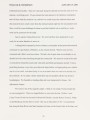
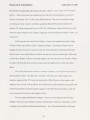
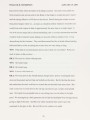
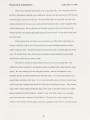
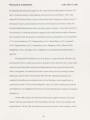
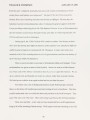
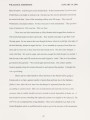
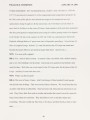
Show WILLIAM H. THOMP ON J NU R 19,2001 BILL: Yes. Later on I understand that the I 55's finally did catch up with the battalion and that the battalion did get off Oahu and went westward with some of the other forces and landings, island hopping toward Japan. I came back to the states and was assigned with this cadre to Camp Roberts, California. And I then came home and got my wife and we went back there. We had a baby by then. And, so, I was with the cadre only a short period of time when I was reassigned to the 53rd Field Artillery Training Regiment at Roberts. And the battery- ! was assigned to B-Battery, and they were training cannoneers and truck drivers for the 155 howitzer. [Editor's note: Along with battalions equipped with 155 mm guns, the Army also had some battalions equipped with short-barreled 155 mm howitzers. The both fired the same shell but the propellant charges were different. The guns mounts were different too.] We had six training guns for each battery, rather than the usual four. And every thirteen weeks we'd get a new batch of recruits in, and we'd train them to be cannoneers or truck drivers, and send them as replacements anywhere in the world that needed artillery replacements. I became, I was promoted to captain then, and was commanding a battalion (battery), when I was ordered to go to Fort Lewis, Washington, and to join another unit that was just getting formed. That was the 51 5th Field Artillery Battalion. It was armed with 15 5 millimeter guns, high-speed tractor drawn. [Editor 's note: The 51 5th FA was equipped with 155 mm ((Long Tom" guns. The gun was an exceptional artillery weapon of WWIJ Well known by its nickname the ((Long Tom", the gun could fire a ninety-five pound projectile upwards of fifteen miles with high accuracy. It could fire more than forty rounds per hour of high-explosive, chemical, smoke, or illuminating shells. The gun could elevate up to 63 degrees. Two variants were built, the 24 |
| Reference URL |
https://collections.lib.utah.edu/ark:/87278/s6t74khn/1035058 |