| Title |
William H. Thompson, Salt Lake City, Utah: an interview by Winston P. Erickson, January 19, 2001: Saving the Legacy tape nos. 137 & 138 |
| Alternative Title |
William H. Thompson, Saving the legacy: an oral history of Utah's World War II veterans, ACCN 2070, American West Center, University of Utah |
| Creator |
Thompson, William H., 1918-2001 |
| Contributor |
Erickson, Winston P., 1943-; University of Utah. American West Center |
| Publisher |
Digitized by J. Willard Marriott Library, University of Utah |
| Date |
2001-01-19 |
| Date Digital |
2015-12-16 |
| Access Rights |
I acknowledge and agree that all information I obtain as a result of accessing any oral history provided by the University of Utah's Marriott Library shall be used only for historical or scholarly or academic research purposes, and not for commercial purposes. I understand that any other use of the materials is not authorized by the University of Utah and may exceed the scope of permission granted to the University of Utah by the interviewer or interviewee. I may request permission for other uses, in writing to Special Collections at the Marriott Library, which the University of Utah may choose grant, in its sole discretion. I agree to defend, indemnify and hold the University of Utah and its Marriott Library harmless for and against any actions or claims that relate to my improper use of materials provided by the University of Utah. |
| Spatial Coverage |
Denmark; Hawaii; England; France; Germany |
| Subject |
Thompson, William H., 1918-2001--Interviews; Veterans--Utah--Biography; World War, 1939-1945--Personal narratives, American; World War, 1939-1945--Military operations, American; World War, 1939-1945--Artillery operations, American; World War, 1939-1945--Campaigns--Europe, Northern--Personal narratives, American; Latter Day Saint missionaries--Denmark; Dachau (Concentration camp); Germany--History--1945-1955 |
| Keywords |
Great Depression; National Guard; Island defense; Honolulu; 515th Field Artillery Battalion; Dachau; Allied occupation of Germany; Military engineers; Hill Field |
| Description |
Transcript (75 pages) of an interview by Winston Erickson with William H. Thompson on January 19, 2001. From tape numbers 137 and 138 in the "Saving the Legacy" Oral History Project |
| Collection Number and Name |
Accn2070, Saving the Legacy oral history project, 2001-2010 |
| Abstract |
Thompson (b. 1918) discusses his family, the Depression and schooling. He joined the National Guard at age sixteen. He recalls experiences in Europe before being evacuated back to the US. Thompson was reactivated in the Guard as a supply sergeant with the 145th Field Artillery, the 40th Infantry Division, in January 1941. He was shipped to Hawaii after Pearl Harbor for island defense. He was later returned to Camp Roberts to lead training and was then reassigned to the 515th Field Artillery Battalion and shipped to England and later crossed the channel, landing on Utah Beach in September 1944. He entered battle near the French/German border. He describes his activities and occupation duty in Dachau before discharge in 1945. He joined the National Guard in Utah and was called up for active duty during the Korean War, where he served stateside and in Germany in the 115th Engineering Battalion. Discharged in 1954, he was called up again during the Cuban Missile Crisis for one year. Mr. Thompson continued active in the National Guard and served as Assistant Adjutant General of the Guard for Utah. He worked in civilian positions at Hill Field for eighteen years before retiring. Interviewed by Winston Erickson. 75 pages. |
| Type |
Text |
| Genre |
oral histories (literary works) |
| Format |
application/pdf |
| Extent |
75 pages |
| Language |
eng |
| Rights |
 |
| Scanning Technician |
Mazi Rakhsha |
| Conversion Specifications |
Original scanned with Kirtas 2400 and saved as 400 ppi uncompressed TIFF. PDF generated by Adobe Acrobat Pro X for CONTENTdm display |
| ARK |
ark:/87278/s6t74khn |
| Topic |
Personal narratives--American; Veterans; World War (1939-1945); Military operations, Artillery--American; Dachau (Concentration camp); Mormon missionaries--Denmark |
| Setname |
uum_slohp |
| ID |
1035110 |
| Reference URL |
https://collections.lib.utah.edu/ark:/87278/s6t74khn |
| Title |
Page 21 |
| Format |
application/pdf |
| Setname |
uum_slohp |
| ID |
1035055 |
| OCR Text |
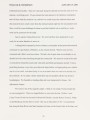
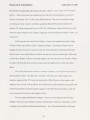
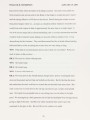
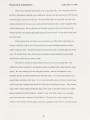
Show WILLIAM H. THOMPSON J R 19,2001 were generally fired at low angles (except for flak guns) directly at target . Howitzer had short barrels, lower muzzle velocities and were fired at high angle , ending hell in arcs indirectly down on targets that weren 't visible from the firing position. The distinction between guns and howitzers arose in the Nineteenth Century when exploding shells were developed. Early exploding shells were generally fired from mortars, or short barreled cannon called howitzers, whereas solid shot continued to be fired from guns. The distinction between guns and howitzers was being blurred by the time of World War II and now most modern artillery pieces are combination gun-howitzers.] And that's what we went to war with. Well, I was the exec of D-Battery. Two of my guns were placed up on the main deck of the Matsonia for, I guess, some protection. There was an infantry regiment on the ship with us, and they put all our machine guns up on the deck above us. We finally left in convoy then on the 11th or 12th of December of 1941. Three big Matson liners, the Luraline, the Matsonia, and I forget what the other one was (SS Monterey)-a whole bunch of destroyers and one cruiser. WIN: They got these all ready in four or five days, huh? BILL: Yes. WIN: Wow! BILL: We got .50 caliber machines gun issued. [Editor's note: The .50 caliber machine guns were for defensive purposes.] We broke them out of the boxes, cleaned them, and learned how to set the hedge space and fire them in one day's time. WIN: Really? 21 |
| Reference URL |
https://collections.lib.utah.edu/ark:/87278/s6t74khn/1035055 |