| Title |
William H. Thompson, Salt Lake City, Utah: an interview by Winston P. Erickson, January 19, 2001: Saving the Legacy tape nos. 137 & 138 |
| Alternative Title |
William H. Thompson, Saving the legacy: an oral history of Utah's World War II veterans, ACCN 2070, American West Center, University of Utah |
| Creator |
Thompson, William H., 1918-2001 |
| Contributor |
Erickson, Winston P., 1943-; University of Utah. American West Center |
| Publisher |
Digitized by J. Willard Marriott Library, University of Utah |
| Date |
2001-01-19 |
| Date Digital |
2015-12-16 |
| Access Rights |
I acknowledge and agree that all information I obtain as a result of accessing any oral history provided by the University of Utah's Marriott Library shall be used only for historical or scholarly or academic research purposes, and not for commercial purposes. I understand that any other use of the materials is not authorized by the University of Utah and may exceed the scope of permission granted to the University of Utah by the interviewer or interviewee. I may request permission for other uses, in writing to Special Collections at the Marriott Library, which the University of Utah may choose grant, in its sole discretion. I agree to defend, indemnify and hold the University of Utah and its Marriott Library harmless for and against any actions or claims that relate to my improper use of materials provided by the University of Utah. |
| Spatial Coverage |
Denmark; Hawaii; England; France; Germany |
| Subject |
Thompson, William H., 1918-2001--Interviews; Veterans--Utah--Biography; World War, 1939-1945--Personal narratives, American; World War, 1939-1945--Military operations, American; World War, 1939-1945--Artillery operations, American; World War, 1939-1945--Campaigns--Europe, Northern--Personal narratives, American; Latter Day Saint missionaries--Denmark; Dachau (Concentration camp); Germany--History--1945-1955 |
| Keywords |
Great Depression; National Guard; Island defense; Honolulu; 515th Field Artillery Battalion; Dachau; Allied occupation of Germany; Military engineers; Hill Field |
| Description |
Transcript (75 pages) of an interview by Winston Erickson with William H. Thompson on January 19, 2001. From tape numbers 137 and 138 in the "Saving the Legacy" Oral History Project |
| Collection Number and Name |
Accn2070, Saving the Legacy oral history project, 2001-2010 |
| Abstract |
Thompson (b. 1918) discusses his family, the Depression and schooling. He joined the National Guard at age sixteen. He recalls experiences in Europe before being evacuated back to the US. Thompson was reactivated in the Guard as a supply sergeant with the 145th Field Artillery, the 40th Infantry Division, in January 1941. He was shipped to Hawaii after Pearl Harbor for island defense. He was later returned to Camp Roberts to lead training and was then reassigned to the 515th Field Artillery Battalion and shipped to England and later crossed the channel, landing on Utah Beach in September 1944. He entered battle near the French/German border. He describes his activities and occupation duty in Dachau before discharge in 1945. He joined the National Guard in Utah and was called up for active duty during the Korean War, where he served stateside and in Germany in the 115th Engineering Battalion. Discharged in 1954, he was called up again during the Cuban Missile Crisis for one year. Mr. Thompson continued active in the National Guard and served as Assistant Adjutant General of the Guard for Utah. He worked in civilian positions at Hill Field for eighteen years before retiring. Interviewed by Winston Erickson. 75 pages. |
| Type |
Text |
| Genre |
oral histories (literary works) |
| Format |
application/pdf |
| Extent |
75 pages |
| Language |
eng |
| Rights |
 |
| Scanning Technician |
Mazi Rakhsha |
| Conversion Specifications |
Original scanned with Kirtas 2400 and saved as 400 ppi uncompressed TIFF. PDF generated by Adobe Acrobat Pro X for CONTENTdm display |
| ARK |
ark:/87278/s6t74khn |
| Topic |
Personal narratives--American; Veterans; World War (1939-1945); Military operations, Artillery--American; Dachau (Concentration camp); Mormon missionaries--Denmark |
| Setname |
uum_slohp |
| ID |
1035110 |
| Reference URL |
https://collections.lib.utah.edu/ark:/87278/s6t74khn |
| Title |
Page 37 |
| Format |
application/pdf |
| Setname |
uum_slohp |
| ID |
1035071 |
| OCR Text |
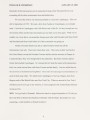
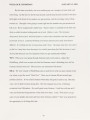
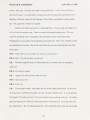
Show WILLIAM H. THOMP ON J R 19 2 01 on the edge. There were four models of Teller Mine made during WWII: Teller Mine 43, (Mushroom), Teller Mine 1942, Teller Mine 35, and Teller Mine 29.] This first night we went into a position we had been warned about the antipersonnel mines. We didn't find any in our region, but in the morning when I got up and began going around, there was a whole area weighed out with what we called "shoe" mines. [Editor's note: The Schu or Shu-Mine was a small German antipersonnel mine cased in a wood box. The box measured six-inch by six-inch and contained a detonator and a solid charge. It was sometimes called the "Shoe Mine" or "Shoe Box" mine. Small in size and constructed primary of wood, the Schu was next to impossible to discover with a normal metal mine detector. It seldom killed. Instead the device mutilated its victims, the idea being that it took more resources to take care of a wounded man than a dead one.] This was an antipersonnel mine in a wooden box that you couldn't detect with a detector. It had about the size of a quarter pound, or maybe an eighth of a pound, of TNT. And it would cause casualties, if not kill people if anybody wandered into the field. We just marked off the field and left it. We didn't have time to clear it. We kept moving from that time on; we moved every night. I would meet with the battalion commander and go on reconnaissance with him. He would go first to the Corps artillery headquarters and determine where they wanted us to go, or move next. We (in advance of the battalion) would move there and select our gun positions. While we were organizing our gun positions, the commander would go back and he would start the battalion moving forward. This would be about dusk by the time they would even start moving. So we'd go back to a place where we would meet them, and then guide them into position, and then organize our position and be ready to fire at first light. We did that 37 |
| Reference URL |
https://collections.lib.utah.edu/ark:/87278/s6t74khn/1035071 |