| Title |
William H. Thompson, Salt Lake City, Utah: an interview by Winston P. Erickson, January 19, 2001: Saving the Legacy tape nos. 137 & 138 |
| Alternative Title |
William H. Thompson, Saving the legacy: an oral history of Utah's World War II veterans, ACCN 2070, American West Center, University of Utah |
| Creator |
Thompson, William H., 1918-2001 |
| Contributor |
Erickson, Winston P., 1943-; University of Utah. American West Center |
| Publisher |
Digitized by J. Willard Marriott Library, University of Utah |
| Date |
2001-01-19 |
| Date Digital |
2015-12-16 |
| Access Rights |
I acknowledge and agree that all information I obtain as a result of accessing any oral history provided by the University of Utah's Marriott Library shall be used only for historical or scholarly or academic research purposes, and not for commercial purposes. I understand that any other use of the materials is not authorized by the University of Utah and may exceed the scope of permission granted to the University of Utah by the interviewer or interviewee. I may request permission for other uses, in writing to Special Collections at the Marriott Library, which the University of Utah may choose grant, in its sole discretion. I agree to defend, indemnify and hold the University of Utah and its Marriott Library harmless for and against any actions or claims that relate to my improper use of materials provided by the University of Utah. |
| Spatial Coverage |
Denmark; Hawaii; England; France; Germany |
| Subject |
Thompson, William H., 1918-2001--Interviews; Veterans--Utah--Biography; World War, 1939-1945--Personal narratives, American; World War, 1939-1945--Military operations, American; World War, 1939-1945--Artillery operations, American; World War, 1939-1945--Campaigns--Europe, Northern--Personal narratives, American; Latter Day Saint missionaries--Denmark; Dachau (Concentration camp); Germany--History--1945-1955 |
| Keywords |
Great Depression; National Guard; Island defense; Honolulu; 515th Field Artillery Battalion; Dachau; Allied occupation of Germany; Military engineers; Hill Field |
| Description |
Transcript (75 pages) of an interview by Winston Erickson with William H. Thompson on January 19, 2001. From tape numbers 137 and 138 in the "Saving the Legacy" Oral History Project |
| Collection Number and Name |
Accn2070, Saving the Legacy oral history project, 2001-2010 |
| Abstract |
Thompson (b. 1918) discusses his family, the Depression and schooling. He joined the National Guard at age sixteen. He recalls experiences in Europe before being evacuated back to the US. Thompson was reactivated in the Guard as a supply sergeant with the 145th Field Artillery, the 40th Infantry Division, in January 1941. He was shipped to Hawaii after Pearl Harbor for island defense. He was later returned to Camp Roberts to lead training and was then reassigned to the 515th Field Artillery Battalion and shipped to England and later crossed the channel, landing on Utah Beach in September 1944. He entered battle near the French/German border. He describes his activities and occupation duty in Dachau before discharge in 1945. He joined the National Guard in Utah and was called up for active duty during the Korean War, where he served stateside and in Germany in the 115th Engineering Battalion. Discharged in 1954, he was called up again during the Cuban Missile Crisis for one year. Mr. Thompson continued active in the National Guard and served as Assistant Adjutant General of the Guard for Utah. He worked in civilian positions at Hill Field for eighteen years before retiring. Interviewed by Winston Erickson. 75 pages. |
| Type |
Text |
| Genre |
oral histories (literary works) |
| Format |
application/pdf |
| Extent |
75 pages |
| Language |
eng |
| Rights |
 |
| Scanning Technician |
Mazi Rakhsha |
| Conversion Specifications |
Original scanned with Kirtas 2400 and saved as 400 ppi uncompressed TIFF. PDF generated by Adobe Acrobat Pro X for CONTENTdm display |
| ARK |
ark:/87278/s6t74khn |
| Topic |
Personal narratives--American; Veterans; World War (1939-1945); Military operations, Artillery--American; Dachau (Concentration camp); Mormon missionaries--Denmark |
| Setname |
uum_slohp |
| ID |
1035110 |
| Reference URL |
https://collections.lib.utah.edu/ark:/87278/s6t74khn |
| Title |
Page 38 |
| Format |
application/pdf |
| Setname |
uum_slohp |
| ID |
1035072 |
| OCR Text |
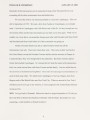
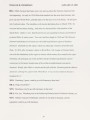
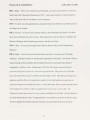
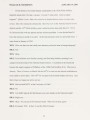
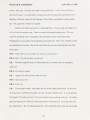
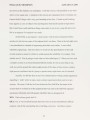
Show WILLIAM H. THOMP 0 J R 19 2 01 very day for days on end. [Editor's note: From online battalion hi tory: From th time that it fired its first rounds in combat until nearly the end of the war, the unit was constantly on the move and involved in combat, supporting various units. Moving teadily northward, the unit finally crossed the Rhine River on a heavy pontoon bridge at Worm , Germany, on March 27. From here the battalion moved south to the area of Heidelberg and then north again toward the area of Birkenfeld. It was reported that during the month of March the battalion traveled a distance of 557 miles, 153 miles of which were during combat. The 51 5th fired 3122 rounds of ammunition during this time.] We moved along the Autobahn from Saarbrticken to Kaiserslautern (on the way towards Worms), and then up north a little ways into the winery fields where there were grapes growing everywhere, and we were coming close to the Rhine. We were positioned such that we could fire across the Rhine. We had units then up to the Rhine, and we were endeavoring to make bridge heads across the Rhine. This one night we-- You know, when a 155 gun fires, there's a flame that shoots out about ten feet from the muzzle. At night it just lights up the landscape. And we had gotten in position and began firing across the Rhine when we heard this lone aircraft above us. We began following that sound. All of a sudden, he dropped a flare, but it was a flare that lit him up, as well as us. We had a section of our antiaircraft artillery, a quad fifty, and a twin forty millimeter gun that traveled right with my battery. [Editor's note: A quad-fifty was a single antiaircraft mount composed of with four .50 caliber machine guns that fired simultaneously in the same direction.] Then I had fifty caliber machine guns on each tractor. So we had six .50 caliber machine guns on the tractors plus the antiaircraft unit's 38 |
| Reference URL |
https://collections.lib.utah.edu/ark:/87278/s6t74khn/1035072 |