| OCR Text |
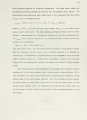
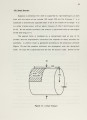
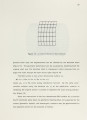
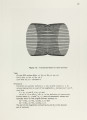
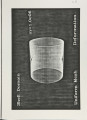
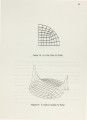
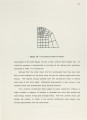
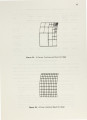
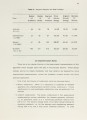
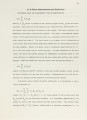
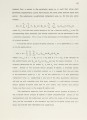
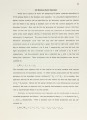
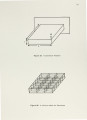
Show 55 nodal displacements. The strain energy distribution for each region is approximated by a linear tensor product 8-spline (vector-valued) surface with the control mesh (mesh of vectors rather than spacial points) obtained from the nodal point coordinates coupled with the nodal strain energy "nodal' i.e., ti(u, v) = { X(u, v), Y{u, v), Z(u, v), ,.(u, v) ). This is how the attribute modelling technique introduced in Chapter 2 was implemented. To synthesize the position coordinate functions with mesh optimization criteria, the criterion surface is simulated by a linear tensor product 8-spline {vector-valued) surface with the control mesh obtained from the nodal point coordinates coupled with optimization criteria, e.g., strain energy distribution, displacement, straightness and planarity, etc., i.e., tJ{u, v) = { X(u, v), Y{u, v), Z{u, v), ,.(u, v), !{u, v), ... ). Since the optimization criteria is well-defined upon the entire region surface and the subdivision of this criterion surface is performed component-wise including those components for the optimization criteria, the projection of this subdivision process onto the original region surface is the candidate for the optimized element configuration. This is how the algorithm for near-optimum meshes was implemented. 4.4 Extension to Three-dimensional Solids The construction of a three-dimensional solid domain can be achieved by constructing several regions in terms of trivariate tensor product 8-spline solids by means of trivariate boolean sum operators. Now the geometry of a region is a trivariate tensor product 8-spline solid, i.e., a(u, v, w) = { X(u, v, w), Y(u, v, w), Z{u, v, w) ), where X, Y and Z are the parametric {scalar) functions for position coordinates, and u, v and w are parameters. The displacements, stress values and strain energy distribution are all trivariate parametric functions as !{u, v, w), G'(U , v, w) and ,.(u, v, w), respectively. And the applied loads, displacement constraints are |