| OCR Text |
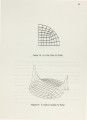
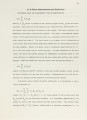
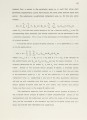
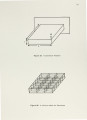
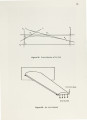
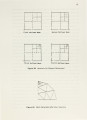
Show 35 along this spline. Finally, to reposition the key nodes they step through those data points and add up their absolute differences until the sum exceeds the segment energy variation. When this happens, a new key node is generated. The process is repeated until key node positions are all determined. Ti•i~ approach optimizes the mesh density by assuring that the SED variation between nodes is equal. It repositions key nodes only along the boundaries and, consequently, it works only if the largest variations occur along the boundaries. When the variation peaks are in the interior of the domain, it seems that some auxiliary curves should be drawn across the interior on which new key nodes are placed according to their SED variation. 3.3 The Algorithm This algorithm is based on a surface subdivision algorithm [43] such that the element geometry is subdivided into smaller element geometry whenever such subdivision is desired. It is self-adaptive since it terminates whenever the prescribed subdivision termination criteria are met. Therefore it all boils down to the choice of these criteria. 3.3.1 Refinement and Subdivision One of the major applications of refinement and subdivision in using the Oslo algorithm [43] is to render three-dimensional surfaces. A similar approach can be adopted to subdivide the strain energy distribution surface. A a-spline curve can be approximated by its control polygon. For closer approximation, one can refine its knot vector and subdivide the curve into two pieces each having its own knot vector and control polygon. The form of the two sibling curves is identical to the original parent curve. By further refining and subdividing these two sibling curves and so on recursively, a set of control polygons can be as close to the original curve as desired. By a similar refinement and subdivision process, a surface can be approximated by its control |