| Title |
Melvin Lewis, Salt Lake City, Utah: an interview by Becky B. Lloyd, July 16, 2001: Saving the legacy tape no. 402 and 403 |
| Alternative Title |
Melvin Lewis, Saving the legacy: an oral history of Utah's World War II veterans, ACCN 2070, American West Center, University of Utah |
| Creator |
Lewis, Melvin, 1917-2010 |
| Contributor |
Lloyd, Becky B.; University of Utah. American West Center |
| Publisher |
Digitized by J. Willard Marriott Library, University of Utah |
| Date |
2001-07-16 |
| Date Digital |
2015-09-16 |
| Access Rights |
I acknowledge and agree that all information I obtain as a result of accessing any oral history provided by the University of Utah's Marriott Library shall be used only for historical or scholarly or academic research purposes, and not for commercial purposes. I understand that any other use of the materials is not authorized by the University of Utah and may exceed the scope of permission granted to the University of Utah by the interviewer or interviewee. I may request permission for other uses, in writing to Special Collections at the Marriott Library, which the University of Utah may choose grant, in its sole discretion. I agree to defend, indemnify and hold the University of Utah and its Marriott Library harmless for and against any actions or claims that relate to my improper use of materials provided by the University of Utah. |
| Spatial Coverage |
Pakistan; South Pacific; Saipan, Northern Mariana Islands; Guam; Shasta County, California, United States |
| Subject |
Lewis, Melvin, 1917-2010--Interviews; World War, 1939-1945--Personal narratives, American; World War, 1939-1945--Aerial operations, American; World War, 1939-1945--Campaigns--Pacific Area--Personal narratives, American; Veterans--Utah--Biography |
| Keywords |
Flight instructors; Army Air Corps |
| Description |
Transcript (77 pages) of an interview by Becky B. Lloyd with Mel Lewis on July 16, 2001. This is from tape numbers 402 and 403 in the "Saving the Legacy Oral History Project |
| Collection Number and Name |
Accn2070, Saving the Legacy oral history project, 2001-2010 |
| Abstract |
Mel Lewis (b. 1917) grew up in Redding, California, and operated a private airstrip before enlisting in the Army Air Corps one day after Pearl Harbor. He flew with the 14th Air Force in Pakistan, the 5th A.F. in the South Pacific, and the 7th A.F in Saipan and Guam. He was also a flight instructor in Greenville, South Carolina. 77 pages. |
| Type |
Text |
| Genre |
oral histories (literary works) |
| Format |
application/pdf |
| Extent |
77 pages |
| Language |
eng |
| Rights |
 |
| Scanning Technician |
Mazi Rakhsha |
| Conversion Specifications |
Original scanned with Kirtas 2400 and saved as 400 ppi uncompressed TIFF. PDF generated by Adobe Acrobat Pro X for CONTENTdm display |
| ARK |
ark:/87278/s6bk3bkc |
| Topic |
Personal narratives--American; Veterans; World War (1939-1945); Military operations, Aerial--American |
| Setname |
uum_slohp |
| ID |
1024582 |
| Reference URL |
https://collections.lib.utah.edu/ark:/87278/s6bk3bkc |
| Title |
Page 59 |
| Format |
application/pdf |
| Setname |
uum_slohp |
| ID |
1024560 |
| OCR Text |
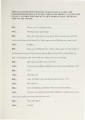
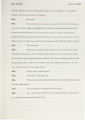
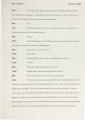
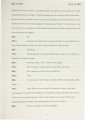
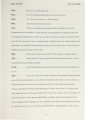
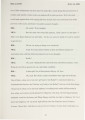
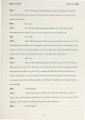
Show M LLEWI .J y 1 , 20 1 MEL: We had what they called a honey barge. hat wa a b t that th took the garbage on, took it out to sea a ways and dumped it. But it g t t wh r ther was nothing for the honey barge to do because the garbage cans were always n1pty. of course, the consensus was that the hold-outs were coming down and getting th fl d, because we knew it wasn't the POWs-they were fed well. Besides that, they were locked up at nighttime. So we got on this idea about taking care of some of these people. And over at the quartermasters corps they had tons and tons ofK-rations and C-rations that were just going to be thrown away. And they set that aside for another purpose. We were down to about seventy percent squadron strength, but we started to draw rations, regular rations, for a full squadron. So, we took all of this extra food we had and put it out on the edge of the trees, out behind the mess hall, and the C-rations were probably the best because they had canned vegetables, little canned fruits, canned meat and a couple of cigarettes and little Sterno stove and a few things like that. And we also had tons and tons of cases of 3.2 beer (laughs). So we set that out. Well, in the morning it would all be gone. Every bit of it. So it was the hold-outs that were coming down and picking up this stuff. And that was pretty gratifying, you know. BBL: Yeah. MEL: So, after a while, I was finally appointed the squadron corrunander. So I'd just unlock the compound gates, day and night, and let the prisoners roam at will. And they were good, you know. We just told them to never go near the airplanes but they were free to roam the area all they wanted, which they did, and they kept the area just spic and span. Picked up every little thing that looked like a piece of dirt and they were always so polite and always did their level best to please you in things like that. So, you 56 |
| Reference URL |
https://collections.lib.utah.edu/ark:/87278/s6bk3bkc/1024560 |