| OCR Text |
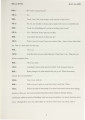
Show M LLEWI 16 20 1 BBL: I 1nean, was all that training helpful? r wh n y u g t th r y u aid 'Oh, this wasn't exactly, at all, like my crate at home?' MEL: Well, it wasn't much different because the first airplan I g tin and flew was pretty much of a crate (laughs)! But this happened a little lat r in y ars so I knew I was going to have an airplane, one way or the other. So I-n ow to kind of break or break into the little different part of the story here, my dad passed away when I was eleven and my mother had re1narried and she, unfortunately, remarried the orneriest little son of a gun. Well, I couldn't put up with him and he couldn't put up with tne and so when I was thirteen years old I walked out the door and I never looked back. And I never lived home since that time. But I had a lot of jobs and things like that. I saved my money and put myself through grade school and high school and all of those things. But in the mean time, most of the jobs that were available to young people in those days also included board and room, so you could save your money. BBL: I was going to ask you how you survived, but that answered the question. MEL: That's how we did it. So, anyway, through various jobs I took, woodcutting jobs and worked in the second-hand store, and then I had another job in a garage overhauling Model-T Fords and because of things like that, I was able to save quite a bit of money. And so by the time I was sixteen, I had about three hundred dollars in the bank, which was a pretty good sum. And, incidentally, I learned to save through our school system. What we had is a savings program and the local banks would come into the schools once a month and set up little savings accounts for the students. And it didn't make any difference how much it was; you could put in a penny, a nickel, a dime, 8 |