| Title |
Alving Andersen, Salt Lake City, Utah: an interview by Becky B. Lloyd, February 25, 2003: Saving the legacy tape no. 628 |
| Alternative Title |
Alving Andersen, Saving the legacy: an oral history of Utah's World War II veterans, ACCN 2070, American West Center, University of Utah |
| Creator |
Andersen, Alving, 1920-2010 |
| Contributor |
Lloyd, Becky B.; University of Utah. American West Center |
| Publisher |
Digitized by J. Willard Marriott Library, University of Utah |
| Date |
2003-02-25 |
| Date Digital |
2015-09-16 |
| Access Rights |
I acknowledge and agree that all information I obtain as a result of accessing any oral history provided by the University of Utah's Marriott Library shall be used only for historical or scholarly or academic research purposes, and not for commercial purposes. I understand that any other use of the materials is not authorized by the University of Utah and may exceed the scope of permission granted to the University of Utah by the interviewer or interviewee. I may request permission for other uses, in writing to Special Collections at the Marriott Library, which the University of Utah may choose grant, in its sole discretion. I agree to defend, indemnify and hold the University of Utah and its Marriott Library harmless for and against any actions or claims that relate to my improper use of materials provided by the University of Utah. |
| Spatial Coverage |
Denmark |
| Subject |
Andersen, Alving, 1920-2010--Interviews; World War, 1939-1945--Personal narratives, Danish; World War, 1939-1945--Denmark; Danish Americans--Utah |
| Description |
Transcript (54 pages) of an interview by Becky B. Lloyd with Alving Andersen on February 25, 2003. This is from tape number 628 in the "Saving the Legacy Oral History Project |
| Collection Number and Name |
Accn2070, Saving the Legacy oral history project, 2001-2010 |
| Abstract |
Andersen (b. 1920) recalls his boyhood in Denmark and the German invasion when he was a teenager. He was drafted into the Danish army and was a forward observer north of Odense. 54 pages. |
| Type |
Text |
| Genre |
oral histories (literary works) |
| Format |
application/pdf |
| Extent |
54 pages |
| Language |
eng |
| Rights |
 |
| Scanning Technician |
Mazi Rakhsha |
| Conversion Specifications |
Original scanned with Kirtas 2400 and saved as 400 ppi uncompressed TIFF. PDF generated by Adobe Acrobat Pro X for CONTENTdm display |
| ARK |
ark:/87278/s66q3wgs |
| Topic |
Personal narratives--Danish; World War (1939-1945); Danish Americans |
| Setname |
uum_slohp |
| ID |
1021020 |
| Reference URL |
https://collections.lib.utah.edu/ark:/87278/s66q3wgs |
| Title |
Page 38 |
| Format |
application/pdf |
| Setname |
uum_slohp |
| ID |
1021000 |
| OCR Text |
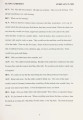
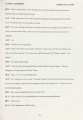
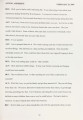
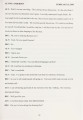
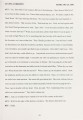
Show LV NG DE went up and I figured that I could never afford a farm £ r m it n high. And with what I had been able to save doing farm work d id d I tt tin something else. I decided I would get into building the building indu I finally made the decision, I quit the job and went over to Esbjerg again h r I h d n for a time. It was where I had been as a missionary, too. So I went over there and nt to work for a builder there. He was a brick layer and doing plastering and things lik that. So I went in with him and took care of the men to start with and I would lay brick on the back walls. I would lay the back walls. Then the meisener (masons) that were working on the front wall would make money according to how much work they did. So they got so much money. And when they got so much money every three weeks, I got three hundred crowns more for what I was doing and they got more than that. So that worked out for all of us. Then, when they were doing work on the walls, I tried to help them the most that I could. I don't know if you know, but in Danish we had a big pail that we would stir up of lime and a certain lime mixture that we had. On the walls there were wood partitions. We put straw mats over that, made straw mats into that, and then we would flip that stuff with mason trowels all in the rest and flip and have the whole thing covered, the ceiling and everything. When that was done, we had these big things, like that [demonstrates size with hands], where we put two or three shovels of the stuff on and that was thinner and different. Then, we would put it on and drag it up the wall and smooth the wall out. We would have what we called, kadesk. That is, if you ever know anything about it, here they call them-I can't remember-but anyway, they used them to smooth the walls off. They sprinkled a little water on them and then smoothed them off. We had these big long rods where we would rub them off to, so they were straight. 37 |
| Reference URL |
https://collections.lib.utah.edu/ark:/87278/s66q3wgs/1021000 |