| Title |
Alving Andersen, Salt Lake City, Utah: an interview by Becky B. Lloyd, February 25, 2003: Saving the legacy tape no. 628 |
| Alternative Title |
Alving Andersen, Saving the legacy: an oral history of Utah's World War II veterans, ACCN 2070, American West Center, University of Utah |
| Creator |
Andersen, Alving, 1920-2010 |
| Contributor |
Lloyd, Becky B.; University of Utah. American West Center |
| Publisher |
Digitized by J. Willard Marriott Library, University of Utah |
| Date |
2003-02-25 |
| Date Digital |
2015-09-16 |
| Access Rights |
I acknowledge and agree that all information I obtain as a result of accessing any oral history provided by the University of Utah's Marriott Library shall be used only for historical or scholarly or academic research purposes, and not for commercial purposes. I understand that any other use of the materials is not authorized by the University of Utah and may exceed the scope of permission granted to the University of Utah by the interviewer or interviewee. I may request permission for other uses, in writing to Special Collections at the Marriott Library, which the University of Utah may choose grant, in its sole discretion. I agree to defend, indemnify and hold the University of Utah and its Marriott Library harmless for and against any actions or claims that relate to my improper use of materials provided by the University of Utah. |
| Spatial Coverage |
Denmark |
| Subject |
Andersen, Alving, 1920-2010--Interviews; World War, 1939-1945--Personal narratives, Danish; World War, 1939-1945--Denmark; Danish Americans--Utah |
| Description |
Transcript (54 pages) of an interview by Becky B. Lloyd with Alving Andersen on February 25, 2003. This is from tape number 628 in the "Saving the Legacy Oral History Project |
| Collection Number and Name |
Accn2070, Saving the Legacy oral history project, 2001-2010 |
| Abstract |
Andersen (b. 1920) recalls his boyhood in Denmark and the German invasion when he was a teenager. He was drafted into the Danish army and was a forward observer north of Odense. 54 pages. |
| Type |
Text |
| Genre |
oral histories (literary works) |
| Format |
application/pdf |
| Extent |
54 pages |
| Language |
eng |
| Rights |
 |
| Scanning Technician |
Mazi Rakhsha |
| Conversion Specifications |
Original scanned with Kirtas 2400 and saved as 400 ppi uncompressed TIFF. PDF generated by Adobe Acrobat Pro X for CONTENTdm display |
| ARK |
ark:/87278/s66q3wgs |
| Topic |
Personal narratives--Danish; World War (1939-1945); Danish Americans |
| Setname |
uum_slohp |
| ID |
1021020 |
| Reference URL |
https://collections.lib.utah.edu/ark:/87278/s66q3wgs |
| Title |
Page 26 |
| Format |
application/pdf |
| Setname |
uum_slohp |
| ID |
1020988 |
| OCR Text |
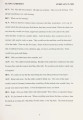
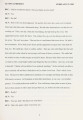
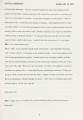
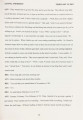
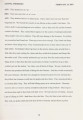
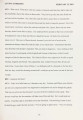
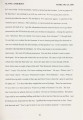
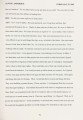
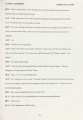
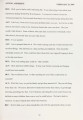
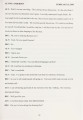
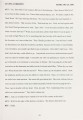
Show barracks and take care of the barracks th r with th m th . I 11 t of it. ' He counter ordered and pulled them back that I had s nt ut t ut th around. He went head on with the whole group. Of course h didn t 1nd th next morning I was mad. I stamped and said, ' I don t give five c nts for a Danish officer." They just smiled (laughs). I remember one, he said to me 'If you can do it t h can I." So one day, he opened his big fat mouth and said something and immediately they sent two soldiers to grab him by the shoulders and marched him down to the prison (laughs). I went down to him when I got off my guard duty. So I went down to him and bawled him out and told him how stupid he was. I said to him, "You haven't figured out that you can't insult the officers." I didn't insult them; I just told them I didn't give five cents for a Danish officer (laughs). But the officers laughed. I remember another funny incident that was in '45, when the next commander, he gave me a German Luger and says, "Fire that and see if you can hit anything at fifteen feet." I couldn't. I never had any training on a handgun. My most dangerous place was on the march in the field. If we went in the field, you know, they would shoot up. We had mechanical figures coming up in our training and they would just up one, two, three and they would be down again. They would say, "enemy to the rear", and I would pull the gun. I was more dangerous than most of them in that shooting. So that was my markings. I thought I was going to get this shooting shield, but the last half of my shooting was bad. Oh, I did hit. I pumped ten shots out from 500 meters and I hit one time right in the center. There weren't many that could do that, but I wasn't the best shot. So I got called an average shot. But we had a corporal. I never will know how in the world he managed to do it. He was lying there sprawled out and the site he was supposed to shoot, he was shooting three places further 25 |
| Reference URL |
https://collections.lib.utah.edu/ark:/87278/s66q3wgs/1020988 |