| OCR Text |
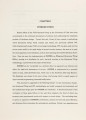
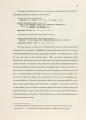
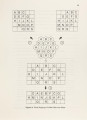
Show 79 Another example of a tool under development that will fit nicely into the Structured Tiling framework is a program that will take high-level descriptions of arithmetic circuits in the form of digit-set equations, and will discover how to logically implement the circuit by decomposing an input expression on one side of the equation into an output expression on the other side. The interface module will need to generate the appropriate INSTED messages to place tiles from a special-purpose arithmetic tileset on a special-purpose grid. This may eventually evolve into an expert system for automating the design and layout of general-purpose arithmetic circuits. In general, a major advantage of the Lisp Machine residence of INSTED is the ease with which artificial intelligence tools and techniques can be incorporated and exploited. A new simulator dubbed SISYPHUS [8] is yet another tool that should prove useful to INSTED users. Currently under development, SISYPHUS is an object-oriented, hierarchical, mixed-mode, event-driven simulator that possesses the considerable virtue of being written in Symbolics-Lisp, and therefore shares INSTED's native environment. Other tools such as routers, circuit compactors, layout converters, and so forth, can also be interfaced to INSTED, and thereby enabled to take advantage of the object-based world of Structured Tiling. 5.2.2 Database Management Given the importance of data structures, it is clear that the problem of representing data inside the machine extends to the problem of storing that data on some mass-storage device. That is, some thought must go into the data storage and retrieval interface. Addressing this issue in the context of Structured Tiling, Nelson [14] has argued for a database approach to integrated circuit design. He and others argue that the Relational Database model, with its emphasis on what is stored instead of how it is stored (data independence,) is the easiest and most favorable model to use. This argument is wellsubstantiated, and especially in light of recent work that would extend this model in very useful ways (with such things as complex objects and long fields) [9]. Because of Structured Tiling's accommodation of a generalized concept of tiles, multiple tilesets are the rule. Each tileset is geared toward a different kind of grid or functionality, and circuit |