| OCR Text |
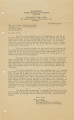
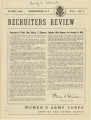
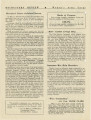
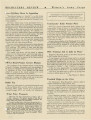
Show 25 MAY 1944 WASHINGTON, D. C. VOL. 1 NO. 9 . . RECRUITERS REVIEW Secretary of· War, Hon. Henry L. Stimson, Explains Why Women Are Needed in WAC .The Honorable Henry L. Stimson, Secretary of War, was asked the following question at a recent press and radio conference: · "In view o£ the fact that General H~rshey is quoted as ex-pressing concern over the number of men placed in lA because of diminishing Army and Kavy draft calls, will the Secretary say why . there is an urgent need for more members of the Women's Army Corps?" Mr. Stimson replied as follows: Our Army has reached a strength of 7,700,000 men and women, and that is the strength at which it must be maintained. It is not enough, however, to maintain a strength of 7.700,000 and lean on that strength of numbers. The Army is more than an aggregation of men. It is more than so many individuals in uniform. The Army is a vast organized unit of technical skills- of men and women trained, each to do a job that may seem small in itself, but when added together mean the mighty force on which we depend for victory . . To support the battle line, there must be thousands behind the line. Their jobs, behind the lines, are those concerned not only with food, clothing, munitions, and supplies, but with the mammoth task of maintaining the Army as an orderly, well-directed unit with channels of communications open, with supplies flm\ring on time, with precision in all the Army's teamwork. These jobs, like those of the battle line itself; call for skills. They call for quick, confident minds. They call for n almost reverent regard for accuracy and detail. And this answers the question :I "" Thy do we need women and more women in our Arniy7' \Ve need them because they already have the skills we are looking for. We can fit them into Army jobs with a minimum of training. "T e can use them on jobs where men are seldom as well trained, as efficient, as well suited by temperament or as willing to work as women are. There are jobs in the Army which women cannot do. Many of them. There are other jobs which women can do as well as men. There are still other jobs, and many of them, which women can do better than men. These are the jobs for which we need more Wacs - and need them urgently. We need skilled typists, expert stenographers, clerks, and women of business and professional training which can be adapted readily to military uses. We need women for 239 categories of jobs which they can do, and do well. The Army has not yet and perhaps never will have all the women it could use. By that, I mean that we could use thousands of them on jobs no-i· held by men who are . WOMEN'S ARMY the heads of large families. Looking at the matter from the standpoint of the country as a whole, it would have been better if many of these men had been left at home. It would have strengthened the civilian economy and would have been more expedient for the Army itself. It is not economy to take men from their families and from jobs in essential industry .to do the work in the Army \,,hich women who are mobile and without dependents could do, and with less training. Such an inefficient procedure doubles our training problem and the time required to arrive at full wartime efficiency, because women must replace these men in the plants from which they have been taken. · Frequently that means that men must fumble to learn a new job in the Army, while the women who replaced them must fumble to learn a new job in the factory. It would mean much toward efficiency in both the Army and in essential industry, if we had women corning into the Army to replace those of our general service men who are now performing noncombat duty. In this way, we could· maintain our fighting strength, make secure our trained reserves, and hold to a minimum our future calls on the fathers and older men at home and the trained workers in essential "\var plants. You may hear that the drafting of 4F's rather than the enlistment of women, is the answer to our problem. It isn't. Though many of the men in this classification are willing, even eager, to serve, and though it may seem that here is a reservoir of noncombatant manpower, our experience has shown that it is better ·to leave them on essential civilian jobs. They do not constitute a reservoir of the skills we are looking for, and they do entail risks to themselves and to the Army when brought into the service. Usually such men have a high sick rate- requiring the services of other men and women to look after them. Two persons are required to care for every three patients in hospitals. Our need now, as it will be increasingly until the war is oHr, is .for fighting men and capable women who, by their training and their skills and their temperament, can aid in bringing about that perfect machine which we must ha,·e for final victory. SECRETARY OF \VAR ARMY CORPS OF THE UNITED STATES Prepared semimonthly by The Adjutant General's Office, Planning Branch for WAC Recruiting. Room 4327, Munitions Building, Wa!;'hington 25, D. C. |