| OCR Text |
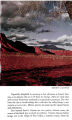
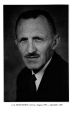
Show HISTORICAL NOTES At the annual dinner meeting held on May 13 in the Panorama Room of die University of Utah Union, the Society conferred honors upon three prominent historical writers. "For eminence in historical research and writing," Dr. Wallace E. Stegner was named "Fellow." Dr. Stegner is a native of Iowa, but lived for some time in Utah, graduating from East High School and the University of Utah. He received his masters and doctorate degrees in creative writing from the University of Iowa. He taught English at the University of Utah and has taught English and creative writing at both Harvard and Stanford. During the spring and summer months this past year he was a Phi Beta Kappa traveling lecturer and thus accepted the award in absentia. He has authored some thirteen books and short stories, much of it on Utah subjects. Honorary Life Membership, "for distinguished service to Utah and the Society," was presented to Dr. Howard R. Driggs, New York, president of the American Trails and Landmarks Association, and Dr. Leland H. Creer, former head of the department of history, University of Utah. Dr. Driggs, a native of Pleasant Grove, was educated in Utah and did graduate work at Chicago University. He was professor of English education at the University of Utah from 1912 to 1922 and was also professor of English education at New York University from 1926 to 1942. He is editor of die American Trails Series and has spent many years identifying and marking exact pioneer trails. Dr. Creer was graduated from the University of Utah and received his Ph.D. from the University of California, Berkeley. He taught history in Spanish Fork and Granite High schools, served on the faculty of the University of Washington, and has served as president of two colleges, Gila College, Thatcher, Arizona, and Weber College, Ogden. Two of his important published works are Utah and the Nation and The Founding of an Empire. 394 UTAH HISTORICAL QUARTERLY Early this past year Secretary of the Interior Fred A. Seaton announced selection of fifty-one sites eligible for Registered National Historic Landmark status. Several are pertinent to Utah and Mormon history. The sites possessing exceptional historic and archeological value are described in three new "theme studies" in the National Park Service series which eventually will cover all the major periods of human history in the United States. The three studies are: Prehistoric Hunters and Gatherers; The War for Independence; and a sub-theme under Westward Expansion and Extension of the National Boundaries entitled: Overland Migrations West of the Mississippi River. The Registry of National Historic Landmarks is designed to recognize and endorse the preservation and protection of structures and sites now administered by states, other public agencies, or historical societies, and to encourage private owners of historic landmarks to maintain them. In the Prehistoric Hunters and Gatherers category, a site recognized as having exceptional value and eligible to receive a certificate is: Danger Cave, Utah. Danger Cave is the most important of the Great Basin finds. It led to the formulation of the "Desert Culture" concept and showed that early people of the Great Basin lived in an entirely different environment from that of the High Plains Paleo-Indian hunters. It indicated that weaving was known in America prior to 7,000 B.C. In the study of Overland Migrations West of the Mississippi River, two pertaining particularly to the Mormon emigration are eligible to receive certificates as Registered National Historic Landmarks. Emigration Canyon (at point of the Pioneer Monument), Utah. Brigham Young and his Mormon followers arrived at die Salt Lake Valley in 1847 by way of Emigration Canyon. Here at the mouth of the canyon, now the east edge of Salt Lake City, there is a fine panoramic view of the land that became their home, and is considered the best place to commemorate the long, history-making migration. The site is owned by the state of Utah. Nauvoo, Illinois. The place from which the great Mormon migration westward to Utah began in 1846 following mob violence and persecution. By 1842 more than 10,000 Mormons had settled in Nauvoo, and it soon became the largest city in Illinois. Many of the structures originally built by and associated with the Mormon leaders of that time survive. Some of them are preserved by the Reorganized Church, HISTORICAL NOTES 395 others by the Church of Jesus Christ of Latter-day Saints in Salt Lake City, and still others are privately owned. October 24, 1961, will mark the centennial date of a great historical event, important to Utah, the West, and the nation. It was just one hundred years ago that the great overland telegraph was completed and the wires joined in Salt Lake City. A monument on the east side of Main Street, about midway between South Temple and First South streets now commemorates the spot. The joining of the wires signified an ending of one era and the beginning of a new. The romantic Pony Express no longer had a reason for existing, and the stage was set for the rapid advance in communications that has continued to this very day. The erstwhile Mormon desire for isolation was gone forever. |