| OCR Text |
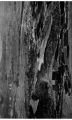
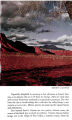
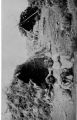
Show Previous deplorable storage conditions of Utah State public records which have become too bulky to be maintained in active office space but cannot be destroyed because of administrative, legal or historical value. Records Manager F. T. Johnson points to storage facilities offered to the departments of the State of Utah by the newly created records center. Records are now accessible for efficient and economical servicing. THE PRESIDENT'S REPORT For the Year I960 By Leland H. Creer* Organized for the express purpose of collecting, preserving, and disseminating the materials of history, particularly those pertaining to the Intermountain West, the Utah State Historical Society was created during the Jubilee Year 1897. With great steadfastness of purpose the seventy-four charter members, on December 28 of that year defined their objectives as follows: The encouragement of historical research and inquiry by the exploration and investigation of aboriginal monuments and remains; the collection of such material as may serve to illustrate the growth of Utah and the Intermountain region; the preservation in a permanent depository of manuscripts, documents, papers and tracts of value; the establishment of a library of books and publications, and a cabinet of antiquities and relics; the dissemination of information and the holding of meetings at stated intervals for the interchange of news and criticisms. Under the capable leadership of Dr. A. Russell Mortensen who is now serving his eleventh year as director of the Society, marked progress has been made toward the realization of these aims. Headquarters of the Society were established by the state in 1957 in the former governors' mansion, 603 East South Temple, which in turn had been acquired as a gift from its original builder and owner, Senator Thomas Kearns. This spacious edifice, artistically and lavishly furnished throughout, provides ample space for many of the activities featured - library, editorial rooms, microfilm operations, and research facilities. However, archival facilities, including fireproof vaults for the storage of permanent records, are noticeably lacking. Since its occupancy by the Society the mansion has always been available for the visitation of the public, for be it understood the Historical Society is essentially * Dr. Creer, professor of history, University of Utah, served as president of the Board of Trustees of the Society from April of 1957 to April, 1961. 374 UTAH HISTORICAL QUARTERLY designed to render public service to all its patrons who may be interested in its many services. During the last four years, hundreds of writers, graduate students, genealogical workers, public officials, and foreign visitors have utilized its splendid facilities in quest of further knowledge. Frequent art exhibits, planned conventions of noted societies and many informal conferences by state, county, and local governmental agencies have been held here. During the past year five very popular lectures sponsored by the Comrnittee on Public Relations were attended by many interested patrons. Due to the generosity of its donor, the Nicholas G. Morgan memorial fund was created in 1958 to be used at the discretion of the Board of Trustees for the following purposes: (1) the general development of the Morgan Library over and above the normal state support, emphasizing particularly Utah, Mormon, and Western history; (2) the purchase of necessary real property for an archives building; (3) an extended program of research fellowships; and (4) the purchase, support, and operation of historic sites and museums and the purchase or erection of monuments to individuals, institutions, and significant events. Other gifts of this worthy philanthropist to the Society and the state of Utah include: the Nicholas G. Morgan Collection of more than two thousand volumes of Western Americana, several pieces of sculpture, the restoration of the old City Hall, and the assignments of potentially valuable royalties from oil, gas and mineral leases on some seven thousand acres of land in the Paradox Basin of southwestern Utah. For these many fine gifts the Board of Trustees expresses its thanks and appreciation. In 1951 the state legislature created a division of State Archives and made the Historical Society responsible for all noncurrent public records. Since then this material has been filed in the basement vaults which are quite unsatisfactory for that purpose because they are neither fireproof nor air conditioned. Lack of funds too has prevented the employment of much needed trained assistance in this department. With the resignation of Dr. Everett Cooley, state archivist, much of this work has had to be assumed by the director, Dr. Mortensen, at the expense of his own responsibilities. On July 1, 1960, some assistance was assured through the appointment of Ferdinand T. Johnson as records manager, with the assigned task of sifting, examining and filing public documents with a view to their permanent filing in the archives of the state or their disposal as useless records. During his first year of employment, Mr. Johnson made thirty-two trips to various counties to THE PRESIDENT'S REPORT 375 help county clerks establish effective county record management programs. As a guide to this program he has prepared and published two manuals, The Record Management Manual and The County Records Manual. He also has completed plans for the establishment of a Records Center in the basement of the State Capitol as soon as appropriate space can be made available. In his filed report, Mr. Johnson states: The archives staff has continued the practices and projects instituted by the former state archivist. Through consultation with various state, county, and municipal offices, we have been instrumental in destroying some 2,242 cubic feet of records which represents a saving to the state of $25,410 in recovered filing equipment and floor space. Records from Weber County, Utah County, and Salt Lake City have been accessioned into the archives and are now being processed. The cleaning, cataloguing, filing, and indexing of records already in the archives is continuing. The appropriation of $37,000.00 made to the State Archives by the 1961 legislature was less than half of what had been requested. Of this amount $29,800.00 is needed for personnel and $4,100.00 for shelving for the Record Center and $2,600.00 for Current Expense. In a revealing report at the annual meeting of the Society in May, 1960, State Archivist Cooley in part said: The Archives of the state in 1959 destroyed some 3,345 cubic feet of records, thereby saving the state some $43,890.00 in recovered filing equipment and vacated floor space. This is what I consider a negative approach to the archival program, although it is a necessary phase and it is one that can be sold to the budget-makers and legislators whereas the preservation of historical documents or permanent records is too often classified as one of the "frills" of government that should be eliminated or can wait for some other time. But we can wait no longer. The records of the state have been accumulating for 110 years. They need protection. The great bulk of the recent records can be screened out and destroyed. The remaining permanent ones should be filed with the old ones in vaults specially designed and constructed for their preservation. In summary, let me conclude my report on archives by inserting a quotation used as an introduction to my report of two years ago. The chief monument of the history of a state is its archives. . . it is unquestionably as much a function of the government to provide for the preservation and use of its archives as it is to make laws and levy taxes. This is a recognized fact in all civilized countries, and to neglect properly to perform this function is not only unbefitting the dignity of a great state, but it endangers an inheritance which future generations have a right to demand shall pass to them unimpaired. 376 UTAH HISTORICAL QUARTERLY A special word of commendation concerning the excellent work of our director and editor Dr. A. R. Mortensen should be added. The summer issues of our excellent periodical alone have done more to advertise the state favorably perhaps than any other medium. The editor's vision and acknowledged scholarship, have produced a Quarterly of distinction with a reputation second to* none in the nation. Over the past four years the summer sales have averaged more than 25,000 each season. The paid membership of the organization has increased from 400 in 1950 to more than 1,600 today, an increase of 400%. The annual appropriation has increased from $40,000.00 to $200,000.00, or 500% during the past decade. A beginning was made during the past year in the field of planned research through the appointment of Juanita Brooks as editor of the excellent and valuable journal of Hosea Stout. This type of service I believe is indispensable to the continued reputation of our organization as the sponsor of planned research projects. Under the very capable chairmanship of Dr. Joel E. Ricks, past president for eight years and currently the oldest member of the Board of Trustees, serving continuously since 1927, new chapters of the Society have been added. Two years ago a strong unit covering the Salt Lake Valley was formed and still more recently chapters in Cedar City and Ogden were organized. Older chapters were already established at Provo and Logan, serving Utah County and Cache Valley. Plans are in progress for the organization of similar groups in Uintah, Carbon, and Sanpete counties. This report represents the last official function of my term as president. I have been affiliated with the Board of Trustees for fourteen years. During that time many changes have been noted as our functions have become more diversified. Today the reputation of our group as a civic organization of the first rank is unchallenged. To President-elect Iverson and the new board members I extend my heartiest congratulations and pledge to them my continued loyalty and support. With a devoted Board of Trustees, a sympathetic governor and legislature, and an efficient staff of co-workers, the future of the Society seems permanently assured. |