| OCR Text |
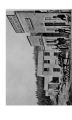
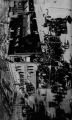
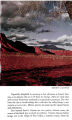
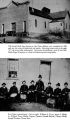
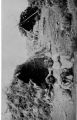
Show Holiday celebrations in Dixie started at sunrise with the raising of the flag and the firing of the cannon, followed immediately by a serenade of the band, and the Parade which would begin at 9:00 a.m. V I G N E T T ES Some Memories of Dixie As you leave Santa Clara there's the Devil's Saddle, diat out-jutting butte of black lava guarding the cosy little valley beyond. And dien you round die point and at once die spire of the Tabernacle greets you, while beyond it comes to view the glistening whiteness of die Temple, that symbol of a people's faith - a people who worked, sweated, and ate poor food, but how they danced, made sermons, wetted their gullets with the juice of die vine, and floated out onto die balmy air their old-time songs: "Come, Come, Ye Saints," "Hard Times Come Again No More," and "After the Ball Is Over." And how diey did mix and make sermons! Can you remember those grease spots along die south wall of die tabernacle where the weary, unwashed heads rested while their leaders sermonized? You know, Lizzie, I never think of St. George as it is today. . . . Let's take a walk from your old home about the business district. Walking west from your home was the Taylor Riding Shoe and Barber Shop, and next was the old Sam Adams Blacksmith Shop. Turning south was Woolley, Lund and Judd, and dien die old Co-op Store, the Lyceum, and the T. O., widi Hon Snow in charge, counting eggs, weighing hay, and putting grain and bran in bins Next was the old Telegraph office and as die pathway cata-cornered across the street thru die deep sand to where the new Rassie B. Snow store is, it further cata-cornered across the street to A. R. Whitehead & Sons' store. Further along that street was Scotty Gray's barber shop, and then the old Pymm House and the Post Office. That was about all there was to the busines section. A rather simple matter.... The social life was unique in those days. The young people got together after the night meetings and roamed the streets, drinking in the lilac-scented air, while water babbled along the ditches and friendly cottonwoods listened to their love-makings. Up at the top of Main Street and out among the mesquites was the Boodi or Clark Dance Hall, where betimes the youngsters twisted a wicked hip or leaned heavily on each other as Old Joe Worthen sawed out a waltz, during which old Charlie Worthen took a quiet sneak outside and wet his whistle. Blessed nights were those. And ah, baby, what dancers they were! . . . Can you remember how those Beau Brummels dressed? Recall Dord Ashby with his big black bow-tie, his white shirt, or if the shirt The arrival of the mail twice a week was an exciting event and the Post Office a gathering place for old and young. The Post Office (right) was located on U.S. 91 adjoining the Washington County News Building which still stands. Located on East Tabernacle Street was the first Post Office in the building believed to be the first built as such in the state. \fohn Pymm served as postmaster for many years. were black, a red bow-tie, and his very low patent leather slippers, a colored handkerchief hanging out of one breast pocket, a sack of Bull Durham out of the other ? A match behind his ear, a flashy belt around his waist, and there you have what die best dressed men of those days strutted dieir stuff in. It was always a sartorial contest between the cowboys and the boys who went away to the mines to see who could outsmart the other in dress. I think the Mining Camp boys had the edge on the cow-punchers. . . . They wore nifty hats, seldom cocking them sidewise as did die cowboys, and they wore flashy ties and better shoes, and their shirts like Camel cigarettes, were made of "more costlier" materials. Remember the Sun Dial Club - those happy loafers who moved around a tree or a hitching post with the sun just fast enough to keep in its warmth? In summer they called it The Shade Squatter's club, 292 UTAH HISTORICAL QUARTERLY because they moved around the same trees with dieir shade. It was St. George's All-the-Year Club, and like the lilies of die field, diey toiled not, neidier did they spin, and yet die Lord took care of them. A few of diem may be freezing in heaven, but most of them are now toasting their heels in hell, and happy, I'll bet. DR. JOSEPH WALKER Growing Up in St. George Loneliness hounded every youth throughout the long winter evenings. If a boy stayed home, he might read or be read to until nine o'clock, seldom later, for wood to keep the house warm was scarce and expensive, and oil for the lamps was scarce and expensive. We could afford just one gallon of oil a month. An active youngster just doesn't like bed at 9 o'clock. There was one outlet for his energies. The mail came in at 9 o'clock. The mail was an exciting event, especially when it was raining. The buckboard splashed through the mud as the driver whipped up his team as he neared the post office. Then the wet canvas was removed and die mail bags taken into Pymm's store and post office. Everyone lined up for mail. The affluent had boxes, the odiers fined up. As many as took the Deseret News Semi-weekly were sure of somediing twice a week. Many took the Montreal Star, as we did, and its coming was an event. Then there was the Montgomery Ward & Company catalogue. That was really an event, especially the colored pages of saddles and boots Crowds formed an important part of life in St. George. (The modern term is "gangs.") The First, Second, Third, and Fourths each had a crowd which guarded its assets with jealousy and defended them widi green apples, ripe tomatoes, mock oranges, and rocks. To reach Dodge's Spring, the town swimming pool, meant a battle widi die awful Third Warders. On summer nights die lovers of the whole town came to walk around the Temple. It was guarded by First Warders whose green apples, clods, and rocks played no favorites. The Second Ward had a solitary asset, the dugway up the Black Ridge. If a couple wished to Black-ridge an evening dirough, they had to risk the regular weapons. To say of a girl that she "could be Black-ridged" was to infer questionable habits. The Fourth Ward had most of the town's assets - die stores, the T. O., the blacksmith shops, die Tabernacle, the scales on which die loads of hay were weighed, die shoe shops and harness shops, the drug- VIGNETTES 293 store. Its conceit was unbounded, but justified, although a bit dimmed by the Temple in the First Ward. The Temple more than equaled the Courdiouse, the Tabernacle and the T. O. combined. Another night amusement was the roasting of potatoes and green corn on the public square. Of course the potatoes and corn were stolen - "swiped" is the better word. The psychology of roasting food over campfires would take us back in man's history to the cave-man stage of it. But around the roastings on the public square there lingered, hidden, but not extinguished, the beginnings of man's use of fire in preparing his food. Our swiping the potatoes and corn aroused a distant echo of dangers of the Cave Man as with bone knife and wooden spear he attacked his prey. Roasting-ear parties were a common social event in St. George in my boyhood days. My mouth waters now as I recall them. DR. JOSEPH WALKER Portrait of a Country Doctor (Dr. J. T. Affleck) . . . One would know at a glance that he was born elsewhere. His manners were always precise but never too formal, while his consideration for others was always evident and never neglected. As a boy, I often wondered if he were not a lonely man, hungry for the culture and refinement he had known. And yet, when I came to know him professionally, speaking with him as one professional man speaks to another, I found diat he was not at all a lonely man, but rather a man who genuinely loved the common people, the people who make up the backbone of diis world.... I have bounced about the world a lot, have met many distinguished men and doctors, some titled and others wealthy and famous, but tonight if I could wave a magic wand, and out of the past have my choice of who would come to spend an evening's gossip with me, it would be Dr. Affleck.... One afternoon comes to me. I had dropped in to have Dr. Affleck lance an abscessed tooth for me. He did it cleverly. Then we sat and talked in his office-study. We warmed up widi a glass of Tom Sterling's best wine. Then the doctor began to tell me about his work in Dixie. He reached from a shelf a great bottle that contained a huge cystic kidney which he had removed from a woman in Washington, his only 294 UTAH HISTORICAL QUARTERLY assistants Gus Hardy and a woman, and his operating room a kitchen, his operating table a kitchen table. It was a most dramatic story, and yet he told it as if he were telling of just another day's work. It was years after when I had specialized in kidney surgery before I fully realized what a daring and magnificent surgical feat he had performed there in the wind-swept wilderness of sandstone and stretching lava beds. I reported his achievement one evening before the Urological Section of the Royal Victorian Hospital in Montreal. The fact that the woman lived for years after astounded the members. He removed the kidney not knowing whether the other kidney could carry on or not, for there was then no possible way of finding out what the other kidney could do. He nursed her through without benefit of any post-operative aids such as intravenous salines, transfusions, sulfa drugs, or penicillin, and with no other nursing than the clumsy, no matter how willing, hands of her neighbors. There was no resident physician to watch her dirough the critical post-operative days . . . There was just he alone, Dr. Affleck, his good work, his daring, his willingness to risk his reputation for whatever chance that woman had. He put his skill and judgment against the out-stretched, clutching fingers of Death. He won. The sad part of that masterpiece of surgery was that there was not a person, not a doctor in the country about who could appreciate what he had done. He got neidier money nor fame nor glory for his daring and successful work. Perhaps all he ever got was a heartfelt "thank you, Doctor," from the woman whenever he saw her. . . . I am sure his real reward was that, driving in the night through that lonely and ghost-like desolation called Washington, he could say to himself, "A woman lives in diat house yonder who would have been dead but for me." Had Dr. Affleck lived among other surgeons he would have been great in the same sense as are the Mayos great, for he had the same daring and genius that characterized them, the creative genius to conceive and execute great things independently DR. JOSEPH WALKER Cops and Co-Habs Much of the best Dixie folklore centers in the attempts of the men with plural families to evade the marshals. Thomas S. Terry, for example, had a ranch on the Utah-Arizona line and built two houses, one on each side, so that if the Utah officers came for him, he could just walk across the line to his house in Arizona. He named his little daughter who was born there "Exile," which became "Exie" for short. VIGNETTES 295 John S. Stucki, of Santa Clara, recorded that when the familiar single-seat, black-topped buggy drew up in front of his house, he was out in his arbor. He could easily have hidden among the heavy growth of the vineyard, but instead he walked up to the vehicle widi his hands full of luscious grapes. He greeted the officers cordially, offering them each a bunch of grapes and inviting them to get out and help themselves from the vines and the peach orchard. Warm with the hour-long drive from St. George in the late August heat, the visitors accepted his invitation. After diey had looked over his orchard, vineyard, and well-kept garden and listened to his talk, in broken German, of the first years here, after they had accepted his invitation to a cool drink and lunch in his home and had been introduced to both of his wives, they drove away, an extra box of fruit under the spring-seat. They never came to molest him again. The Charles L. Walker diaries are full of examples of his hiding from the officers. In spite of the fact that the Silver Reef telegraph operator sent a timely code warning, McGeary and Armstrong might do some night driving and arrive in St. George before schedule. Walker, who worked at the Temple, was safe so long as he was in that building, but one morning early word came to him at home that the officers were on their way there. Some quick thinking on the part of his family helped him to escape. His wife answered the knock at the front door, opening it just a little, stepping out, and pulling it shut behind her. She was sorry, but they could not come in; her family were getting ready for Sunday School. After a brief argument the officers forced their way past her and into the family kitchen, where, sure enough, the teen-age daughter, Zaidee, was naked in a wooden bath tub before the stove. Her screams forced them to pause again until she could get some towels wrapped around her. By that time it was futile to search the house, for the father had made his exit through the bedroom window and the back yard to the shelter of a neighbor's granary. Before they had finished their search of his home, he was safe at the temple Dudley Leavitt had brought a load of cotton to the factory to exchange for batts and cloth when the familiar black buggy pulled into the yard and parked beside his wagon. "Run, Brother Leavitt," the girl at the desk said excitedly. "Quick! Hide! Here are McGeary and Armstrong!" Dudley Leavitt, widely known as the husband of five wives and father of many children, knew that to run or hide would be futile. 296 UTAH HISTORICAL QUARTERLY Snatching a cap from the head of a machinist who stood near, he put it on, picked up an oil can, and proceeded with great diligence to oil the machinery. He went about his work, climbing a ladder to get at one place, and crawling along on the upper scaffold to reach another. In the meantime the officers poked into die mass of loose cotton in the bin, kicked aside boxes, opened barrels, searched for trap doors and secret closets. At last they gave up, certain that no Cohab was near. [A stanza from a song sung by children in derision of the U.S. Officers] McGeary searched McArthur's house Good-bye, my lover good-bye And all he could find was the tail of a mouse Good-bye, my lover, good-bye. Charles L. Walker on May 17, 1885, attended a Sunday School Jubilee at die tabernacle. He says: "I composed die following lines which were received with much enthusiasm." The last four stanzas are: . . . There's an underground railroad Evading the bail road Which ne'er was a jail road in Utah. The girls still keep singing While washing and wringing There's none of them cringing in Utah. The cows are yet eating, The sheep are still bleating While the lawyers are cheating in Utah. While the marshals are slumming There's no thought of succumbing, For the babies keep coming in Utah. The Old Town Clock The census of St. George taken in 1862 showed that there were in the whole new city only five timepieces - watches and clocks. There was a sundial on the public square which gave high-noon and a general idea of the hours, but meetings were scheduled at "early candle light" between sunset and dark, or at mid-afternoon, or at two hours before VIGNETTES 297 sundown - all very inadequate, inaccurate times. Most of the trouble in taking water turns arose from the fact that diere was no way to measure die exact time for the change. Troubles multiplied until by the time die Tabernacle was up to the square the authorities decided that they must install in it a clock and a bell. The clock was ordered from Sheffield, England, in the same order that brought hinges, locks, and other hardware to finish the building. The bell was cast in Troy, New York, in 1872 by Meneely and Rem-berly. The clock struck for die first time at 10 A.M., November 15,1873. From that hour, die life of die citizens was regulated by the clock. The bell was rung a half hour before a meeting was scheduled to begin, so that those living far out in the valley would have time to get to church before the stroke of the hour, when die meeting began. Men widi shovels in hand waited at die headgate for the clock to begin to srike before they touched the dam. The Cannon The cannon diat for more than fifty years has set upon a pedestal beside die door of the Information Building on die Temple grounds played an important role in die history of Dixie. Folklore says that Jesse W. Crosby brought it in from southern California in 1866 or 1867; records show that it was the heart of an artillery unit in the local militia organized March 13, 1868, and commissioned in June following. David Milne was appointed captain with a total force under him of two officers and eleven privates, each of whom possessed a horse, a revolver, and either a rifle or a shotgun. As befitted dieir rank, the two officers each wore a long sword. As a part of their training, die artillery men set die cannon up on a knoll south of town, cleaned, loaded, and shot it out toward die barren hills across the river, its bark as effective as the coyote chorus that assailed die moon. Too cumbersome to be used in expeditions against die Indians, it remained for a time on the post of guard, and then was placed in front of the unfinished courthouse. On All Fool's Day, April 1, 1869, the cannon was missing from its post. The village was accustomed to pranks on this day - oudiouses tipped over, gates removed and hidden, wheels taken from wagons, the bell rendered speechless through loss of its clapper - but to have the cannon disappear was another matter. In vain the artillery rode die streets up and down, scouted the river bank for trace of it, questioned 298 UTAH HISTORICAL QUARTERLY teen-agers. Some sleuth finally located it inside the high rock wall of the stray pen, where by means of planks up and down and much co-operative engineering and pushing, it had been hidden. John M. McFarlane, an aspiring young lawyer, made out a formal complaint against the culprits, but since some were members of prominent families, it was decided to settle out of court. If the offenders would return the cannon to its place in front of the courthouse and would provide the artillery unit and the peace officers with ten gallons of Lang's best wine, the incident would be closed. So momentous was the return of the cannon that the event was photographed, following which all concerned drank and sang and embraced each other in good fellowship. The cannon had its first practical use during the building of the Temple. The work on the excavation was well under way in 1872 when the ground became damp and almost boggy along the east end. The men in charge were instructed to fill in the area with stone. After a full year of work Edward Parry, chief mason, reported that "about 80 cords of small volcanic rock have been well driven down with a heavy pile-driver to make the bottom hard and of equal sustaining quality for the superstructure to be erected diereon." The pile-driver was the cannon barrel, filled with shot, and wrapped with wet buckskin strips. It was rigged up widi scaffold and pulleys, the power lift a horse, the weight released by a mechanical trip. This whole procedure was so laborious that Charles L. Walker wrote a song "by request for the boys who were Pounding Rock into the Temple Foundation," which they could sing to enliven their task or to tell the public about it. After this task was finished, die cannon barrel was cleaned, remounted, and returned to its place at the courthouse where it remained, except for a brief time each July, when it was moved on up to Mount Hope and used as a part of the Independence Day celebration. Firing the cannon was under the direction of the town marshal, George Brooks. As part of the preparations his wife would make thirteen identical bags of red flannel, into which powder, carefully measured, was poured, and the bags then sewed up securely. Before daylight on die holiday, Sheriff Brooks and two official helpers prepared to shoot the piece by swabbing out the barrel, and cramming it with damp gunny sacks, green lucern, and rags. When these were tamped in, one little red bag of powder was pressed into the breeching, and die space around filled VIGNETTES 299 with a spoonful of black powder in kernels like caraway seed. In the meantime the end of a ramrod had been heating in a nearby fire. All eyes were on the Liberty Pole down town in the square. As soon as the first rays of the sun hit the Black Ridge, Lieutenant Brigham Jarvis raised the flag, and at first sight of the Stars and Stripes going slowly up the pole, the ramrod was brought from the fire. Slow- careful-reach- touch- and the red end of the iron came in contact with the red of the sack. A flash, a roar, and the cannon coughed out its load of gunny sacks and lucern. The eager children swarmed down the hill, gathered up what they could, and brought it back for another shot, until the flag had been saluted once for each of die thirteen original colonies. The first shot was signal for the band to begin its serenade. Mounted on a bunting-draped wagon, the horses sporting crepe paper plumes, they struck up "Three Cheers for the Red, White, and Blue," at the flag pole. They followed with other patriotic numbers as they drove away, stopping at the homes where they could be sure of a treat of cake, pie, or a pitcher of good wine. All Dixieites whose memories extend back forty or fifty years will remember this pattern for the summer holidays. Sometime after 1910 the cannon barrel was set upon a pedestal beside the door of the Bureau of Information on the Temple grounds, where it now dozes in the sun, a reminder of the pioneer experiences in which it played so prominent a part. A Hint to Young Men in Search of Wives The Cotton Factory at Washington was the scene of romances and heartbreaks and thrills. At the peak of its production it employed a personnel of twenty-seven people, sixteen of whom were women and young girls. Since their hours were long and their week a full six days, diey had little opportunity for recreation that would bring them into contact with eligible men, and any courtship was a matter of group knowledge and interest. One of the most colorful courtships was that of C. L. Christensen, who was coming to Dixie for the first time. Though he had other business, he also had been charged by his first wife to bring back a second, in order that he might be eligible for a higher church position. He arrived at the factory just at noon, as the girls were coming out of doors to eat their lunch, buxom, healthy girls eager to get out into die spring air. Quickly he formulated a plan. Mounting a large rock near the place where the girls had spread out their food, he took off his hat - 300 UTAH HISTORICAL QUARTERLY conscious, perhaps, that his six-foot-two height, curly blond hair, and fine set of teeth made him not hard to look at - and called out in die manner of a Mormon missionary at a street meeting: "Give me your attention, please! I am Chris Christensen of San Pete County, commonly called Chris Lingo. I have come to Dixie on business and will be here only a short time. One of my hopes is that I may be able to find for myself a second wife, that I may please my first and fulfill the celestial law. Look me over, girls, and if any of you would like to get better acquainted, I'd be very glad to visit with you after dinner." The girls giggled and whispered and dared each other, until finally a group of a half-dozen or more went to talk with him. He found his wife Serenie [ ? ] there, married her and took her back with him. They later moved to San Juan County, where the story of the courtship is legend. Old Toab From the time in 1854 when Thomas D. Brown and Jacob Hamblin had written so eloquently of the savage conditions of the Indians until 1891 when the government secured land for a reservation and moved them upon it, the Mormons had tried earnestly to help fulfill the prediction diat diey would yet become a white and delightsome people. True, there were some Indian uprisings during 1864 and 1865, or some threats of war, but there was never an outright battle. On the otiier hand, die Mormons had tried to teach die Indians to farm, had plowed and furnished seed and helped them to plant and irrigate, but always with the arrival of hot weather the Indians went to the mountains. Each winter the local people and the central Tithing Office co-operated to give them from four to six hundred dollars worth of food and clothing. Although most of the natives seemed to appreciate what was done for them, there was one who did not. He was Toab. Born to be a chief, and with qualities of daring and leadership worthy of a chief, he resented the white man and all he represented. The Mormon herds had eaten the grass and chased off the deer, he said, he would kill some of their cattle that his own people should not go hungry. If he stole all the time from the white men, he could not get back even a small part of what they had taken from him. More and more Toab moved in a cloud of hate, until die white settlers feared him. The first murder with which his name was connected was that of the three members of the Powell expedition, who as Toroweap, land of Toab and other Indian chiefs, lies on the edge of the Grand Canyon of the Colorado eighty miles due south of St. George. It was at this point, marked by the talus slope center left, that three members of Powell's expedition hoping to return to civilization found egress from the river. They were murdered by Indians before they reached the settlements, and it was believed that Toab was directly responsible. they approached the Black Canyon of the Colorado, decided that they did not want to go farther. They found a point of escape up the cliffs near Toroweap and climbed out. An Indian runner brought word into the settlements that three white men had been killed, and a telegram to that effect was sent to Salt Lake City on September 7,1869. Who was responsible for the murder? No definite proof was ever found, but Toab carried a watch that had belonged to one of the victims, and he wore on his forehead as a sign of triumph a greenback, ignorant of the fact that it was money. When in the fall of 1891 the Indian bands along the river were gathered up and moved to die reservation, he resented it all - the fact that it was done at all and the way in which it was done. He wanted to be free to wander on his own homelands around the springs far out on the Arizona Strip. Then came the time when he had trouble with one of his own people, Chief Queetuse. Whatever the cause of the argument, it became so 302 UTAH HISTORICAL QUARTERLY bitter that Toab caught up a heavy grubbing hoe, and striking Queetuse over the head with it, killed him instantly. This was a criminal case to be tried in a Mormon court. In the trial Toab's lawyer pleaded justifiable homicide, making an eloquent plea of self-defense. Here was Toab, a small, wiry man confronted by a very large Indian who threatened to kill him. Toab, much afraid, had snatched at the first weapon at hand to save his life. Toab had listened to all die talk in silence until the lawyer began to talk about his fear. "No! No!" he cried, leaping to his feet. "Toab no afraid! Toab no rabbit! Me just whack 'em. Me no scare no body - no time." And he sat down mumbling. So the case was lost, and Toab had to be taken in to the state penitentiary at Salt Lake City. To one who found many acres too close confinement, the prison was slow death. He began to droop and pine until the warden wrote to Anthony W. Ivins, who was in charge of the reservation, suggesting that he take Toab home. They arrived a few days before Christmas. The Indians had a great feast, and days of celebration. Their young men hunted rabbits during the day and had songs and dances in the evening. Better still, they listened to Toab tell the legends of their people, and how dieir life had been before the white man. For a few days, Toab knew diat he was their chief, that he had their respect. Then he died. Today no Indian is found on all the vast country over which Toab led his band. Pahrashaunt and Mociac and Ibanpah and Big Spring are only names on a white man's map, and not the gadiering places of Indian tribes. But on the reservation Foster Charles, Toab's son, is respected by whites and Indians alike, and on die far battlefronts of the world two of his grandsons have fought to defend die very government which Toab hated. UTAH STATE HISTORICAL SOCIETY BOARD OF TRUSTEES (Terms Expiring April 1, 1965) LELAND H. CREER, Salt Lake City DELLO G. DAYTON, Ogden JACK GOODMAN, Salt Lake City NICHOLAS G. MORGAN, SR., Salt Lake City JOEL E. RICKS, Logan (Ex-Officio Member) LAMONT F. TORONTO, Salt Lake City (Honorary Life Member) LEVI EDGAR YOUNG, Salt Lake City (Terms Expiring April 1, 1963) j. STERLING ANDERSON, Grantsville RICHARD E. GILLIES, Cedar City j . GRANT IVERSON, Salt Lake City MRS. A. c. JENSEN, Sandy L. GLEN SNARR, Salt Lake City OFFICERS 1961-63 j . GRANT IVERSON, President DELLO G. DAYTON, Vice-President A. R. MORTENSEN, Secretary ADMINISTRATION A. R. MORTENSEN, Director JOHN JAMES, JR., Librarian F. T. JOHNSON, Records Manager, Archives DOROTHY SUMMERHAYS, Associate Editor ROBERT w. INSCORE, Registrar, Military Records Section EDITORIAL CONTRIBUTIONS: The Society was organized essentially to collect, disseminate and preserve important material pertaining to the history of the state. To effect this end, contributions of manuscripts are solicited, such as old diaries, journals, letters, and other writings of the pioneers; also original manuscripts by present-day writers on any phase of early Utah history. Treasured papers or manuscripts may be printed in faithful detail in the Quarterly without harm to them, and without perma-nendy removing them from their possessors. Contributions for the consideration of the Publications Committee, and correspondence relating diereto, should be addressed to the Editor, Utah State Historical Society, 603 East South Temple, Salt Lake City 2, Utah. The Editor assumes no responsibility for the return of unsolicited manuscripts unaccompanied by return postage. The Utah State Historical Society assumes no responsibility for statements made by contributors to mis publication. MEMBERSHIP: Membership in the Society is $4.00 per year. The Utah Historical Quarterly is sent free to all members. Non-members and institutions may receive the Quarterly at $4.00 a year or $1.00 for current numbers. Life membership, $100.00. Checks should be made payable to the Utah State Historical Society and mailed to the Editor, 603 East South Temple, Salt Lake City 2, Utah. PICTURE CREDITS Will Brooks: lower 213,240, 243, 254,284,286,290,291 Arthur Bruhn: 197, 205, 221, 223, 224, upper 225, 228, 229, 233, 235, lower 247, 257, 258, 267 Walter Cottam: 247 Charles Kelly: 301 A. Karl Larson: 259, lower 271 St. George Chamber of Commerce: 192, lower 225, 232, 252, 257, 282 Snow Family Papers: 250 Utah State Historical Society Files: 200, upper 213, 215, 225, 246, upper 247, upper 250,262,268, upper 271,274,275,278,285,288 Lorin Wheelwright: 226,227,228,230-31,234,237,238 Wes Williamson: 236 Cover: Front, Arthur Bruhn; Back, Robert Barrel courtesy Carl Jepson, Zion National Park Artwork: Roy Olsen University of Utah Press Typesetting and Composition Deseret News Press Printing and Binding Wheelwright Lithographing Company Cover, Colored Section Ridges Engraving Company Black and White Engravings PUBLICATIONS FOR SALE UTAH HISTORICAL QUARTERLY VOLUMES 1-29 (some numbers out of print). Table of contents and price list will be sent on request. SPECIAL PUBLICATIONS A History of Southern Utah and Its National Parks. By ANGUS WOODBURY. Paper, $2.50. The Utah War - Journal of Captain Albert Tracy. Paper, $3.00, fabrikoid, $6.00. Spirit of the Pioneers - Biography and Diary of Lorenzo Dow Young. Paper, $3.00, fabrikoid, $6.00. The Exploration of the Colorado River in 1869. Fabrikoid, $6.00. The Exploration of the Colorado River and the High Plateaus of Utah in 1871-72. Fabrikoid, $7.50. Pageant in the Wilderness. The Story of the Escalante Expedition to the Interior Basin in 1776. Edited by Herbert E. Bolton. Fabrikoid, $5.00, deluxe red cloth, $5.50. Escalante maps, 50/. West From Fort Bridger. The Pioneering of the Immigrant Trails across Utah 1846-1850. By J. RODERIC KORNS. Paper, $4.50, fabrikoid, $6.00. Utah's Parks and Scenic Wonders. Paper, 50/. The Valley of the Great Salt Lake. Paper, 50/, cloth, $2.00. The Colorado - River of the West. Paper, $1.00. U T A H S T A T E H I S T O R I C A L S O C I E TY ~**s%4r • ~ . * - H I S T O R I C A L Q U A R T E R LY October, 1961 IN THIS ISSUE ABOUT THE COVER East side of Main Street, Salt Lake City, about 1870. U. S. Land Office lower left corner. Center, first Catholic church in Salt Lake, St. Mary Magdalene, |