| OCR Text |
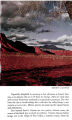
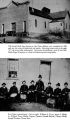
Show NAUVOO, ILLINOIS The view of Nauvoo above was taken looking toward the Mississippi River. By 1845 it was the largest city in the state with a population of about 15,000. i Nauvoo, Illinois, the Mormons attempted secure political as well as religious ad-mtages. The unique political situation in e state enabled the Mormons to hold the dance of power and gain their ends. POLYGAMY: AN ISSUE IN THE ELECTION OF I860? By Vern L. Bullough* In the election of 1860, Abraham Lincoln carried the state of Illinois over his political rival, Stephen A. Douglas. This was not entirely unexpected; Lincoln had in part secured the nomination of the Republican party in the belief that he would carry the state. The reasons for the increasing difficulties of the Democratic party have been amply documented before, but often overlooked is the political potency of the Mormon question, especially polygamy, in the state of Illinois.1 Albert Beveridge, one of the few historians who paid attention to polygamy as an issue, pointed out that after Douglas introduced his concept of popular sovereignty in 1854, "the anti-Douglas press and speakers thundered against Mormonism as an evil which the Kansas- Nebraska law protected as much as the twin wickedness of slavery." 2 The fear that Utah would be admitted as a state under polygamous rule continued to be an issue in the campaign of die Douglas Democrats from 1854 until 1860. While there can be no agreement as to how * Professor Bullough is on the faculty of the history department, San Fernando Valley State College, Northridge, California. 1 The issue is ignored, for example, by Avery Craven, The Coming of the Civil War (Chicago, 1957); Allan Nevins, The Emergence of Lincoln (2 vols., New York, 1950); George Fort Milton, The Eve of Conflict (Boston, 1934); and Alexander Davidson and Bernard Stave, A Complete History of Illinois (Springfield, 1874). 2 Albert J. Beveridge, Abraham Lincoln (2 vols., New York, 1928), II, 236. 120 UTAH HISTORICAL QUARTERLY many votes the polygamy issue cost Douglas in 1860, its importance in the decline of Douglas in Illinois cannot be denied. When the refugee Mormons straggled into Illinois from Missouri, they were everywhere received with sympathy as sufferers in the cause of their religion. Several communities attempted to attract them as settlers, and after some search the Mormons under their prophet, Joseph Smith, settled an area in the northern part of Hancock County which they named Nauvoo. Somewhat embittered by their experiences in Missouri, they attempted to secure political as well as religious advantages in their new home. The almost unique political struggle in Illinois which found the Whigs and Democrats evenly divided enabled the Mormons to hold the balance of power and gain their desired ends. While the Mormons had been mainly Democratic in Missouri, they were not unwilling to change. They probably rationalized that much of their previous difficulties had been due to the policies of the Democratic governor and to the inaction of a Democratic president. As a result in August, 1840, they voted almost unanimously for the Whig candidates in the Illinois Assembly and Senate. During the legislative session of 1840-41 both parties attempted to woo the rapidly growing Mormon vote. By 1845 the city of Nauvoo was the largest city in the state with a population of approximately 15,000.3 The desire of both parties to gain favor with the Mormons led to the creation of an almost independent Mormon island in the state of Illinois. Governor Ford claimed that the Nauvoo city charter passed by the legislature established: . . . a government within a government, a legislature with power to pass ordinances at war with the laws of the State: courts to execute them with but little dependence upon the constitutional judiciary; and a military force of their own command, to be governed by its own by-laws and ordinances and subject to no State authority but that of the Governor.4 This soon created jealousy of Mormon privilege, which could easily be transformed into aggressive hatred if the Mormons made a mistake in their political strategy. This happened when the Mormon vote, largely through the efforts of Stephen A. Douglas, returned to the Democratic party. Douglas as a member of the Illinois Supreme Court had been assigned to circuit 3Leland H. Creer, Utah and the Nation (Seattle, 1929), 14-15; Thomas Ford, A History of Illinois, 1818-1847, Milo Milton Quaiffe (ed.) (2 vols, Chicago 1845-46), II, 60, 66. 1 Ford, op. cit., II, 66. POLYGAMY AND THE ELECTION OF I 8 6 0 121 court duties in Hancock and neighboring counties. Here his chief problem, political as well as legal, was the treatment of the Mormons. When officials of Missouri served a warrant for the arrest of Joseph Smith as a fugitive from justice, Douglas dismissed the case. He did so because in his opinion the writ was not a legal document since it had been originally issued for an earlier attempt to arrest Smith which had failed. The Mormons showed their gratitude in the elections of 1842 by voting overwhelmingly for the Democratic candidates. This infuriated the Whigs in Illinois, and henceforth they became rather bitter opponents of the Mormons. Later when Douglas went on to Washington he continued to advise and befriend the Mormons even after they were driven out of Illinois. As the powerful chairman of the Committee on Territories he was usually consulted by the Mormon delegates in matters pertaining to the welfare and safety of their members in Utah.5 Douglas then had early been labeled as a friend of the Mormons, a fact which was to be used against him when the Mormon question became a political liability in some sections of Illinois. Matters first came to a head in 1854 when the Whigs, using Douglas's background against him, argued that his Kansas-Nebraska bill and popular sovereignty were to be used to bring Utah in as a polygamous state. In the eyes of the editor of the Illinois State Journal, the Whig-Republican paper in Springfield, and of many other Americans, polygamy was a fate even worse than slavery. By the fall of 1854 Thomas L. Harris, the candidate of the Nebraska Democrats in Illinois, was being labeled "Polygamy Harris,'' by the Journal.6 The attacks on Harris were soon extended to include Douglas. The Journal editorialized that Harris was nominated: . . . because Judge Douglas wanted just such a man as Major Harris elected- who would go with full heart for the Nebraska swindle or anything else he was bid to do, and who in carrying out his Nebraska doctrine avows that he would vote for the admission of Utah into the Union with her institutions of "Polygamy and Incest." 7 At first the Journal argued that Harris had indicated that he would vote to admit Utah as a state with polygamy, but when this was effec-sSee for example ibid., II, 69, 72-73, 154, 229; Milton, op. cit., 25; and Andrew L. Neff, History of Utah, 1847-1869, Leland H. Creer (ed.) (Salt Lake City, 1940), 458. 'Illinois State Journal (Springfield, Illinois), September 8, 12, 19, 20, 23, 25, 26, 27, 1854. The first time "Polygamy Harris" was used as a term was September 28, 1854. After this it or a variation of it frequently appeared. 'Ibid., September 19, 1854. 122 UTAH HISTORICAL QUARTERLY tively denied the paper said that despite his denials he had to do so in order to be consistent with the other Nebraska candidates. The attack on Harris and his supposed willingness to legalize polygamy became the dominant issue in the campaign.8 Despite the attacks Harris won the election. The Illinois State Register, the voice of Douglas in Springfield, attempted to negate the potency of the polygamy argument against Douglas and his supporters first by attaching it to the Whigs and secondly by denying the Whig interpretation of popular sovereignty. In a long article the Register pointed out that the organization of the Utah Territory had been carried out under the direction of the Whigs in 1850, that the Whigs had appointed Brigham Young as governor, and that the Whigs, and only the Whigs, were responsible for the conditions in Utah. The editors also attempted to demonstrate that die charges against Major Harris were false.9 Later the paper argued that Utah could not in any case be admitted as a state widi polygamy because it lacked a republican constitution. In general, however, the Register tended to ignore the charges of its political rival, preferring to remain comparatively silent.10 Despite the victory of Harris, the Journal and the Whigs felt they had an important issue at hand and continued to play on the anti- Mormon feeling, implicating Douglas whenever they could. The Douglas paper on the other hand mentioned the Mormons only occasionally and did so with a rather tolerant bemused manner.11 In the election of 1856 both papers used the charge of polygamy against members of the opposing party. The Register denied the charges against "Polygamy Harris" again, but now went to the attack by attaching the term to William H. Bissel, the Journal's candidate for governor. 12 Such charges made the Journal burst with righteous indigna- 8 Ibid., September 11, 26, 27, 29, 30, October 2, 9, 11, 16, 20, 23, 27, 28, 31, November 6, 1854. D Illinois State Register (Springfield, Illinois), September 25, 1854. 10 Ibid., September 18, 22, 29, 30, October 3, 5, 26, 29, 1854. u Illinois State Journal, November 20, 27, December 14, 26, 1854; January 29, February 8, 10, 16, March 23, April 13, May 18, 24, 25, 1855, and so on. The Illinois State Register on June 6, 1855, for example, advocated sending strong-minded women, the so-called "bloomers and fast young ladies" to Utah where they would raise such a cry for "virtue and independence" that the whole "female" community in Utah would rise in mass. Another article, November 22, 1855, dealt with the rather unique trouser-like costume designed by Brigham Young for Mormon women, the chief advantage of which was that it freed husbands "from paying for more than two-thirds the usual quantity of dry goods." "Ibid., July 28, 1856. POLYGAMY AND THE ELECTION OF I 8 6 0 123 tion; its editors retaliated by extending the application of the polygamy argument to the Democratic candidate for governor as well as Harris.13 The Utah Expedition under the command of Colonel Albert Sidney Johnston in 1857, leading to the so-called Mormon War, caused another outburst of anti-Mormon sentiment in Illinois.14 The Journal somehow attempted to blame Douglas for the Utah difficulties and at the same time make the Whigs appear as innocent bystanders. The paper charged that Brigham Young had been "appointed governor of Utah at the express solicitation of Senator Douglas," even though Douglas knew that Young was under indictment for making and passing counterfeit money. "No wonder," the article concluded, "Douglas is so popular with die Mormons." 15 Popular sovereignty's encouragement of polygamy was also brought into the discussion.16 Apparently Senator Douglas himself now began to feel that the polygamy charges were becoming somewhat dangerous politically. On June 12, 1857, he delivered a speech at Springfield which, though concerned with the Dred Scott decision and conditions in Kansas, proposed appropriate remedies for the Utah problem. Douglas implied that Utah could not be admitted as a state both because many of its inhabitants were alien and because the Mormons were forming alliances with the Indians. He concluded that the Mormon question could be solved by an absolute and unconditional repeal of the organic act which had made Utah a territory. Instead of easing the attack, the now Republican Journal, increased its tempo: The principle of the "squatter sovereignty," which he has sought to extend to the Territories, he virtually confesses, has proved a miserable failure and does not stand the test of practical application. He may yet talk about it in Kansas, which has been overrun and "subdued" by Ruffian Democrats; but it has failed of its purpose there; and he now acknowledges by his proposition to repeal, that it has failed in Utah.17 They again charged him with avoiding the fact that polygamy was spreading because of his doctrine of popular sovereignty. Douglas had long insisted that slavery was not a moral issue, but now in order to cut down the growing criticism of his popular sovereignty concept, he in 13 Illinois State Journal, July 25, 28, 1856. "Creer, op. cit., 115 ff.; Illinois State Journal, April 1, 18, 21, 1857, et al. For => bibliographical account see Nevins, op. cit., II, 478-80. 15 Illinois State Journal, May 5, 1857. '* Ibid., June 8, 1857. "Ibid., June 25, 1857. 124 UTAH HISTORICAL QUARTERLY effect made polygamy just such an issue. It was probably difficult for many people to realize why Douglas would make polygamy a moral evil and yet refuse to make slavery one. The Journal hit Douglas hard on this issue.18 Since 1858 was an election year, the Republican press played the Mormon issue for all it was worth in Illinois, accusing the Mormons of allying themselves with the Indians, fighting against the United States, as well as being polygamous. The Journal argued that polygamy in Utah would have long since disappeared if it had not been for the Douglas doctrine of squatter sovereignty.19 The effectiveness of the argument is debatable. Some historians have argued that the Republicans were gaining votes with their arguments on polygamy, and that the sending of the Utah Expedition might actually have been ordered for political reasons to offset the Republican gains with the issue.20 Nevertheless, the Republicans must have been encouraged by the effectiveness of their attacks on Douglas and polygamy. To make further political capital they introduced a bill in 1860 to outlaw polygamy. 21 By so doing they could in effect open up all the old wounds, especially in Illinois, over popular sovereignty, and perhaps thus carry the state in the presidential campaign. Republican papers as exemplified by the Journal quickly seized the initiative. Even Lincoln was not adverse to pushing Douglas hard on the troublesome issue. The editor of the Journal was a close personal friend of Lincoln, and the Journal during this period apparently speaks for Lincoln.22 In the first few months of the campaign polygamy was the key issue of the anti-Douglas forces. The Journal asked: . . . (if) Congress can abolish polygamy in Utah, why can it not forbid slavery in New Mexico? If the South grants the power in the one case, she cannot deny it in the other . . . unless a bill is passed the evidence will be on the journals of both houses, that the Democratic Party tolerates and defends all the horrible Mormon crimes connected with the beastly abomination of polygamy, rather than incidentally concede the power of Congress to preserve the Territories to free labor.23 18 Ibid., July 8, 10, 1857. 10 Ibid., January 16, April 2, 14, June 29, August 2, September 6, 1858, among others. m Creer, op. cit., 126. Creer found that such assertions could not be actually documented but probably had some validity. 21 Illinois State Journal, March 16, 1860. 22 Nevins, op. cit., 356. 23 Illinois State Journal, March 26, 1860. POLYGAMY AND THE ELECTION OF I 8 6 0 125 The Register replied that the antipolygamy bill was a mere political maneuver which could not be enforced. They indicated that while most Douglas Democrats might vote against the bill, they did so merely because it was a shameless piece of maneuvering and not because any Democrat approved of polygamy. Despite the opposition of Douglas Democrats a bill providing imprisonment for not less than two nor more than five years for the practice of plural marriage in the territories controlled by the United States passed the House.24 The District of Columbia was specifically exempted from the provisions of the bill, probably to make certain of Southern support and gain the greatest political advantage. Almost all of Douglas's supporters in the House voted against the bill. In fact the Illinois delegation led the fight against it. This put Douglas in an embarrassing position of backing polygamy. To counter this charge he proposed that Utah be divided into two territories, Nevada and Jefferson, in which non-Mormons would be dominant and thus polygamy under popular sovereignty would be voted out of existence. 25 Lincoln thereupon asked if it was wise to divide up a territory and attach its parts to others when the issue could be voted on directly by outlawing polygamy. He said this was just like saying that if I "cannot rightfully murder a man, I may tie him to the tail of a kicking horse, and let him kick the man to deatii!" 2G The Illinois Republicans following Lincoln's lead argued that the issue was either "Popular Sovereignty and polygamy" with Douglas or "Congressional intervention and the one wife system," with the Republicans. The Journal editorialized on April 12, 1860, that: . . . while every Republican in Congress voted for the,bill, the Douglasites to a man, voted against it, thus indirectly voting for Polygamy . . . We know the Douglas delegation . . . have pretended to be opposed to Mormon polygamy, but when, on a fair and square vote like this, we find them giving their aid and countenance to the establishment and perpetuation of the leacherous abomination, it is clear that their wordy gabble is all a sham and a pretence. It is easy to explain the reason of their vote on the bill. They regard it as interfering with the "great principle of popular sovereignty" as inaugurated by Douglas, which permit the people to do as they please, and sanctions, not only slavery, but polygamy, piracy, and whatever else is revolting and monstrous.27 24 Illinois State Register, April 17, 1860; see also March 23, April 3, 9, 12, 19, 1860, and Illinois State Journal, April 4, 1860. ™Ibid., April 16, 1860; Illinois State Register, April 11, 14, 1860. 20 Ibid., April 17, 1860. His speech was made April 12. 27 Illinois State Journal, April 12, 16, 1860. 126 UTAH HISTORICAL QUARTERLY Again and again the Journal hit Douglas and his supporters for voting against the polygamy bill. The Register countered by charging die Republicans with hypocrisy for failing to include the abolition of polygamy in their 1860 platform as they had in 1856.28 While the antipolygamy bill never came to a vote in the U.S. Senate, the long buildup of the polygamy issue in Illinois might well have cost Douglas votes. Mormonism and polygamy were touchy political issues in that state; Douglas had been closely associated with the Mormons; he had been responsible for the doctrine of popular sovereignty which was now equated with polygamy, and in the attempt to outlaw polygamy his supporters had voted to keep it. Not only could the Republicans make capital of this to discredit Douglas, but the Southern Democrats irritated at Douglas had a ready-made issue with which they could embarrass him, and many of them voted to outlaw polygamy as a political maneuver against Douglas. Stump orators in Illinois undoubtedly capitalized on the issue. The fact that Douglas lost Illinois to Lincoln by only 12,000 out of a total of 335,000 votes indicates the closeness of the two in the state despite the defection of voters to Bell and Breckinridge.29 Douglas's early acquaintance with the Mormons and his championship of popular sovereignty were used very effectively by the anti-Douglasites to weaken his position in Illinois, and it seems that perhaps a good part of the 12,000 votes he lacked might have been lost over the polygamy issue. 28 Ibid., April 26, 28, and occasional references up to September 25, 1860, and Illinois State Register, September 5, 1860. 29 Milton, op cit., 501. |