| OCR Text |
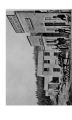
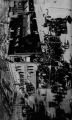
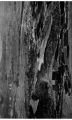
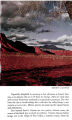
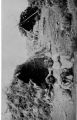
Show ear as can be determined, Edwin Bry- :rossed the Stansbury Mountains by of North Willow Canyon. The saddle •e ridge at this point appears decep-i low and accessible. EDWIN BRYANT'S TRAIL THROUGH WESTERN UTAH By Henry J. Webb* Edwin Bryant, member and chronicler of one of the first westward-trekking emigrant parties to reach Fort Bridger in the summer of 1846, was convinced by Lansford W. Hastings that the new route west, via the south end of the Great Salt Lake, would shorten the distance to California by 150 to 200 miles. As a result, he and eight others under the temporary guidance of James M. Hudspeth left the fort on July 20 and struck out for Salt Lake Valley and the mountains and deserts to the west. Much of his route as far as Grantsville, Utah, has been carefully retraced; but to my knowledge, no one has endeavored to cover precisely the trail he took from Skull Valley to Pilot Peak on the Utah- Nevada border, although J. Roderic Korns and Charles Kelly have contributed generously to our knowledge of this area.1 With the help of a grant from the University of Utah Research Fund, a small party of historians2 spent many days over a period of four years in the mountains * Professor Webb is a member of the faculty of the English Department, University of Utah, Salt Lake City. 1 See J. Roderic Korns, "The Journal of Edwin Bryant," Utah Historical Quarterly, XIX (1951) and Charles Kelly, Salt Desert Trails (Salt Lake City, 1930). ' The writer has been given the greatest assistance by Drs. C. Gregory Crampton and David E. Miller of the University of Utah History Department. Others who have helped are Dr. Joseph Salvatore of Carbon College, Mr. Gerard Cautero of the University of Southern California, and Mr. Scott Maughan, graduate student in history at the University of Utah. 130 UTAH HISTORICAL QUARTERLY and deserts attempting to map and photograph Bryant's trail, which deviates considerably from the wagon road cut by the Harlan-Young company and dieir followers. J. Roderic Korns surmised, and I agree, that Bryant crossed the Stansbury Mountains by way of North Willow Canyon. The entrance to this canyon is an inviting and gentle slope. The canyon itself, until the foot of the ridge is reached, rises easily. The saddle in the ridge, which could have been seen as soon as Bryant skirted die Oquirrh Mountains, appears deceptively low and accessible - so low and accessible, in fact, that any rider not wanting to swing north of the Stansbury Mountains would have headed for it without hesitation. Today it is a simple matter to go up the canyon to the base of the saddle, for a well-defined dirt road has been bladed out to several mine shafts; and any horseman or hiker can readily continue up the winding path that leads over the hump into Skull Valley. This path has been well worn by modern cattle and sheep men. Sheep herders whom I met in the vicinity told me that in their youth they had used this trail to go to dances in Grantsville from the spread of ranches in Skull Valley, and, because of the description of it by Bryant in What I Saw in California, I am reasonably sure it is the same route - or within yards of the same route - that Bryant and his party pioneered. The descent on the western side of the mountain, "although steep," as Bryant says, "is not difficult";3 and one making die hike soon runs into a jeep road that leads through Pass Canyon, which contains several cool and invigorating springs,down to Josepa (now the Deseret Ranch). The eventual importance of the springs above Josepa - springs which earlier had been missed by both Fremont and Clyman and which were subsequently used by all immigrants traveling the Hastings Cutoff - was not recognized by Bryant, probably because he had just come out of North Willow Canyon, which runs plenty of water. Bryant merely acknowledged the presence of "a faint stream which flows from the hills and sinks in the sands just below." But the later members of the wagon parties, all of whom went around the northern tip of the Stansbury Mountains and, therefore, had only salt springs with which to refresh themselves, welcomed this sweet water with enthusiasm, the wheels of their prairie schooners cutting a well-defined road to their source.4 3 The quotations from Bryant in this paper are from his work What I Saw in Cali- Jornia (2d ed., New York, 1848). 4 There are several unnamed springs in Pass Canyon, situated within u mile or so of one another. The upper ones, which are among cedars, fit the description which Bryant penned in 1846, except that now tall deciduous trees have joined the evergreens. The EDWIN BRYANT'S TRAIL 131 On the slope, still standing, just as Bryant describes it, is "a grove of small cedars, the deep verdure of which is some relief to the brown and dead aspect of vegetable nature" all around. From this point, Bryant's route across the alkali of Skull Valley to Redlum Spring on the eastern slope of the Cedar Mountains becomes a matter of conjecture. There is a kind of sugar-loaf, terraced butte directly east of the spring in what might be called the foothills of the Cedars, and a trace of the pioneer wagon road skirts this butte on the north and then loops southwest again to Redlum.5 Perhaps Bryant went this way. It is even reasonable to suppose that the wagon trains took the route which they did because they happened upon the relatively fresh tracks left by Bryant and followed diem to the spring. (Bryant, it will be remembered, was less than a month ahead of the leading wagon trains.) That this may indeed be the direction taken by Bryant is further supported by the fact that he struck Fremont's trail on the east slope of the Cedars; and Fremont, approaching Redlum Canyon along a southwest course, would certainly never have circled south of the butte.'1 In any event, we know that on August 2 Bryant camped at Redlum Spring at the spot used earlier by Fremont and later by all the wagon trains preparing for the "long drive" through Hastings Pass and across the Great Salt Desert. With his usual attention to detail, Bryant portrays the area as follows: "There are a few dwarf cedars in our vicinity, and scattered bunches of dead grass. In a ravine near us the sand is moist; and by making an excavation, we obtained a scant supply of water, impregnated with salt and sulphur." lowest spring in the canyon, issuing from beneath a bush some distance below the last, straggling cedars (and therefore not the one beside which Bryant camped), is probably the one first used by the wagon trains, although it seems probable that all the water sources were eventually developed by the immigrants. The best description of them occurs in the journal of Madison Berryman Moorman. In an entry for July 27, 1850, we find: "Seven miles brought us to where the road forked - the left hand one leading up a ravine towards the mountain. We took it and after going about diree miles we came to one of the finest springs that ever ran from the earth, gushing from the mountain side. Several of the men could not wait to get to the fountain, but leaped from their mules and quaffed bountifully from the brook below. . . . The place was a lovely one - grass and water abounding and of the finest quality, as well as plenty of good dry cedar wood. . ." Irene D. Paden (ed.), The Journal of Madison Berryman Moorman (San Francisco, 1948), 54. 3 Although this road seems to be no longer in use, it was probably utilized at one time by ranchers who kept cattle and sheep in die Cedars. 0 Fremont, of course, was not looking for any particular canyon. He was searching for verdure which would announce the presence of water. The greenery at the mouth of Redlum Canyon, quite visible from Skull Valley or the foothills of the Cedars, would have been an obvious invitation to his scouts. 132 UTAH HISTORICAL QUARTERLY The site remains much the same to this day, except that ranchers have piped the water to a number of troughs for their cattle so that the flow is now greater than it was when the immigrants went through.7 Immediately below the troughs is a small pond; above them, a large, rusted water tank. On the north bank of the ravine is the remnant of a small cabin. Around the source of the spring the ground is always moist - even in mid-summer and early fall - and we, by digging down a foot or so, obtained a trickling of murky but not unpalatable drinking water. Interestingly enough, although we drank of the spring, our horses, like the cattle in the Hoppe party, refused to touch it.8 From Redlum Spring almost to the crest of the Cedars, the trail is obvious. (This trail, of course, is not the one which Hastings took over the Cedars going east nor the one which the Harlan-Young Company and others cut with their prairie schooners going west. The wagon road looped north and then west from Redlum, entering Hastings Pass at a point approximately 2.5 miles from the spring.) Redlum has a smooth sand and gravel bottom and a gentle incline for approximately 3.5 miles; even after a rain storm, which usually tears great ruts in this canada, a jeep can readily pull up to the base of the ridge. For a horseman to follow any other route is unimaginable. At the head of Redlum Canyon, however, several forks occur; and it is very difficult to decide which one Bryant may have taken. We know that he lost the Fremont trail somewhere in the Cedars, for he speaks of picking it up again in the valley; and perhaps here, at one of these forks, the Fremont and Bryant trails part company for a while. To satisfy ourselves that we were doing our best to retrace this portion of the course, we abandoned jeep and foot and enlisted the services of an experienced rancher and pathfinder - Mr. Keith Hol-brook of Salt Lake City - and beginning at the spring, rode horseback over the summit of the Cedars and down into the valley below.3 Relying on his horseman's instinct and more than fifty years in the saddle, Mr. Holbrook chose the most likely fork leading west. This fork, a narrow ravine winding between a steep hill on the south and several leg-tiring hogbacks on the north, ends in a sharp incline at the 7 In the summer of 1959, the Bureau of Land Management placed a "Redlum Spring" sign near the watering troughs. s Moorman, describing the spring four years later (July 29, 1850), states: ". . . the last watering place . . consists of a number of small wells dug in a ravine that were ever kept stirred up and muddy. The water would have been bad enough had this not been the case, it being very brackish, but not intolerable." See Paden, op. cit., 55. ° Later we re-examined this trail on foot and were reasonably satisfied with our conclusions. EDWIN BRYANT'S TRAIL 133 summit of the mountain; and once we lurched to the top of this ridge, we had a clear and magnificent view of Pilot Peak, approximately seventy miles away. The descent was almost exactly as Bryant remembered: "two or three miles, by a winding and precipitous path through some straggling, stunted, and tempest-bowed cedars." We ran into several dune-like sand hills and some ridges of slippery, black gravel, however, which Bryant does not mention; and at one point, being rim-rocked, we had to retrace our steps for a hundred yards or so; but we moved down into the valley without great difficulty, coming out by Lone Rock.10 When we were on the summit of the Cedar Mountains, we could see where Bryant should have gone had he, at this point, been guiding himself on Pilot Peak - in a straight line from Lone Rock, over the southern-most saddle in Grayback, to the north of Floating Island, and through the Donner-Reed Pass11 in the Silver Range. But unfortunately Bryant could not see the peak since, on August 3, 1846, the whole basin was filled with a smoky haze. Accordingly, instead of striking directly for Pilot Peak when he came out of the mountains, he had to search for Fremont's trail among the sage and greasewood of the valley floor. He found a "blind" trail, visible and invisible by turns, which he assumed to be Fremont's; and this trail led him "through a narrow gap" in Grayback, "the walls of which were perpendicular, and composed of the same dark scorrious material as the debris strewn around. . . ." Passing a little further on, Bryant stood "on the brow of a steep precipice. . . ." There is only one gap in Grayback that fits this description. It is a mile or so north of U.S. Highway 40 and now contains a rough access-road to a line of telephone poles that march over the ridge and into the desert. A jeep can pull up to this ridge and horses can take riders down the cliff to the brink of the desert. We made a careful search of the area at the western base of Gray-back in several different seasons - sometimes on horseback, once with Tote-Gotes, but mostly by jeep and on foot - but our efforts were not especially rewarding. Trails there are in profusion, streaking off in dif- 10 Lone Rock, a prominent butte on the western approaches to the Cedar Mountains, is one of the few landmarks Bryant does not mention in his account. Perhaps the search for Fremont's trail, which had been lost, and the need for speed at this moment made him oblivious to this interesting rock. " I am here using the name which Warren L. Anderson gave to the pass in 1956 after completing the first accurate survey of the Silver Range for the department of geology, University of Utah. Spring in Pass Canyon in the Stansbury Mountains used by all immigrants. Looking west toward Pilot Peak ffom the brow of the Cedar Mountains. &mMysY£m&Lm EDWIN BRYANT'S TRAIL 135 ferent directions, crossed and re-crossed by jeep tracks, military roads, and sheep and cattle padis - but that one of these might be a remnant of Bryant's (or Fremont's) course, no one, I am sure, will ever be able to say. In fact, even the old road made by the wagon trains is, in this particular sector of the desert, effectively obscured by nature and the activities of modern man. Further west, the sand dunes remain mute. Even the mud flats, which retain clear signs of the pioneer road, no longer hold the hoof marks of Bryant's mules, not even in the wettest portion where the animals sank to their knees in the mixture of salt, sand, and clay. We can only surmise that Bryant, warned by Hudspeth of the necessity for speed on diis grim and desolate plain, pressed his animals directly toward Pilot Peak as soon as he could see it through the haze, which was about 2:00 P.M. on August 3. We can place him at this time between six and nine miles east of Floating Island, for, having dismounted from his mule to make it easier for her to plough through the muck, he did not reach Floating Island until three hours later, at 5:00 P.M.12 At 2:00 P.MV however, he would have easily noticed the gap that separates Silver Island from Crater Island, the gap now known as the Donner-Reed Pass; presumably he headed directly for it. In any event, the route from Floating Island to Pilot Peak is unmistakable to anyone who has ever examined this terrain and who has also read What I Saw in California. Heading northwest, Bryant temporarily left the salt and clay plain behind him, and mounting the alluvium that surrounds Silver Island, bent to the left and spurred directly across Pilot Valley for the spring that flows up from the base of Pilot Peak. There he and his companions remained for two nights and a day recuperating strength for the harsh, dry journey through Nevada. 13 My assumption here is based upon a speed of between two and three miles an hour. From Floating Island to Pilot Peak, a distance by the Bryant route of approximately twenty-six or twenty-seven miles, the average speed of the mounted animals was five miles an hour. |