| OCR Text |
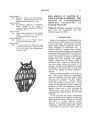
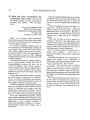
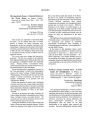
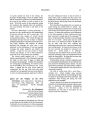
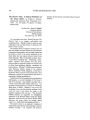
Show NOTES CULTURAL AFFILIATION AND AGE OF THE BROADBENT CACHE SITE Alan R. Schroedl, P-III Associates, Inc., 2759 South 300 West, Salt Lake City, Utah 84115 INTRODUCTION In a recent Utah Archaeology, Broadbent (1992) describes a cache site in Daggett County, Utah, that contained 39 projectile points and 1 biface. These artifacts were apparently stored as a cache in one of the cracks in a large rock outcrop in a rockshelter in a high mountain valley near Sheep Creek at about 8,280 ft. The artifacts were analyzed and measured by James C. Wood and Gene Titmus who apparently did not offer any typological identification. Broadbent suggests that these points might be typeable as the Sand Dune Side-notched type (Geib and Ambler 1991; Tipps and Hewitt 1989). Although there are some superficial similarities between the Broadbent cache points and the Sand Dune Side-notched points, the points from the cache are not morphologically similar to Sand Dune Side-notched points. The Sand Dune Side-notched point, an Early Archaic point type, is generally narrower, smaller, and more symmetrical, and appears to be geographically restricted to the highly dissected Canyonlands section of the Colorado Plateau in southern Utah and northern Arizona (Betsy L. Tipps, personal communication 1993). Morphologically, the projectile points pictured by Broadbent (1992: Figure 4) are- best classified as Mount Albion Corner-notched points, the defining point type for the Mount Albion Complex centered in the southern Rocky Mountains province (Benedict 1978a). MOUNT ALBION CORNER-NOTCHED POINTS Mount Albion Corner-notched points were defined by Benedict (1978b) in the mid-1970s based on an assemblage of 40 of these points from the Hungry Whistler site in Colorado (Figure 1). Benedict (1978b:47-48) notes that the Mount Albion Corner-notched point is "a medium-sized dart point with heavily ground corner or side notches and a heavily ground convex base. Variation in size, blade shape, and symmetry are primarily the result of repair of broken specimens, and attrition due to wear and resharpening during secondary use as hafted butchering tools." On this point type, the notching varies from medium to shallow side and corner notches with a slightly to greatly expanding stem. The base varies from straight to strongly convex and the Hungry Whistler specimens show evidence of grinding around the stem and the hafting element. The specimens range in length from 2.2 to 5.6 cm, 1.5 to 2.6 cm in width, and 0.4 to 0.8 cm in thickness. "Cycles of breakage and repair, use, and resharpening have resulted in size reduction, exaggerated asymmetry, and irregular blade configuration" (Benedict 1978b:49). Schroedl (1980; see also Walker [1992:132-142]), following Holmer's (1978) discriminant analysis procedures, conducted a multivariate analysis of five Early Plains Archaic projectile point types including the Mount Albion Corner-notched. The discriminant analysis of the Mount Albion Corner-notched type demonstrated a statistical asymmetry for this artifact type. The asymmetry, the extent of resharpening and rejuvenation, and the grinding around the hafting element, all noted by Benedict, suggest very strongly that Mount Albion Corner-notched "points" functioned primarily as hafted knives rather than projectile points. Because the Hungry Whistler and other Mount Albion Complex sites are in high altitude stone poor areas, few specimens were discarded until the absolute end of their use life. Consequently, complete specimens are rare. The five complete Mount Albion Corner-notched points in the discriminant analysis have a mean length of 4.5 cm while the Broadbent cache points are much longer, ranging in size from 5.5 to 10.3 cm. Not only are the points from the Broadbent cache much longer but they are also thicker than the points from the Hungry Whistler site. Given that the Broadbent points were cached, they were not at the end of the use life cycle. On the other hand, virtually all of the Hungry Whistler specimens were 96 UTAH ARCHAEOLOGY 1993 Figure 1. a-d, Albion Corner-notched points from the Hungry Whistler site in Colorado, redrawn from Benedict (1978: Figure 37); e-h, points from the Broadbent cache (Broadbent 1992: Figure 4). NOTES 97 k f A. N \ I / Montana North Dakota ! v / \ Idaho Middle Rocky \ Mountains * i South Dakota i . r^ ^ Wyoming Wyoming Basins h Nebraska ->-*x Nevada I / Broadbent! V I J Cache Site.' V r- Utah Colorado Kansas / * Southern Rocky f Mountains \ J - - - rsS \ i .7..- Oklahoma \ / N i Arizona New Mexico Texas \L 0 2S0 500 CZZJBB miles Sites and Site Clusters • State Boundary Physiographic Provinces Figure 2. Location of Broadbent cache sitcin relation to other Mountain Tradition sites (adapted from Black 1991: Figure 1). 98 UTAH ARCHAEOLOGY 1993 discarded because they had exceeded their use life. The differences in length between the Broadbent cache and the Hungry Whistler specimen is explained by their relative position in the use life trajectory. Throughout the sequence of use-breakage and/or resharpening, a projectile point will decrease in size through the process of resharpening and rejuvenation. While projectile points do not often lose medial mass through reworking, bifaces that are used as cutting tools often lose this mass over the course of resharpening and working (Andre D. La Fond, personal communication 1994). The proposed use of Mount Albion Corner-notched points as butchering tools would explain the thinner discarded specimens at the Hungry Whistler site. CULTURAL AFFILIATION AND AGE Mount Albion Corner-notched points are a diagnostic artifact type of the Mount Albion Complex identified by Benedict (1978a). At the Hungry Whistler site, one Mount Albion Corner-notched point was associated with a radiocarbon date of 5800 ± 125 radiocarbon years (1-3267), 4800-4500 B.C. (calibrated), and two others with a radiocarbon date 5520 ± 190 radiocarbon years (1-9434), 4540-4160 B.C. (calibrated) (Benedict 1978b:51). This complex is found in the higher elevations of the Southern Rocky Mountains and is believed to represent Altithermal populations who retreated to mountain refugia during the Altithermal Period (Benedict 1978c). Black (1991) includes the Mount Albion Complex and a variety of other high-altitude complexes into the Mountain Tradition. According to Black, the Mountain Tradition is geographically restricted to the Middle Rocky Mountains, the Wyoming Basins, and the Southern Rocky Mountains (Figure 2) and represents a discrete archeological cultural area that maintained a separate cultural identity throughout most of the prehistoric period. In summary, the altitude of the Broadbent cache site (8,280 ft), the location of the site on the southern periphery of the Middle Rocky Mountain physiographic province, and the morphology of the points suggest that this cache represents an assemblage of Mount Albion Corner-notched points associated with the Mount Albion Complex of the Mountain Tradition and may date between 4800 and 4100 B.C. ACKNOWLEDGMENTS Comments on the manuscript were provided by Andre D. La Fond and Phil Geib. The illustrations were drafted by Susan C. Kenzle and manuscript preparation completed by Michelle A. Sanders. REFERENCES CITED Benedict, J. B. 1978a The Mount Albion Complex: Review and Summary. In The Mount Albion Complex: A Study of Prehistoric Man and the Altithermal, by J. B. Benedict and B. L. Olson, pp. 118-138. Research Report 1. Center for Mountain Archeology, Ward, Colorado. 1978b Excavations at The Hungry Whistler Site. In The Mount Albion Complex: A Study of Prehistoric Man and the Altithermal, by J. B. Benedict and B. L. Olson, pp. 1-75. Research Report 1. Center for Mountain Archeology, Ward, Colorado. 1978c The Mount Albion Complex and the Altithermal. In The Mount Albion Complex: A Study of Prehistoric Man and the Altithermal, by J. B. Benedict and B. L. Olson, pp. 139-180. Research Report 1. Center for Mountain Archeology, Ward, Colorado. Black, K. D. 1991 Archaic Continuity in the Colorado Rockies: The Mountain Tradition. Plains Anthropologist 36(133):l-29. Broadbent, L. 1992 The Broadbent Cache Site. Utah Archaeology 5:139-149. Geib, P. R. and J. R. Ambler 1991 Sand Dune Side-notched: An Early Archaic Projectile Point Type of the Northern Colorado Plateau. Utah Archaeology 4:17-23. Holmer, R. N. 1978 A Mathematical Typology for Archaic Projectile Points of the Eastern Great Basin. Unpublished Ph.D. dissertation, Department of Anthropology, University of Utah, Salt Lake City. Schroedl, A. R. 1980 Multivariate Analysis of Early Plains Projectile Points. Paper presented at the 13th Annual Meeting of Canadian Archaeological Association Meetings, Saskatoon, Saskatchewan. Tipps, B. L. and N. J. Hewitt 1989 Cultural Resource Inventory and Testing in the Salt Creek Pocket and Devils Lane Areas, Needles District, Canyonlands National Park, Utah. Selections from the Division of Cultural NOTES 99 Resources 1. Rocky Mountain Region, National Park Service, Denver. Walker, E. G. 1992 The Gowen Sites: Cultural Responses to Climatic Warming on the Northern Plains (7500-5000 B.P.). Archaeological Survey of Canada Mercury Series Paper 145. Canadian Museum of Civilization, Hull, Quebec. 100 UTAH ARCHAEOLOGY 1993 |