| OCR Text |
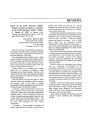
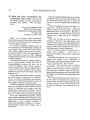
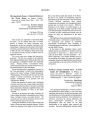
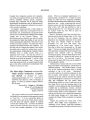
Show REPORTS 37 Simms, Steven R. 1987 Behavioral Ecology and Hunter-gatherer Foraging. BAR International Series 381. British Archaeological Reports, Oxford. Steward, Julian H. 1938 Basin-Plateau Aboriginal Sociopolitical Groups. Bulletin No. 120. Bureau of American Ethnology, Smithsonian Institution, Washington, D.C. Stewart, Omer C. 1941 Culture Element Distributions: XIV Northern Paiute. University of California Anthropological Records 4:360-446. Wheat, Margaret M. 1967 Survival Arts of the Primitive Paiutes. University of Nevada Press, Reno. Zeanah, David 1992 A Transport Model for Winter Base Camp Location in the Great Basin. Paper presented at die 23rd Great Basin Anthropological Conference, Boise. WHY SHOULD IT MATTER IF I TAKE ANOTHER POTSHERD? THE IMPACTS OF CONTEMPORARY ARTIFACT COLLECTING AT ANASAZI VILLAGES William B. Fawcett, Department of Sociology, Social Work, and Anthropology, Utah State University, Logan, Utah 84322 INTRODUCTION Studies of the vandalism of archaeological sites focus primarily on visible evidence, such as potholes, in sites on public lands. More informal, but equally illegal, surface collecting significantly alters the surface assemblages of archaeological sites. A statistical analysis of potsherds from excavated puebloan sites provides estimates for the proportions and numbers of decorated potsherds that should occur on the surface of uncollected sites. According to this formula, approximately 75 percent of the decorated potsherds have been previously, and probably illegally, collected from 20 Anasazi villages in southwestern Utah. Predictors of vandalism derived from other studies confirm the accuracy of the estimates. The utility of this approach for assessing the integrity of site surfaces prior to more costly studies of site structure and human settlement is explored. Contrary to popular perceptions, much of what we learn about the past comes from archaeological surveys of landscapes and surface remains, rather than from more expensive and labor intensive archaeological excavations. Through regional surveys and syntheses of smaller surveys, we gain insights into the organization, growth, collapse, and persistence of earlier and contemporary societies. Regional studies, such as those concerning the Chacoan roads, reveal scales of interaction and organization that is often invisible to the site-focused excavators. In both excavations and surveys, archaeologists invest considerable time and energy in recording and analyzing material remains. The bulk of their studies often focus on so-called diagnostic artifacts, perceived to be projectile points and decorated potsherds (e.g., Reid 1984; Sullivan 1984). There is a long history of using these artifact classes for 38 UTAH ARCHAEOLOGY 1993 Table 1. The Number of Potsherds from Excavations of Habitation Villages Occupied by the Virgin Anasazi Site Name ZNP1 ZNP3 ZNP5 ZNP52 Three Forks Bridgette Mudhole Golden Stairs Bonanza Dune Kanab Dune 1 - Frei Goosenecks Reusch - - - - - - Little Man 1 Red Cliffs Little Man 2 Little Man 4 Little Man 3 Site Number 42KA- 42KA- 42KA- 42KA- 42KA331 42KA346 42KA354 42KA524 42KA1076 42KA1969 42WS39-40; 45-56 42WS162 42WS164 42WS173 42WS173 42WS268 42WS288 42WS388 42WS390 42WS392 42WS395 42WS404 42WS503 42WS1346 42WS1348 42WS1349 Number of Potsherds: Plain 193 1,232 272 231 179 206 196 293 5,584 8,665 2,441 85 714 900 645 396 1,453 640 607 1,348 1,882 491 4,804 5,494 128 2,248 Decorated 5 315 38 10 44 55 115 60 991 1,187 560 20 190 159 94 25 15 74 75 502 460 45 441 574 5 330 Reference Schroeder 1955 Schroeder 1955 Schroeder 1955 Schroeder 1955 Fowler and Aikens 1963 Fowler and Aikens 1963 Fowler and Aikens 1963 Fowler and Aikens 1963 Aikens 1965 Nickens and Kvamme 1981 Day 1966 Walling et al. 1986 Pendergast 1962 Aikens 1965 Aikens 1965 Walling et al. 1986 Walling et al. 1986 Walling et al. 1986 Walling et al. 1986 Walling et al. 1986 Walling et al. 1986 Dalley and McFadden 1988 Dalley and McFadden 1985 Dalley and McFadden 1988 Dalley and McFadden 1988 Dalley and McFadden 1988 Note: Decorated sherds include black-on-white and black-on-gray sherds. Plain sherds are various undecorated gray and white wares. Redwares, corrugated and black-on-red sherds excluded, along with excavations with < 100 sherds. REPORTS 39 relative dating and assigning cultural affiliation to sites. Other forms of material culture have only rarely been given the same sort of attention by archaeologists (for elaboration upon this point see Gero and Conkey 1991). Archaeologists assume that a site is relatively intact unless vandalism, potholes, or other disturbances are visible on the surface. Increasingly, we devote greater effort to off-site collection strategies, piece-plotting, and controlled surface collections aimed at understanding site structure. But as part of such intensive and expensive research efforts, we need to pay greater attention to the impacts and biases created by prior illegal and legal investigators. Most studies of vandalism to archaeological sites have concentrated on the more visible evidence of disturbance, such as potholes and the defacement of rock art (e.g., Green and LeBlanc 1979; Nickens et al. 1981; Williams 1978; U.S. General Accounting Office 1987). Casual artifact collecting has largely been ignored. With the passage of laws making artifact collecting and vandalism illegal, evaluating the integrity of surface distributions becomes much more difficult, since collectors and vandals fear prosecution if they reveal their finds. Throughout this article, I do not differentiate between the destructive activities of artifact looters and vandals. During a recent survey of the Muddy Creek- Orderville area in Kane County, Utah, a team from Utah State University encountered 20 Anasazi villages on which thousands of undecorated potsherds lay on the surface, but only a handful, if any, decorated sherds remained. We suspected that years of artifact collecting had stripped these sites of the decorated potsherds. This article examines a statistical method for estimating the impacts of collecting the decorated sherds from archaeological sites. First I examine the statistical relationship of decorated to undecorated potsherds at a excavated sample of Virgin Anasazi villages. The derived regression formula then is used to estimate the number of decorated sherds that once existed on the surface of 20 villages in the Muddy Creek-Orderville area. The accuracy of these estimates is supported by introducing other predictors of vandalism, developed in studies with more visible vandalism and interviews with collectors. I conclude with a discussion of ways to incorporate these findings into regional studies, directing the results in a positive fashion beyond another cautionary tale. LINEAR REGRESSION OF EXCAVATED SAMPLES OF POTSHERDS Lightfoot and Francis (1978; Lightfoot 1978) examine the effects of artifact collectors on ceramic assemblages in two studies that are exceptions to digger-oriented investigations of vandalism. They propose that collectors prefer decorated sherds over plain sherds, larger sherds over smaller ones, and potsherds over other artifacts (Lightfoot and Francis 1978:88; Lightfoot 1978:99). The decline of decorated sherds over time due to multiple-episodes of collection is well documented at the Baker site, a major Fremont village on the Nevada-Utah border (Talbot et al. 1991 Table 1). The problems prior collection poses for cross-dating of sites, assessing research significance, and examining models of human settlement are detailed in Henderson's (1987) case study on the Pecos River in New Mexico. Pots of different shapes and sizes often have different functions, and vary in the quantities of decoration (Blitz 1993; Hairy 1986). In the American Southwest, bowls-often used for serving food-have much more painted decoration than jars which were probably used for food storage and preparation. Because the ratios of jars to bowls sometimes correlates with site function, the analyses presented here concentrate on habitation villages. This focus minimizes functional variability. Extensive middens and refuse surround the architectural debris and walls at habitation villages. These villages receive greater attention from vandals, due to their rich artifactual assemblages, including decorated pottery. By examining the correlation between decorated and undecorated potsherds from excavated contexts, presumably unaffected by surface collecting, it should be possible to estimate the true proportions. This relationship should be constant as long as: the amounts of decoration on various vessel forms remain constant, along with the proportions of different vessel forms and the degree and rates of breakage (or fragmentation) of pottery vessels. Selective reuse of sherds would alter the relationship. I assume that the excavated samples of sherds are representative of the population of decorated and undecorated sherds for the entire site. A high (r = .927; p < .01) linear correlation was obtained between the numbers of decorated and plain potsherds from 26 Virgin Anasazi villages without resorting to multiple-regression to control for the effects of different vessel forms (Table 1). The 40 UTAH ARCHAEOLOGY 1993 1000 - NUMBER OF DECORATED POTSHERDS 500- n = 26 r = 0.927 P < 0.01 tf* fcG & 2000 4000 6000 NUMBER OF PLAIN POTSHERDS 8000 Figure 1. Linear regression of numbers of undecorated potsherds against numbers of decorated potsherds (data from Table 1). scatter-plot exhibits a strong linear relationship (Figure 1). Only those sherds from excavations were tabulated for each village. Few of the excavators screened (or sieved) the deposits from which the sherds were obtained. Rather than being detrimental to this study, the absence of screened samples probably makes the collections more closely resemble the in-field tabulations we completed on the surface of villages in the Muddy Creek-Orderville area. PROJECTIONS TO SURFACE SAMPLES AT VIRGIN ANASAZI SITES The formula derived through the regression of excavated samples can be used to predict the expected number of decorated sherds on the surface of the sites in the Muddy Creek-Orderville area. These expected numbers can then be compared to the observed numbers occurring there today, in order to infer the extent of past artifact collection. In doing so, I assume that the surface artifacts are representative of those still buried within the sites. Today about 29,500 decorated and 884,550 plain potsherds remain on the surface of the 20 village sites (Table 2). The regression projects an expected value of 116,800 decorated sherds. On the average only 25 percent of the expected number of decorated sherds occur on the site surface. At 4 sites, no decorated pottery was recorded. The percentage of the remaining decorated potsherds only exceeds 50 percent of the expected number at 4 other sites. Evaluating the accuracy of these predictions poses a dilemma because the artifacts were collected in the past by persons who are usually unwilling to discuss their illegal activities. Instead, we can examine how the estimates correlate with other predictors of vandalism developed in various other studies. COMPARISONS WITH OTHER PREDICTORS OF VANDALISM In southwestern Colorado, vandals most often target the latest village sites with masonry architecture within 0.1 kms of a road, but further (> 12 kms) from towns (Nickens et al. 1981). Lightfoot and Francis (1978:89) found a similar REPORTS 41 Table 2. Potsherds and Indicators of Vandalism on the Surface of Habitation Villages in the Muddy Creek- Orderville Project, Kane County, Utah 42KA 3900 3901 3902 3903 3904 3905 3907 3908 3911 3912 3913 3915 3921 3922 3927 3934 3936 3940 3944 3945 Totals Number of: Plain (X) 750 7,000 15,350 8,600 2,750 13,200 14,550 23,100 288,600 18,000 + 117,450 19,100 56,300 4,600 97,550 115,550 9,600 40,000 1,300 31,200 884,550 Decorated (Y) 50 500 550 400 50 400 450 1,600 11,400 0 +2,550 500 3,700 400 2,450 4,450 0 0 50 0 29,500 Expected Number of Decorated (Y) 150 950 2,050 1,200 400 1,800 1,950 3,100 38,150 2,400 15,550 2,550 7,450 650 12,900 15,300 1,300 5,300 200 4,150 117,500 Percent Remaining Decorated (Y/Y)xl00 33 53 27 33 13 22 23 52 30 0 < 16 20 50 62 19 29 0 0 25 0 25 Distance to Nearest (km): Paved Road Road Town 1.0 1.2 .9 .8 .6 .1 .1 .2 .0 .1 .5 .5 .7 .2 .3 .3 .3 .5 .3 .1 - 2.5 2.3 2.2 2.0 1.9 .1 .3 .2 .6 .1 1.3 1.1 .7 .2 1.0 .8 4.6 1.7 2.0 2.5 - 3.2 3.0 3.0 2.7 2.7 5.5 5.4 6.5 6.0 7.0 6.0 6.3 1.8 1.3 3.7 4.7 7.5 4.2 5.9 6.3 - Pothole* A A A A A A P P A A P P P P P P A P A P - NOTE: Numbers of potsherds rounded to nearest 50. *P = Presence or A = Absence. 42 UTAH ARCHAEOLOGY 1993 DISTANCE TO NEAREST ROAD (KMS) 1.0 - 0.0 10 20 30 40 50 60 70 PERCENTAGE OF DECORATED POTSHERDS REMAINING Figure 2. Linear regression of percentage of remaining decorated potsherds against distance to nearest road (data from Table 2). Table 3. Association between prevalence of decorated pottery and distance to the nearest road Percentage Decorated Potsherds Rernaining < 30% > 30% Total Distance to Nearest Road in (km) <.5 12 2 14 > .5 2 4 6 Total 14 6 20 Chi-square •? 5.6; d.f. = 1; p = .02 REPORTS 43 4 . 0 - DISTANCE TO NEAREST3.0- PAVED ROAD (KMS) 2.0 1.0 - n = 20 r = -0.347 p > 0.05 0.0 L 0 10 20 30 40 5-0 60 PERCENTAGE OF DECORATED POTSHERDS REMAINING Figure 3. Linear regression of percentage of remaining decorated potsherds against distance to nearest paved road (data from Table 2). association of vandalism with proximity to roads to eastern Arizona. Interviews with collectors conducted as part of Nickens et al.'s study indicate that they gain access to sites with automobiles along familiar roads. Illegal diggers concentrate on middens rather than in architectural rooms (Nickens et al. 1981:61). In eastern Arizona, larger, more visible sites with less vegetation cover are the most likely to be vandalized (Lightfoot 1978:99). Over the broader area of the Rocky Mountain West, Williams' (1978) polling of government personnel indicates that vandals targeted less accessible and remote sites with less chance of detection by other visitors and government officials. All of these studies focus on public lands, where artifact collection and site vandalism is illegal. In recent years, law enforcement and prosecution have increased in an attempt to suppress the activities of vandals and collectors. On public lands, considerable 44 UTAH ARCHAEOLOGY 1993 Table 4. Association Between Prevalence of Decorated Pottery and Distance to the Nearest Paved Road Percentage Decorated Potsherds Remaining < 28% > 28% Total Distance to Nearest Road in (km) < 1.3 7 4 11 > 1.3 6 3 9 Total 13 7 20 Chi-square = .01; d.f. = 1; p = .99 Table 5. Association Between Prevalence of Decorated Pottery and Evidence of Potholes Percentage Decorated Potsherds Remaining < 30% > 30% Total Distance to Nearest Road in (km) Potholes Absent 7 3 10 Present 7 3 10 Total 14 6 20 Chi-square = .000; d.f. = 1; p = .995 effort might be devoted to avoiding detection, something that would be less of a concern on private lands. The Muddy Creek-Orderville data are unique because the sites are mostly on private lands, where the owner potentially has greater control over the activities of collectors and vandals. As the chances of detection and prosecution increased on federal and state lands, collectors and vandals may have shifted their efforts to private lands. We might expect the intensity and extent of their efforts to differ between private and public lands. Strategies would probably differ between surface collection and digging for artifacts. As in other vandalism studies a positive, but weak, correlation exists between the distance to the nearest road and the percentage of decorated potsherds that remain on the surface. More decorated pottery occurs on the surface of sites located further from any road (Figure 2). While the correlation coefficient (r = .309) is not statistically significant (p > .05), a chi-square test on a contingency table with the same data is strongly significant (Table 3). While a statistically significant trend is supported by the chi-square, the relationship in the scatter plot (Figure 2) is not very linear. Notice also that none of the sites occur at tremendous distances from roads. More people travel along paved roads, increasing the likelihood of detection of vandalism. The partial avoidance of sites close to paved roads by collectors is suggested by the weakly negative (r = -.347) and slightly nonsignificant (p > .05) correlation between REPORTS 45 8 ~ DISTANCE TO NEAREST TOWN (KMS) 4 - 0 i 0 10 20 30 40 50 660U 70 PERCENTAGE OF DECORATED POTSHERDS REMAINING Figure 4. Linear regression of percentage of remaining decorated potsherds against distance to nearest town (data from Table 2). the distance to paved roads and the percentage of decorated potsherds that remain on the sites (Figure 3). Chi-square calculated on Table 4 is also not statistically significant. An effort to avoid detection may account for the highly significant negative correlation (r = -.572, p < .01) between distance from towns and the amount of decorated pottery that remains (Figure 4). Collection-induced bias is higher at remote sites. Visible evidence for vandalism (in the form of potholes or other nonprofessional excavations) is not common at sites where fewer decorated potsherds exist on the surface, due in part to prior collection (Table 5). Based on this finding, I propose that surface collecting is done independently of digging for artifacts. Surface collection may be more casual and opportunistic, in contrast to more serious looting oriented towards discovering marketable artifacts. This proposal requires further evaluation, perhaps through ethnographic research on vandalism. The agreement of independent predictors of vandalism with the estimates of the intensity of surface collecting of decorated potsherds at 20 Anasazi villages in the Muddy Creek-Orderville area, adds further support to the accuracy of those estimates. In most cases only a small fraction of the decorated sherds that probably once existed on the surface of the sites remain today. DISCUSSION AND CONCLUSIONS By using linear regression to describe the statistical relationship between decorated and plain potsherds, estimates can be made of the quantities of decorated sherds that have been removed from the surface of a site. In the Muddy Creek-Orderville area of southwestern Utah approximately 75 percent of the expected number of decorated potsherds have been 46 UTAH ARCHAEOLOGY 1993 removed, presumably by artifact collectors, from the surface of 20 village sites. The correlation between these estimates of the intensity of artifact collection with other predictors of archaeological vandalism supports the accuracy of the estimates. This study provides a method for estimating the impacts of surface collecting on specific archaeological sites that is independent of more visible evidence of vandalism. In combination with taphonomic and other middle-range approaches to site formation/transformation processes, it offers a means for rapidly assessing which site surfaces offer greater integrity (i.e., are more pristine). Assessing the degree of prior artifact collection benefits more costly and intensive studies of site structure by allowing us to focus our efforts at piece-plotting and controlled surface collecting/recording on those sites with less biased and more intact surface assemblages. Additional potsherds are created (through breakage) and exposed (through various natural and cultural processes) over time, but they are derived from a finite number of vessels within a particular site. Previous studies at other sites (Talbot et al. 1991 Table 1), as well as this one, indicate that repeated surface collecting gradually decreases both the numbers and diversity of decorated potsherds on the surface. This effect hinders our efforts to determine the cultural affiliation, time period(s), and functions of the occupation(s), and increasing the difficulty of making accurate statements about human settlement and societal organization. While the effects of surface collection cannot be eliminated, they can be evaluated and incorporated into anthropological studies by using the technique presented here. On the other hand, some categories (e.g., chipped-stone debitage, smaller undecorated sherds, ecofacts) and size-classes (e.g., micro-refuse) may be ignored by artifact collectors. Yet, these materials often receive less attention from archaeologists than the decorated pottery and formal tools, such as projectile points. Increasing the attention paid to less impacted classes of refuse provides a way of coping with collector-induced biases. ACKNOWLEDGMENTS This study was made possible with funding from the U.S.D.A. Soil Conservation Service (Salt Lake City), as part of the Muddy Creek-Orderville Watershed Improvement Project, and the physical and mental efforts of the field team from Utah State University. Local residents and businesses also assisted the archaeological and historical studies. All of diem deserve our thanks. REFERENCES CITED Aikens, C. M. 1965 Excavation in Southwest Utah. Anthropological Papers No. 76. University of Utah Press, Salt Lake City. Blitz, J. H. 1993 Big Pots for Big Shots: Feasting and Storage in a Mississippian Community. American Antiquity 58:80-96. Dalley, G. F., and D. A. McFadden 1985 The Archaeology of the Red Cliffs Site. Cultural Resources Series No. 17. Bureau of Land Management, Utah State Office, Salt Lake City. Day, K. C. 1966 Excavations at Gunboat Flats, Southwestern Utah. Anthropological Papers No. 83:1-48. University of Utah Press, Salt Lake City. Fowler, D. D., and C. M. Aikens 1963 1961 Excavations Kaiparowits Plateau, Utah. Anthropological Papers No. 66. University of Utah, Salt Lake City. Gero, J. M., and M. W. Conkey (editors) 1991 Engendering Archaeology: Woman And Prehistory. Black well, Oxford. Green, D. F., and S. LeBlanc (editors) 1979 Vandalism of Cultural Resources: The Growing Threat to Our National Heritage. Cultural Resources Report No. 28. U.S.D.A. Forest Service, Southwest Region, Albuquerque. Hally, D. J. 1986 The Identification of Vessel Function: A Case Study of Northwest Georgia. American Antiquity 51:267-295. Henderson, M. S. 1987 Method and Theory in Hit and Run Archaeology: An Early Example from Soudieastern New Mexico. In Advances in Middle Pecos Archaeology, edited by S. R. Katz and P. Katz, pp. 30-46. Bureau of Reclamation, Carlsbad, New Mexico. Lightfoot, K. G. 1978 The Impact of Casual Collecting on Archaeological Interpretation Through Regional Surface Surveys. In An Analytical Approach to Cultural Resource Management: The Little Colorado Planning Unit, edited by F. Plog, pp. REPORTS 47 83-90. Anthropological Research Paper No. 23. Arizona State University, Tempe. Lightfoot, K. G., and J. E. Francis 1978 The Effects of Casual Surface Collection on Behavioral Interpretations of Archaeological Data. In An Analytical Approach to Cultural Resource Management: The Little Colorado Planning Unit, edited by F. Plog, pp. 83-90. Antiiropological Research Paper No. 23. Arizona State University, Tempe. Nickens, P. R., and K. Kvamme 1981 Archaeological Investigation at the Kanab Site. Cultural Resources Series No. 9(2). Bureau of Land Management, Utah State Office, Salt Lake City. Nickens, P. R., S. L. Larralde, and G. C. Tucker 1981 A Survey of Vandalism to Archaeological Resources in Southwestern Colorado. Cultural Resources Series No. 11. Bureau of Land Management, Colorado State Office, Denver. Pendergast, D. M. 1962 The Frei Site, Santa Clara, Utah. Anthropological Papers No. 60:127-163. University of Utah Press, Salt Lake City. Reid, J. J. 1984 What is Black-on-White and Vague All Over? In Regional Analysis of Prehistoric Ceramic Variation: Contemporary Studies of the Cibola Whitewares, edited by A. P. Sullivan and J. L. Hantman, pp. 135-152. Anthropological Research Papers No. 31. Arizona State University, Tempe. Schroeder, A. H. 1955 Archaeology of Zion Park. Antiiropological Papers No. 22. University of Utah Press, Salt Lake City. Sullivan, A. P. 1984 Design Style and Cibola Whitewhare: Example from die Grasshopper Area, East-Central Arizona. In Regional Analysis of Prehistoric Ceramic Variation: Contemporary Studies of the Cibola Whitewares, edited by A. P. Sullivan and J. L. Hantman, pp. 74-93. Antiiropological Research Papers No. 31. Arizona State University, Tempe. Talbot, R. K., S. E. Billat, and L. D. Richens 1991 The Snake Valley Archaeological Project, Field Year 1990: Research Overview and Testing Results. Museum of Peoples and Cultures Technical Series No. 91-1. Brigham Young University, Provo. U.S. General Accounting Office 1987 Cultural Resources: Problems Protecting and Preserving Federal Archaeological Resources. Government Accounting Office, Washington, D.C. Walling, B. A., R. A. Thompson, G. F. Dalley, and D. G. Weder 1986 Excavations at Quail Creek. Cultural Resources Series No. 20. Bureau of Land Management, Utah State Office, Salt Lake City. Williams, L. R. 1978 Vandalism to Cultural Resources of the Rocky Mountain West. Cultural Resources Report No. 21. U.S.D.A. Forest Service, Southwest Region, Albuquerque. 48 UTAH ARCHAEOLOGY 1993 |